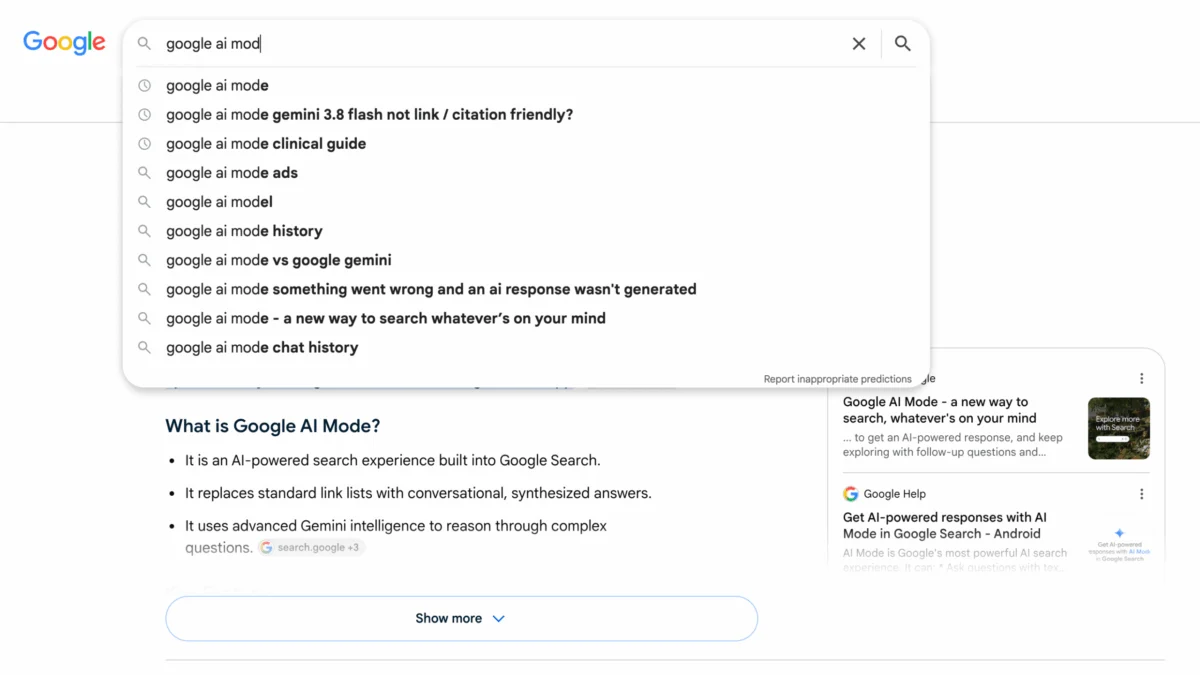
Google, the undisputed titan of internet search, is currently engaged in a significant test that could fundamentally alter how users interact with its search results pages. The company is actively experimenting with integrating an "AI Mode" button directly into the search bar itself, specifically when users are already within the search results environment. This development marks a notable expansion of Google’s AI integration strategy, moving beyond its previous placements of the AI Mode button on the homepage or within the broader Google Search application. The objective appears to be a more seamless and immediate pathway to generative AI capabilities, allowing users to effortlessly toggle between traditional and AI-enhanced search experiences for follow-up queries.
The Evolving Integration of AI in Google Search: A Strategic Imperative
Google’s foray into generative AI within its core search product is not a sudden pivot but rather the culmination of years of research and development, intensified by recent competitive pressures. The company first signaled its ambitious vision for AI-powered search with the introduction of its Search Generative Experience (SGE), now increasingly referred to as AI Overviews. This initiative, initially launched in experimental phases, aimed to transform search from a list of "10 blue links" into a more conversational and synthesised answer engine, capable of directly addressing complex queries with AI-generated summaries.
Prior to this latest test, the AI Mode button had already begun appearing in various Google interfaces. Users might have encountered it prominently on the Google search homepage, inviting them to initiate an AI-powered query from the outset. It was also integrated into the Google Search app, providing an option to leverage AI for more interactive and comprehensive results. These initial placements were strategic, designed to familiarize users with the concept of AI-driven search and encourage adoption. However, placing the AI Mode button within the search bar on the results page represents a critical shift, positioning AI as an intrinsic part of the ongoing search journey, rather than just an entry point. This move underscores Google’s commitment to embedding generative AI deeply into the fabric of its most widely used product, aiming to redefine user expectations for information retrieval.
The strategic imperative behind this aggressive integration is multifaceted. Firstly, it’s a direct response to the burgeoning AI landscape and the rise of competitors like Microsoft’s Bing Chat (now Copilot), which leverages OpenAI’s GPT models to offer conversational search. This competitive pressure has undoubtedly accelerated Google’s efforts to showcase its own advanced AI capabilities, primarily powered by its Gemini family of large language models. Secondly, Google aims to enhance user experience by providing more immediate, comprehensive, and personalized answers, theoretically reducing the need for users to click through multiple links to find the information they seek. This could lead to greater user satisfaction and stickiness within the Google ecosystem. Finally, by gathering extensive data on how users interact with AI Mode within the search results, Google can refine its algorithms, improve the quality of AI-generated responses, and tailor the feature to better meet user needs, thereby reinforcing its dominant position in the global search market.
Chronology of AI Feature Rollouts and Recent Observations
Google’s journey towards an AI-centric search experience has unfolded in several key phases:
- May 2023: Google officially unveils the Search Generative Experience (SGE) at its I/O developer conference, introducing AI-powered summaries and conversational capabilities as an experimental feature. This marked the public debut of Google’s vision for integrating generative AI directly into search results.
- Late 2023 – Early 2024: SGE begins rolling out to a wider audience through Google’s Search Labs program, allowing users to opt-in and test the new functionalities. During this period, the "AI Mode" button starts appearing in prominent positions, such as the Google search homepage and within the general Google Search application, acting as an on-ramp to the generative experience.
- Mid-2024: Google continues to iterate on SGE, refining its responses, expanding its availability to more regions and languages, and gradually integrating it more deeply into the standard search experience for some users. Discussions about "AI Overviews" as a default feature begin to intensify.
- Recently (September 2026 timestamp in tweet, interpreted as current observation): The latest development emerged recently when Dwayne Cubbins, a keen observer of Google’s UI changes, shared an image on X (formerly Twitter) depicting the "AI Mode" button directly embedded within the search bar on a Google search results page. This observation, made on what appeared to be September 15th (though the year indicated a future date, signaling a likely typo in the social media timestamp, the observation itself is current and reflects ongoing testing), quickly garnered attention within the SEO and tech communities. The article author independently verified this test, confirming its presence for some queries after an initial inability to replicate it.
This chronology highlights Google’s incremental but persistent approach to integrating AI. Each step, from the experimental SGE to the current in-results-page AI Mode button, signifies a deliberate effort to normalize and entrench generative AI as an essential component of the search experience. The current test is particularly significant because it places the AI toggle at the point of intent refinement – when a user is already engaged with search results and potentially looking to adjust or deepen their query.
Dissecting the User Interface Change: A Detailed Look
The new placement of the "AI Mode" button is subtle yet impactful. Traditionally, when a user conducts a search on Google, the search bar at the top of the results page typically features a magnifying glass icon or a standard "Search" button. This allows users to modify their query or initiate a new search based on suggestions. The tested interface, however, introduces a distinct "AI Mode" button directly adjacent to the existing search functionality within this very search bar.
Visually, the AI Mode button often features an icon that distinctly represents artificial intelligence – frequently a stylized star, a brain, or a similar emblem – accompanied by text such as "AI Mode." The contrast between the standard search bar appearance and the new variant is striking. In the traditional layout, the emphasis remains on text input and direct search execution. With the AI Mode button present, users are presented with an immediate choice: either refine their traditional search or switch to an AI-powered conversational or summary-generating mode for their next query.
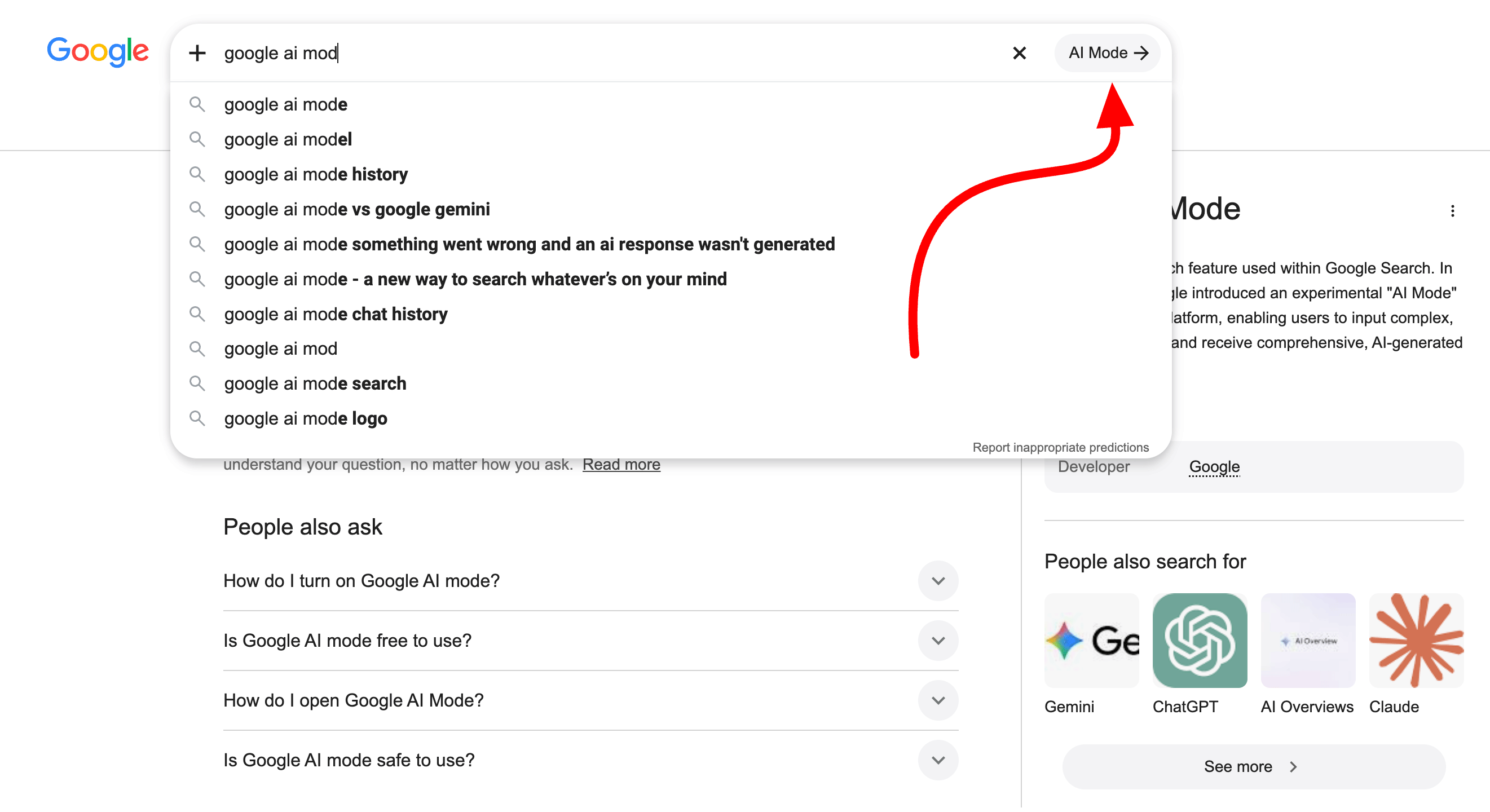
A crucial aspect of this test, as noted by both Dwayne Cubbins and the article’s author, is its inconsistent appearance. The AI Mode button does not manifest universally for all users, nor does it appear for every search query, even for those within the test group. This variability is characteristic of Google’s extensive A/B testing methodologies. The company often deploys multiple test variations to different segments of its user base, collecting data on engagement, user satisfaction, and performance metrics for each iteration. This allows Google to gauge the effectiveness of a feature before a broader rollout. The fact that it doesn’t always show up, even for users who have seen it, suggests that Google is meticulously evaluating the specific contexts and query types where an AI-driven follow-up might be most beneficial or desired. It could also be tied to specific user profiles, geographic locations, or even the type of device being used.
User Experience and the "Nudge" Factor
Dwayne Cubbins’ initial reaction encapsulated a common concern among some users and industry observers: "Is Google trying to force people to use AI Mode when making a follow-up search from the results page? Am I tripping? I swear there used to be a normal search button here too. Now I have to hit Enter to continue with the regular search." This statement highlights a key psychological aspect of UI design – the potential for "nudging" user behavior. By placing the AI Mode button so prominently and potentially altering the perceived default action, Google could be subtly encouraging users towards its generative AI features.
Cubbins’ specific concern about the absence of a "normal search button" and the perceived necessity to hit "Enter" for a traditional search suggests a potential reordering of user expectations. If the AI Mode button becomes the most visually prominent or easily clickable option for a follow-up query, some users might feel guided towards it, even if their initial intent was to perform a conventional search refinement. This raises questions about user autonomy and the preservation of familiar interaction patterns.
However, the article author’s subsequent testing offered a counterpoint, indicating that normal search functionality remained accessible, even with the AI Mode button present. This discrepancy suggests the existence of multiple test variations. Google might be experimenting with different button configurations, visual hierarchies, and default actions to determine the optimal balance between promoting AI features and maintaining user familiarity. For instance, some test groups might see the AI Mode button alongside a clearly visible traditional search button, while others might experience a more streamlined interface where "Enter" becomes the implicit trigger for a regular search. Understanding these nuances is crucial for Google to avoid alienating users who prefer the established search paradigm while simultaneously pushing the boundaries of AI integration. The "nudge" is a delicate balance, and over-aggressive pushing could lead to user frustration.
Broader Implications for Search Engine Optimization (SEO)
The persistent integration of AI into Google Search carries profound implications for Search Engine Optimization (SEO) professionals and website publishers. If the "AI Mode" button becomes a widely adopted feature within the search results page, it could significantly alter user behavior and, consequently, website traffic patterns.
- Shift in Click-Through Rates (CTR): If users increasingly opt for AI-generated summaries or conversational interactions directly within Google’s interface for follow-up questions, it could lead to a reduction in click-through rates (CTR) to external websites. Content creators invest heavily in ranking for specific keywords, but if the answer is sufficiently provided by an AI Overview or an AI Mode interaction, the incentive to click on a traditional organic result diminishes.
- The Importance of Structured Data and Quality Content: To appear in AI Overviews or be effectively processed by AI Mode, websites will need to ensure their content is high-quality, authoritative, and well-structured. Utilizing schema markup and other forms of structured data will become even more critical, as it helps Google’s AI models understand the context and key entities within a page. AI systems thrive on clear, concise, and factual information.
- Focus on Topical Authority and E-E-A-T: Google’s emphasis on Experience, Expertise, Authoritativeness, and Trustworthiness (E-E-A-T) will likely intensify in an AI-driven search landscape. AI models are trained on vast datasets, but the credibility and factual accuracy of their outputs are paramount. Websites that demonstrate strong E-E-A-T will be more likely to have their content referenced and summarized accurately by AI, potentially boosting their visibility indirectly.
- Adapting Content Strategies: SEOs may need to adapt their content strategies to cater to both traditional search and AI-driven queries. This could involve creating content that is easily digestible for AI summaries, anticipating follow-up questions that AI Mode might answer, and focusing on long-tail, nuanced queries that require deeper exploration than a quick AI summary can provide. The goal may shift from merely ranking for keywords to being a trusted source for AI systems.
- The Blurring Lines of Search: The distinction between Google as a "search engine" and Google as an "answer engine" will continue to blur. Publishers will need to understand that Google is increasingly seeking to keep users within its ecosystem by providing direct answers, making it essential to find new ways to demonstrate value and attract users to their sites beyond initial information retrieval. This might involve focusing on unique data, tools, community, or exclusive insights that AI cannot replicate.
Google’s Strategic Vision and Competitive Landscape
This test is a clear manifestation of Google’s long-term strategic vision: to make AI an indispensable part of every user interaction, particularly within its most critical product, Search. The company is not merely adding AI as an optional feature; it’s integrating it into the core workflow, aiming to reshape how users perceive and utilize search. This proactive approach is essential for Google to maintain its formidable market share in the face of escalating competition.
Microsoft, through its partnership with OpenAI, has aggressively pushed AI into Bing and its Edge browser with Copilot, offering conversational search and generative capabilities that directly challenge Google’s traditional dominance. Other AI-first search engines like Perplexity AI have also emerged, focusing exclusively on providing summarized, sourced answers rather than lists of links. These competitors have forced Google to accelerate its own AI integration, demonstrating that the future of search is undeniably intertwined with generative AI.
By placing the AI Mode button within the search results page, Google is signaling that it intends for AI to be a continuous companion throughout the information-seeking process, not just a one-off query tool. This move aims to reinforce Google’s position as the leading innovator in AI, showcasing its proprietary Gemini models and their ability to enhance user experience directly within its flagship product. The data gathered from these tests will be invaluable in understanding user preferences, refining AI responses, and ultimately determining the final form of AI-powered search for billions of users worldwide. It is a testament to Google’s commitment to staying ahead in the rapidly evolving technological landscape, ensuring that its core product remains at the forefront of innovation.
The Nature of Google’s A/B Testing
The inconsistent appearance of the AI Mode button underscores Google’s rigorous and continuous A/B testing methodology. Google is renowned for its data-driven approach to product development, where even minor UI changes are subjected to extensive testing before a global rollout.
A/B testing involves presenting different versions of a feature (A and B) to different segments of the user base and then analyzing their interactions, engagement metrics, and feedback. In this instance, Google is likely testing several variables:
- Placement: Where is the button most effective and least intrusive?
- Visibility: How prominent should it be?
- Default Behavior: Should AI Mode be opt-in or opt-out for certain queries?
- User Segment: Which types of users are most receptive to AI-powered follow-up queries?
- Query Type: Does AI Mode perform better for informational, navigational, or transactional queries?
- Impact on Traditional Search: How does the presence of the AI Mode button affect the usage of traditional search functions?
The fact that the article author could search normally despite Cubbins’ initial concern suggests Google is carefully balancing innovation with user familiarity. It’s plausible that some test groups might experience a more assertive "nudge" towards AI, while others are given clearer options for both traditional and AI search. This granular approach allows Google to fine-tune the user experience, mitigate potential negative reactions, and optimize for long-term user adoption of its AI capabilities. The sheer scale of Google’s user base allows for highly sophisticated and nuanced testing, providing invaluable insights into how new features are perceived and utilized in real-world scenarios.
Expert and Community Reactions (Inferred)
The broader SEO and webmaster community is likely observing these tests with a mixture of anticipation and concern. Many in the industry have already begun adapting to the advent of SGE and AI Overviews, recognizing that the landscape of search is fundamentally changing. The placement of the AI Mode button directly in the results page search bar will likely reinforce the perception that AI is not a fleeting trend but a permanent fixture in Google’s ecosystem.
- SEO Professionals: Will likely express concerns about further potential reductions in organic traffic and the increasing difficulty of driving users to their websites. They will be strategizing on how to optimize content for AI consumption and how to differentiate their offerings in an AI-dominated search environment. Discussions will revolve around the need to provide unique value beyond what an AI summary can offer.
- Content Creators: May feel increased pressure to produce high-quality, authoritative content that is both engaging for human readers and easily digestible by AI models. The focus will shift towards building brand authority and establishing themselves as trusted sources that AI systems will reliably cite.
- General Users: Reactions will likely be mixed. Some users will embrace the convenience and efficiency of AI-powered summaries and conversational search, appreciating the ability to get quick answers without extensive clicking. Others, however, may express frustration with changes to familiar interfaces, potential biases in AI outputs, or a preference for the traditional "10 blue links" model that offers more direct control over information sources. Concerns about data privacy and the accuracy of AI-generated content will also likely persist.
These inferred reactions underscore the transformative period Google Search is currently undergoing. The company must navigate these diverse perspectives carefully, balancing technological innovation with user expectations and the needs of the vast ecosystem of websites and content creators that rely on its search engine.
Conclusion: The Future of Google Search is Conversational and AI-Driven
The testing of an "AI Mode" button within the search bar on Google’s results pages is far more than a minor UI tweak; it signifies a pivotal moment in the evolution of internet search. It represents Google’s determined effort to seamlessly integrate generative artificial intelligence into the very fabric of how users discover and interact with information. This move positions AI not as an add-on, but as an intrinsic, readily accessible component of the ongoing search journey, potentially transforming follow-up queries into conversational or summary-driven interactions.
As Google continues to refine its AI capabilities and expand its SGE/AI Overviews, the presence of such a button will likely become more prevalent, nudging users towards a future where AI-powered answers are as common as traditional organic links. While this promises a more efficient and comprehensive search experience for many, it also presents significant challenges and opportunities for SEOs, content creators, and the broader web ecosystem. The future of Google Search is increasingly conversational, personalized, and AI-driven, requiring all stakeholders to adapt to a continuously evolving digital landscape. The ongoing tests are not just about a button; they are about redefining the very nature of information retrieval for billions worldwide.