Raul Delapena Setiawan
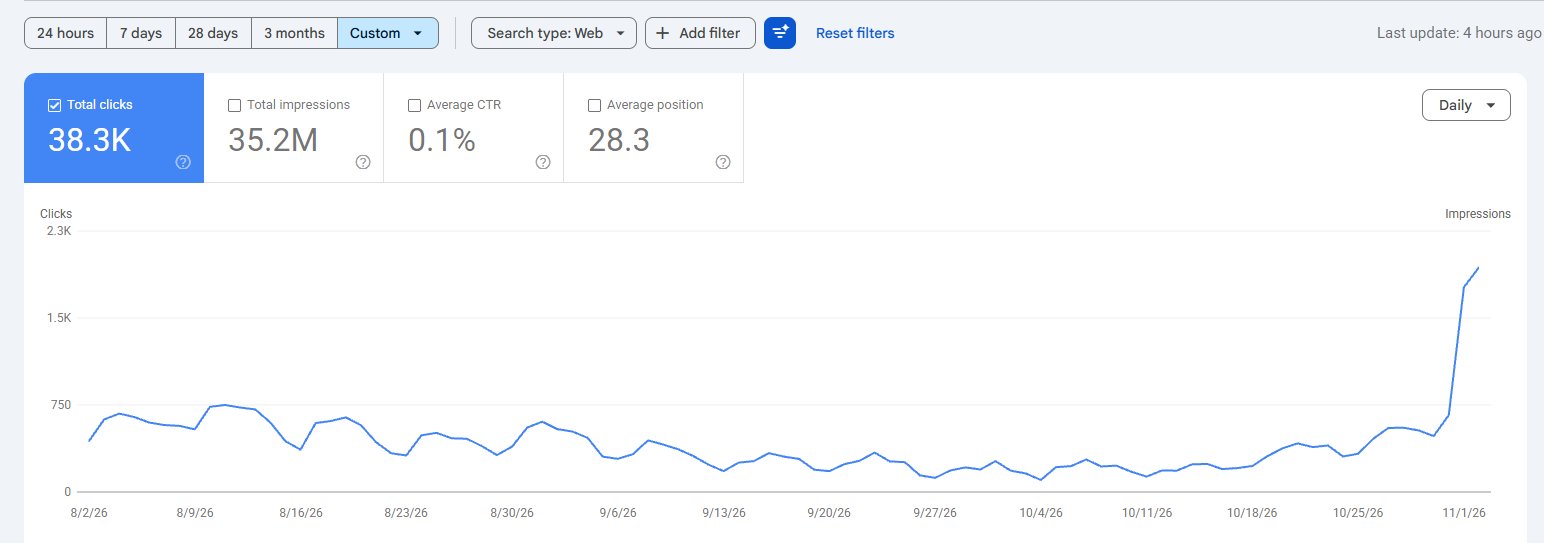
Webmasters and SEO professionals are currently grappling with an unusual phenomenon: Google Search Console (GSC) performance reports are displaying significant, uncharacteristic spikes in click data for a subset of websites over the past few days. This anomaly, which does not appear to be affecting all properties, has prompted widespread discussion within the search engine optimization community, raising concerns about data integrity and the reliability of crucial performance metrics. While the exact cause remains unconfirmed, initial theories point towards a potential bug within Google’s reporting system or an influx of miscategorized bot traffic.
Understanding the Critical Role of Google Search Console
Google Search Console serves as an indispensable, free tool provided by Google to help webmasters, SEOs, and developers monitor their site’s performance in Google Search. Its "Performance Report" is particularly vital, offering granular data on how users discover and interact with a website in search results. This report provides key metrics such as total clicks, total impressions, average click-through rate (CTR), and average position across various queries, pages, countries, and devices. For any business or individual relying on organic search traffic, the accuracy of this data is paramount. It informs strategic decisions, helps identify content gaps, monitors the effectiveness of SEO campaigns, and provides a clear picture of a site’s visibility and user engagement. An unexpected surge or drop in these figures, especially clicks, can trigger immediate alarms, necessitating swift investigation to differentiate between genuine performance shifts and reporting anomalies. The current situation, characterized by phantom click spikes, directly challenges the foundational trust in this critical data source.
A Chronology of Emerging Anomalies
The first reports of these unusual spikes began to surface in the days leading up to November 3, 2026. Initially, observations were sporadic, but a pattern quickly emerged as multiple prominent figures in the SEO industry began to confirm similar discrepancies.
One of the early notifications came from Search Engine Land, detailing instances where sites were showing substantial increases in clicks. Interestingly, their report highlighted a critical inconsistency: while the Search Console API indicated a huge spike across three different sites, the web interface within Google Search Console itself only reflected this surge for one of those three properties. This immediate divergence between reporting methods underscored the complexity and potential systemic nature of the issue.
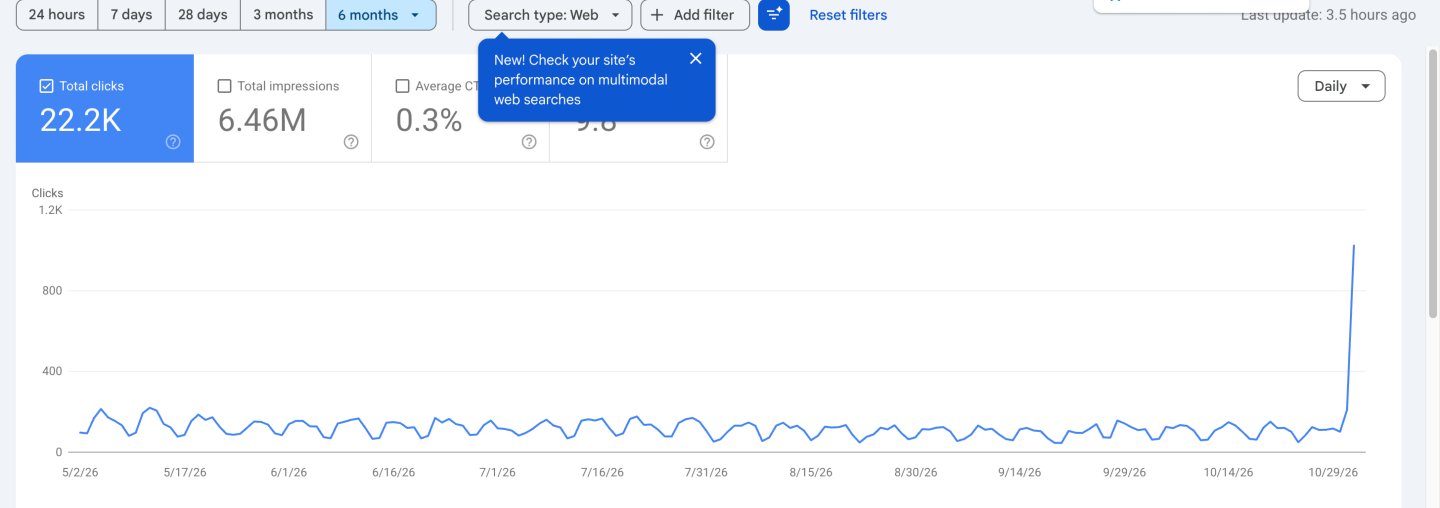
The situation gained broader attention on November 3, 2026, when Joy Hawkins, a renowned expert in local SEO, posted on X (formerly Twitter) about a noticeable spike in clicks within Search Console. Her accompanying chart visually demonstrated the dramatic and unexplained increase, prompting a wave of confirmations from her peers.
Glenn Gabe, another highly respected SEO consultant, responded to Hawkins’ observation, confirming that he was also witnessing similar spikes across "some sites and not all." His screenshot, shared on X, further corroborated the selective nature of the anomaly, illustrating that this wasn’t a universal issue affecting every website, but rather a targeted or intermittent glitch.
Further evidence emerged from the comments section of the SERoundtable website itself, where a user reported experiencing "5x clicks in GSC for the weekend." This individual articulated a common concern, stating, "They don’t seem to have translated to actual traffic on site," suggesting a disconnect between GSC’s reported clicks and real-world user engagement as measured by other analytics tools. This observation was crucial as it hinted that the spikes might not represent genuine user activity but rather a data misinterpretation.
Another interesting detail came from a user identified as "_WeirdGinger" on X, who claimed to have spotted the issue a day earlier, suggesting the anomaly might have begun around October 31st. This user noted the phenomenon was occurring across "60% of brands" they managed and advised others to "Check your GA data too for the 31st," reinforcing the importance of cross-referencing data with Google Analytics to identify discrepancies. This particular detail provided an earlier potential start date for the widespread issue, indicating it wasn’t an isolated, single-day event.
Analyzing the Nature of the Spikes and Discrepancies
The reported spikes exhibit several key characteristics that are central to understanding the potential underlying causes:
- Magnitude and Suddenness: Users reported "huge increases," "5x clicks," and "dramatic spikes." These aren’t minor fluctuations but significant, often vertical, rises in click data that defy typical organic growth patterns.
- Selectivity: The issue is not affecting all websites. Both Glenn Gabe and the broader community noted that only "some sites" were experiencing this. This selective impact suggests a potential targeting of specific site configurations, data processing clusters, or possibly interaction with certain types of external tools.
- Discrepancy Between GSC and Other Data Sources: The most alarming aspect is the lack of correlation between the GSC click spikes and actual traffic observed in other analytics platforms, such as Google Analytics (GA). The comment about clicks not translating to "actual traffic on site" is a critical indicator that these are likely reporting errors or misclassified events rather than genuine user interactions. The suggestion to check GA data for October 31st further emphasizes this cross-verification need.
- Clicks vs. Impressions: Joy Hawkins provided a crucial insight, clarifying that "That graph is clicks. Impressions are flat." This detail is highly significant. In a typical scenario, a genuine surge in clicks would almost invariably be accompanied by a corresponding increase in impressions, indicating higher visibility in search results. When clicks spike dramatically while impressions remain stable, it strongly suggests an issue with how clicks are being recorded or filtered, rather than an organic surge in search demand or ranking performance.
Leading Theories Behind the Anomaly
Several theories are being discussed within the SEO community to explain these anomalous click spikes:
-
Google Search Console Bug: This is perhaps the most straightforward explanation. Google’s systems are incredibly complex, processing trillions of data points daily. Even minor errors in data collection, processing, or aggregation can lead to significant reporting discrepancies. A bug could be misinterpreting certain signals as legitimate clicks, or incorrectly attributing existing data. Given the selective nature and the discrepancy between API and web interface, a bug within specific GSC data pipelines seems plausible. Google has a history of occasional reporting delays or minor glitches in GSC, though widespread, dramatic click spikes are less common.
-
Bot Traffic Misclassification: Another strong contender is the misclassification of bot activity as genuine user clicks. As suggested by Joy Hawkins ("fairly confident it’s bot traffic") and the commenter’s hypothesis about "rank trackers resolving the ?goto parameters?," various automated systems interact with search results.
- Rank Trackers: SEO tools that monitor keyword rankings often simulate user searches to check positions. If these tools interact with search result pages in a way that Google’s tracking systems interpret as a legitimate click (especially if they follow
?gotoparameters or similar redirect URLs often used by Google for tracking clicks), they could artificially inflate click counts. - Scrapers and Other Bots: Malicious or benign web crawlers, data scrapers, and other automated agents constantly traverse the internet. If some of these bots are interacting with search results pages and then navigating to a website in a manner that bypasses Google’s usual bot filtering mechanisms within GSC, they could be erroneously counted as clicks. The fact that impressions remain flat supports this, as these bots might be "clicking" without necessarily having been "impressed" in the traditional sense of a user seeing the result.
- Rank Trackers: SEO tools that monitor keyword rankings often simulate user searches to check positions. If these tools interact with search result pages in a way that Google’s tracking systems interpret as a legitimate click (especially if they follow
-
Parameter Resolution Issues: The mention of "?goto parameters" is noteworthy. Google often appends parameters to URLs in search results to track clicks. If there’s an issue with how GSC is processing or filtering clicks originating from specific parameterized URLs, or if certain bots are interacting with these parameters in an unusual way, it could lead to inflated click counts. This could be a specific technical glitch in how GSC handles redirects or click-tracking mechanisms.
Impact on Webmasters and SEO Professionals
These reporting anomalies have significant implications for webmasters and SEO professionals:
- Misguided Strategic Decisions: SEO strategies are heavily data-driven. If GSC reports show a massive spike in clicks, a webmaster might incorrectly conclude that a recent optimization effort was incredibly successful, or that a particular piece of content has suddenly gone viral. This could lead to misallocating resources, doubling down on ineffective strategies, or failing to address actual performance issues.
- Erosion of Trust in Data: The fundamental trust in Google Search Console as a reliable source of truth for organic performance is undermined. When core metrics like clicks become unreliable, it forces SEOs to question all data, increasing the time and effort required for verification.
- Challenges in Reporting and Justifying ROI: For agencies and in-house SEO teams, accurately reporting performance to clients or internal stakeholders becomes a nightmare. Explaining why GSC shows a 500% increase in clicks while Google Analytics shows no corresponding traffic surge is a difficult conversation that can damage credibility. This directly impacts the ability to demonstrate the return on investment (ROI) of SEO efforts.
- Diagnostic Confusion: When a real performance issue or opportunity arises, it becomes harder to identify amidst the noise of false positives. Webmasters might spend valuable time investigating phantom spikes instead of addressing genuine drops in traffic or capitalizing on true growth.
- Increased Workload: The need for constant cross-verification with other analytics tools, manual data reconciliation, and community monitoring adds a significant burden to already busy SEO professionals.
Anticipated Response from Google
As per the original report, Google has been reached out to for a comment. In similar situations involving data anomalies or bugs, Google typically follows a predictable course of action:
- Acknowledgement: The first step is usually an official acknowledgment of the issue, often via their official Search Central blog, Twitter (X) accounts, or directly through the Search Console interface. This helps to confirm the problem and reassure webmasters that it is being addressed.
- Investigation and Resolution: Google’s engineering teams would then conduct a thorough investigation to identify the root cause of the bug or misclassification. This process can take anywhere from a few hours to several days, depending on the complexity of the issue.
- Communication of Resolution: Once resolved, Google usually communicates the fix and provides guidance on whether affected data will be corrected retrospectively. In many cases, historical data affected by a bug is either cleaned or a clear disclaimer is provided.
- Preventative Measures: Long-term, Google often implements measures to prevent similar issues from recurring, reinforcing their data processing and filtering systems.
Given the significant impact on data integrity and the widespread nature of the reports, a swift and transparent response from Google is highly anticipated by the SEO community.
Broader Implications for Data Integrity in the SEO Landscape
This incident underscores several broader challenges in the realm of SEO and digital analytics:
- The Constant Battle Against Bots: The internet is increasingly populated by automated agents. Distinguishing between legitimate human interaction and bot activity is an ongoing challenge for all analytics platforms. Incidents like these highlight the sophisticated nature of bot detection and filtering required to maintain accurate data.
- The Need for Multi-Source Verification: No single data source should ever be relied upon exclusively. Webmasters must consistently cross-reference data from Google Search Console, Google Analytics, server logs, and third-party analytics tools to gain a comprehensive and accurate understanding of their website’s performance. This redundancy is crucial for identifying anomalies and ensuring data veracity.
- The Dynamic Nature of SEO Tools: Google’s algorithms and tools are constantly evolving. This dynamism, while driving innovation, also means that occasional glitches or unexpected interactions between complex systems can occur. SEO professionals must remain adaptable and vigilant, understanding that the tools they rely on are not infallible.
- Community Collaboration: The rapid identification and confirmation of this issue across multiple experts and webmasters, largely facilitated by platforms like X, demonstrates the power of community in the SEO industry. Collective observation and discussion are invaluable for quickly identifying widespread problems and advocating for solutions.
Advice for Webmasters and SEO Professionals
While awaiting an official statement and resolution from Google, webmasters should take the following proactive steps:
- Do Not Panic: Avoid making immediate, drastic changes to SEO strategies based solely on the anomalous GSC click data.
- Cross-Reference Data Diligently: Immediately compare GSC click data with corresponding traffic reports in Google Analytics. Look for discrepancies in user sessions, page views, and conversions. If GSC shows a spike and GA does not, it’s a clear indicator of a reporting anomaly.
- Focus on Impressions: Since impressions appear to be unaffected, continue to monitor them as a more reliable indicator of your site’s visibility in search results during this period.
- Analyze Specific Segments: If you are seeing a spike, try to segment the data by query, page, country, or device within GSC. Look for any patterns that might indicate a specific source of the inflated clicks, which could help in diagnosis.
- Document Observations: Keep detailed records of when the spikes began, their magnitude, and any discrepancies noted with other analytics platforms. This documentation will be valuable if you need to troubleshoot further or communicate with Google.
- Stay Informed: Monitor official Google Search Central channels, prominent SEO news sites, and community discussions on platforms like X for updates and official announcements from Google.
- Consider Server Logs: For advanced users, examining server access logs can provide another layer of verification, helping to distinguish between legitimate user visits and bot activity.
In conclusion, the current situation with Google Search Console performance reports displaying anomalous click spikes highlights the critical importance of data accuracy in the SEO world. While the community awaits an official explanation and resolution from Google, webmasters are urged to exercise caution, cross-verify their data, and remain vigilant. The incident serves as a stark reminder that even the most sophisticated analytics tools can experience glitches, underscoring the ongoing need for a multi-faceted approach to performance monitoring and strategic decision-making in digital marketing.


 Asro

 Basiran