rifanmuazin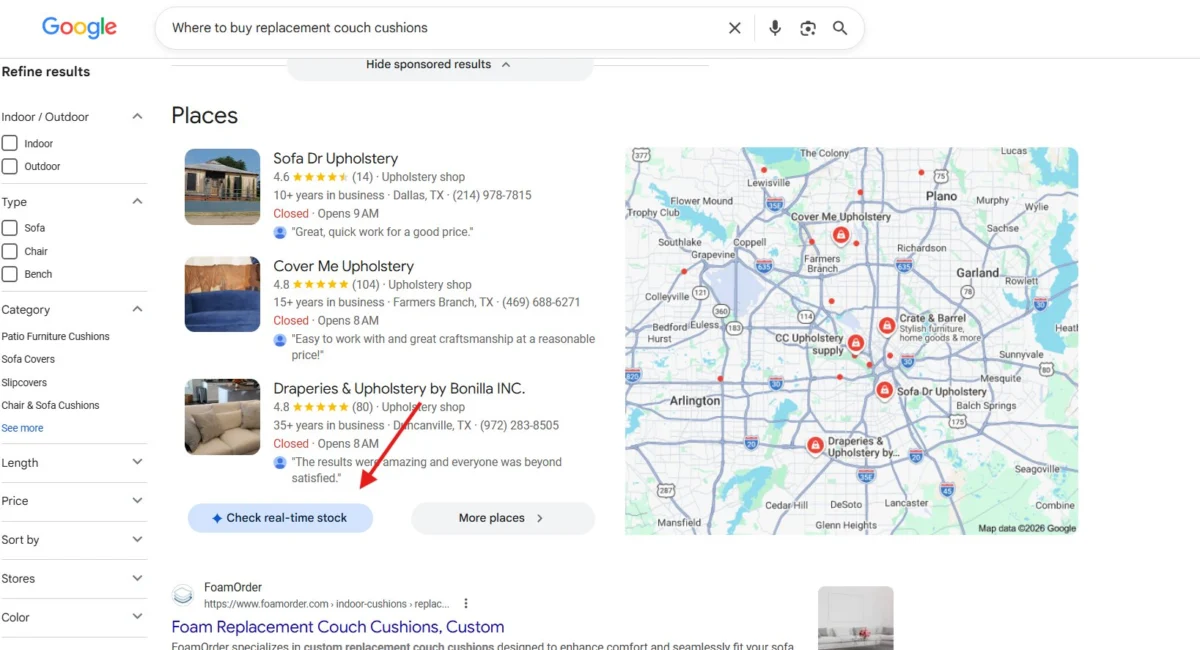
Google is currently testing a significant new feature within its local search results, allowing users to verify the real-time stock and inventory of products directly through the local pack. This initiative marks a further evolution in Google’s ongoing efforts to seamlessly integrate online search with offline retail experiences, potentially transforming how consumers interact with local businesses and plan their purchases. The new functionality, identified by a distinctive “Check real-time stock” button, appears alongside the existing “more places” option in the local pack, promising a new level of transparency and convenience for shoppers.
The discovery of this testing phase was attributed to Sachin Patel, who shared screenshots of the feature on X (formerly Twitter). The visual evidence provided by Patel illustrates a multi-step user experience. Upon clicking the “Check real-time stock” button, users are prompted with a question, indicating an interactive element designed to refine the search. Subsequently, the system confirms the specific location the user wishes to query, ensuring accuracy in inventory checks. This interactive flow suggests Google’s commitment to delivering precise, user-centric information. Furthermore, the testing appears to extend to Google’s AI Mode, with additional screenshots confirming its integration within this advanced search environment, signaling a future-forward approach to local commerce.
The Evolution of Google’s Local Commerce Strategy
This new real-time stock checking feature is not an isolated development but rather an extension of a series of strategic moves by Google aimed at bridging the gap between digital discovery and physical retail. For years, Google has been investing heavily in technologies and features designed to enhance the local shopping experience, recognizing the immense value in connecting consumers with nearby businesses. The foundational principle behind these efforts is to minimize friction in the buying journey, from initial product search to in-store purchase.

One of the most notable predecessors to this current test is the “call stores and track inventory and prices” feature, which Google has been gradually rolling out. This functionality allowed users to leverage Google’s AI capabilities to inquire about product availability and pricing at specific stores, often through automated calls. This move demonstrated Google’s ambition to move beyond simple directory listings and offer actionable, real-time insights.
Further back in Google’s innovation timeline, features like “Ask for me” and the more widely recognized Duplex AI system laid the groundwork for complex conversational interactions. Duplex, initially showcased for tasks like making restaurant reservations and booking hair appointments, demonstrated Google’s ability to conduct natural language conversations on behalf of users. While these earlier iterations focused more on service-based interactions, the underlying AI and automation principles are clearly being adapted and refined for product-centric queries. The progression from Duplex’s automated calls to “Ask for me” for basic store inquiries, and now to real-time stock checks, illustrates a clear, long-term vision to make Google a comprehensive personal shopping assistant.
The Retail Landscape and Consumer Demand for Real-Time Information
The introduction of real-time stock checks aligns perfectly with prevailing trends in consumer behavior and the broader retail landscape. In an increasingly digital world, consumers expect instant access to information, and product availability is a critical factor in their purchasing decisions. A 2023 study by Statista revealed that approximately 80% of shoppers conduct online research before making an in-store purchase, with a significant portion specifically checking for product availability. Another report indicated that out-of-stock experiences lead to an estimated $1 trillion in lost retail sales globally each year, highlighting the immense financial impact of inventory inaccuracies.
The rise of omnichannel retail, where customers seamlessly move between online and offline channels, has further amplified the need for accurate, real-time inventory data. Services like “Buy Online, Pick Up In-Store” (BOPIS) have become incredibly popular, especially since the COVID-19 pandemic, with many retailers reporting double-digit growth in BOPIS usage. However, the success of such models hinges entirely on reliable inventory information. A consumer arriving at a store only to find an item they were assured was in stock is a significant source of frustration and can lead to brand disloyalty.

This Google feature directly addresses these pain points. By providing real-time stock information directly within search results, Google empowers consumers to make more informed decisions, reducing wasted trips and enhancing overall satisfaction. For retailers, it presents an opportunity to capture demand that might otherwise be lost due to perceived unavailability or the inconvenience of manually checking stock.
Technical Implications and Integration Challenges for Businesses
While the benefits for consumers are evident, the implementation of a widespread real-time stock checking system presents significant technical and logistical challenges for businesses, particularly for smaller enterprises. Large retail chains often have sophisticated Enterprise Resource Planning (ERP) and Inventory Management Systems (IMS) that can, in theory, integrate with external platforms. However, even for these giants, ensuring real-time accuracy across thousands of SKUs and multiple store locations is a complex undertaking.
For small and medium-sized businesses (SMBs), the challenge is even greater. Many SMBs still rely on manual inventory tracking or less sophisticated systems that do not offer robust API access for real-time data sharing. Integrating their inventory data with Google’s platform would require investment in new software, hardware, or significant process overhauls. Google would likely need to provide robust, easy-to-implement integration tools and potentially financial incentives or support programs to encourage widespread adoption among its vast network of local business profiles.
The accuracy of the data is paramount. A system that frequently provides incorrect stock information could quickly erode user trust and become counterproductive. This necessitates robust data validation, error handling, and frequent updates from retailers. Google’s role would extend beyond merely displaying data; it would likely involve setting standards for data feeds and potentially developing mechanisms to verify the reliability of the information provided by businesses.

Broader Impact and Implications for Local SEO and Marketing
The introduction of real-time stock checks will have profound implications for local search engine optimization (SEO) and marketing strategies. Businesses that can seamlessly integrate their inventory data with Google will gain a significant competitive advantage.
Enhanced Visibility and Click-Through Rates:
Businesses displaying real-time stock availability are likely to stand out in local search results. A “Check real-time stock” button or an immediate display of “In Stock” could significantly increase click-through rates to their local listings or even drive direct foot traffic. This shifts the focus of local SEO from just visibility to actionable, transactional visibility.
Increased Foot Traffic and Sales:
By removing uncertainty about product availability, Google can directly facilitate in-store visits and purchases. Consumers are more likely to visit a store knowing their desired item is waiting for them, reducing bounce rates and increasing conversion opportunities for physical locations. This feature effectively transforms Google’s local pack from a directory into a dynamic shopping tool.
Competitive Differentiator:
Initially, businesses that adopt this feature early will gain a strong competitive edge. Those that lag in integrating their inventory systems may find themselves at a disadvantage, as potential customers opt for stores offering immediate stock confirmation. This could accelerate the digital transformation for many traditional retailers.

Data-Driven Marketing Opportunities:
Access to real-time inventory data could open new avenues for highly targeted local advertising. Businesses could potentially run campaigns promoting specific products that are currently in stock at nearby locations, or even dynamically adjust ad creatives based on inventory levels. This moves local marketing closer to the precision seen in e-commerce advertising.
Shift in Local Search Ranking Factors:
While Google’s local ranking factors are complex and multi-faceted, it is reasonable to infer that the provision of real-time, accurate inventory data could become a valuable signal. Businesses that consistently provide high-quality, up-to-date information might see an uplift in their local search visibility, rewarding those who invest in data integration.
Competing in the Local Commerce Arena
Google’s foray into real-time stock checks also positions it strategically within the broader competitive landscape of local commerce. While Google Search and Maps dominate general local discovery, platforms like Amazon, with its robust inventory management and fulfillment network, pose a significant challenge. Amazon has been increasingly investing in local delivery and pickup options, blurring the lines between online and offline retail. By offering real-time stock checks, Google aims to provide a comparable level of convenience for traditional brick-and-mortar shopping, leveraging its unparalleled reach in local search.
Other platforms like Yelp, Apple Maps, and various niche local directories also play a role in connecting consumers with local businesses. However, none currently offer the integrated, real-time inventory checking functionality that Google is testing. This feature could further solidify Google’s position as the primary gateway for local shopping information, making it even more indispensable for both consumers and businesses.

The Future of Omnichannel Retail and Google’s Vision
The testing of real-time stock checks underscores Google’s commitment to shaping the future of omnichannel retail. The company’s vision appears to be one where the distinction between online and offline shopping diminishes, replaced by a seamless, integrated experience. Consumers will be able to discover products online, verify their availability locally, and then choose to purchase online for pickup, or visit the store with confidence.
This move also aligns with the broader trend of “discovery commerce,” where products are found and purchased not just through explicit searches, but also through contextual recommendations and intuitive tools. By embedding stock information directly into the local pack, Google is making product discovery more actionable and less fragmented.
Ultimately, this feature has the potential to empower both consumers and businesses. For consumers, it offers unparalleled convenience and reduces purchase friction. For businesses, it provides a powerful tool to drive foot traffic, increase sales, and compete effectively in an increasingly digital marketplace. The success of this initiative will hinge on Google’s ability to facilitate seamless data integration for retailers and ensure the accuracy and reliability of the real-time information provided. As the tests continue, the retail industry will be watching closely to see how this new capability reshapes the landscape of local commerce.