

Email senders worldwide are grappling with a significant paradigm shift in how their campaigns are measured, as Gmail reports substantial declines in open rates over the past few months. Industry insights from Validity reveal some customers experiencing quarter-over-quarter drops of 30 percent or more, with the company’s own engagement data confirming a roughly one-third reduction in Gmail image loading activity, including tracking pixels, since late November 2025. This dramatic change is largely attributed to Gmail’s strategic adjustments, which are reshaping the very foundation of email marketing metrics. Rather than signaling a "depressed" platform, these shifts reflect a deliberate evolution by Google to prioritize user experience, data privacy, and genuine engagement, forcing marketers to recalibrate their strategies and focus beyond traditional vanity metrics.
The Shifting Landscape of Email Engagement: A Historical Context
For decades, email open rates have stood as a cornerstone metric for marketers, offering a seemingly straightforward indicator of campaign reach and initial subscriber interest. However, the accuracy of this metric has been increasingly challenged by technological advancements and privacy-driven initiatives. The mechanism behind open rate tracking typically involves a tiny, invisible image pixel embedded in an email. When the email is opened, this pixel loads, registering an "open" event. Since 2013, Gmail has routed image loading through its proxy servers, a practice that, while enhancing user privacy and security, also contributed to an artificial inflation of open rates by prefetching images, including these tracking pixels, regardless of whether a user actively viewed the email.

The current downturn in reported open rates is widely speculated to stem from Gmail reducing the frequency of this image prefetching. Fewer prefetched pixels inherently translate to fewer recorded opens, even if the actual readership and engagement with the email content haven’t changed. This analysis points to a crucial distinction: the reported decline isn’t necessarily a drop in actual email consumption, but rather a correction in the measurement of that consumption.
This phenomenon is not entirely new to the email marketing ecosystem. In 2021, Apple introduced Mail Privacy Protection (MPP), which similarly forces "false opens" by pre-loading emails via proxy servers, regardless of user interaction. Given that many Gmail users access their accounts through Apple Mail apps, MPP already contributed to artificial open rate inflation for a significant segment of the market. Validity’s earlier investigations into engagement declines at Apple and Yahoo in previous years also highlighted similar trends, driven by features like inbox categories, digest views, AI summaries, and stricter enforcement of bulk sender requirements. These precedents underscore a broader industry movement towards enhanced privacy controls and algorithmic curation, making Gmail’s recent actions part of a larger, ongoing transformation.
Why the Decline in Open Rates is Good News for Savvy Marketers
While initial reports of plummeting open rates might trigger alarm, industry experts and data analysts largely agree that this recalibration is, paradoxically, a positive development. The "false opens" generated by automatic image prefetching often stemmed from inactive subscribers, distorting the true picture of audience engagement. Gmail’s renewed focus on targeting genuinely engaged subscribers means that marketers are now seeing a more accurate representation of who is interacting with their content. This is evidenced by the fact that many senders are not reporting similar declines in clicks, conversions, or revenue, suggesting that actual performance metrics, which reflect deeper engagement, remain stable.

For marketers, this shift compels a move away from optimizing for vanity metrics towards a more holistic understanding of campaign effectiveness. Open rates, while still directionally useful as a health signal—a sudden, unexplained drop might indicate a deeper problem—should no longer be the sole determinant of success or the primary basis for list segmentation and suppression. The emphasis is now firmly on quality over quantity, fostering a subscriber base that is genuinely interested and responsive.
Chronology of Gmail’s Transformative Changes and Their Impact
Gmail’s recent developments represent a multifaceted overhaul of its inbox experience, each contributing to the observed shifts in open rates and demanding a strategic response from email marketers.
-
Increased Enforcement of Bulk Sending Requirements (Effective November 2025):
Gmail significantly tightened its bulk sender requirements, moving from a policy of "soft enforcement" to "active rejection" for non-compliant traffic. This change resulted in an approximate three percent drop in inbox placement rates for some senders, according to the Validity Intelligence Network. When emails are rejected at the SMTP level, they cannot be opened, directly contributing to lower open rates. This enforcement highlights Google’s commitment to reducing spam and improving the overall quality of the inbox environment. Google’s explicit guidelines mandate strong sender authentication (SPF, DKIM, DMARC), low spam complaint rates, and easy one-click unsubscribe options. Non-compliance now carries immediate consequences in the form of hard bounces, signalling a critical need for marketers to audit their technical setup and sending practices.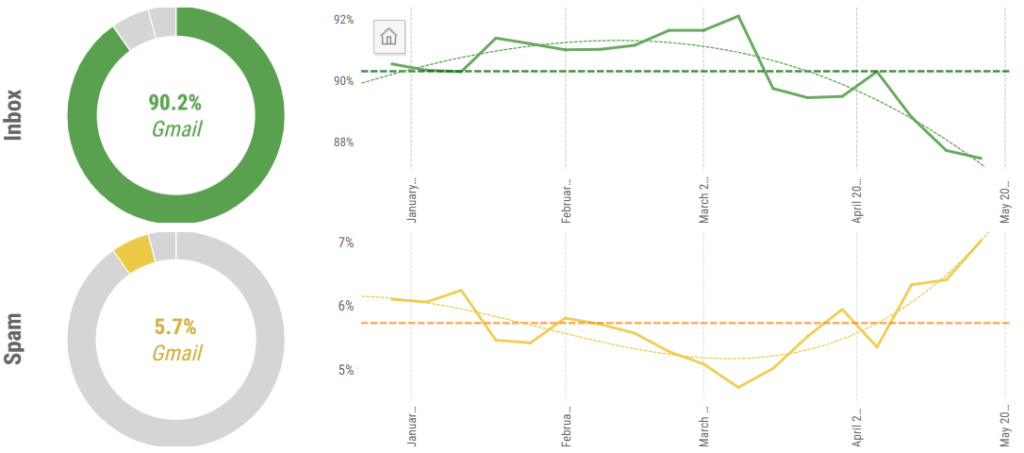
-
Relevance-Sorted Promotions Tab (Gradual Rollout):
In a significant algorithmic change, Gmail now sorts the Promotions tab not by recency, but by engagement and relevance. This means emails from senders with lower engagement scores are placed further down the tab, making them less likely to be seen and opened. This creates a feedback loop: lower visibility leads to fewer opens, which further degrades engagement signals, perpetuating a "vicious circle" of reduced discoverability. This change directly impacts open rates by making them a function of past engagement, rather than just send time. It underscores the paramount importance of content personalization and relevance in achieving inbox visibility. -
Auto-Annotations (Ongoing Feature Evolution):
Gmail has enhanced its ability to automatically extract and display deal details, images, and discount codes from promotional emails directly in the Promotions tab preview, even if senders haven’t manually implemented specific Annotations markup schemas. While beneficial for user convenience, allowing subscribers to quickly identify valuable offers, this feature also means recipients can glean key information without ever opening the email. If an offer’s value proposition is clear from the preview, the incentive to open the message diminishes, creating downward pressure on reported open rates. -
Subscriptions Manager (Launched Mid-2025, Fully Rolled Out to Personal Accounts):
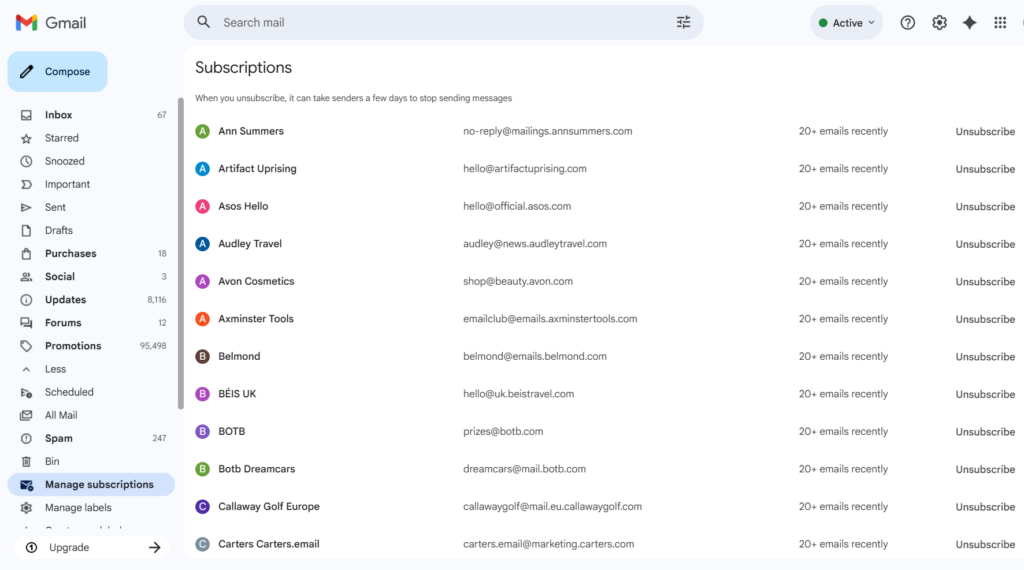
This feature provides users with a centralized dashboard listing all marketing senders, ranked by sending frequency. Critically, it allows subscribers to unsubscribe from any sender’s mail stream with a single click, directly from the dashboard, without needing to open an email. While this can lead to list shrinkage and, consequently, fewer potential opens, the remaining subscriber base is likely to be more engaged and responsive. The impact on open rates here is primarily through list hygiene, removing disengaged subscribers who might otherwise inflate (or dilute) metrics. -
AI-Generated Email Summaries (Rolling Out January 2026):
Gmail began rolling out AI-generated summaries that display automatically when users open emails, presenting 1-2 sentences capturing the key message. The impact on open rates is twofold: there’s ongoing debate whether the AI summarization process itself might involve "auto-opening" emails, potentially inflating opens. More significantly, if subscribers can extract all necessary information from a concise summary, their motivation to read the full email diminishes, thus reducing meaningful opens and clicks. This demands a rethinking of email content structure, prioritizing key information at the outset.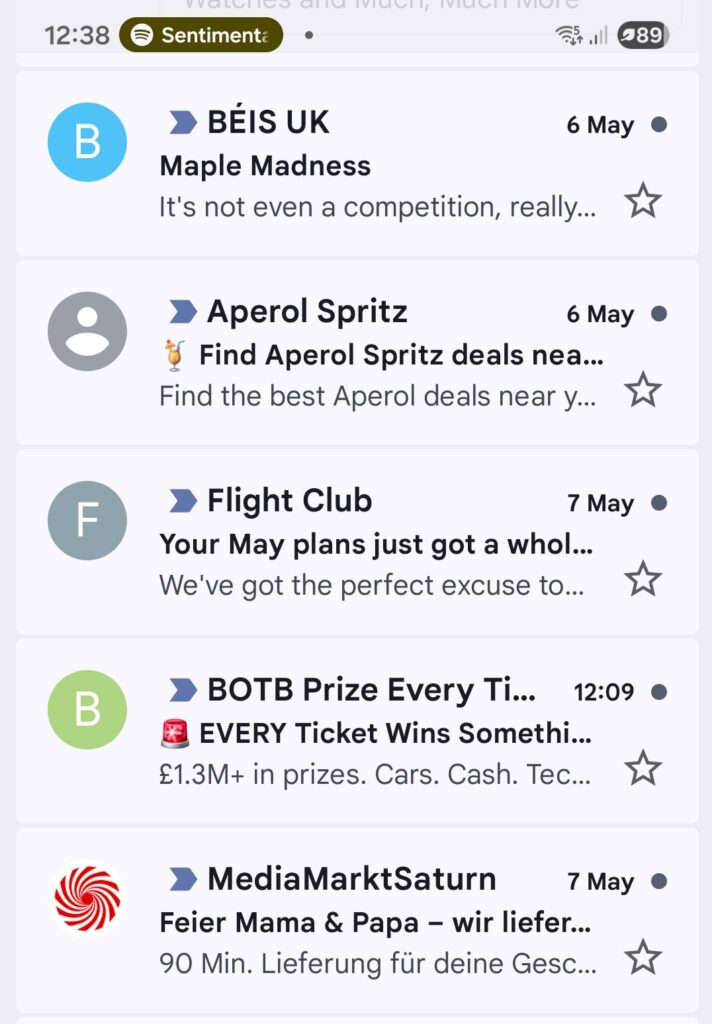
-
Integration of Gemini for Inbox Search and Management (January 2026):
The January 2026 integration of Google’s Gemini AI brought conversational, natural-language search capabilities to the Gmail inbox. Users can now query their email history with prompts like "What discount codes do I have for sportswear?" and receive compiled answers from multiple emails without opening any of them. This advanced search functionality means that information previously requiring an email open can now be retrieved passively. This feature is expected to disproportionately impact low-engagement senders, as users can bypass direct interaction with their emails entirely, potentially exacerbating the "circle of disengagement." -
Message Clipping (Long-standing Issue, Renewed Importance):
While not a new development, Gmail’s long-standing policy of clipping messages with HTML file sizes exceeding 1024 bytes remains a critical factor. Content beyond this threshold is hidden unless the reader explicitly requests to view the full message. Many senders inadvertently place their open tracking pixels and critical elements like unsubscribe links at the very end of their email HTML. If an email is clipped, these elements are not loaded, failing to register an open and potentially leading to increased spam complaints if unsubscribe options are unseen. -
Gmail Email Address Change Feature (Introduced in 2025):
Gmail introduced a feature allowing users to change their primary email address while seamlessly migrating their history. When users leverage this capability, marketing emails sent to the previous address will no longer reach an active, human-readable inbox. This leads to an increase in hard bounces or sustained non-engagement from what were once active addresses. Furthermore, marketers should not expect replacement opens from the new address, as subscribers may have changed addresses precisely to curtail marketing communications, directly impacting open rates from a churned segment. -
Purchases Tab (Late 2025):
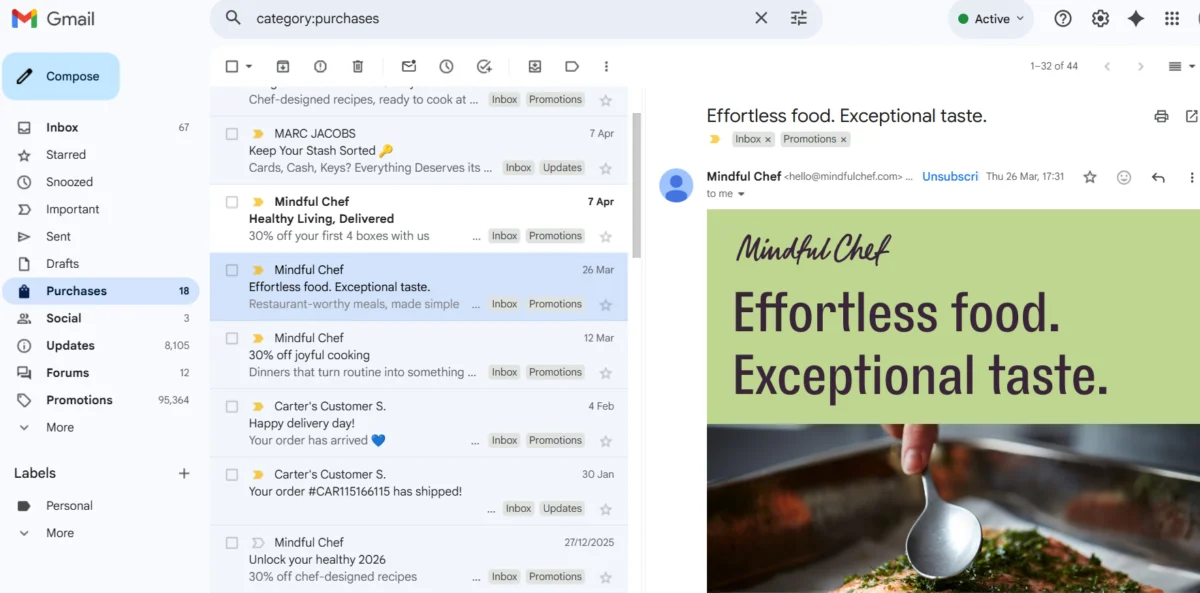
Gmail’s dedicated "Purchases" view, introduced in late 2025, consolidates order confirmations, shipping updates, and delivery notifications. However, marketers have observed instances where promotional emails are inadvertently routed to this tab, often due to containing content related to delivery policies or product information that mimics transactional communications. This miscategorization depresses open rates, as subscribers don’t typically look for marketing messages in this tab, and can erode trust if recipients haven’t recently purchased from the brand.
-
Inactive Accounts (Ongoing Policy):
Google maintains a policy of deleting accounts that have been inactive for two years or more. Activity is broadly defined, including reading/sending emails, using Google Drive, watching YouTube, or signing into third-party apps. This policy ensures a healthier ecosystem by removing dormant accounts, which naturally translates to fewer potential opens from lists that haven’t been meticulously cleaned. While a basic best practice for email marketers, Google’s proactive deletion reinforces the need for rigorous list hygiene.
Strategic Implications for Email Marketers: Adapting to the New Reality
The cumulative effect of these Gmail changes necessitates a fundamental rethinking of email marketing strategies. The era of optimizing for inflated open rates is over; the focus must now pivot towards genuine engagement, compliance, and multi-channel relationship building.
1. Enhancing Deliverability and Compliance:
Marketers must rigorously audit their compliance with Gmail’s bulk sender guidelines. This includes ensuring proper implementation of SPF, DKIM, and DMARC for sender authentication, maintaining extremely low spam complaint rates (below 0.1%), and providing clear, one-click unsubscribe options via the List-Unsubscribe header. Regular monitoring of Google Postmaster Tools V2 and careful review of bounce logs for specific Gmail error codes are crucial for identifying and addressing compliance issues proactively. A clean sender reputation is now more critical than ever, as it directly impacts inbox placement and, by extension, the opportunity for an email to even be seen.
2. Optimizing for Engagement and Relevance:
With the Promotions tab sorted by relevance and AI summarizing content, personalization and content quality are paramount. Marketers should segment Gmail recipients based on their actual engagement (clicks, conversions, website visits) rather than just opens. More aggressive suppression thresholds for inactive segments should be adopted to protect sender reputation and improve overall relevance scores. Content strategy must evolve to front-load value, ensuring the most important information, calls to action, and unique selling propositions are immediately visible, whether in an AI summary, annotation preview, or the opening lines of the email body. Testing offers that require a click, rather than just surfacing a discount code in a preview, becomes a strategic imperative.
3. Adapting to Evolving Inbox Interfaces:
To regain control over how their messages appear, senders should implement Gmail Annotations markup schemas for promotional emails. This allows direct control over featured images, deal badges, and expiration dates, ensuring accuracy and optimizing the "glance value." For AI summaries and Gemini search, content should be structured for clear legibility and extraction by AI. This means using specific deadlines, named actions, structured data markup (where applicable), and clean HTML. The goal is to provide enough compelling information in the summary or preview to entice a click, rather than replacing the need to open the email entirely.
4. Maintaining List Hygiene and Data Quality:
The Subscriptions Manager and Address Change feature highlight the importance of proactive list hygiene. Brands sending high-frequency emails should evaluate whether reducing cadence could improve engagement and reduce unsubscribes. For brands using multiple "From" addresses, ensuring each has a unique List-Unsubscribe header allows subscribers to "opt-down" from specific content streams rather than a blanket opt-out. Monitoring hard bounces and sustained non-engagement for previously active Gmail addresses is crucial for identifying churned subscribers. Email list management should focus on nurturing active relationships and promptly removing unengaged users, well before Google’s 24-month inactive account policy takes effect.
5. Rethinking Key Performance Indicators (KPIs):
The most fundamental adaptation involves shifting the primary focus from open rates to more meaningful engagement metrics. While open rates still provide a directional pulse, clicks, conversions, revenue per email, and customer lifetime value (CLTV) should take precedence. This requires a deeper integration of email marketing data with broader customer relationship management (CRM) and analytics platforms. Marketers need to understand the entire customer journey and how email contributes to business objectives, rather than fixating on a single, increasingly unreliable, metric. Furthermore, developing strategies for relationship building that extend beyond the email address—such as loyalty programs, first-party identity resolution, and progressive profiling—will be vital in an environment where email addresses themselves can change or become less central to customer interaction.

The Road Ahead: A Paradigm Shift in Email Marketing
Gmail is not "broken"; it is undergoing a profound evolution, mirroring broader industry trends towards enhanced user control, privacy, and intelligent content curation. The decline in reported open rates is less a crisis and more a clarification—a necessary re-calibration that provides marketers with a more accurate picture of genuine subscriber interest. The senders who embrace these changes as an opportunity to sharpen their strategy, prioritize engagement quality over sheer volume, ensure rigorous compliance, and adapt to AI-driven inbox environments will not only navigate this shift successfully but emerge stronger and more effective. The future of email marketing is less about shouting to the largest possible audience and more about whispering relevant, timely, and valuable messages to a truly attentive one. Marketers are encouraged to delve deeper into these developments, perhaps by engaging with specialized webinars and resources, to fully grasp the implications and implement the necessary design tweaks, testing protocols, and strategic adjustments for this new era of email engagement.








