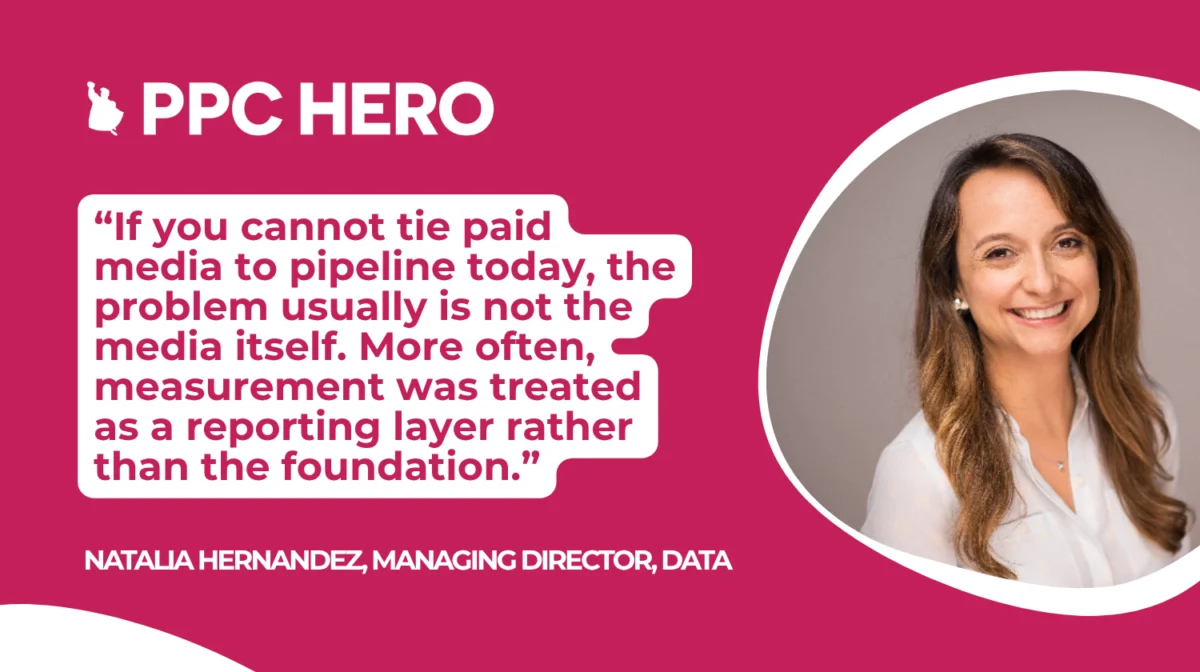
The persistent disconnect between paid media performance metrics and tangible business outcomes, particularly in the B2B sector, is a growing concern for marketing leaders. While metrics like cost per click (CPC) and return on ad spend (ROAS) may appear healthy on individual platforms, the ability to translate these figures into a defendable pipeline number for financial stakeholders remains a significant challenge. This gap arises from a fundamental misunderstanding of the B2B buyer journey, which is characterized by lengthy sales cycles, multiple decision-makers, and a conversion process that extends far beyond a single click.
The core issue lies not in the sophistication of advertising platforms or campaign tactics, but in the foundational approach to measurement. Many B2B marketing teams operate with a reporting layer that focuses on platform-specific data, failing to establish a robust connection to the Customer Relationship Management (CRM) system and, subsequently, the sales pipeline. This often results in a situation where marketing can demonstrate campaign efficiency, but struggles to quantify its direct contribution to revenue generation. The silence that often follows a question about pipeline contribution underscores the urgency for a more integrated and business-aligned measurement strategy.
The Criticality of Pre-Campaign Integration: Wiring Media to the CRM
The most effective solution to this measurement dilemma begins long before a single campaign is launched. It requires a disciplined approach to tracking and integration, establishing a clear line of sight from media touchpoints to CRM outcomes. This foundational work, often overlooked due to its unglamorous nature, is paramount to building a credible pipeline attribution model.
Historically, measurement problems in B2B marketing have stemmed from a lack of foresight in campaign setup. Campaign IDs are frequently not linked to CRM records, UTM parameters are inconsistently applied or delayed, and lead forms fail to synchronize with campaign objects in systems like Salesforce. By the time a request arises to identify the source of a crucial first meeting or qualified lead, the digital breadcrumbs have often vanished, rendering accurate attribution impossible.
A proactive strategy dictates that every campaign be meticulously tagged at its inception. Lead forms must be configured to sync directly with CRM campaign objects, ensuring that every submission is associated with the originating marketing effort. Crucially, conversion tracking within advertising platforms, such as Google Ads and LinkedIn, needs to be configured to connect to tangible pipeline outcomes. This includes not just leads, but also Marketing Qualified Leads (MQLs), first meetings, and CRM-defined lead quality scores. Implementing these connections before any campaign optimizations or changes are made establishes a baseline of accurate data.
This baseline is what enables a marketer to confidently determine whether a subsequent campaign adjustment has impacted a business metric, such as pipeline value, or merely a platform-specific number. When executed with precision, this integrated approach allows for the comprehensive tracking of a prospect’s journey, from their initial interaction with a paid ad to becoming an MQL, then a Sales Qualified Lead (SQL), and ideally, culminating in a high-intent action that leads to a closed-won deal. This holistic view aligns marketing efforts with the operational realities and language of the sales team, providing finance with a transparent and trustworthy narrative, rather than an abstract analytics story.
The Illusion of a Single Attribution Model: Embracing a Multi-Layered Approach
A candid assessment of B2B attribution reveals a fundamental truth that many agencies and platforms may be reluctant to articulate: no single attribution model can perfectly capture the complexity of B2B pipeline generation. The notion of a singular "source of truth" is often a simplification that masks the nuances of multi-channel marketing and diverse buyer journeys.
The most robust and defensible approach involves employing a layered system of attribution models that cross-reference and validate each other. This layered strategy addresses the inherent blind spots of individual methodologies.
- Multi-Touch Attribution (MTA): This model links various ad interactions and self-reported data from prospects to CRM outcomes. While valuable for understanding the sequence of touchpoints, MTA can be biased towards the last trackable click, potentially over-crediting immediate engagement over earlier influential touchpoints. For instance, a prospect might see a display ad, then conduct a branded search, and finally click on a paid search ad that leads to conversion. MTA would likely credit the paid search ad most heavily.
- Causal Modeling (Econometric Methods): This approach leverages statistical techniques to measure the contribution of each marketing channel to pipeline generation while controlling for external variables such as seasonality, market trends, and overall brand demand. Unlike MTA, which focuses on individual user journeys, causal modeling provides a more macro-level understanding of channel effectiveness. This method is particularly adept at isolating the incremental impact of marketing spend. For example, it can discern whether an increase in ad spend directly correlates with an increase in pipeline, or if that increase would have occurred regardless due to broader market conditions.
- Geo-Based Incrementality Testing: This rigorous method aims to definitively prove whether paid media efforts have driven net-new pipeline or if they have merely captured demand that would have materialized organically. By comparing performance in test markets exposed to paid media with control markets that are not, incrementality testing provides a direct measure of incremental lift. This is often considered the gold standard for proving true impact, though it can be resource-intensive and slower to implement.
By running these three layers in concert, marketing teams can achieve a more accurate and defensible understanding of their performance. MTA provides granular journey insights, causal modeling offers strategic channel allocation based on controlled impact, and incrementality testing provides the ultimate validation of net-new business. This triangulation of data mitigates the risk of relying on a single, potentially flawed, perspective. In complex B2B environments, causal modeling, in particular, offers a reliable foundation for critical budget decisions, as it can isolate the impact of marketing activities from background noise.

Speaking the Language of Finance: Reporting in Business Terms
A measurement framework, no matter how sophisticated, is ultimately only as valuable as the confidence it inspires in financial stakeholders. To achieve this, marketing reporting must transcend internal marketing jargon and speak the language of finance. This means aligning metrics with those already used by the CFO to manage the business.
Revenue-based planning offers a potent framework for this alignment. It begins with a thorough audit of marketing spend against historical and projected revenue. This process helps to accurately size the revenue opportunity and allows for iterative refinement of strategies. The metrics that resonate most strongly with finance are those that directly inform profitability and long-term growth, such as:
- Contribution Margin: The revenue remaining after deducting variable costs, indicating profitability before fixed costs.
- Customer Lifetime Value (LTV) to Customer Acquisition Cost (CAC) Ratio: A key indicator of marketing ROI and sustainable growth, where a higher ratio signifies greater efficiency and profitability.
- Payback Period: The time it takes for marketing investment to be recouped through generated revenue, a critical metric for cash flow management.
Metrics like cost per first meeting and cost per pipeline dollar belong in this same critical conversation. They provide a direct link between marketing activities and sales-stage progression. Conversely, metrics such as impressions and clicks, while useful as directional signals for campaign health, hold little weight in a serious pipeline review with finance. They are too abstract and too far removed from tangible business outcomes.
Modeling tools play a crucial role in bridging this gap. Marketing Mix Modeling (MMM), for instance, can tie marketing spend to key stages in the funnel, including first meetings, MQLs, and pipeline value, directly through CRM data. Geo-holdout testing, a component of incrementality testing, further validates the effectiveness of spend by demonstrating which geographic markets are genuinely responding to marketing efforts rather than merely exhibiting correlation. The ultimate objective of this reporting discipline is not to achieve analytical complexity for its own sake, but to generate a number that can be confidently defended in front of the board of directors.
The Transformative Power of Measurement-Led Strategy
The tangible benefits of prioritizing measurement and aligning it with business objectives are evident in numerous case studies where strategy has been fundamentally reshaped by data. These are not instances of minor optimization, but rather significant shifts in performance driven by a clearer understanding of what truly drives pipeline.
- Integrated Search for a B2B SaaS Company: By shifting budget allocation from broad click volume to pipeline signals, an integrated search program for a B2B SaaS company achieved a 27% reduction in cost per MQL. Simultaneously, conversion rates improved by 18%, and qualified traffic increased by 22%. This demonstrates how focusing on pipeline contribution, rather than vanity metrics, can lead to dramatic improvements in efficiency and lead quality.
- Salesforce Lead Scoring Integration for a Global Technology Company: A global technology firm integrated Salesforce lead scoring directly into their Google Ads campaigns. By assigning real dollar values to each lead tier based on their sales-qualified status, the company was able to grow their ROAS by an impressive 138%. This example highlights how deep integration with sales intelligence can unlock significant performance gains.
These successes were not born from more sophisticated bidding algorithms or a single "trick." Instead, they emerged from a deliberate commitment to measuring the right things first, and then systematically optimizing towards those defined business outcomes. This shift in focus from platform metrics to business impact is the true differentiator in modern B2B marketing.
Conclusion: The Foundation for Defensible Pipeline Numbers
If a B2B marketing team is currently unable to directly tie its paid media efforts to pipeline contribution, the root cause is rarely the media itself. More frequently, the issue lies in how measurement has been approached – treated as a secondary reporting layer rather than the fundamental bedrock of strategy.
The path forward is clear: establish a direct connection to the CRM before embarking on campaign optimization. Embrace a multi-layered attribution approach, recognizing that no single model offers complete honesty. Crucially, report performance using the metrics that your CFO and finance department already trust and utilize to run the business.
By adopting this integrated, business-aligned measurement philosophy, the next time the question arises about paid media’s contribution to the pipeline, marketers will not only have a number, but also the robust data and clear methodology to confidently defend it. This elevates marketing from a cost center to a demonstrably accountable revenue driver, essential for sustained growth and strategic investment.