The strategic significance of a robust audience list in the digital economy is paramount, serving as a direct conduit to engaged individuals. This audience, metaphorically represented as a room filled with eager listeners, forms the bedrock of sustainable digital engagement. When content resonates, this initial interest blossoms into deeper interaction, fostering inquiries, driving product or service acquisitions, and ultimately cultivating brand advocates who organically expand the community. Traditionally, the primary mechanism for cultivating such a list has been the ubiquitous signup form integrated within a dedicated website, inviting visitors to subscribe to content updates. However, a significant paradigm shift is underway, addressing the critical question of audience acquisition for entities operating without a conventional web presence. The answer lies in the increasing sophistication and accessibility of hosted signup forms, a solution that democratizes list building and empowers a broader spectrum of entrepreneurs and creators.
The Indispensable Power of Direct Audience Engagement
In an era characterized by algorithm shifts and fragmented attention spans across numerous digital platforms, the direct relationship forged through an email list stands as an unparalleled asset. Unlike social media followers, whose access is mediated by platform algorithms and subject to arbitrary changes, email subscribers represent a voluntarily opted-in audience, granting businesses and individuals direct, unimpeded communication. This direct channel fosters loyalty, trust, and a higher conversion rate, making email marketing consistently one of the most effective digital marketing strategies. Industry reports frequently underscore its superior return on investment (ROI); for instance, various studies consistently show email marketing generating an average of $36 to $42 for every dollar spent, far surpassing other digital channels. This compelling data highlights why cultivating an email list is not merely an optional add-on but a foundational element for any entity seeking sustained digital growth.
The power of this direct connection extends beyond mere communication; it enables segmentation, personalization, and targeted messaging that resonates deeply with specific audience interests. This capability is crucial for nurturing leads, announcing new offerings, sharing valuable content, and building a community around a brand or personality. For small businesses, solopreneurs, artists, and content creators, the ability to build and own their audience list provides a degree of stability and control often lacking in volatile social media environments. It mitigates the risks associated with platform dependency, ensuring that a core audience remains accessible regardless of external changes or policy shifts.
Bridging the Digital Divide: The Role of Hosted Signup Forms
The concept of a hosted signup form emerged as a crucial innovation to address a prevalent challenge: how to effectively gather subscriber information without the necessity, cost, or complexity of maintaining a full-fledged website. For many nascent businesses, individual consultants, and aspiring content creators, the initial investment in website development and maintenance can be a significant barrier. Hosted signup forms bypass this hurdle entirely.
A hosted signup form is, at its core, a standalone web page dedicated solely to collecting email addresses. It possesses a unique, shareable URL, liberating it from the confines of a parent website. This characteristic allows it to be deployed across a vast array of digital and even physical touchpoints: shared directly on social media platforms like Facebook, Instagram, X (formerly Twitter), and LinkedIn; embedded in instant messages; or even physically printed on business cards, flyers, or event banners via QR codes. Its singular focus on subscription minimizes distractions, streamlining the user experience and maximizing conversion rates.
Beyond its utility for those without a website, the hosted signup form also serves as a strategic asset for entities that do possess a web presence. It functions as a robust backup in scenarios where a primary website might experience downtime, ensuring continuous list-building efforts. Furthermore, for specific campaigns or direct outreach initiatives where a clean, focused subscription path is desired, devoid of website navigation or extraneous content, a hosted form provides an optimized solution. Digital marketing strategists often advocate for dedicated landing pages for specific calls to action, and a hosted signup form perfectly fulfills this role for list building.
Technological Advancements: AI-Powered Form Creation
The evolution of digital marketing tools has been marked by a consistent drive towards greater accessibility and efficiency. The advent of artificial intelligence (AI) has significantly accelerated this trend, particularly in areas like content generation and user interface design. A prime example of this innovation is the AI Signup Form Builder, such as the one offered by AWeber, which represents a significant leap forward in democratizing marketing technology.
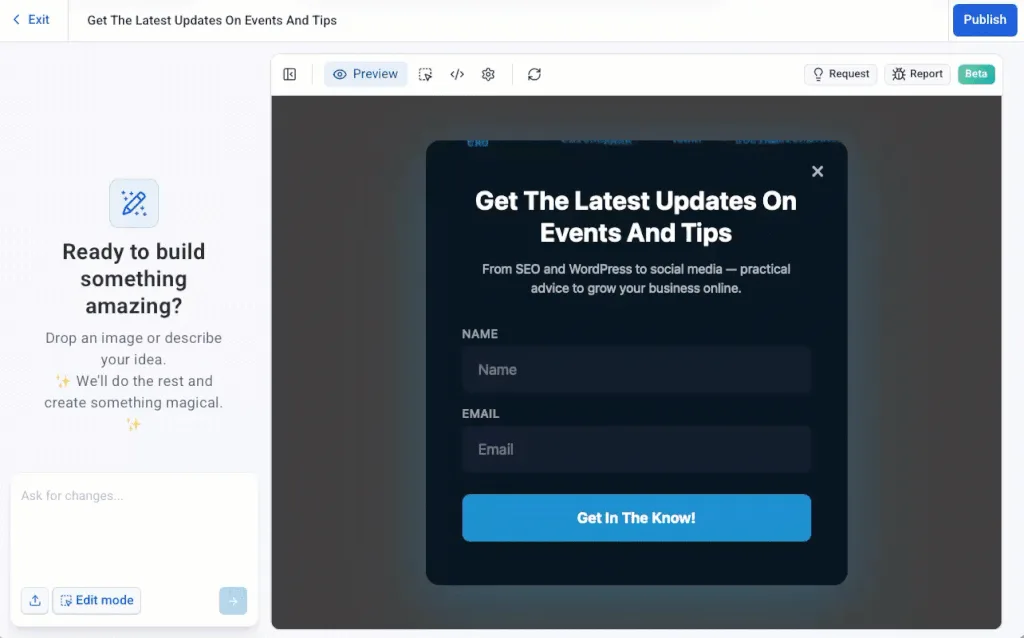
This AI-driven tool streamlines the creation of professional, brand-aligned signup forms from a simple text prompt. Users can describe their business or the purpose of their list, and the AI algorithm intelligently generates a complete hosted signup form. This includes crafting compelling headlines, writing concise descriptions, and even suggesting design elements like color schemes and layouts that resonate with the described brand identity. This process drastically reduces the time and specialized design knowledge traditionally required to create an effective form, making it accessible to individuals with minimal technical or design expertise.
The typical workflow for creating such a form is remarkably efficient:
- Accessing the Builder: Users navigate to the designated AI Signup Forms section within their email marketing platform, such as AWeber’s Pages & Forms interface.
- Describing the Business: The core of the AI’s functionality lies in its ability to interpret natural language. Users input a brief description of their business, their target audience, or the value proposition of their email list. For example, "A weekly newsletter for aspiring home chefs featuring quick, healthy recipes and meal prep tips."
- Review and Customization: Once the AI generates the initial form, users are presented with a ready-to-publish draft. This draft typically includes a suggested headline, descriptive text explaining the benefits of subscribing, and a clean, responsive design. Users then have the flexibility to fine-tune any element – adjusting colors, fonts, layout, or refining the text – to perfectly align with their brand voice and aesthetic preferences. Alternatively, for those seeking rapid deployment, the AI-generated form can be published as-is.
- Retrieving the Hosted URL: Upon publication, the platform provides a unique, shareable URL. This link is the gateway to the new hosted signup form, ready to be distributed across any digital or physical channel.
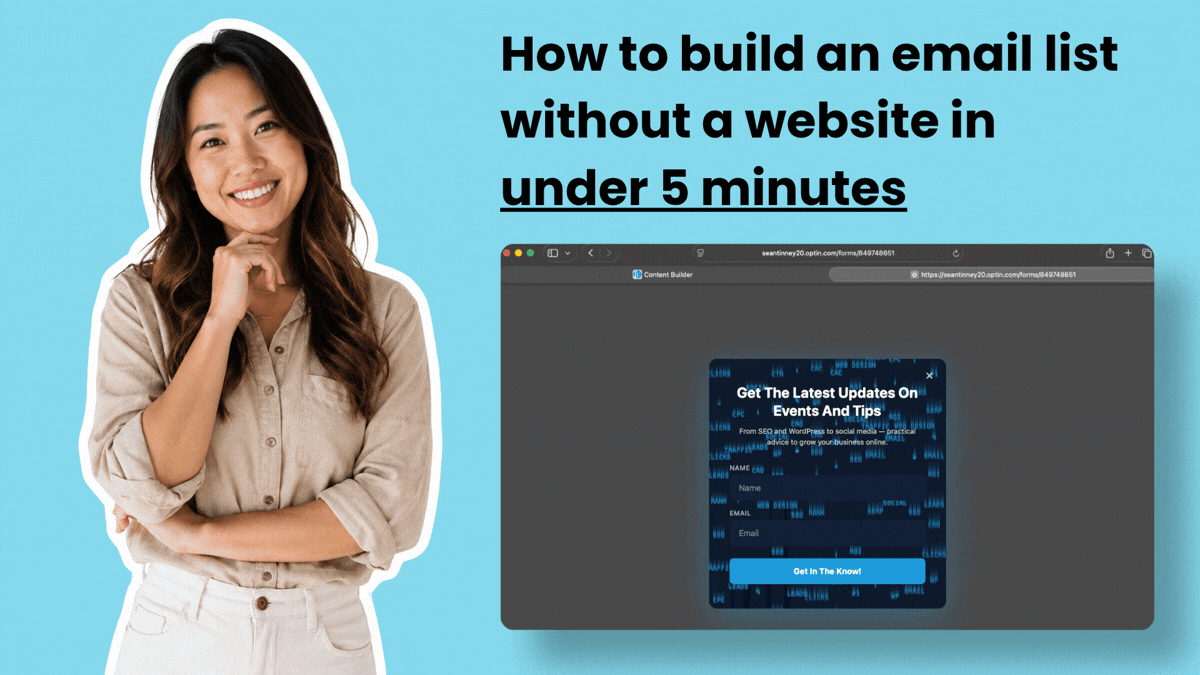
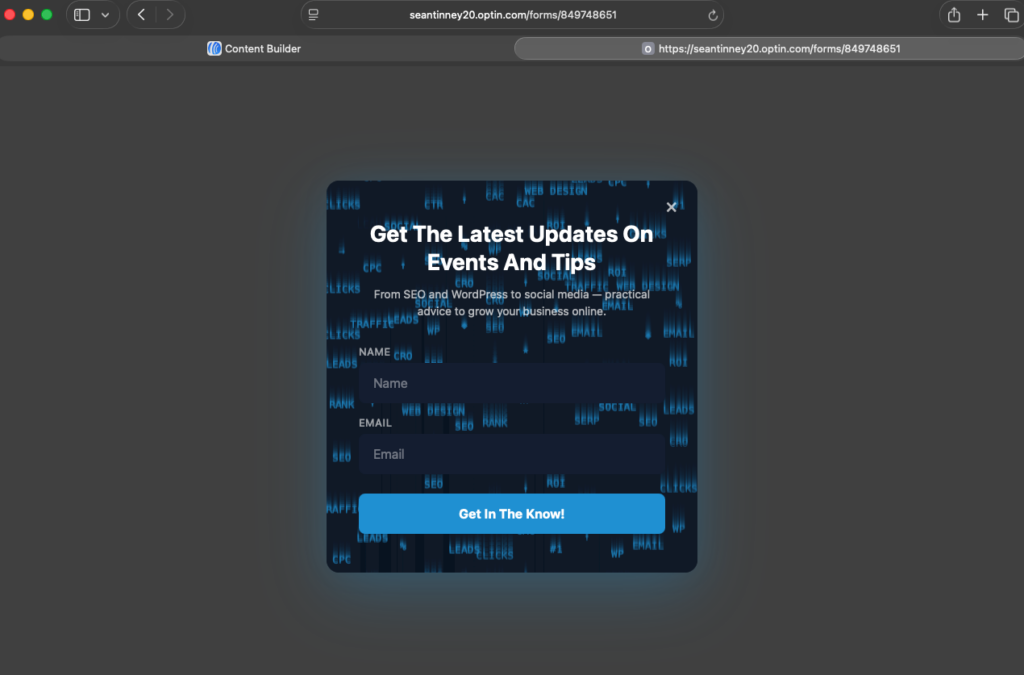
This entire process can often be completed in less than five minutes, marking a significant improvement in workflow efficiency. The AI handles the initial creative and technical heavy lifting, providing a robust first draft that can be used immediately or easily refined. This "no-code" approach empowers entrepreneurs to focus on their core business activities while leveraging sophisticated tools to build their audience effectively. The screenshot provided within the original article, depicting an AI-generated signup form hosted on a URL, visually reinforces the simplicity and efficacy of this modern approach, showcasing a professional interface born from a brief input. Another illustrative GIF further demonstrates the step-by-step process, highlighting the intuitive user experience.
Strategic Deployment: Maximizing Reach Without a Website
Possessing a hosted signup form is merely the first step; effective deployment is crucial for maximizing its reach and impact. The key lies in strategically placing the form’s unique URL where the target audience naturally congregates and is most receptive.
-
Leveraging Social Media Platforms:
Social media channels are vibrant hubs of audience activity, making them ideal for promoting a hosted signup form. Instead of simply dropping a link, the strategy involves integrating the call to action within engaging content. Businesses and creators should actively encourage their followers on platforms like Facebook, Instagram, X, LinkedIn, and TikTok to join their email list by clearly articulating the exclusive value proposition.For instance, a compelling social media post might read: "Every Tuesday, I send out one exclusive email featuring a new, healthy recipe and a complete grocery list – no spam, no fluff, just delicious inspiration! Sign up here: [Your Hosted Form URL]." This approach not only provides the link but also sets clear expectations and highlights tangible benefits.
Beyond direct posts, the link can be strategically placed in various high-visibility areas:
- Bio Link: Most social media platforms allow for a single clickable link in the profile bio. This is a prime location for the hosted signup form.
- Pinned Posts: On platforms like X or Facebook, a post promoting the email list can be pinned to the top of the profile, ensuring it remains visible.
- Stories and Reels: Utilizing interactive features like "swipe up" links (where available) or simply displaying the URL prominently in video content can drive significant traffic.
- Direct Messages: When interacting with followers, the link can be shared as a personalized recommendation.
When sharing the AWeber hosted form link on platforms like Facebook, the name chosen for the form often becomes the preview text, emphasizing the importance of selecting a clear and enticing name to capture attention and encourage clicks.
-
Including in Guest Posts and Collaborations:
Guest blogging and collaborative content creation are powerful strategies for expanding reach by tapping into established audiences. When contributing an article to another blog, participating in a podcast, or collaborating on a social media campaign, including a link to the hosted signup form is an effective way to convert newfound exposure into direct subscribers.Within a guest blog post, the link can be naturally integrated into the content, perhaps as a resource for further reading, or more commonly, prominently placed within the author’s bio or signature. A clear call to action like, "If you enjoyed this content and wish to receive more insights directly, subscribe to my newsletter here," guides interested readers to the signup form. This strategy leverages the credibility of the host platform to endorse the guest’s expertise, making the invitation to subscribe more compelling.
-
Collecting Emails In-Person with QR Codes:
The digital realm is not the only frontier for list building. Physical interactions present unique opportunities, significantly streamlined by technologies like QR codes. By generating a QR code that directly links to the hosted signup form’s URL, businesses can bridge the gap between offline engagement and online subscription.This strategy is particularly effective for:
- Retailers and Market Vendors: A small business owner at a farmer’s market or craft fair can display a QR code on their stall signage, product packaging, or business cards. Customers can instantly scan the code with their smartphone, fill out the form, and join the list before leaving the premises.
- Event Organizers and Speakers: At conferences, workshops, or public speaking engagements, a QR code displayed on presentation slides, event programs, or networking materials allows attendees to subscribe on the spot, capturing interest at its peak.
- Service Providers: Consultants, coaches, or freelancers can include a QR code on their physical marketing materials or during in-person consultations, providing a seamless way for prospects to stay connected.
This method eliminates the need for manual data entry, physical signup sheets, or the requirement for a potential subscriber to remember a URL later, thus reducing friction and increasing conversion rates in real-world scenarios.
The Evolution of Digital Presence: When to Consider a Full Website
While hosted signup forms and dedicated landing pages are exceptionally powerful for initiating and sustaining audience growth, there comes a point in the trajectory of many businesses or personal brands where a full-fledged website becomes a strategic necessity. Recognizing this inflection point is crucial for continued scalable growth.
Key indicators that signal the readiness for a website upgrade include:
- Expansion of Content Strategy: When the ambition extends beyond short-form content or regular newsletters to include long-form articles, detailed blog posts, comprehensive guides, or resource libraries, a website provides the necessary architecture for organization and discoverability. A website allows for sophisticated content management systems (CMS) that can categorize, tag, and optimize extensive content archives for search engines.
- Direct E-commerce Integration: If the primary objective shifts towards selling products or services directly online, with integrated shopping carts, secure payment gateways, inventory management, and order fulfillment systems, a dedicated e-commerce website becomes indispensable. While some landing page builders offer basic product sales, a full website provides the robust infrastructure required for a scalable online store.
- Need for Multiple, Interconnected Pages: As an entity grows, the demand for various informational pages increases. This includes an "About Us" or "About Me" section detailing the brand’s story and mission, dedicated "Services" or "Products" pages with detailed offerings, "Testimonials" or "Case Studies" to build social proof, and a professional "Contact Us" page. A website provides a cohesive navigation structure for these elements.
- Brand Authority and Discoverability: As a brand gains recognition, its audience will increasingly search for it by name. A professional website serves as the ultimate digital home base, enhancing brand credibility and authority. It provides a centralized hub for all information and acts as a primary destination for search engine traffic, enabling better control over online perception and narrative. Industry research indicates that businesses with a professional website are often perceived as more credible and trustworthy by consumers.
Until these specific needs arise, the combination of a hosted signup form and strategically designed landing pages (which can also be created without a full website using many email marketing platforms) remains an incredibly effective and cost-efficient "home base." These tools are perfectly capable of collecting emails, delivering lead magnets (such as free e-books or checklists offered in exchange for an email address), and triggering automated email workflows that nurture subscribers. This lean approach allows entrepreneurs to validate ideas, build an initial audience, and generate revenue without the upfront commitment of a complex web development project.
Expert Perspectives and Industry Trends
Digital marketing experts widely endorse the strategic importance of direct audience ownership. Sarah Jenkins, a prominent digital strategist, recently commented, "In an age dominated by platform algorithms, the email list remains the most resilient and valuable asset for any digital endeavor. It’s your direct line, unmediated, unfiltered." This sentiment is echoed across the industry, particularly as content creators and small businesses seek greater independence from the fluctuating policies of social media giants.
The trend towards "no-code" and "low-code" solutions, exemplified by AI-powered form builders, is transforming the entrepreneurial landscape. These tools are democratizing access to sophisticated marketing capabilities that were once the exclusive domain of technically proficient individuals or those with significant budgets. This allows a broader range of innovators to launch and scale their ventures with unprecedented speed and efficiency. The integration of AI, specifically, marks a significant technological advancement, moving beyond simple templates to intelligent design generation, further reducing the entry barrier.
Economic and Business Implications
The widespread adoption of accessible tools like hosted signup forms carries significant economic and business implications. Firstly, it fosters entrepreneurship by lowering the initial capital and technical barriers to entry. Individuals with innovative ideas can rapidly establish a digital presence and begin building an audience without the typical startup costs associated with website development. This empowers solopreneurs, freelancers, and small businesses to compete more effectively in the digital marketplace.
Secondly, it promotes efficiency and agility. Businesses can quickly adapt their marketing strategies, launch new campaigns, and test different lead generation tactics without requiring extensive technical resources or development cycles. This agility is crucial in today’s fast-paced digital environment.
Thirdly, it supports direct-to-consumer (D2C) models by enabling brands to cultivate direct relationships with their customer base from inception. This reduces reliance on third-party marketplaces and distributors, allowing businesses to retain a larger share of their revenue and build stronger brand loyalty.
In conclusion, the powerful capabilities of an email list, combined with the innovative simplicity of hosted signup forms – particularly those enhanced by AI – represent a cornerstone of modern digital strategy. They provide an accessible, efficient, and highly effective pathway for individuals and businesses to build, nurture, and monetize an engaged audience, even in the absence of a traditional website. This evolution in marketing technology ensures that the critical process of audience acquisition remains within reach for everyone, fueling growth and fostering resilient digital communities. The call to action is clear: leveraging these tools is not merely an advantage, but an imperative for sustained success in the contemporary digital landscape.


 Ammar Sabilarrohman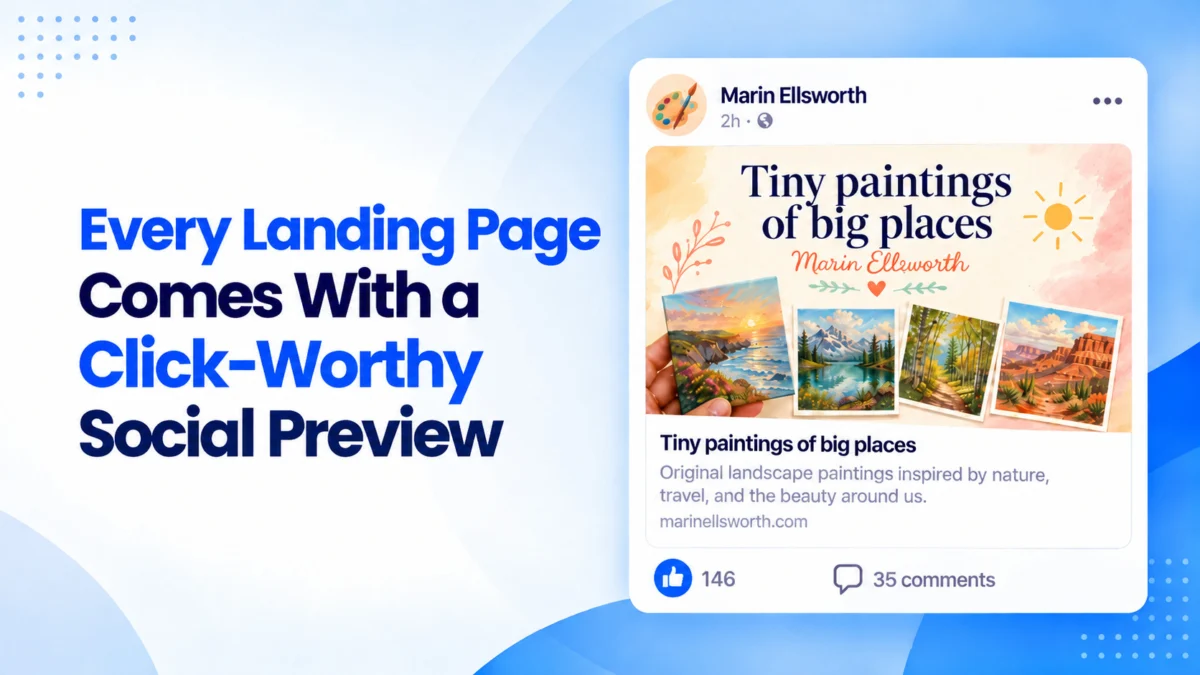
 Asro
Asro