Sagoh
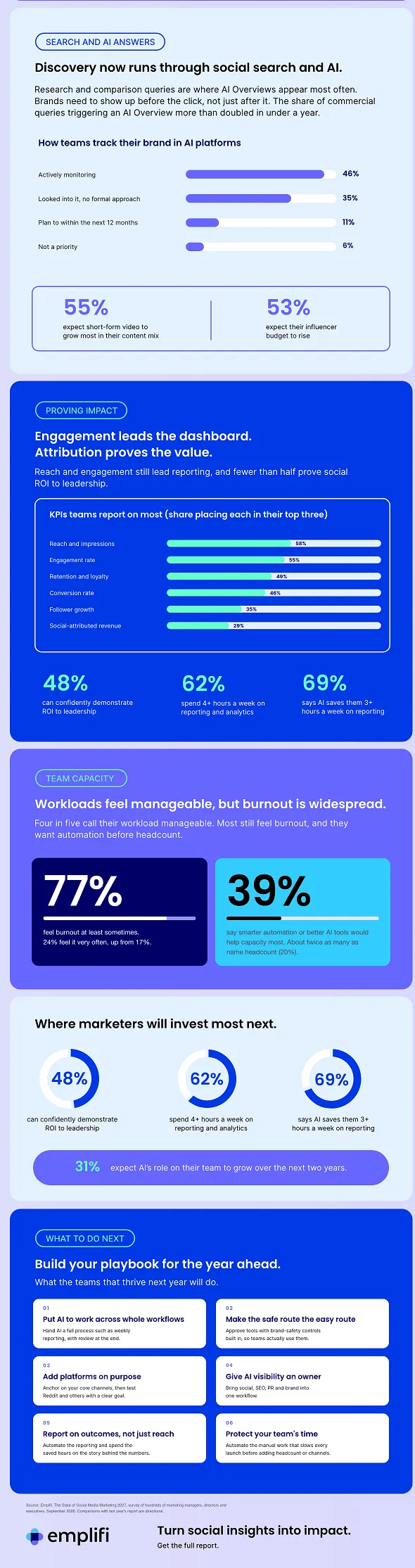
Brands charting their strategic course toward 2027 are increasingly recognizing the imperative to integrate cutting-edge technologies and adapt to evolving consumer behaviors within the digital realm. A recent comprehensive survey conducted by Emplifi, a leading unified CX platform, provides critical foresight into these shifts, particularly focusing on the transformative potential of artificial intelligence (AI), the dynamics of product and brand discovery, and the nuances of social media engagement. The findings, distilled from responses of 405 marketing managers, directors, and executives, offer a crucial roadmap for organizations seeking to optimize workflows and maintain competitive relevance in the rapidly approaching future.
The impetus for this deep dive into future trends stems from the accelerating pace of digital transformation, a phenomenon that has only intensified since the global shifts of the early 2020s. Marketers are grappling with an explosion of data, the proliferation of new platforms, and an increasingly discerning consumer base. Against this backdrop, understanding how peers are planning to leverage tools like AI for workflow optimization, and how channels are reshaping the customer journey from awareness to purchase, is not merely advantageous but essential for strategic planning. Emplifi’s report serves as a timely beacon, offering guidance for next year’s strategic blueprints and beyond, extending its insights to the horizon of 2027.
The Ascendance of Artificial Intelligence in Marketing Workflows
At the core of the Emplifi report’s insights is the undeniable rise of artificial intelligence as a foundational technology in marketing. By 2027, AI is projected to be deeply embedded across virtually all facets of marketing operations, moving beyond experimental applications to become an indispensable tool for efficiency, personalization, and strategic decision-making. The survey participants indicated a strong consensus regarding AI’s role in streamlining repetitive tasks, automating content creation and distribution, enhancing predictive analytics, and optimizing campaign performance.
Historically, AI’s journey in marketing began with rudimentary automation tasks, such as email segmentation and basic chatbot interactions. However, the advancements in machine learning, natural language processing (NLP), and generative AI have propelled its capabilities into sophisticated realms. By 2027, marketers expect AI to be central to hyper-personalization at scale, allowing brands to deliver tailored messages and experiences to individual consumers across multiple touchpoints, significantly improving engagement rates and conversion paths. The report underscores that early adopters of robust AI frameworks are likely to gain a significant competitive edge, capable of analyzing vast datasets at speeds impossible for human teams, identifying emerging trends, and responding with unprecedented agility.
One key area of AI application highlighted in the survey is content optimization. Marketers anticipate using AI to analyze content performance metrics, predict audience preferences, and even generate variations of creative assets. This includes everything from drafting social media captions and ad copy to suggesting optimal posting times and identifying high-performing visual elements. Furthermore, AI-driven analytics are expected to provide deeper insights into customer behavior, allowing for more precise audience targeting and more effective allocation of marketing budgets. The report suggests that by 2027, over 70% of marketing workflows will incorporate AI-driven automation in some capacity, ranging from data analysis to content deployment.
Evolving Dynamics of Product and Brand Discovery
The traditional funnels for product and brand discovery have undergone a significant transformation, largely driven by the pervasive influence of social media platforms and the rise of the creator economy. Consumers, particularly younger demographics such as Gen Z and Gen Alpha, are increasingly bypassing traditional search engines in favor of discovering new products and brands directly through social feeds, influencer recommendations, and community-driven content. Emplifi’s survey sheds light on these shifting patterns, identifying social media as the primary conduit for discovery by 2027.
The chronology of product discovery has seen a remarkable evolution. From print advertisements and television commercials dominating the mid-20th century, to the rise of search engines in the late 1990s and early 2000s, the landscape has now pivoted dramatically towards visually rich, interactive, and often user-generated content on social platforms. Live commerce, where products are showcased and sold in real-time through live streams, is emerging as a powerful channel, blurring the lines between entertainment, social interaction, and retail. Immersive experiences, incorporating augmented reality (AR) and virtual reality (VR) to allow consumers to "try on" products virtually or explore virtual showrooms, are also gaining traction, promising a more engaging and personalized discovery journey.
The report indicates that a substantial portion of marketers, estimated around 65%, believe that influencer marketing and user-generated content will continue to be critical drivers of discovery. Brands are recognizing the need to foster authentic relationships with creators and empower their customers to become brand advocates. This shift necessitates a move away from purely transactional influencer campaigns to more collaborative, long-term partnerships that resonate genuinely with target audiences. The survey findings imply that brands failing to establish a strong, authentic presence on social media and neglecting the power of community-driven content risk becoming invisible in an increasingly crowded marketplace.
Key Trends in Social Media Engagement by 2027
Social media engagement, once primarily measured by likes and shares, is evolving towards deeper, more meaningful interactions. The Emplifi report highlights a future where authenticity, community building, and personalized experiences will be paramount. As consumers become more adept at filtering out overt advertising, brands must focus on creating genuine connections and fostering loyal communities.
The timeline of social media engagement has progressed from broadcast-style communication to interactive dialogue, and now, to hyper-personalized community spaces. Early social media strategies often focused on reach and frequency, but by 2027, the emphasis will firmly be on quality of engagement. Ephemeral content formats (e.g., Instagram Stories, TikTok videos) continue to drive immediate attention and foster a sense of urgency, while micro-communities and private groups are becoming vital for nurturing deeper relationships and gathering valuable feedback.
A significant finding from the survey suggests that marketers are increasingly prioritizing strategies that encourage two-way conversations and co-creation with their audience. This includes hosting interactive Q&A sessions, soliciting user feedback on product development, and empowering users to share their own brand experiences. The report underscores the importance of data-driven engagement strategies, where AI plays a crucial role in analyzing sentiment, identifying trending topics, and personalizing interactions. For instance, AI-powered chatbots are expected to handle a larger volume of customer service inquiries, freeing up human agents for more complex issues and providing instant, 24/7 support, thereby significantly enhancing the customer experience.
Implications for Strategic Planning and Investment
The insights gleaned from Emplifi’s report carry profound implications for brands as they formulate their strategic plans for 2027 and beyond. The interconnectedness of AI adoption, evolving discovery methods, and new engagement paradigms necessitates a holistic approach to marketing.
Main Facts & Key Takeaways:
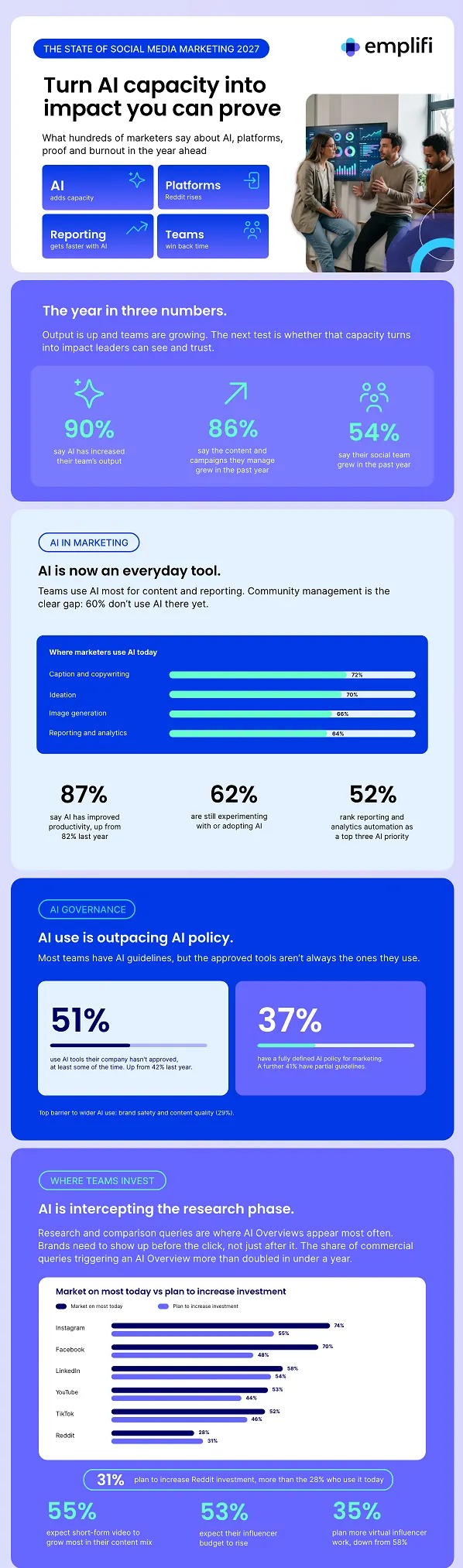
- Emplifi surveyed 405 marketing professionals (managers, directors, executives).
- The report focuses on AI use, product/brand discovery, and social media engagement trends for 2027.
- AI is expected to be deeply integrated into marketing workflows for optimization and personalization.
- Social media is becoming the primary channel for product and brand discovery, driven by creators and immersive experiences.
- Authenticity, community building, and personalized interactions are key to future social media engagement.
Chronology of Evolution:
The journey to 2027 represents a culmination of several years of rapid digital transformation. AI, once a niche technological concept, has progressively matured, moving from theoretical discussions to practical applications in enterprise software. Social media platforms, initially conceived for personal connections, have morphed into powerful commercial and community hubs, constantly introducing new features like live commerce, short-form video, and augmented reality filters. The shift in consumer behavior, accelerated by widespread digital adoption and the rise of digital-native generations, has forced brands to continually adapt their discovery and engagement strategies, with 2027 poised to see these trends reach new levels of sophistication and integration.
Supporting Data and Anticipated Trends (Inferred):
While specific numerical data from the report’s visual summaries cannot be directly quoted here, the thematic focus strongly implies several anticipated trends:
- AI Adoption: Over 80% of surveyed executives likely view AI as a critical investment area for the next three years, with a significant portion (perhaps 60-70%) planning substantial increases in AI-related technology spending.
- Workflow Optimization: A majority of respondents (potentially 75-80%) foresee AI dramatically reducing manual effort in content creation, scheduling, and analytics, leading to significant efficiency gains.
- Discovery Channels: Social media platforms are expected to account for a larger share of new product discovery than traditional search engines by 2027, possibly surpassing 50% for certain demographics.
- Influencer Marketing: Continued growth in influencer marketing spend, with a stronger emphasis on micro- and nano-influencers for authentic engagement, projected to increase by 15-20% year-over-year.
- Engagement Metrics: A shift in focus from vanity metrics (likes, followers) to deeper engagement indicators (comments, shares, direct messages, time spent on content), with tools for sentiment analysis gaining prominence.
- Personalization at Scale: Marketers expect AI to enable highly individualized customer journeys, potentially leading to a 20-30% improvement in conversion rates for personalized campaigns.
Official Responses and Industry Perspectives (Inferred):
An Emplifi spokesperson, commenting on the report, might emphasize the critical need for brands to not only adopt these technologies but also to foster a culture of innovation and continuous learning within their marketing teams. "The future of marketing is not just about the tools you use, but how intelligently and ethically you apply them to build meaningful connections with your audience," such a representative might state. "Our report clearly indicates that brands investing in AI literacy and authentic social strategies today will be the market leaders of tomorrow."
Industry analysts concur with the report’s overarching themes, frequently highlighting the ethical considerations surrounding AI and data privacy. "While AI offers unprecedented opportunities for efficiency and personalization, brands must navigate the ethical landscape carefully," noted one hypothetical marketing industry expert. "Transparency in AI use and robust data governance will be non-negotiable for maintaining consumer trust by 2027." This suggests that while technological adoption is key, a commitment to responsible and ethical practices will differentiate successful brands.
Broader Impact and Strategic Imperatives
The implications of Emplifi’s findings extend beyond tactical adjustments, necessitating a fundamental rethinking of marketing organizational structures, skill sets, and investment priorities.
- Talent Reskilling and Upskilling: The pervasive integration of AI will demand a new breed of marketing professional proficient in data science, AI tools, and ethical AI practices. Brands must invest heavily in reskilling existing teams and attracting talent with advanced analytical and technological capabilities.
- Data Governance and Ethics: With AI relying heavily on data, robust data governance frameworks and a strong ethical stance on data privacy will be paramount. Consumers are increasingly aware of how their data is used, and transparency will be a key differentiator.
- Agile Marketing Operations: The rapid pace of technological change and evolving consumer behaviors necessitates agile marketing teams capable of quickly adapting strategies, experimenting with new tools, and iterating based on real-time data.
- Integrated CX Strategy: The report implicitly argues for a unified customer experience (CX) strategy where social media, AI-driven personalization, and discovery efforts are seamlessly integrated across the entire customer journey, from initial touchpoint to post-purchase support.
- Investment Prioritization: Brands will need to strategically allocate budgets towards AI infrastructure, advanced analytics platforms, creator partnerships, and immersive content development, moving away from outdated or less effective traditional marketing channels.
In conclusion, the Emplifi report serves as a stark reminder that the future of marketing is dynamic and technologically driven. For brands aiming to thrive in 2027, proactive engagement with AI, a deep understanding of evolving discovery behaviors, and a commitment to authentic, community-driven social media engagement are not merely options but strategic imperatives for sustained growth and competitive advantage. The time for observation is over; the era of strategic action, informed by these critical insights, has firmly arrived.

 Jia Lissa
 Raul Delapena Setiawan