Jia Lissa
The Evolution of TikTok’s Algorithmic Power
Since its explosive global rise, TikTok has redefined content consumption, emphasizing discovery over social connections. Unlike traditional social networks that prioritize content from friends or followed accounts, TikTok’s FYP is a dynamic stream of fresh content, often from unknown creators, curated for maximum relevance. This shift has propelled TikTok into a central role in digital culture, shaping trends, influencing purchasing decisions, and fostering niche communities at an unprecedented pace.
By 2026, the algorithm has matured, becoming even more adept at understanding nuanced user behavior. While the core principle of delivering personalized experiences remains, its mechanisms have adapted to user habits, particularly the increasing reliance on TikTok as a search engine and the demand for diverse content formats. TikTok’s official documentation consistently highlights its use of "recommender systems to offer a personalized experience," with content suggestions based on "interactions on TikTok, such as following an account or liking a post." For marketers, this translates into a clear imperative: provide unambiguous signals about your content’s target audience.

Core Pillars of the 2026 TikTok Algorithm
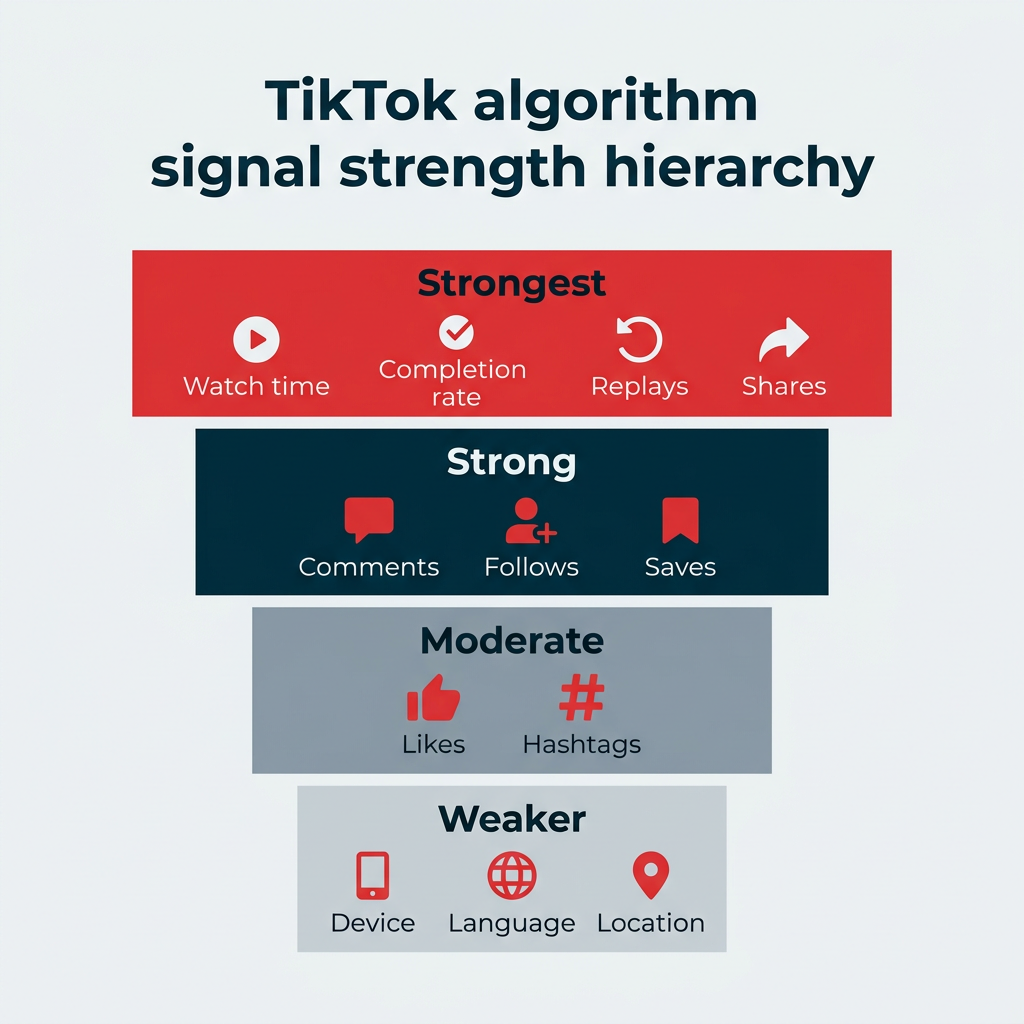
The TikTok algorithm evaluates content based on three primary signal categories, each weighted differently to determine a video’s potential for recommendation.
-
User Interactions (High Weight): These are the most significant signals, directly reflecting a user’s engagement and preferences. Every tap, swipe, and watch provides the algorithm with data. Crucially, watch time and completion rate stand out as the strongest indicators. If a user watches a video to its conclusion or even replays it, this signals high engagement and relevance.
- Positive Signals: Liking a video, sharing a video, commenting on a video, following a creator, watching a video to completion, rewatching a video, clicking through to a sound or hashtag, visiting a creator’s profile, interacting with a call-to-action (e.g., "Shop Now").
- Negative Signals: Swiping past quickly, clicking "Not Interested," hiding videos from a specific creator, reporting a video. These actions instruct the algorithm to reduce similar content in the future.
-
Video Information (Medium Weight): Beyond direct user actions, the algorithm analyzes inherent video characteristics to categorize content and match it with interested viewers.

- Examples: Captions, hashtags, trending sounds and music, visual effects, on-screen text, and spoken words. The algorithm’s ability to analyze both visual and auditory elements means that a video’s voiceover and text overlays are just as crucial for categorization as its written caption. This deep analysis helps TikTok understand the video’s subject matter and context.
-
User Information (Low Weight): While less influential than direct interactions or video specifics, general user settings provide foundational context for content delivery.
- Examples: Device type, language preferences, country, account settings, and time zone. These factors ensure a smooth user experience and localized content delivery but are less dynamic than ongoing engagement signals.
It is important to note that TikTok has never publicly confirmed a specific "point system" for interactions. Instead, it operates on a system of weighted signals, where some actions (like completing a video) carry significantly more influence than others (like a simple like). The exact weighting is proprietary and subject to continuous refinement, underscoring the need for creators to prioritize high-quality, engaging content rather than attempting to reverse-engineer a static formula.
Key Algorithmic Shifts: 2025 and 2026
While the core ranking signals have remained steadfast, TikTok’s content distribution strategy has seen notable evolution in 2025 and 2026. These shifts reflect user behavior and platform priorities, with significant implications for content planning.
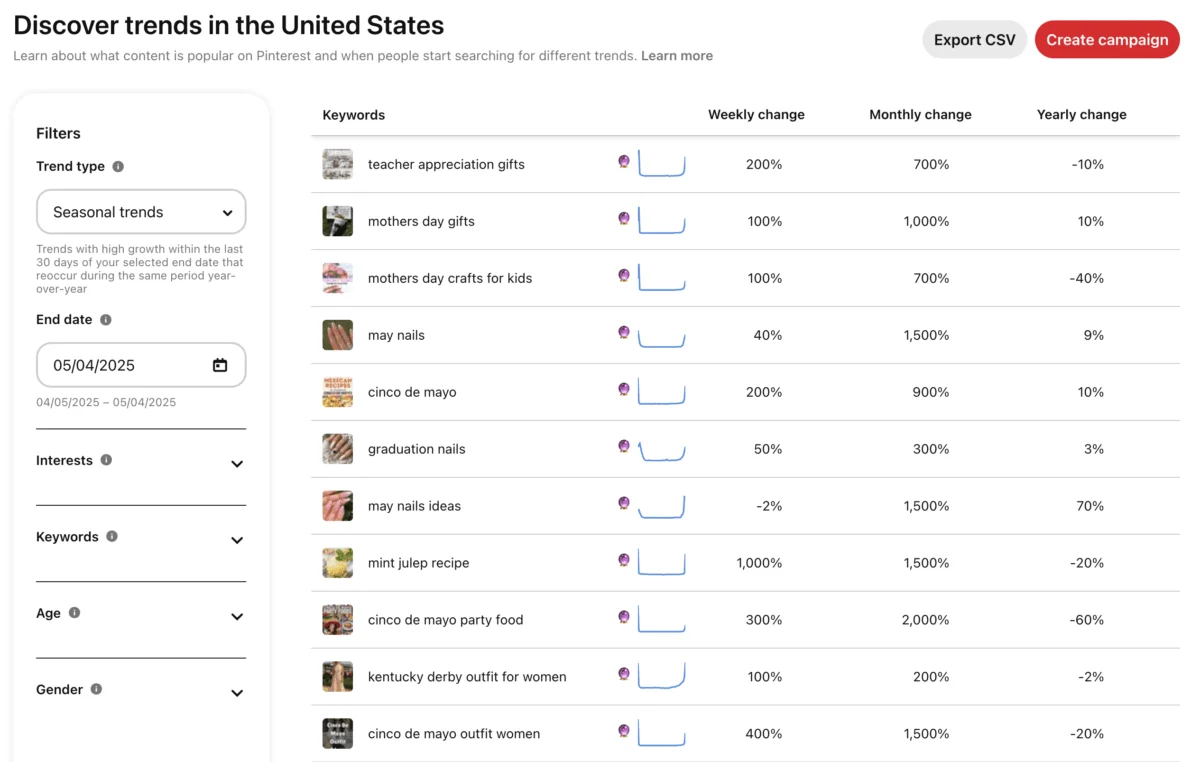
- Rise of TikTok SEO: The platform has solidified its role as a powerful search engine, particularly among younger demographics. Recent data indicates that nearly half (49%) of consumers now use TikTok for search, driving the algorithm to prioritize keyword relevance in captions, voiceovers, and on-screen text. This means content discoverability extends beyond the FYP to explicit user queries.
- Increased Distribution for Longer Videos: While TikTok built its empire on short-form video, the algorithm is now more willing to distribute longer content (1 to 3 minutes, and sometimes beyond), provided it maintains high completion rates and engagement. Length itself is not a favored metric; sustained viewer attention is.
- Emphasis on Format Variety: The algorithm now encourages a broader range of formats beyond typical short clips. This includes interactive elements, Duets, Stitches, and particularly, TikTok LIVE sessions, which generate significant sustained watch time and real-time interaction.
- Community-First Approach: Deeper integration with specific subcultures and niche communities is rewarded. Content that resonates strongly within a defined community is more likely to be amplified to similar users, reinforcing TikTok’s strength as a hub for shared interests.
These changes collectively point towards a future where success on TikTok hinges on content that is not only engaging but also highly searchable, adaptable across formats, and clearly targeted to specific interest groups.
Content Restrictions: Navigating the "Not Recommended" List
Even content that adheres to TikTok’s Community Guidelines might not be eligible for recommendation on the FYP. TikTok maintains a separate list of content types it will not actively promote, a critical distinction for brand safety and maximizing reach. A single non-compliant element can quietly cap a video’s organic distribution.
Content typically restricted from FYP recommendations includes:
- Unoriginal content (reposted, duplicated without significant added value).
- Low-quality videos (poor resolution, flickering, excessive text, unedited raw footage).
- Spammy content (excessive calls to action, repetitive posting, misleading information).
- Content promoting regulated goods or services (alcohol, tobacco, gambling, pharmaceuticals without proper disclosure).
- Potentially sensitive themes (e.g., content depicting graphic or disturbing imagery, self-harm references, extreme dieting, sexually suggestive themes) that, while not outright violations, are deemed inappropriate for broad public recommendation.
- Misleading or clickbait content.
- Content featuring unverified medical claims or misinformation.
- Political content that is not deemed neutral or educational, especially in sensitive periods.
Content not suitable for young audiences may be age-gated (restricted to users over 18), while outright violations of Community Guidelines lead to removal and potential account strikes. Enterprise teams must integrate these nuances into their content guidelines to avoid inadvertently limiting reach. TikTok Analytics provides creators with data on video performance, including any content restrictions, and allows for appeals.
Strategic Approaches for Algorithmic Success in 2026
To thrive on TikTok in 2026, a multifaceted strategy focusing on authentic engagement and platform-specific optimization is essential.
-
Cultivate Community Connections: Unlike platforms where existing connections drive engagement, TikTok thrives on strangers finding common ground. With 65% of adult TikTok users connecting over shared interests and 72% of women finding it easy to bond in new communities, tapping into existing subcultures is paramount. Hashtags serve as crucial conduits for these communities. Brands that genuinely participate in these groups, rather than just broadcasting, see greater credibility and amplified reach. Tools like TikTok’s Audience Insights within Ads Manager can help identify relevant interests and hashtags, guiding content creation that resonates deeply.
-
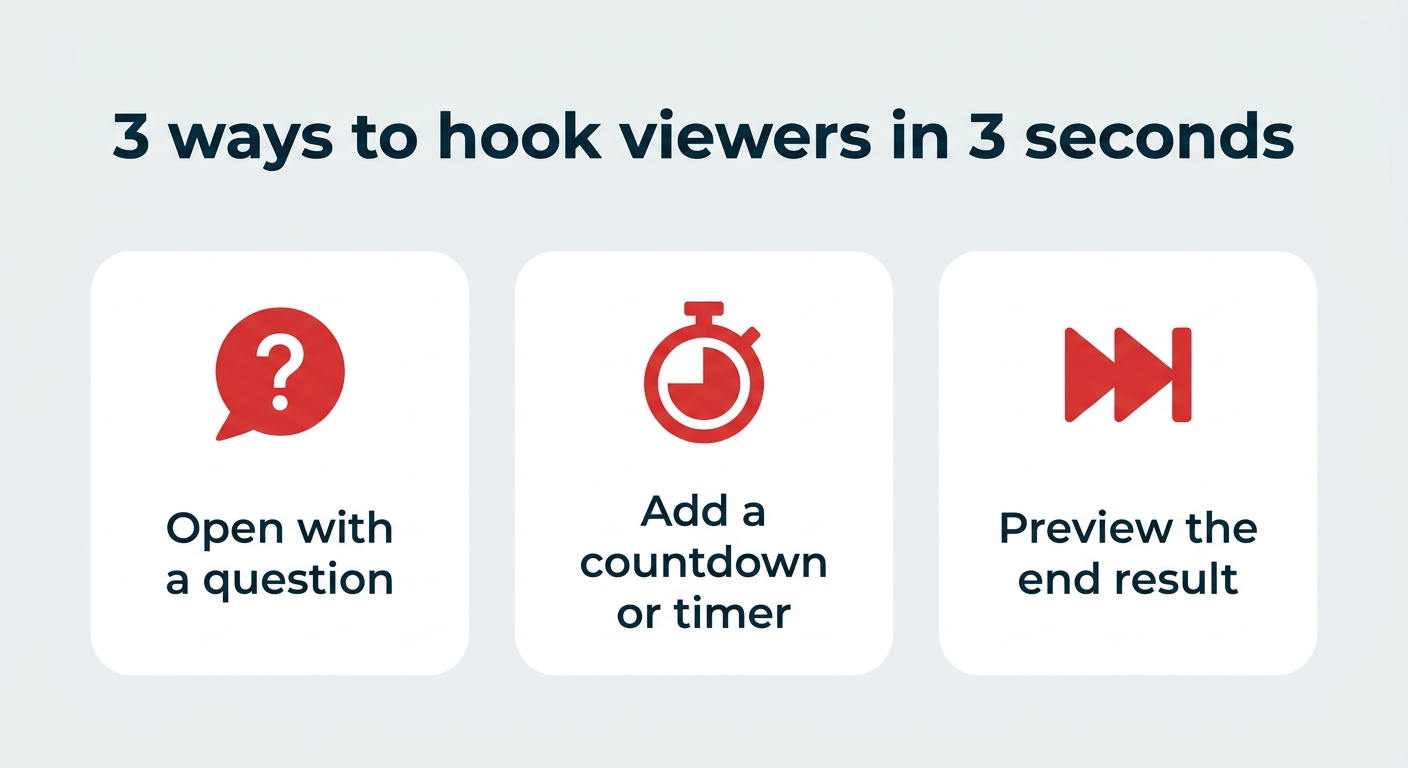
Master the Three-Second Hook: Watch time is a dominant algorithmic signal, and the first three seconds are decisive. Viewers make a swift decision to scroll or stay. TikTok’s Creator Academy emphasizes starting with a compelling question, a countdown, or a tantalizing preview of the video’s outcome to immediately grab attention and encourage continued viewing.
-
Implement Robust TikTok SEO: As TikTok increasingly functions as a search engine, optimizing for keywords is as vital as using relevant hashtags. Marketing strategists, like Sarah Warner from Destination Madison, advocate for anticipating user search queries and integrating keywords into captions, voiceovers, and on-screen text. This not only helps the algorithm categorize content but also ensures discoverability long after initial publication. The TikTok Creative Center’s Keyword Insights and AI caption generators can aid in this process.
-
Prioritize High-Quality, TikTok-First Content: Quality on TikTok means authenticity and platform-native aesthetics, not high-budget productions. TikTok’s internal data reveals that high-quality content creators achieve 72% more watch time and significantly higher follower growth. A striking 79% of TikTok users prefer brands that create content specifically tailored for the platform. This means clear sound, good lighting, quick edits, captions for accessibility, and a less-polished, authentic style. Experimentation with formats and lengths is encouraged to maintain viewer interest.
-
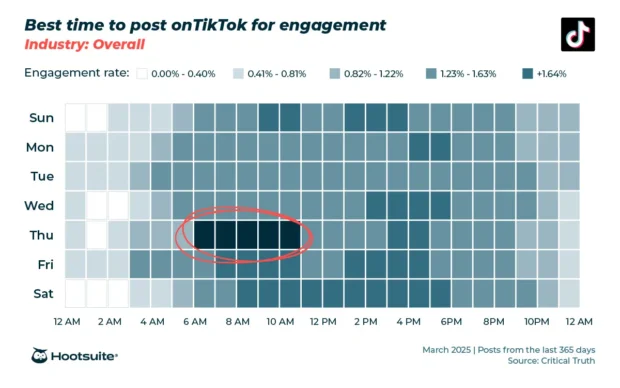
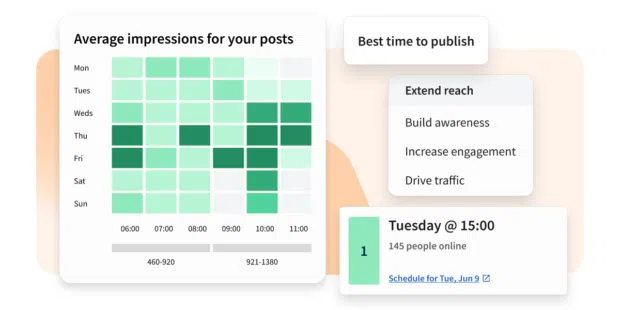
Strategize Posting Consistency and Timing: Consistent posting signals an active account to the algorithm, maintaining algorithmic momentum. However, timing is equally critical. Research indicates optimal posting times for engagement (e.g., Thursday mornings or Saturday midday overall), but leveraging tools like Hootsuite’s "Best Time to Publish" can provide custom recommendations based on an account’s unique audience activity patterns, optimizing for both engagement and reach.
-
Leverage Duets, Stitches, and LIVE: These native features are powerful tools for borrowing distribution. Dueting or Stitching a viral video allows creators to piggyback on existing content’s success, exposing their content to an audience already interested in the topic. TikTok LIVE sessions offer dedicated discovery surfaces and generate sustained watch time and real-time engagement. Brands can use them for Q&As, behind-the-scenes glimpses, or product walkthroughs, provided the original creator allows Duets/Stitches, and their own permissions are set correctly.
-
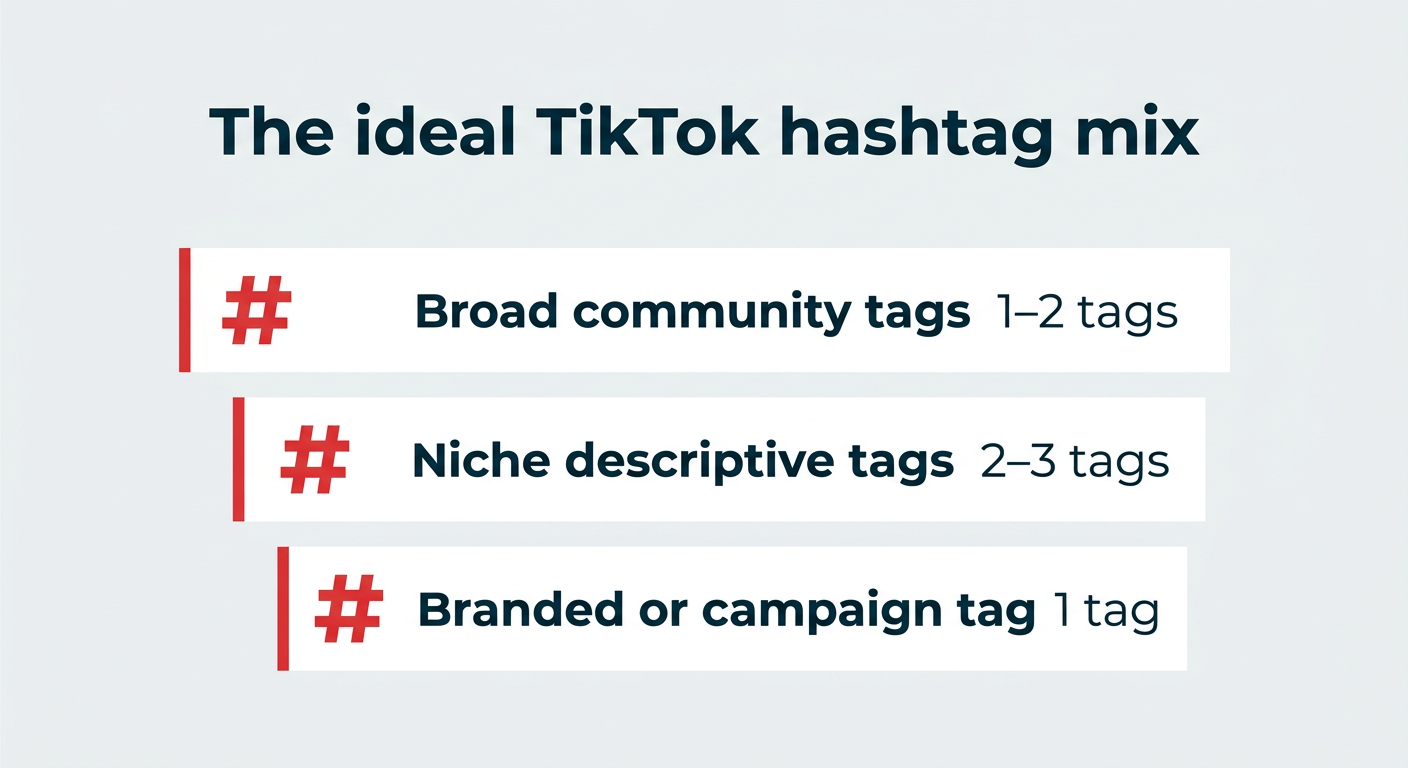
Employ Strategic Hashtag Blends: Hashtags remain a vital categorization signal, informing the algorithm about a video’s community and topic. The most effective approach in 2026 combines:
- Broad Community Hashtags: e.g., #BookTok, #CleanTok.
- Niche-Specific Hashtags: Highly targeted to the content’s precise theme.
- Trending Hashtags: Capitalizing on current platform buzz.
- Branded Hashtags: For campaigns or consistent content series.
Avoid hashtag stuffing; a concise, relevant set paired with keyword-rich captions is more effective given TikTok’s advanced search capabilities.
-
Integrate Trending Sounds and Music: Trending audio acts as another powerful categorization signal, grouping videos with similar content and exposing them to relevant audiences. Spotting sounds early in their lifecycle, before widespread saturation, offers the greatest discovery advantage. However, business accounts must exclusively use audio from TikTok’s Commercial Music Library to avoid copyright infringements, which can lead to video muting or removal. Original audio and voiceovers also offer creative flexibility.
-
Utilize TikTok Analytics for Performance Tracking: Data is indispensable for algorithmic optimization. TikTok’s native analytics, available to business and creator accounts, directly map to key ranking signals. Metrics to monitor include:
- Watch Time & Completion Rate: Direct indicators of engagement.
- Shares & Saves: Strong signals of content value and resonance.
- Traffic Source Types: Crucial for understanding if content is being distributed via the FYP.
- Profile Views & Follower Growth Rate: Reflect overall account health and increasing audience interest.
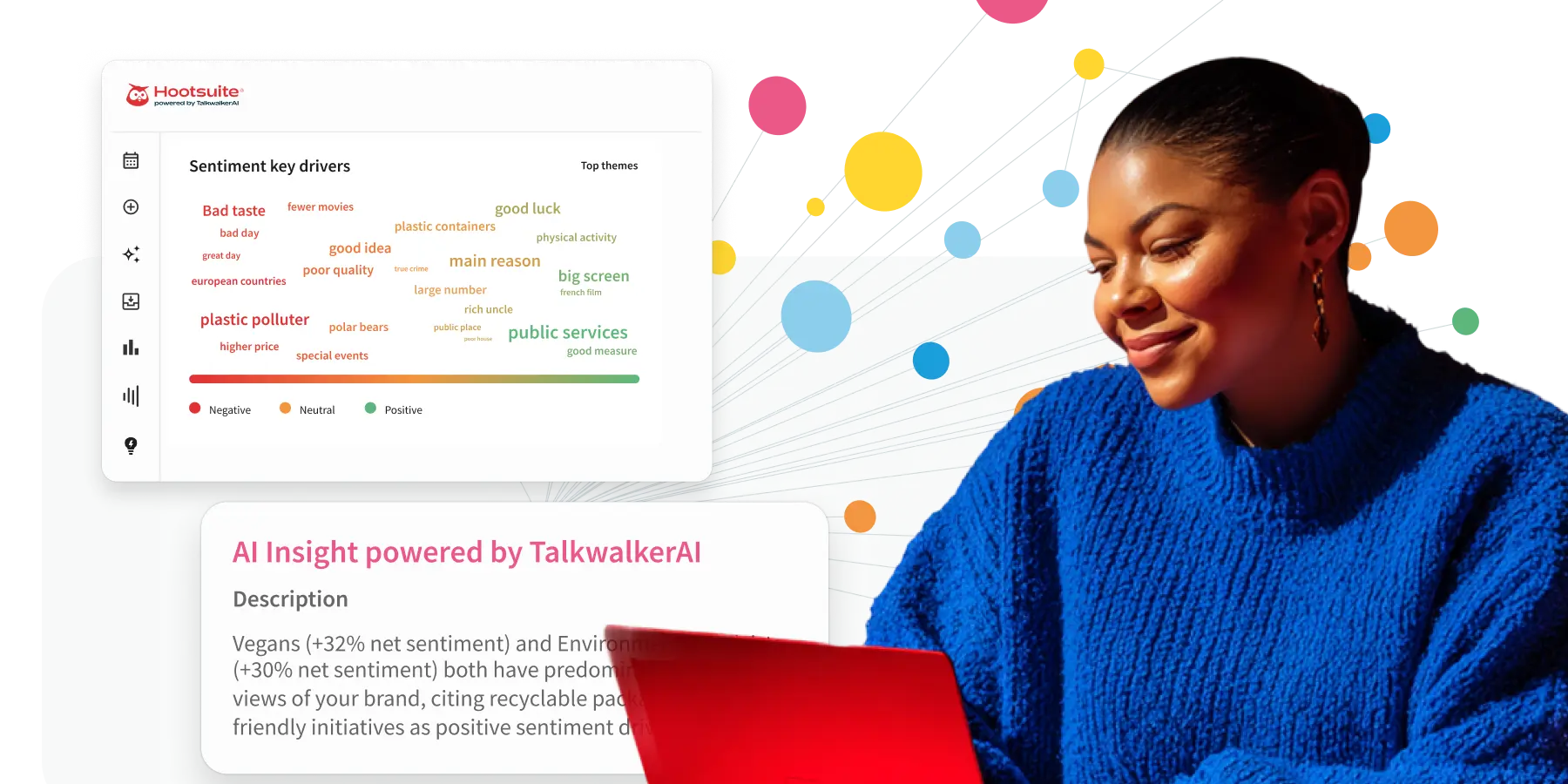
For enterprise teams managing multiple platforms, integrated tools like Hootsuite Analytics centralize performance data, enabling cross-channel comparisons and streamlined reporting.
-
Collaborate with Creators and Influencers: Creator partnerships offer an invaluable shortcut to trusted audiences. While the algorithm doesn’t inherently favor creator content, it rewards the strong engagement signals that authentic creator content generates. Influencers understand their community’s cadence, humor, and preferred formats, leading to higher watch time, comments, and shares. The TikTok Creator Marketplace facilitates finding suitable partners, but focus on engagement rates and audience overlap over mere follower count. Granting creative latitude to creators is key to maintaining authenticity.
-
Integrate TikTok Shop Strategically: With projections of 57.7 million U.S. buyers by 2026, TikTok’s heavy investment in commerce features ensures algorithmic support for shoppable content. Product videos and live shopping sessions are eligible for FYP recommendations alongside the dedicated Shop tab. The caveat remains: shoppable content must still be engaging. Effective strategies include showcasing products in real-world scenarios, leveraging user-generated content, offering exclusive discounts, and hosting interactive live shopping events. Treat TikTok Shop content as another format within your overall content mix, prioritizing watch time and engagement.
-
Embrace Authenticity and Fun: This seemingly soft advice is arguably the most practical. The algorithm rewards content that genuinely holds attention, and nothing achieves this like authentic personality. TikTok’s own research, and broader social media trends, confirm that audiences prefer less-polished, honest content over hyper-produced perfection. Allowing brand personality to shine, experimenting with formats, and actively engaging with comments all contribute to content that resonates, driving the intrinsic enjoyment that keeps viewers watching to the end.
Measuring Algorithmic Success
The clearest indicator of successful algorithmic distribution is when a significant portion of your video views originates from non-followers, particularly from the For You Page. This signifies that TikTok is actively introducing your content to new audiences.
Key metrics to monitor for algorithmic performance:
- For You Page Percentage: The percentage of views coming from the FYP is the most direct measure of algorithmic distribution.
- Watch Time & Average Watch Time: Crucial for understanding content appeal and retention.
- Video Completion Rate: Indicates how many viewers watch your video to the end.
- Shares & Saves: Strong signals that content is valuable enough to be shared or revisited.
- Follower Growth Rate: Reflects the algorithm’s success in attracting new, interested users.
These metrics should be analyzed as trends over 30 to 90 days, rather than on a per-post basis, as algorithmic recommendations can vary. For enterprise teams, integrating TikTok analytics with broader social media management platforms like Hootsuite allows for a holistic view of performance, enabling strategic adjustments across content types and target communities.
In 2026, the TikTok algorithm remains a dynamic force, continuously refining its approach to deliver the most engaging content to its vast user base. Success hinges on a deep understanding of its core signals, adapting to its evolving priorities, and consistently producing authentic, high-quality content that captivates and connects.

 Raul Delapena Setiawan

 Iffa Jayyana