admin
admin
The digital marketing landscape, increasingly competitive and data-driven, presents a significant paradox for professionals: while email marketing consistently delivers one of the highest returns on investment, the integrity of the underlying data—the email list itself—is often overlooked, leading to substantial financial and reputational costs. Marketing professionals frequently encounter the frustration of crafting compelling campaigns only to be met with a cascade of bounce notifications, a clear indicator of a decaying contact database. This challenge, which scales exponentially with list growth, underscores the critical need for a proactive, rather than reactive, approach to email list hygiene. Email list validation automation emerges as the definitive solution, transforming sporadic cleanups into an always-on defense mechanism that protects deliverability, enhances campaign performance, and secures the bottom line. This article will delve into the mechanics of automated verification, illuminate the profound economic impact of compromised data, and provide a structured framework for implementing a strategy that maintains pristine email lists, ensuring marketing efforts consistently hit their mark.
What is Email List Validation Automation?
Email list validation automation leverages advanced technological solutions to continuously and automatically verify the legitimacy and status of email addresses within a database. Unlike traditional one-time list scrubbing, which offers a snapshot of data health at a specific moment, automation integrates seamlessly into existing data workflows. Its primary function is to identify and flag invalid, risky, or dormant email addresses before a message is dispatched, effectively acting as an automated security checkpoint for customer relationship management (CRM) systems and marketing automation platforms.
The exponential growth of email marketing underscores the necessity of such systems. Industry projections, such as an estimated 15.92 percent compound annual growth rate (CAGR) for the email marketing market between 2024 and 2030, highlight email’s enduring efficacy as a marketing tool. A significant driver of this growth, and indeed its sustainability, is the adoption of automation across various facets of email operations. Just as airport security scans every passenger to ensure safety, automated email validation meticulously checks every email address—whether newly acquired or long-standing—before it is fully integrated into a mailing list. This continuous vigilance ensures that only valid, actionable contacts enter the system, thereby safeguarding an organization’s sender reputation around the clock. This real-time, preventive approach minimizes the ingress of bad data, preserving the quality and performance of outreach efforts.
The Escalating Challenge of Data Decay
The problem of data decay is not static; it is an ongoing, pervasive issue that erodes the value of marketing databases over time. Email addresses can become invalid for numerous reasons: individuals changing jobs, abandoning old email accounts, misspelling addresses during sign-up, or even intentionally providing fake credentials to access gated content. Furthermore, the proliferation of bot traffic and spam trap accounts contributes significantly to the degradation of list quality. Without a continuous mechanism to address these issues, an email list, no matter how meticulously built initially, will inevitably accumulate a percentage of unmailable addresses.
Historically, organizations might have performed manual or semi-automated list cleanups on an annual or quarterly basis. However, the sheer volume of data, coupled with the speed at which it decays, renders such reactive measures insufficient. The modern marketing ecosystem demands agility and accuracy. The shift from a periodic, remedial approach to a persistent, preventative one is not merely an operational improvement; it is a strategic imperative for any organization reliant on email for customer engagement, lead nurturing, and sales conversion. This evolution in email hygiene mirrors broader trends in cybersecurity and data governance, where continuous monitoring and automated threat detection have become standard practice.
The True Economic Burden of Substandard Data
A neglected email list carries a multitude of hidden and overt costs that can severely compromise marketing performance and overall business results. These costs extend far beyond the immediate inconvenience of bounced emails:
- Diminished Sender Reputation and Deliverability: Email Service Providers (ESPs) like Gmail, Outlook, and Yahoo meticulously monitor sending behavior. High bounce rates, frequent spam complaints, and hits on spam traps are red flags that signal a sender is not adhering to best practices. This negative feedback leads to a degraded sender reputation, resulting in emails being routed to spam folders or blocked entirely, regardless of their content or the recipient’s genuine interest. A low sender score directly translates to reduced inbox placement rates, meaning fewer eyes on critical marketing messages.
- Wasted Marketing Spend: Every email sent to an invalid address represents wasted resources. This includes the direct cost per email charged by many marketing platforms, as well as the indirect costs associated with campaign creation, segmentation, and analysis. When a significant portion of an email list consists of undeliverable addresses, a substantial portion of the marketing budget is effectively thrown away, yielding no return.
- Skewed Analytics and Impaired Decision-Making: Dirty data distorts key performance indicators (KPIs) such as open rates, click-through rates, and conversion rates. If a campaign reports a 10% open rate, but 20% of the list was invalid, the true open rate among deliverable addresses is actually much higher. This misrepresentation leads to inaccurate campaign assessments, flawed A/B testing, and potentially misguided strategic decisions, hindering optimization efforts.
- Increased Spam Complaints and Unsubscribes: Sending emails to disengaged or unknown recipients can lead to increased spam complaints, further damaging sender reputation. Additionally, if emails consistently land in the wrong hands or are perceived as irrelevant due to poor targeting (itself a symptom of bad data), recipients are more likely to unsubscribe, further shrinking the effective audience.
- Operational Inefficiencies: Manual data cleaning is a laborious, time-consuming process that diverts valuable marketing and sales operations teams from high-impact strategic activities. The effort involved in exporting, cleaning, and re-importing CSV files is prone to human error and represents a significant drain on productivity.
- Compliance Risks: Sending unsolicited emails to invalid or unverified addresses, particularly in regions with stringent data privacy regulations like GDPR, CAN-SPAM, and CASL, can expose organizations to significant compliance risks, including hefty fines and reputational damage. Maintaining a clean, verified list is a fundamental aspect of ethical data governance.
Strategic Imperatives: The Business-Critical Benefits of Automation

Implementing an automated email verification strategy fundamentally shifts an organization’s posture from defensive to offensive, generating compounding value that extends far beyond simply having a clean list. Here are five core benefits that underscore its powerful impact:
1. Protecting Sender Reputation and Enhancing Inbox Placement
Your sender reputation is arguably the most critical asset in email marketing, serving as the primary determinant of whether your messages successfully reach the inbox or are relegated to the spam folder. ESPs such as Gmail and Outlook continuously assess a sender’s trustworthiness based on metrics like bounce rates, spam complaint rates, and engagement levels. By automatically identifying and removing invalid, risky, or problematic email addresses, automated validation significantly reduces negative signals. This proactive hygiene builds and reinforces trust with ESPs, leading to improved inbox placement and ensuring that your carefully crafted messages consistently reach their intended audience. A robust sender reputation is the bedrock of effective email communication.
2. Quantifying and Maximizing Campaign ROI
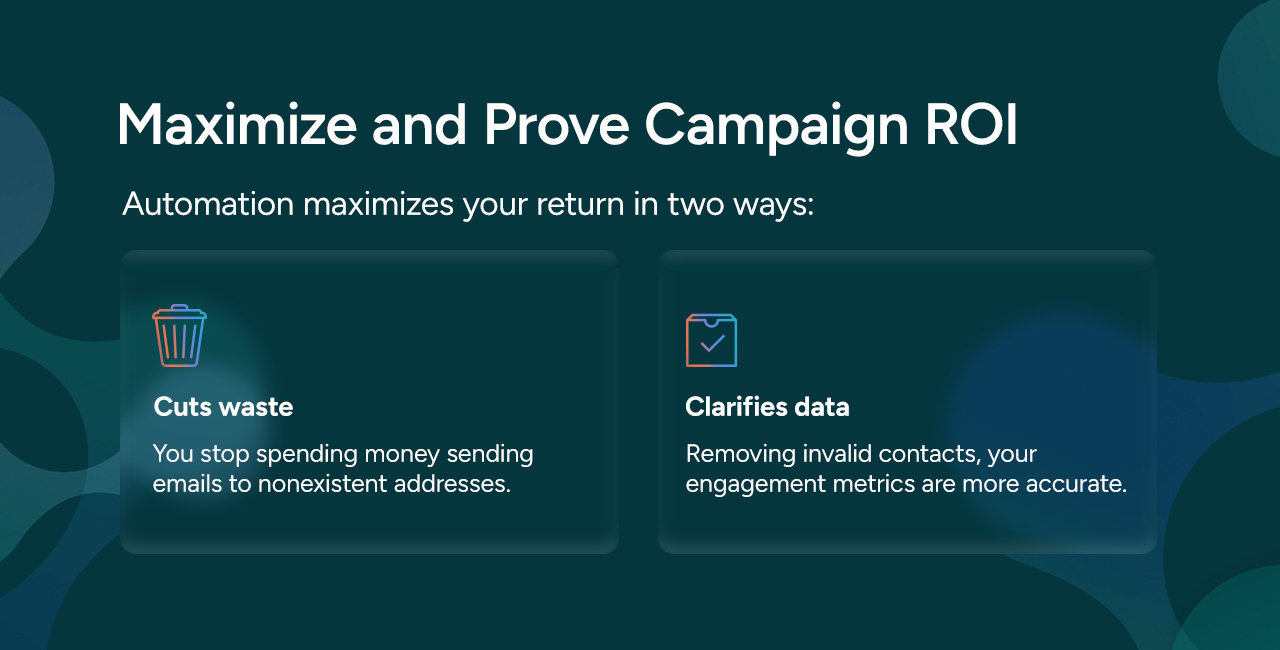
Email marketing boasts an exceptional return on investment, with industry figures often citing approximately $36 for every dollar spent. However, this impressive ROI is only achievable if emails actually reach the inbox and engage real people. Automation maximizes this return in several critical ways. Firstly, by ensuring deliverability, it guarantees that every dollar spent on email content, design, and platform fees is directed towards potentially receptive recipients, eliminating waste on undeliverable addresses. Secondly, with a clean list, engagement metrics become genuinely reflective of campaign performance, allowing marketers to accurately attribute conversions and revenue to email efforts. This precision enables data-driven optimization, identifying what truly resonates with the audience and refining strategies for even greater profitability.
3. Precision in Personalization and Segmentation
Effective marketing campaigns are powered by reliable data. Consider a scenario where a re-engagement campaign targets customers who haven’t made a purchase in six months. If 20% of that segment contains invalid or dormant addresses, the campaign’s results will be artificially deflated. This could lead marketers to mistakenly abandon a strategy that might have been highly effective for valid contacts. An automated email verification service ensures the foundational integrity of your segments. By providing accurate, up-to-date contact information, it enables highly targeted personalization, reliable analysis of campaign performance, and informed decision-making, allowing marketers to tailor messages with confidence and precision.
4. Driving Operational Efficiency Across Marketing and Sales
The time of marketing and sales teams is an invaluable resource. The manual process of exporting, cleaning, and re-uploading comma-separated values (CSV) files is notoriously time-consuming, prone to error, and a significant drain on productivity. Such tasks divert operations specialists from strategic work that drives growth. An automated verification process eliminates these manual burdens, allowing teams to trust the reliability of the data within their CRM and marketing automation platforms. For organizations leveraging platforms like Salesforce, this represents a transformative shift. Accurate data streamlines lead routing, enhances reporting, and improves the accuracy of sales forecasting, freeing up personnel to focus on high-impact strategic initiatives rather than mundane data hygiene tasks.
5. Fortifying Data Integrity at the Point of Entry
Real-time email validation automation acts as a vigilant security guard for your database, preventing bad data from entering the system in the first place. By integrating a verification API (Application Programming Interface) at every point of capture—from newsletter sign-up forms and lead magnet downloads to demo request forms and e-commerce checkouts—organizations can drastically reduce the influx of invalid data. This immediate verification catches typos, identifies fake addresses, and filters out common bot-driven sign-ups that often rely on disposable or invalid email addresses to pollute lists. This "first line of defense" approach is crucial for maintaining a high-quality database, ensuring that marketing efforts are always directed towards genuinely interested and reachable prospects.
A Phased Approach: Implementing an Automated Verification Strategy
Building a robust and sustainable email verification strategy requires a methodical, step-by-step approach. The following four-step framework provides a clear roadmap for successful implementation:
Phase 1: Comprehensive List Audit and Goal Definition
Before embarking on the implementation of an automated solution, a thorough assessment of current list management practices is paramount. Begin by conducting a comprehensive health check on your existing email list. Utilize analytics from your current email platform to identify segments with unusually high bounce rates, low open rates, or poor engagement. This audit should also involve reviewing your current data acquisition methods to pinpoint potential entry points for bad data. Simultaneously, define clear, measurable goals for your organization. Is the primary objective to reduce overall bounce rates by a specific percentage, or to cleanse a particular legacy list that has not been touched in years? Perhaps it’s to improve open rates by a certain margin or to enhance the accuracy of lead scoring. Establishing these baseline metrics and specific objectives will be crucial for measuring the ROI of your automation efforts later on.
Phase 2: Strategic Vendor Selection
The choice of an email verification service is a critical decision. When evaluating potential vendors, accuracy and security must be the paramount considerations. A low-cost tool that frequently flags valid emails as false positives can lead to significant lost revenue by preventing legitimate contacts from receiving communications. Conversely, a tool that misses a high percentage of invalid emails undermines the entire purpose of verification. Look for a secure, scalable solution that offers:
- High Accuracy: The ability to precisely identify valid, invalid, disposable, catch-all, and spam trap email addresses.
- Real-time Verification API: For seamless integration into web forms and other points of data capture.
- Bulk Verification Capabilities: For periodic cleaning of existing lists.
- Comprehensive Data Reporting: Insights into list health, common issues, and trends.
- Robust Security and Compliance: Adherence to data privacy standards (e.g., GDPR, CCPA) and secure data handling practices.
- Seamless Integrations: Compatibility with your existing CRM, marketing automation, and other relevant platforms.
- Scalability: The capacity to handle your current and future list sizes without performance degradation.
Industry leaders such as Validity, with their flagship BriteVerify solution, exemplify the kind of comprehensive, accurate, and secure platforms available, supporting tens of thousands of organizations globally.
Phase 3: Seamless Integration with Existing MarTech Stacks
True automation necessitates deep integration of the chosen verification tool with your existing marketing and sales technology stack. For existing data, the verification tool should be connected directly to your CRM (e.g., Salesforce, HubSpot) or marketing automation platform (e.g., Marketo, Pardot). Schedule regular, perhaps monthly or quarterly, bulk verifications to proactively catch data decay that occurs naturally over time. For new data, the implementation of an API on all web forms (newsletter sign-ups, contact forms, download gates) is essential. This real-time verification allows users to correct typos instantly before submitting their information, preventing bad data from ever entering your system and ensuring that every new lead or subscriber is genuinely reachable.
Phase 4: Continuous Monitoring and Strategic Refinement
Implementation is not the endpoint; it is the beginning of an ongoing process of monitoring and refinement. Regularly review the verification reports generated by your chosen service. Look for trends and patterns: Are you observing a sudden increase in invalid emails originating from a specific lead source? Is a particular web form attracting an unusual amount of bot traffic or disposable email addresses? Use these insights to iteratively refine your data acquisition strategies, tighten your list capture rules, and optimize your forms to deter fraudulent or low-quality sign-ups. Continuous monitoring also allows you to track the tangible benefits, such as reduced bounce rates and improved engagement metrics, proving the ROI of your automated verification strategy and justifying its ongoing investment.
Industry Perspectives and Expert Consensus
Industry analysts and leading marketing strategists consistently underscore the non-negotiable role of email list validation automation in modern digital marketing. "The cost of bad data is no longer just an inconvenience; it’s a direct threat to profitability and brand reputation," states a recent report from a prominent marketing intelligence firm. "Automated validation is moving from a ‘nice-to-have’ to a ‘must-have’ for any organization serious about maximizing its digital outreach." Marketing directors frequently cite the ability to trust their data as a game-changer, enabling more confident decision-making and better allocation of resources. The consensus is clear: in an era where data is king, data quality is paramount, and automation is the most effective means to achieve it.
Beyond Marketing: Broader Implications for Business Operations
The impact of automated email list validation extends well beyond the marketing department. Accurate and clean email data has profound implications for various business functions:
- Sales Enablement: Sales teams rely on accurate contact information for prospecting, outreach, and lead nurturing. Clean data ensures sales efforts are directed towards legitimate prospects, improving conversion rates and reducing wasted time.
- Customer Experience (CX): Sending emails to the correct, active addresses ensures customers receive important service updates, transactional information, and personalized offers, contributing to a seamless and positive customer experience. Inaccurate emails can lead to frustration and a perception of disorganization.
- Data Governance and Compliance: Maintaining clean email lists is a cornerstone of good data governance. It helps organizations comply with global data privacy regulations (e.g., GDPR, CCPA) by ensuring that personal data is accurate, up-to-date, and processed lawfully, reducing legal and reputational risks.
- Resource Optimization: By reducing wasted sends and improving the efficiency of marketing and sales operations, automated validation frees up valuable human and technological resources that can be redirected to more strategic initiatives.
The Future of Email Marketing: An Automated Horizon
The trajectory of digital marketing unequivocally points towards greater automation and data intelligence. As email marketing continues its robust growth, the sophistication required to maintain effective communication channels will only intensify. Email list validation automation is not merely a tactical tool; it is a fundamental shift in how organizations approach data quality and campaign efficacy. By embracing this technology, businesses can future-proof their email marketing efforts, ensuring sustained deliverability, maximizing engagement, and ultimately, driving superior business outcomes in an increasingly competitive digital arena.
Email list validation automation is an indispensable necessity for protecting an organization’s revenue streams and hard-earned reputation. By automating this crucial aspect of data hygiene, businesses can proactively prevent the ingress of bad data and ensure that all marketing efforts are precisely targeted at real, engaged individuals. For organizations ready to address the hidden costs of dirty data and elevate their email ROI, exploring advanced verification solutions like Validity BriteVerify, which offers industry-leading accuracy, speed, and seamless integrations with major platforms such as Salesforce, is a strategic imperative. This ensures improved deliverability, increased engagement, and optimized segmentation, all while lowering operational costs.