Nila Kartika Wati
The maxim that those who fail to learn from history are doomed to repeat it rings particularly true in the dynamic realm of email marketing. Each year, the intense crucible of peak sales events like Black Friday and Cyber Monday provides invaluable data, shaping subsequent tactical approaches and ideally fostering a continuous cycle of performance enhancement and revenue growth. As the holiday sale season of 2026 rapidly approaches, marketers are keenly looking back at the trends and challenges of the previous year to strategize effectively.
Validity, leveraging its extensive Validity Intelligence Network (VIN), recently published a comprehensive analysis of key inbox placement rate (IPR) trends observed during the 2025 holiday season. This critical retrospective not only highlights past patterns but also offers predictive insights into whether these trends are likely to recur in 2026. Crucially, the analysis provides actionable guidance for senders across all industries, emphasizing how to adapt their strategies to maximize the revenue potential of the upcoming peak season. Understanding these historical data points is not merely an academic exercise; it is a vital component of competitive advantage and sustained success in a highly competitive digital landscape.
The 2025 Holiday Season: Unpacking the "Danger Window" for Email Marketers
The 2025 holiday season presented several intriguing trends that, in some instances, challenged established email marketing conventions. The "danger window" – the period leading up to and immediately following major sales events like Black Friday and Cyber Monday – proved to be a critical time for senders, with specific patterns emerging in sending volume, spam complaints, unknown users, and email rejections.
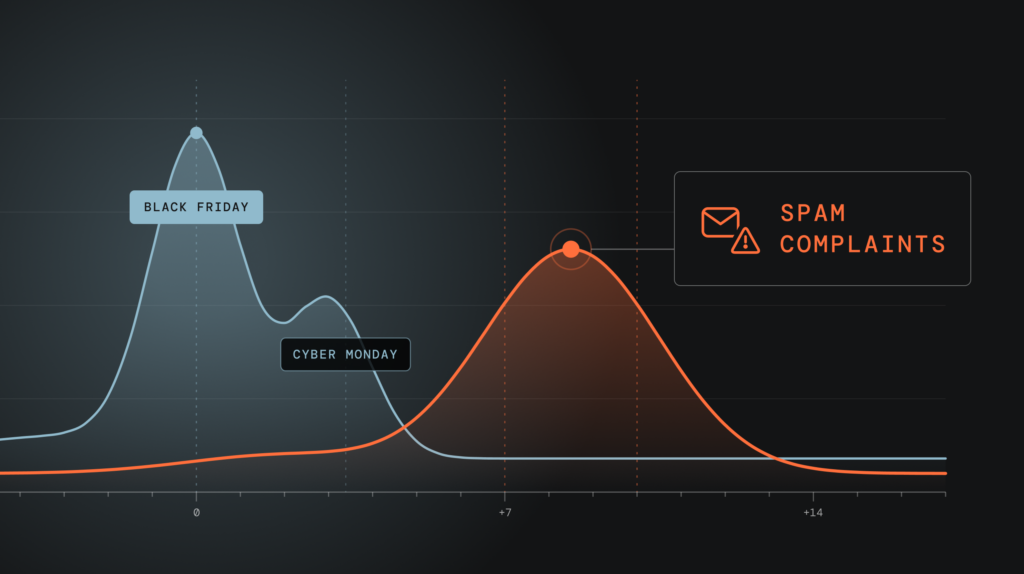
Historically, the period surrounding Black Friday has been characterized by an exponential surge in email sending volume. In 2025, data from the Validity Intelligence Network confirmed this, showing a dramatic increase in email traffic commencing in early November and peaking sharply around Black Friday itself. This concentrated burst of activity, while indicative of aggressive marketing efforts, often carries inherent risks for deliverability. Mailbox providers (MBPs) like Gmail, Outlook, and Yahoo are constantly monitoring sender behavior, and sudden, drastic spikes in volume from senders not typically accustomed to such high frequency can trigger automated filtering mechanisms, impacting inbox placement.
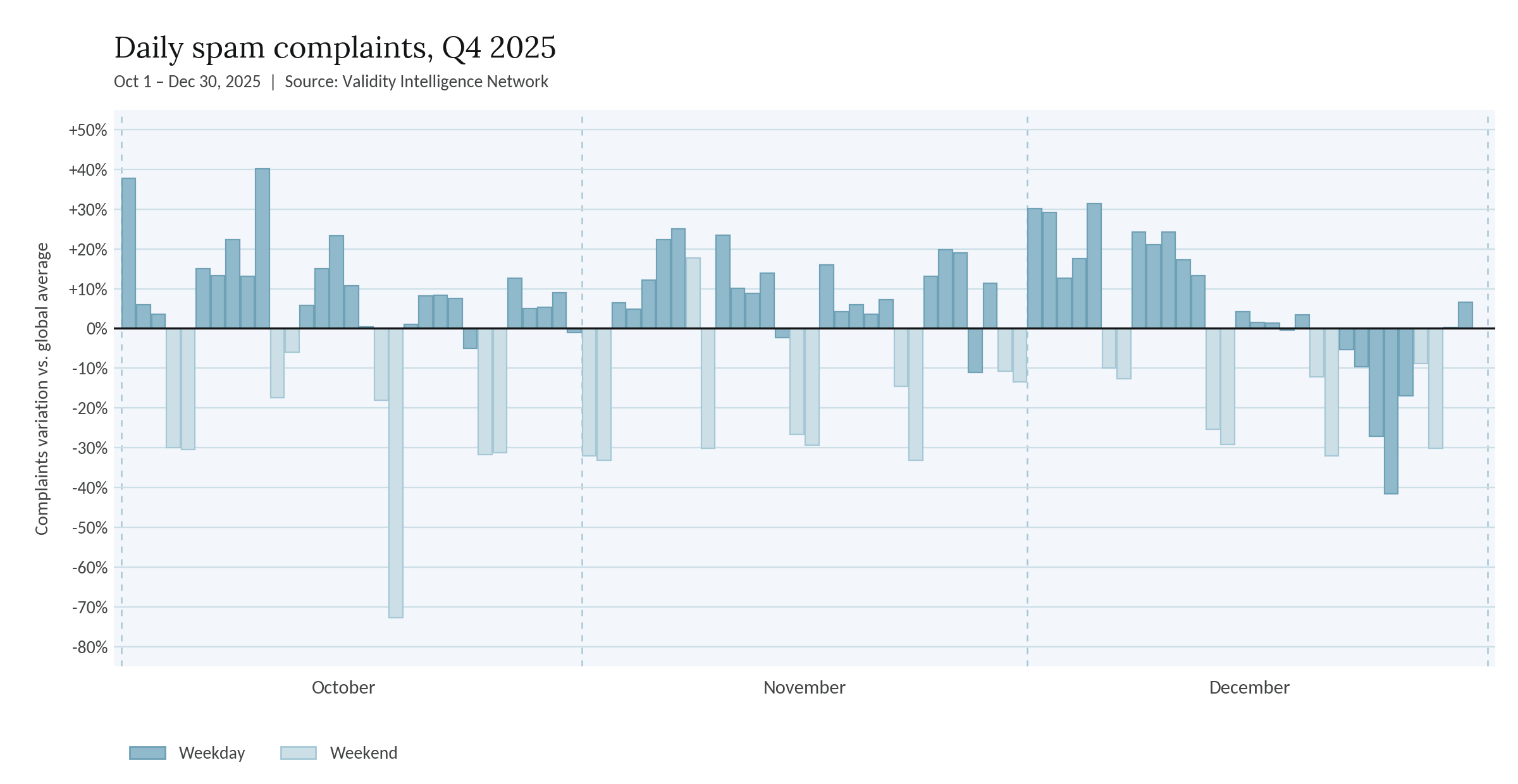
Accompanying the volume surge were distinct patterns in critical deliverability metrics. Spam complaint rates, for instance, typically see an uptick during high-volume periods. The 2025 data revealed that while overall complaint rates remained relatively stable early in the season, they exhibited a noticeable spike immediately after Black Friday and into early December. This suggests that while consumers are receptive to deals leading up to the event, post-sale fatigue or continued aggressive sending can lead to increased subscriber frustration, resulting in more "report spam" actions. For senders, even a slight increase in complaint rates can severely damage sender reputation, leading to future emails being routed to spam folders or even blocked entirely.
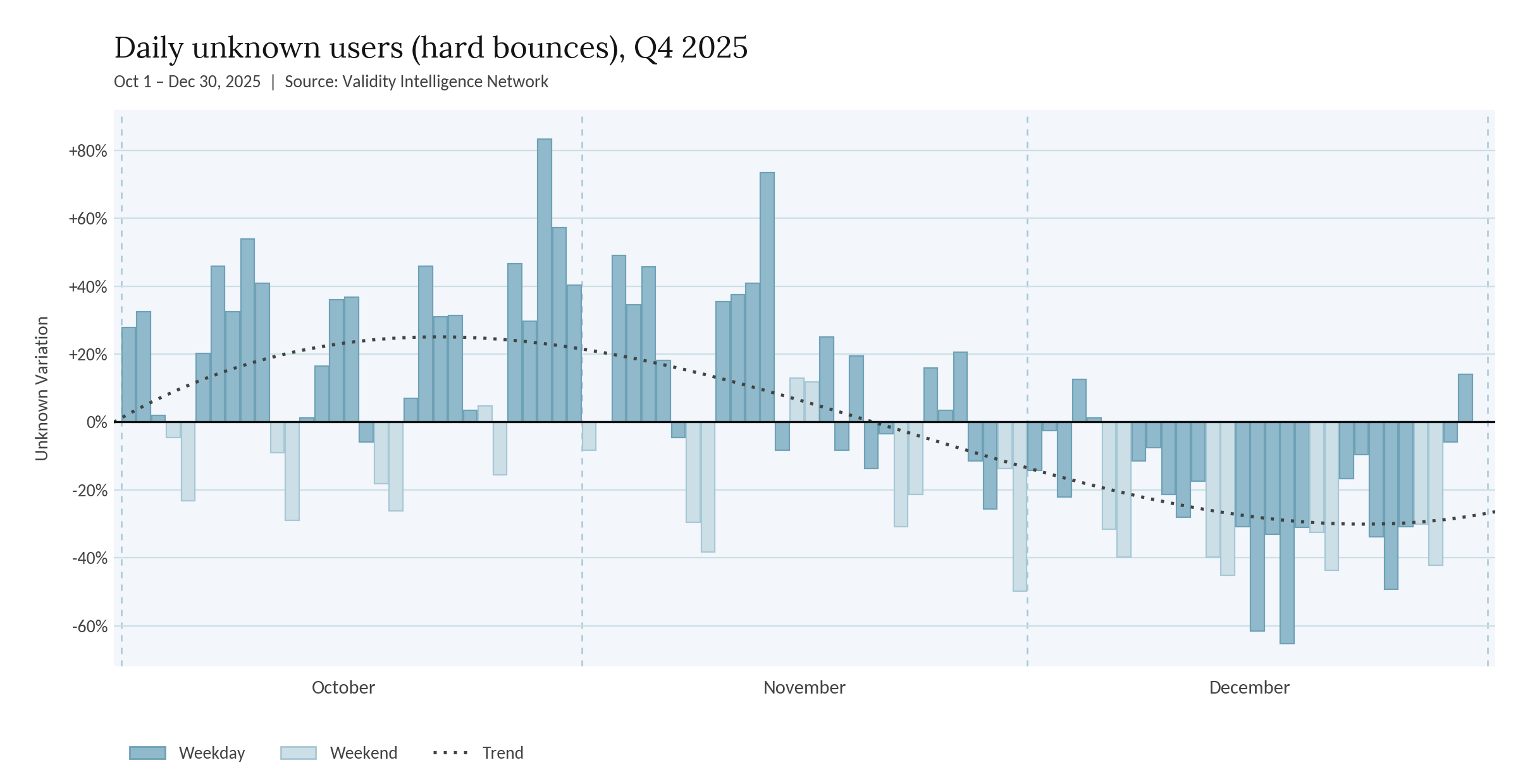
Another critical indicator observed was the rate of "unknown users" or bounces. This metric refers to emails sent to addresses that no longer exist or were never valid. The data showed a gradual increase in unknown users throughout Q4 2025, with a more pronounced elevation around the holiday peak. This trend underscores the importance of rigorous list hygiene, especially before high-volume sending periods. Sending to invalid addresses not only wastes resources but also signals to MBPs that a sender’s list quality is poor, which can negatively impact deliverability across the board. MBPs interpret high bounce rates as an indication of a sender using outdated or purchased lists, further damaging reputation.
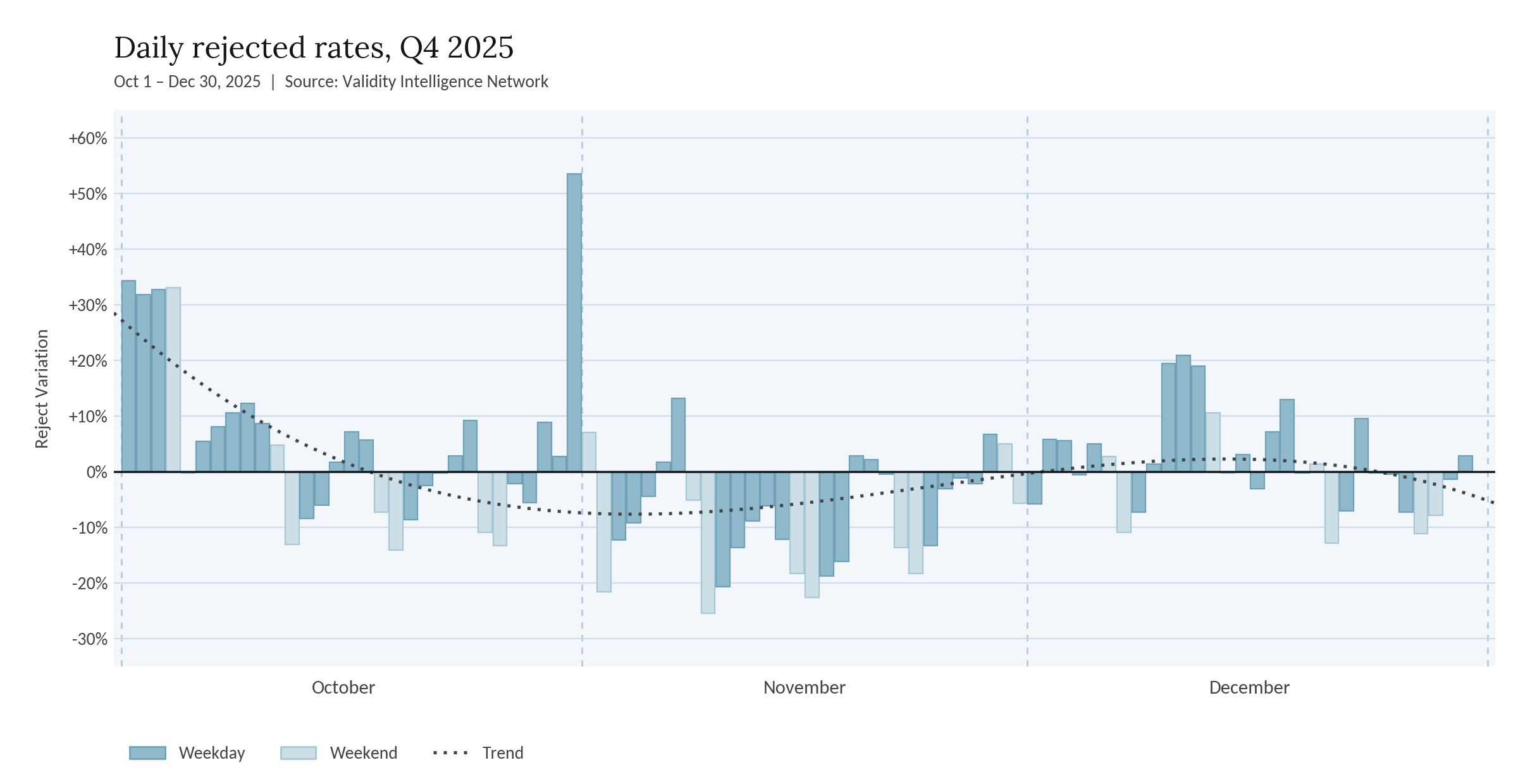
Finally, email rejection rates also demonstrated specific patterns. Rejections, often temporary failures to deliver an email due to server issues or immediate policy violations, saw an increase during the peak sending times. This is often a direct consequence of the sheer volume of emails hitting MBPs’ servers, which can temporarily overwhelm systems or trigger more stringent real-time filtering rules. While temporary rejections can sometimes resolve themselves, persistent rejections or those indicating more severe policy breaches are clear red flags that senders must address promptly.
Key Data Insights from Q4 2025 (Inferred from Image Labels and General Context):
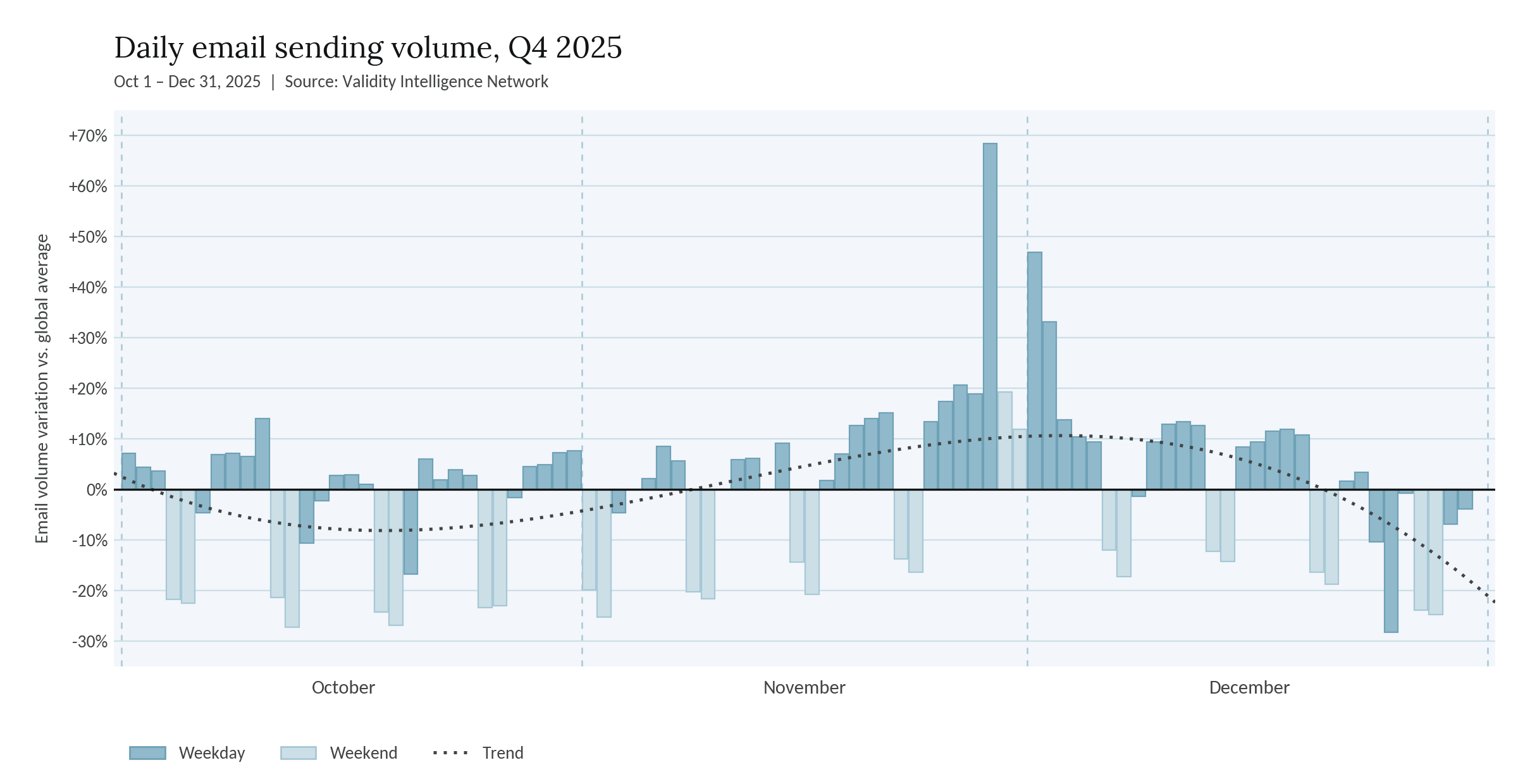
- Sending Volume: A clear upward trend starting in early November, reaching its zenith during the Black Friday/Cyber Monday week, indicating aggressive campaign scheduling. The volume remained elevated through December.
- Spam Complaints: While initial complaint rates might be low, a noticeable spike typically occurs post-Black Friday, suggesting subscriber fatigue or perceived irrelevance of continued promotions. This spike often persists into December.
- Unknown Users: A steady, albeit slight, increase throughout Q4, accelerating during the holiday peak. This highlights the deteriorating quality of email lists over time and the critical need for pre-send verification.
- Rejected Emails: An increase during the highest sending volume periods, indicating potential server strain or heightened filtering by MBPs reacting to unusual sending patterns or content.
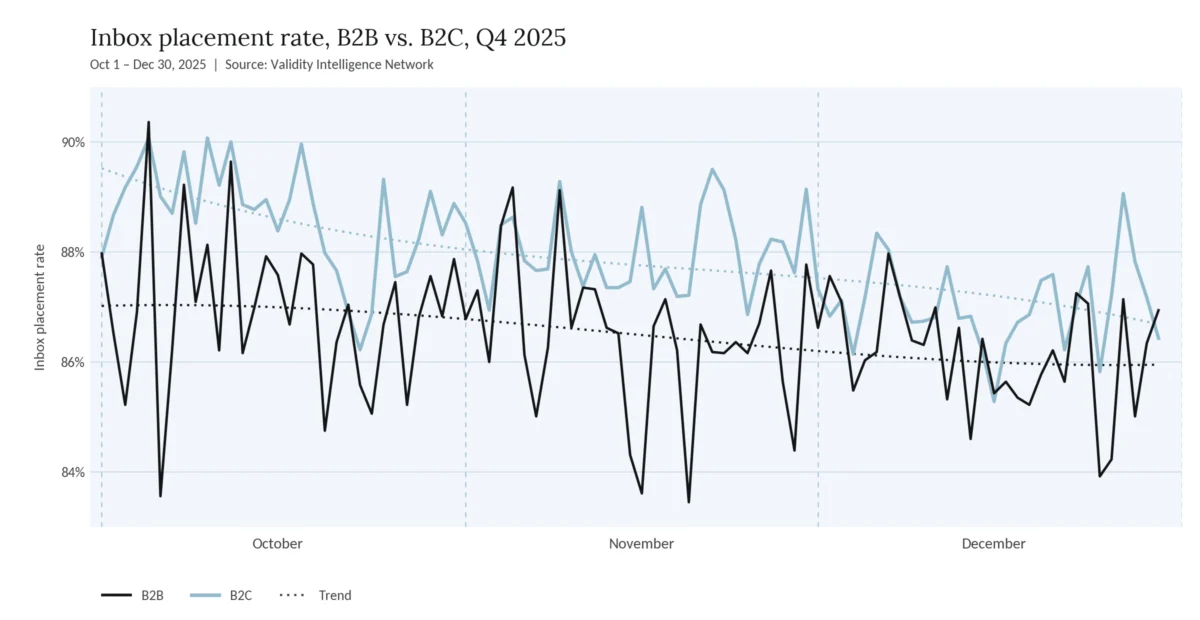
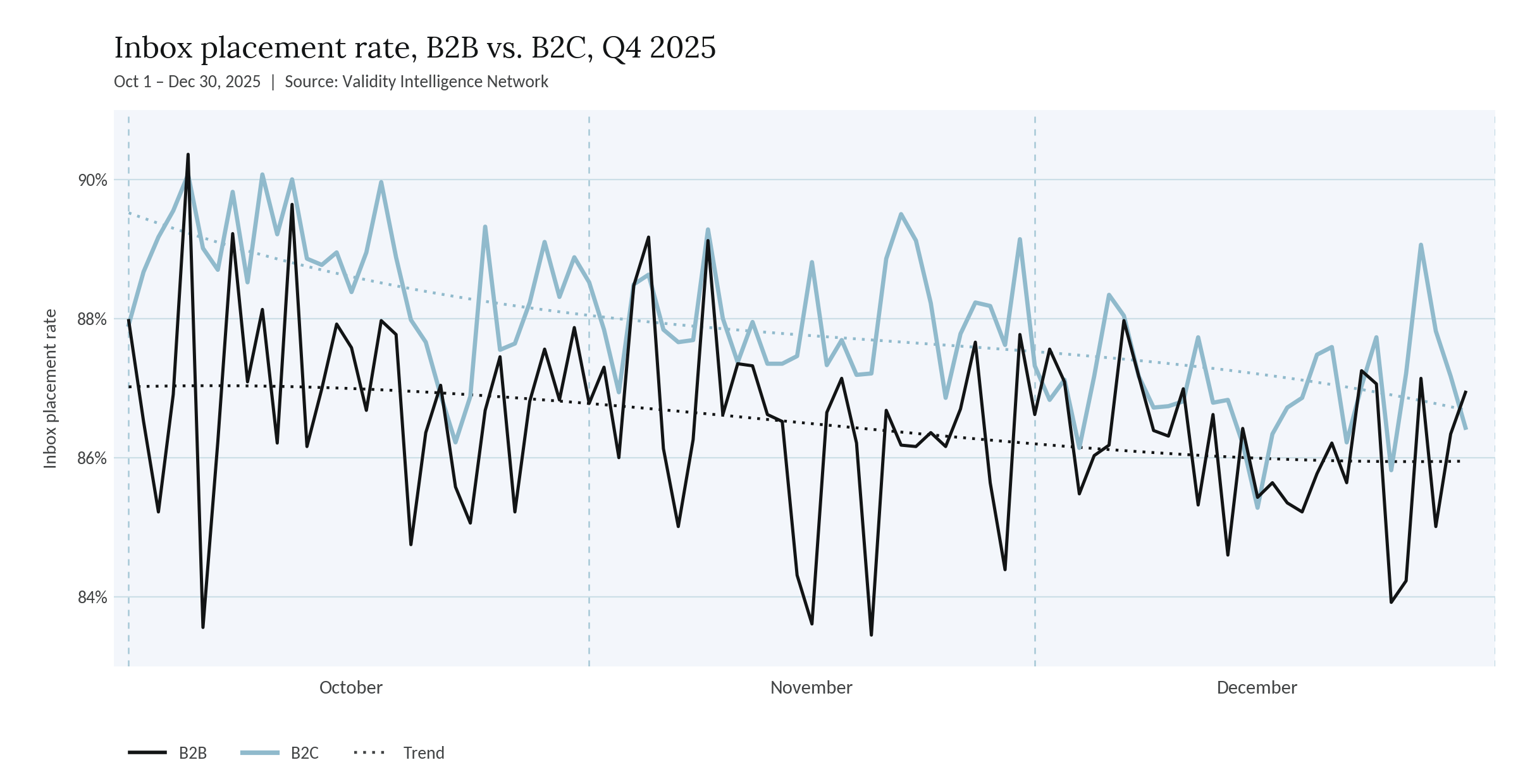
- Inbox Placement B2B vs B2C: A crucial divergence, with B2C experiencing a temporary uplift on Black Friday itself, while B2B saw a significant decline. This points to fundamental differences in audience behavior and sender preparedness.
These insights collectively paint a picture of a holiday season where the sheer volume of email traffic, coupled with varying sender practices, created a challenging environment for maintaining optimal inbox placement.
Divergent Paths: B2B vs. B2C Deliverability Dynamics
While deliverability challenges have increasingly converged for B2C and B2B senders in recent years—largely due to the widespread adoption of Office 365 and Google Workspace, which share similar placement and filtering infrastructures with B2C platforms—the 2025 holiday season revealed a significant divergence during the peak Black Friday period.
B2C inbox placement rates (IPRs) surprisingly saw a three percent increase on Black Friday itself. This uplift can be attributed to several factors. B2C senders are typically more experienced and better equipped for high-volume, high-frequency sending associated with holiday sales. They often have sophisticated segmentation strategies, personalized content, and robust re-engagement campaigns that resonate with consumers actively seeking deals. Furthermore, consumers during this period are generally in a buying mindset, actively looking for promotions, which translates to higher engagement rates and lower complaint rates for relevant emails. This positive engagement signals to MBPs that the emails are desired, thus improving deliverability.
Conversely, B2B inbox placement plummeted by seven percent on Black Friday. This stark contrast highlights a gap in "holiday readiness" between the two segments. Many B2B senders may lack the deep experience in reputation management required for such intense sending periods. Their subscribers, typically professionals, are less likely to be actively seeking sales emails for business purposes on a major consumer shopping holiday. In fact, such emails might be perceived as disruptive or irrelevant, leading to lower engagement, higher spam complaints, and increased filtering by corporate spam filters like Proofpoint, which are designed to protect employees from distractions and potential threats. For many B2B organizations, Black Friday offerings may not be relevant to their target audience, making the aggressive tactics employed by B2C marketers counterproductive and damaging to their sender reputation.
The lesson for B2B senders is clear: blindly adopting B2C holiday strategies without adapting them to a professional audience is fraught with peril. Instead, B2B marketers should focus on value-driven content, targeted promotions that genuinely benefit businesses, and mindful scheduling that respects professional calendars. Learning from B2C’s success in segmentation, personalization, and reputation management, as discussed in Validity’s "State of Email Tactics" conversation with Peloton, can provide valuable insights for B2B marketers to navigate their own peak seasons, even if those peaks occur at different times or with different types of offers.
The Lingering Cost of "Panic Sending": Long-Term Reputation Implications
A critical finding from the 2025 analysis was the lasting penalty associated with "panic sending"—the practice of aggressively ramping up email volume and frequency for Black Friday without careful consideration of deliverability best practices. In previous years, this behavior often resulted in degraded sender reputation and diminished deliverability well into the new year. While the overall email landscape was already becoming more challenging in late 2025, making the direct cause-and-effect harder to isolate, the data still showed a clear correlation.
Specifically, senders who engaged in higher-frequency, higher-volume Black Friday campaigns experienced a greater inbox placement decline of 0.019 percent per day compared to 0.007 percent per day for their more disciplined counterparts. While these figures appear small in absolute terms, the relative difference is almost three times greater. Extrapolating this over a full year, these less disciplined senders would lose an additional 4.6 percent of inbox placement (6.9 percent total decline versus 2.6 percent for disciplined senders).
For marketing and revenue leaders, these seemingly minor dips carry a substantial price tag. At an estimated five cents of revenue per email, that additional 4.6 percent loss in inbox placement translates to a staggering $2,300 per one million emails sent by the end of the year. This financial impact underscores that deliverability is not merely a technical concern but a direct driver of revenue. A damaged sender reputation, once incurred, can be exceptionally difficult and time-consuming to repair, affecting all future email campaigns.
The implications extend beyond immediate revenue losses. A consistently poor sender reputation can lead to emails being consistently routed to spam folders, reduced engagement metrics, and ultimately, a diminished return on investment for the entire email program. This long-term erosion of trust with MBPs and subscribers alike can have profound and lasting effects on a brand’s ability to connect with its audience.
Navigating 2026: Anticipating New Challenges and Regulations
While historical data provides a robust foundation for strategy, 2026 is unlikely to be a simple repeat of 2025. The email marketing landscape is constantly evolving, with major shifts potentially introducing new variables and challenges.
One significant factor is the continuous refinement of mailbox provider algorithms. MBPs like Google and Microsoft are perpetually enhancing their filtering capabilities, placing an ever-increasing emphasis on sender reputation, engagement metrics, and authentication protocols. For example, recent years have seen Google (Gmail) and Yahoo implement stricter authentication requirements (DMARC, SPF, DKIM) and introduce policies around bulk sending, mandating one-click unsubscribe options and low spam complaint rates. These changes are designed to protect users from unwanted emails and improve the overall inbox experience, but they place a greater burden on senders to maintain impeccable practices.
The provided "Gmail Inbox Placement 2026 YTD" graph (inferred to show a fluctuating but generally challenging landscape for Gmail deliverability) would reinforce this point. If the graph indicates periods of lower IPR or volatility, it suggests that even in 2026, maintaining consistent inbox placement, particularly with dominant providers like Gmail, remains a significant hurdle requiring constant vigilance and adaptation. Marketers cannot assume that practices that worked even a year ago will guarantee success today.
Furthermore, the global regulatory environment for data privacy continues to tighten. New-generation privacy laws, such as Europe’s GDPR (General Data Protection Regulation) and California’s CCPA (California Consumer Privacy Act), have fundamentally reshaped how brands collect, store, and utilize personal data, including email addresses. Validity’s separate research indicates that email programs operating under these stringent privacy laws often enjoy significantly better IPRs. This is not coincidental; stronger consent mechanisms, greater transparency in data usage, and broader subscriber choice regarding communication preferences all align perfectly with what MBPs desire from responsible senders. Programs that prioritize these principles build a foundation of trust, leading to higher engagement and better deliverability.
This trend implies that implementing these "future-proof" tactics—regardless of specific regional legal mandates—is becoming a universal best practice. Proactive adoption of robust privacy-centric strategies, such as double opt-in, clear privacy policies, and easy unsubscribe options, can significantly bolster sender reputation and long-term deliverability in an increasingly regulated and user-centric digital environment.
Future-Proofing Deliverability: Strategic Imperatives for Marketers
Given the insights from 2025 and the evolving landscape of 2026, marketers must adopt a multi-faceted, data-driven strategy to ensure their emails consistently reach the inbox. The overarching principle is to prioritize subscriber experience and build trust with both recipients and mailbox providers.
- Prioritize List Hygiene and Consent: The increasing rates of unknown users highlight the critical need for continuous list cleaning. Implement regular checks for inactive or invalid email addresses. More importantly, ensure strong, explicit consent mechanisms. Double opt-in processes are highly recommended, as they verify subscriber intent and drastically reduce the chances of sending to uninterested parties, thus lowering complaint rates and improving engagement. Adhering to "new-generation privacy laws" by ensuring transparent data practices and easy opt-out options is not just a legal requirement but a deliverability imperative.
- Optimize Sending Volume and Frequency: Avoid "panic sending." Instead, develop a calibrated sending schedule that aligns with subscriber expectations and historical engagement patterns. During peak periods, gradual ramps in volume are preferable to sudden spikes. Consider segmenting your audience and tailoring frequency based on their engagement levels. Over-sending to disengaged subscribers is a surefire way to damage reputation.
- Enhance Email Authentication: Ensure all emails are properly authenticated using SPF (Sender Policy Framework), DKIM (DomainKeys Identified Mail), and DMARC (Domain-based Message Authentication, Reporting & Conformance). These protocols verify that an email is genuinely from your domain, preventing spoofing and significantly improving trust with MBPs. Non-authenticated emails are highly likely to be filtered as spam.
- Monitor Deliverability Metrics Continuously: Relying on basic open and click rates is insufficient. Marketers must actively monitor advanced deliverability metrics such as inbox placement rates, spam complaint rates, bounce rates, and blocklist status. Tools that provide real-time insights into these metrics across various MBPs are crucial for identifying and addressing issues before they escalate.
- Segment and Personalize with Precision: Generic, mass emails are increasingly ineffective. Utilize robust segmentation based on demographics, purchase history, engagement levels, and stated preferences. Personalize content to make emails more relevant and valuable to each recipient. This increases engagement, reduces complaints, and signals to MBPs that your emails are desired.
- Focus on Content Quality and Value: Beyond personalization, the content itself must be compelling and provide clear value. Avoid overly promotional or spammy language. Ensure calls to action are clear, and the design is mobile-responsive. A/B test subject lines, preheaders, and email copy to optimize for engagement. For B2B senders, this means focusing on solutions, insights, and genuine business value rather than just discounts.
- Implement Re-engagement and Sunset Policies: Proactively identify and attempt to re-engage inactive subscribers. For those who remain unresponsive after re-engagement efforts, implement a "sunset policy" to remove them from your active mailing lists. Sending to disengaged subscribers harms your sender reputation by inflating complaint rates and lowering engagement metrics.
- Understand and Adapt to MBP Specifics: Each mailbox provider has its own nuances in filtering algorithms. What works for Gmail might not be optimal for Outlook. Stay informed about specific MBP guidelines and adjust strategies accordingly.
This comprehensive list of strategic recommendations might seem daunting, especially during the high-pressure holiday season. This is where specialized technology platforms become indispensable.
Leveraging Technology: The Role of Platforms like Validity Engage
In the complex and rapidly evolving landscape of email marketing, relying solely on manual checks and reactive measures is no longer sustainable. Platforms like Validity Engage are designed to be a strategic partner for marketers, automating the heavy lifting associated with maintaining optimal deliverability.
Validity Engage offers a suite of capabilities that integrate seamlessly into the email workflow, providing proactive insights and safeguards. It performs automated pre-send checks on several critical fronts:
- Data Quality: Ensuring that email lists are clean and free of invalid or high-risk addresses. This minimizes bounces and protects sender reputation.
- Email Verification: Confirming the validity and deliverability of email addresses before a send, preventing wastage and improving IPR.
- Rendering Previews: Allowing marketers to see how their emails will appear across various email clients and devices, ensuring optimal presentation and user experience.
- Deliverability Monitoring: Critically, Engage continuously monitors deliverability performance across every send, providing real-time alerts and insights into inbox placement, spam folder placement, and any emerging issues. This proactive monitoring ensures that problems are caught and addressed before they significantly impact subscribers and, more importantly, before they erode peak season revenue.
By integrating such a platform, marketing teams can shift from a reactive troubleshooting mode to a proactive optimization strategy. This allows them to focus on creating compelling content and strategic campaigns, confident that the technical aspects of deliverability are being expertly managed. The goal is not just to send emails, but to ensure they land in the inbox, engage the recipient, and ultimately drive the desired business outcomes.
In conclusion, the lessons from the 2025 holiday season underscore the non-negotiable importance of strategic deliverability management in email marketing. From understanding the nuanced "danger window" to appreciating the distinct challenges faced by B2B versus B2C senders, and recognizing the long-term financial implications of "panic sending," the data provides a clear roadmap. As marketers prepare for 2026, embracing historical insights, adapting to evolving regulations, and leveraging advanced technological tools like Validity Engage will be paramount to not just surviving, but thriving, in the competitive holiday email rush. The future of email marketing success lies in a commitment to responsible, data-driven, and subscriber-centric practices.

 Sagoh

 Iffa Jayyana