Developing truly exceptional public relations campaign ideas can be an arduous undertaking, fraught with challenges ranging from the initial creative spark to the courage required to stake one’s reputation on a concept. The modern media landscape demands not just novelty, but ideas underpinned by robust data and a deep understanding of audience psychology. Fortunately, strategic research can dramatically elevate the probability of a PR campaign achieving widespread success, transforming speculative creativity into evidence-based innovation. This article outlines a comprehensive two-step methodology for conceiving and executing highly effective PR campaigns, leveraging powerful research tools like BuzzSumo and drawing critical insights from past successful initiatives.
1. Unearthing Resonant Content Themes and Emotional Drivers
The bedrock of any successful PR campaign lies in its ability to tap into themes that consistently resonate with audiences and media outlets. To confidently predict a campaign’s success, PR professionals must meticulously identify content themes that are both consistently discussed and frequently shared or linked across various platforms. Success, in this context, is primarily defined by securing valuable media coverage and backlinks from authoritative sites, with social engagement serving as a crucial secondary Key Performance Indicator (KPI).
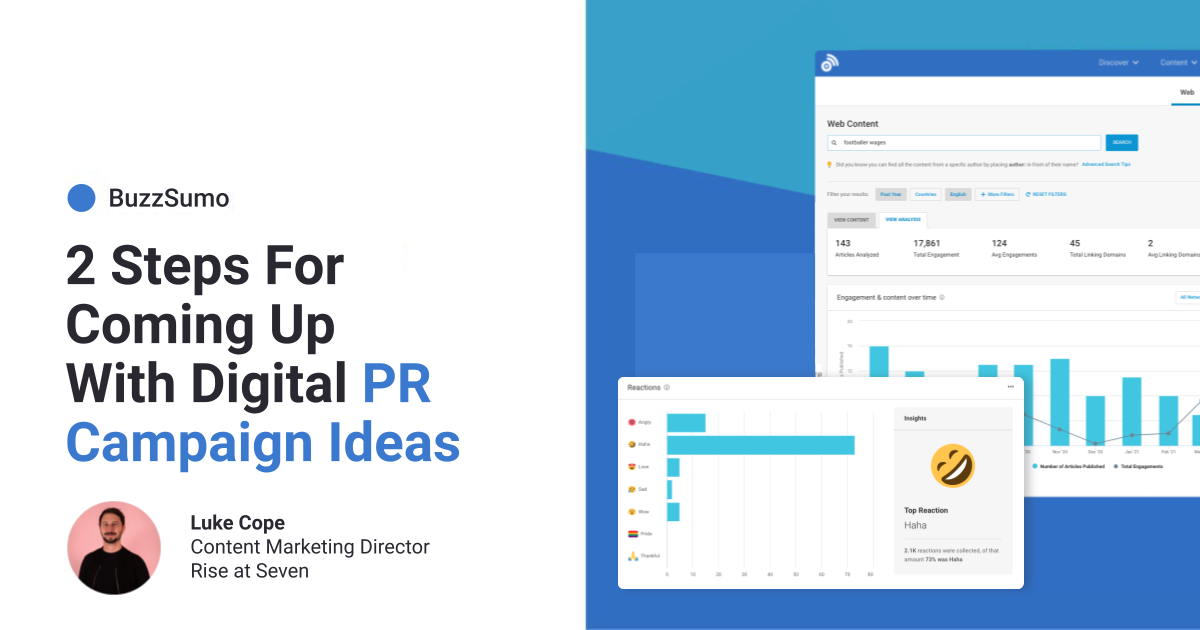
It is important to approach this initial phase without the immediate pressure of generating a concrete campaign idea. Breakthrough concepts rarely emerge fully formed during a brainstorm or the initial research phase. Instead, the process should begin with exploratory research using tools such as BuzzSumo’s Content Analysis Report. This powerful analytical instrument allows for the systematic investigation of popular keywords and topics.
Consider a brand specializing in honeymoon packages. The research would commence with the core product area, "Honeymoons." From there, the scope would broaden to related yet distinct terms, such as "Engagement rings," "Weddings," or "Proposal ideas." This expansion continues until the terms become too far removed from the client’s core offering, ensuring relevance. The goal is not merely to identify popular topics but to understand the underlying currents of public interest and the emotional responses they evoke.
By analyzing metrics like the number of articles published over time, social media engagement trends, and the prevalent emotions associated with these themes, PR professionals can discern genuine opportunities. For instance, a theme showing a steady increase in published articles alongside high average social shares indicates sustained media interest and audience engagement. Furthermore, BuzzSumo’s emotional analysis capabilities reveal whether content around a particular theme tends to evoke joy, sadness, anger, awe, or other sentiments. Understanding these emotional triggers is paramount, as emotions are powerful drivers of sharing and engagement.
Case Study in Action: The "World Without Light Pollution" Campaign
To illustrate this first step, consider a campaign focused on depicting the world’s most light-polluted cities without artificial illumination. The initial product theme for the client was "Star maps," which, while niche, lacked the broad appeal for a large-scale PR campaign. The research then branched out:
- Secondary Theme 1: Supermoons. Analysis revealed significant social engagement around this topic, indicating its appeal and potential for reactive PR due to its regular occurrence.
- Secondary Theme 2: Night Sky. This broader theme also showed substantial social engagement, confirming a general public fascination with celestial phenomena.
- Secondary Theme 3: Light Pollution. This theme proved to be a goldmine. It consistently garnered high social engagement and was a current, evolving topic with ample scope for innovative ideas.
Crucially, the timing for the "Light Pollution" theme was particularly ripe. The period before the campaign’s launch saw a significant surge in discussions around light pollution, partly fueled by SpaceX’s satellite launches, which raised concerns about increased atmospheric light interference. Concurrently, the global COVID-19 pandemic had brought general pollution and environmental impact into sharp focus, making "pollution" a highly relevant and "hot" topic. This confluence of factors signaled that the moment was opportune for a campaign centered on light pollution.
Further analysis of reader reactions to articles concerning light pollution revealed two dominant emotional responses: sadness regarding the loss of natural night skies and a profound sense of "wow" or awe when presented with images of pristine, star-filled vistas. This emotional insight became a cornerstone of the campaign’s development, dictating that the final output needed to be highly visual, evoke awe, and provoke contemplation about a world unmarred by light pollution.
Another Illustrative Example: The "Footballer Car Cost Calculator"
A different campaign, centered on private number plates, followed a similar research trajectory. While the product theme "Private number plates" offered some humorous content, it wasn’t robust enough for a major campaign. The research expanded into aspirational lifestyle themes:
- Secondary Theme 1: Celebrity Cars. This topic consistently generated a high volume of articles, indicating strong media interest.
- Secondary Theme 2: Footballers’ Cars. This sub-theme showed even greater content volume and, critically, a significant volume of emotional reactions in article comments.
A deeper dive into the comments sections of articles about footballers’ cars revealed a compelling psychological dynamic. Readers were often "driven mad" by the perceived opulence and excessive spending, displaying elements of competitiveness and one-upmanship. People instinctively compared their own financial realities to the lavish lifestyles of athletes. This powerful observation directly inspired the campaign idea: to create a calculator that would allow individuals to literally compare their earnings to the cost of a footballer’s car, making the comparison tangible and emotionally resonant.
The ability to emerge from this research phase with an idea that is firmly linked to proven successful themes and capable of tapping into one or two strong emotions is a significant indicator of potential success. This rigorous, data-driven approach forms the essential first step before embarking on any campaign.
2. Optimizing Format and Adding Strategic Depth
The intrinsic quality of a campaign idea, no matter how brilliant, is inherently tied to its execution. A concept that might thrive as an interactive visualization could fall flat as a simple blog post. The second crucial step involves determining the absolute best format for the chosen idea and then enriching it with layers of depth and multiple angles for outreach.
For the "World Without Light Pollution" campaign, a traditional blog post would have entirely undermined the intended "wow factor." While static images of redesigned skylines might have had some impact, the strategic inclusion of a simple interactive slider, allowing users to toggle between "before" (light-polluted) and "after" (pristine night sky) views, elevated the experience significantly. This interactivity transformed passive viewing into an engaging, immersive exploration.
Beyond the format, the depth and breadth of angles an idea offers are paramount. While a single, compelling angle can be sufficient, maximizing impact often requires developing several. In the light pollution campaign, a powerful initial angle was the statistic that 85% of Americans had never seen the Milky Way. This immediately established the problem’s scale and emotional resonance. To add further depth, the campaign integrated data from the Bortle scale, a numerical index measuring sky darkness. This allowed for a direct comparison of the most light-polluted cities (Bortle scale 10) with their hypothetical appearance under pristine conditions (Bortle scale 1). Crucially, recognizing that light pollution is a global issue, the campaign expanded its scope beyond the USA, making it globally relevant and increasing its potential for international media coverage.
The "Touch the Germs" Campaign: Interactivity and Real-World Impact
Another exemplary campaign, implied to be around public hygiene or germ awareness, demonstrates the power of format and depth. While the concept could have been presented as a basic graphic or a simple data list, the creative team pushed further, developing an interactive "microscope function." This allowed users to virtually explore surfaces and visualize the unseen world of germs, transforming abstract data into a tangible, engaging experience.
This campaign’s combination of depth (detailed germ data, potential health implications) and an innovative format led to a significant volume of media links. More impressively, it garnered high-level media attention, with the Mayor of London reportedly commenting on the issue. This illustrates how a meticulously crafted format, designed to amplify the core message, can not only secure extensive media coverage but also influence public discourse and even policy-makers.
Learning from Missed Opportunities: "Who Owns All the Space Junk?"
Even well-intentioned campaigns can sometimes fall short of their full potential due to format or depth limitations. The "Space Junk" campaign from Aira, while visually appealing, offers a valuable lesson. The piece effectively visualized who owns space junk broken down by country. However, it likely faced constraints, possibly from the client’s website platform, which prevented it from achieving its maximal impact.
While the core angle of "who owns all the space junk" was strong, the campaign could have been significantly enriched. What are the different types of space junk? How has the volume and composition of space junk evolved from the 1960s to the present? What are the projections for space junk in the next 100 years? These questions represent numerous avenues for added depth and interactive elements that could have transformed a good visualization into an extraordinary, highly shareable, and deeply informative campaign. This highlights the importance of pushing beyond initial concepts to explore every conceivable dimension of a theme.
Simplicity in Genius: "iPods Visualized as Vinyl"
Not all effective formats need to be technologically complex. Mark Johnstone’s "iPods Visualized as Vinyl" campaign exemplifies the power of elegant simplicity. This idea involved visually re-imagining iconic iPod models as classic vinyl records. The brilliance lay in the stark, yet nostalgic, contrast between two eras of music consumption. The simplicity of the visual concept belied its profound depth, tapping into cultural memory, technological evolution, and the enduring appeal of physical media. This campaign’s success was driven by its strong aesthetic, clear concept, and inherent emotional resonance, proving that sometimes, the most straightforward approach can be the most impactful.
Revisiting the "Footballer Car Cost Calculator": Depth Through Data
The "Footballer Car Cost Calculator" campaign, born from the emotional insights discussed earlier, also benefited immensely from carefully considered depth and multiple angles. The core data—footballers’ weekly wages versus the cost of luxury cars—was straightforward, but the ways it could be framed for outreach were numerous. Angles included:
- "How many years would it take an average person to afford [specific footballer’s car]?"
- "The staggering cost of [luxury car brand] in footballer salaries."
- "Top X footballers who could buy their car in a single week."
- Regional breakdowns of average wages vs. car costs.
By providing these diverse angles, the campaign offered journalists multiple entry points, increasing the likelihood of securing varied coverage across different media segments, from financial news to lifestyle and sports sections.
Ultimately, pairing a compelling idea with the optimal format and then enriching it with extensive depth and multiple outreach angles dramatically increases its chances of success. When these elements are synergistically combined with the initial research into successful themes and emotional drivers, PR campaigns are poised to achieve significant impact across both digital PR and social media landscapes.
Strategic Tips for Maximizing PR Campaign Success
Beyond the two-step framework, several strategic considerations can further enhance the effectiveness and reach of PR campaigns:
Re-using Initial Research for Targeted Seeding Lists
One of the most efficient practices in PR is to leverage the initial research phase to construct highly relevant media seeding lists. By returning to the BuzzSumo Content Analysis Report, PR professionals can identify and export articles that have previously covered the campaign’s subject matter. This allows for the creation of a pre-qualified list of journalists and publications with a demonstrated interest in the topic.
BuzzSumo’s outreach tools facilitate this process by allowing users to save journalists to specific projects and export their contact details. This ensures that outreach efforts are focused on individuals and outlets most likely to be receptive to the pitch, significantly increasing response rates and coverage potential. Further insights into effective pitching strategies can be gleaned from comprehensive studies, such as BuzzSumo’s own research into 600,000 journalists, which offers valuable guidance on crafting compelling pitches and securing media coverage. Additionally, industry thought leaders like Fractl provide excellent resources on avoiding common PR pitfalls and maximizing traffic through earned media links, offering further inspiration for campaign ideas.
Gaining Stakeholder Buy-in and Idea Sign-Off
The subjective nature of creative ideas often presents a significant hurdle in gaining internal and client approval. Different stakeholders may have their own opinions and preferences, leading to potential disagreements or delays. However, the rigorous research conducted in the first stage of this methodology offers a powerful solution: data-driven validation.
By presenting a comprehensive report detailing the engagement metrics and emotional analysis of various themes, PR professionals can transform subjective discussions into objective, evidence-based decisions. Packaging the findings from BuzzSumo’s Content Analysis Report – showcasing the consistent popularity, social engagement, and emotional resonance of chosen themes across different publishers – provides a compelling rationale for the proposed campaign. This data-backed approach instills confidence, streamlines the approval process, and ensures that resources are allocated to ideas with the highest probability of success.
Key Takeaways for Future-Proof PR Campaigns:
- Deep Dive into Themes and Engagement: Prioritize exploring content themes that demonstrate consistent media coverage and high audience engagement, using tools like BuzzSumo for data validation.
- Emotional Connection is Paramount: Ensure campaign ideas tap into at least one strong emotion (e.g., awe, sadness, anger, joy) to maximize shareability and resonance.
- Optimal Format is Non-Negotiable: Match the campaign idea with the most effective format. This might range from interactive calculators and visual sliders to compelling data visualizations or simple, striking graphics. The format should amplify the message, not merely convey it.
- Leverage Comparative Insights: Create emotional responses by drawing comparisons between aspirational ideals and reality (e.g., footballer wages versus average incomes, light pollution versus pristine galaxy views).
- Build Extensive Depth and Angles: Add as much factual and contextual depth as possible to campaign ideas. This generates multiple unique angles, providing diverse hooks for media outreach and broadening the campaign’s appeal across various journalistic beats.
For PR professionals seeking to validate their own campaign ideas and refine their strategic approach, exploring the capabilities of BuzzSumo’s Content Analysis Report is a highly recommended next step. A free 30-day trial is available to begin harnessing the power of data-driven insights.