admin
admin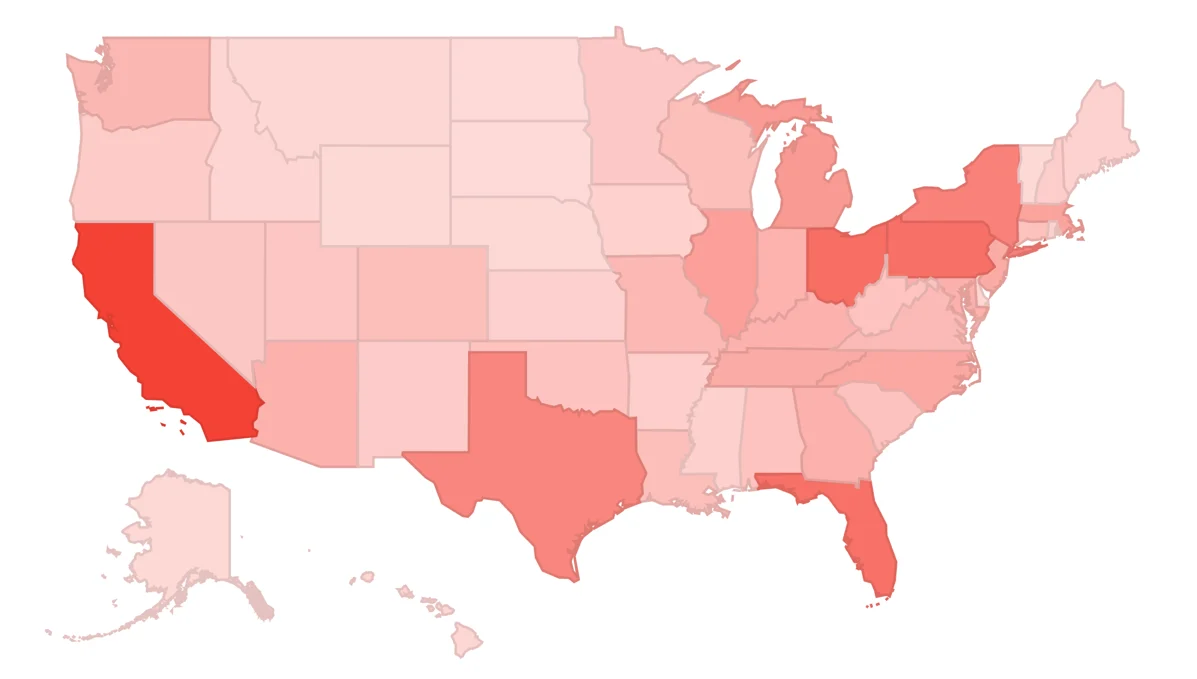
The United States is currently grappling with one of the most significant public health challenges in its modern history, a crisis defined by a staggering increase in drug overdose deaths driven primarily by opioids. While personal narratives and investigative journalism have long highlighted the human toll of this epidemic, a deeper dive into the statistical landscape reveals a complex web of shifting demographics, varying lethality across drug classes, and a stark disparity between the United States and the rest of the international community. By synthesizing data from the Centers for Disease Control and Prevention (CDC), the United Nations Office on Drugs and Crime (UNODC), and demographic studies from FiveThirtyEight, researchers are beginning to map the contours of a crisis that has evolved through several distinct phases over the past three decades.
The Three Waves of the Opioid Epidemic
To understand the current state of the opioid crisis, it is essential to examine the chronology of its development, which public health officials generally categorize into three distinct waves. The first wave began in the late 1990s, characterized by a sharp increase in overdose deaths involving prescription opioids. This period saw a rise in the prescription of natural and semi-synthetic opioids, fueled by changes in pain management philosophies and aggressive marketing by pharmaceutical companies.
The second wave emerged around 2010, marked by a rapid increase in overdose deaths involving heroin. As access to prescription opioids became more restricted due to tighter regulations and monitoring programs, many individuals suffering from opioid use disorder transitioned to heroin, which was often more affordable and more readily available on the illicit market.
The third and most lethal wave began in 2013, defined by a surge in deaths involving synthetic opioids, particularly illicitly manufactured fentanyl. Fentanyl, a substance 50 to 100 times more potent than morphine, has fundamentally altered the risk profile of drug use in America. Because it is often mixed into other drugs—such as cocaine, methamphetamine, or counterfeit pills—without the user’s knowledge, the risk of accidental overdose has reached unprecedented levels.
Comparative Lethality and Usage Patterns
Analysis of drug usage by age group provides a surprising contrast between the prevalence of drug use and the resulting mortality rates. Data suggests that while substances like marijuana and cocaine have significantly higher adoption rates across various age demographics, their lethality does not scale proportionally when compared to heroin and synthetic opioids.
For instance, heroin usage is statistically concentrated among the 20-34 age demographic. Despite having a smaller total number of users compared to "recreational" drugs or stimulants like cocaine and crack, heroin accounts for a disproportionately high number of fatalities. This "lethality gap" underscores the inherent danger of opioids; even a relatively small population of users faces a significantly higher risk of death per usage instance than users of other illicit substances.
Furthermore, data regarding older age groups (45-65) shows a higher prevalence of cocaine and crack usage compared to heroin. However, the introduction of fentanyl into the stimulant supply chain in recent years has begun to close the mortality gap for these older demographics, as many who believe they are consuming a stimulant are inadvertently exposed to lethal doses of synthetic opioids.
The United States in a Global Context
When viewed through a global lens, the United States remains a massive outlier in terms of drug overdose fatalities. Data from the UNODC indicates that the U.S. leads the world in both absolute overdose deaths and deaths per million residents. While other nations face their own substance abuse challenges, the scale of the American crisis is unique.
Countries such as Iceland have occasionally appeared as outliers in per capita data; however, due to Iceland’s small population (approximately 370,000), a minor increase in the absolute number of deaths (e.g., 40 to 50) results in a high statistical rate per million. In contrast, the United States maintains a high death rate across a population of over 330 million, indicating a systemic and widespread crisis.
Other nations with notable overdose rates include Sweden, Australia, and El Salvador. Yet, even in these instances, the death rates typically remain less than half of those recorded in the United States. The disparity suggests that the American crisis is driven by a unique combination of factors, including high rates of opioid prescribing, a highly efficient illicit distribution network for synthetic drugs, and varying levels of access to healthcare and harm reduction services.
Regional Trends and Domestic Hotspots
Within the United States, the epidemic does not impact every region with equal intensity. CDC data highlights specific "hotspots" where the crisis has taken its deepest toll. Historically, the Appalachian region—including West Virginia, Ohio, and Kentucky—and parts of the Northeast, such as New Hampshire and Massachusetts, have recorded the highest overdose rates.
However, the "development trends" of the epidemic are shifting. While some states that were hit early by the crisis have seen a plateauing of death rates due to aggressive public health interventions and expanded access to life-saving medications like Naloxone, other states are seeing rapid escalations. Western states, which were historically less affected by the heroin and fentanyl waves that plagued the East Coast, are now seeing sharp increases in synthetic opioid deaths as illicit fentanyl penetrates western drug markets.
Statistical analysis identifies three categories of states:
- High-Burden, High-Growth: States where the death rate is already high and continues to climb rapidly.
- High-Burden, Stabilizing: States with high death rates that have begun to see a deceleration in the growth of new cases.
- Low-Burden, Emerging: States that previously had low overdose rates but are now experiencing the fastest year-over-year percentage increases.
Official Responses and Public Health Implications
The response from federal and state authorities has evolved alongside the data. The Drug Enforcement Administration (DEA) has intensified its focus on the "Chemical Trail," attempting to intercept the precursor chemicals used to manufacture fentanyl before they reach clandestine labs. Simultaneously, the CDC has issued revised guidelines for opioid prescriptions, urging healthcare providers to prioritize non-opioid pain management therapies for chronic pain.
Legislative efforts have also focused on harm reduction. The widespread distribution of Naloxone (Narcan), an opioid antagonist that can reverse an overdose, has saved tens of thousands of lives. Additionally, the expansion of Medication-Assisted Treatment (MAT)—using medications like methadone or buprenorphine—has become a cornerstone of the clinical response to opioid use disorder.
Despite these efforts, the economic and social costs remain staggering. A report from the Joint Economic Committee (JEC) estimated that the opioid epidemic cost the U.S. economy nearly $1.5 trillion in 2020 alone, accounting for healthcare costs, lost productivity, and the economic value of lives lost.
The Role of Data in Shaping Future Policy
As the crisis continues to evolve, the role of data science and visualization has become increasingly critical. Public health officials and independent analysts use tools like Google Data Studio and GIS mapping to identify emerging clusters of overdoses in real-time. This "predictive" approach allows for the deployment of resources—such as mobile clinics and Naloxone distribution teams—to the areas where they are most needed.
The transition from viewing the opioid crisis through a purely criminal justice lens to a data-driven public health perspective is perhaps the most significant shift in the national strategy. By analyzing trends and patterns, researchers can move beyond reactive measures and begin to address the underlying socio-economic factors—such as "deaths of despair" linked to economic instability—that contribute to the cycle of addiction.
Conclusion and Future Outlook
The U.S. opioid epidemic is a multifaceted tragedy that requires a multi-pronged solution. The data reveals that while heroin and prescription pills were the primary drivers in previous decades, the current era is defined by the lethality of synthetic opioids. The sheer volume of fatalities in the United States compared to global averages underscores the need for continued innovation in treatment, prevention, and international cooperation to disrupt supply chains.
For analysts and policymakers, the goal remains clear: to use the wealth of available data to understand the nuances of drug adoption and lethality. Only through a rigorous, evidence-based approach can society hope to reverse the trends of the last thirty years and mitigate the impact of a crisis that continues to claim hundreds of lives every day. The journey toward recovery for the nation is long, but the patterns identified in the data provide the roadmap necessary for effective intervention and, ultimately, the preservation of life.