Azzam Bilal Chamdy

The global influencer marketing industry has undergone a radical transformation, with total US spending projected to surpass $10 billion in 2025 according to eMarketer estimates. As the capital flowing through these digital channels increases, the software infrastructure required to manage these investments has become increasingly specialized. CreatorIQ has long stood as the standard for massive, multi-brand conglomerates requiring rigorous compliance and approval workflows. However, as the market matures, many organizations find that the "enterprise-first" architecture of CreatorIQ may offer more complexity than utility for specific business models, particularly those focused on direct-to-consumer (DTC) sales and agile agency operations.
The Shift from Enterprise Control to Performance Attribution
For large companies operating dozens of brands across multiple continents, CreatorIQ provides a necessary "paper trail." It allows compliance teams to sign off on every creative asset and maintains a central record of every decision made by hundreds of disparate team members. Yet, for single-brand entities or performance-focused agencies, these layers of bureaucracy can become a bottleneck. The core challenge for modern marketers is no longer just "who approved this post," but "which creator actually drove last month’s sales."
Industry data indicates a significant shift in how ROI is calculated. While legacy platforms often prioritized vanity metrics such as follower counts and reach, contemporary alternatives are pivoting toward deep commerce integration. This shift is driven by the realization that engagement rates often inversely correlate with audience size. An analysis of over 10 million creator profiles across Instagram, TikTok, and YouTube revealed that nano-creators (those with fewer than 10,000 followers) maintain a median engagement rate of 2.5% on Instagram, while mega-creators (those with over 1 million followers) see that figure drop to 0.8%. Consequently, a report based solely on reach can provide a fundamentally misleading picture of a campaign’s actual economic impact.
Essential Criteria for Selecting a CreatorIQ Alternative
When evaluating a transition from CreatorIQ, procurement teams and marketing directors generally prioritize five critical areas of functionality:
1. Commerce and Ecosystem Integration
The most significant differentiator between influencer platforms today is their ability to communicate with the "source of truth"—the online store. A platform must natively integrate with major ecommerce engines like Shopify, Amazon, WooCommerce, Magento, or BigCommerce. Without this connection, sales attribution remains a manual, error-prone process involving spreadsheets and discount code exports.
2. Precision in Sales Attribution
The standard formula for ROI—((Return – Cost) / Cost) x 100—is only as accurate as the "Return" figure. Modern alternatives allow brands to track a single sale back to a specific creator in real-time. This level of granularity is essential for moving away from "influencer marketing" as a brand awareness expense and toward "creator marketing" as a performance-driven sales channel.

3. Automation and Manual Labor Reduction
Marketing teams often lose dozens of hours each week exporting data from disparate tools and matching it by hand. The new generation of platforms utilizes AI-driven agents to handle repetitive tasks. For example, some systems now automate the outreach and follow-up process, which is traditionally where campaigns lose momentum.
4. Regulatory Compliance and Brand Safety
As the Federal Trade Commission (FTC) in the US and the Advertising Standards Authority (ASA) in the UK tighten disclosure rules, platforms must provide automated tools to ensure creators are using the correct hashtags (e.g., #ad or #sponsored) and following regional legal requirements.
5. Historical Learning and Predictive Analytics
Advanced platforms are now moving beyond simple databases. They analyze a brand’s past campaign history to suggest "lookalike" creators who share characteristics with those who have historically delivered the highest sales volume.
Comparative Analysis of Leading Industry Alternatives
The market for influencer management software has segmented into distinct niches. Below is an analysis of the seven primary alternatives to CreatorIQ and the specific team types they serve.
Upfluence: The AI-Agentic Approach for Ecommerce
Upfluence has positioned itself as the primary alternative for brands and agencies that are judged strictly on sales performance. Its standout feature is "Jaice," an AI agent designed to manage the "middle-funnel" of influencer management. According to data from 2025 campaigns, outreach emails written by this AI agent saw a 22% higher reply rate than human-written counterparts. By automating the follow-up process, the platform allowed brands to hire a reported 160,000 creators in a single year. Upfluence’s ability to connect natively with Amazon and Shopify makes it a preferred choice for teams that need to trace every dollar spent back to a specific purchase.
Traackr: The Enterprise Competitor
For organizations that still require the high-level compliance and multi-user controls of CreatorIQ but want a different user experience, Traackr is the closest equivalent. It is particularly dominant in the beauty, fashion, and consumer electronics sectors. Traackr distinguishes itself through its "reputation-risk screening" and its ability to track competitor creator strategies. With starting prices around $20,000 per year, it remains a premium enterprise solution.
Kolsquare: The European Specialist
Based in Paris, Kolsquare has become the go-to for European programs with strict data-privacy needs. Their platform is built with GDPR at its core and offers specialized guidance on EU and UK influencer regulations. For brands whose primary market is Europe, Kolsquare provides localized benchmarks that North American-centric platforms often lack.

Later Influence: The Integrated Social Suite
Formerly known as Mavrck, Later Influence is designed for social media managers who want their creator campaigns to live in the same ecosystem as their post-scheduling tools. This is ideal for smaller teams where the same person handles organic social and influencer outreach. However, its creator discovery is limited to an opted-in index, which may be restrictive for brands in highly specialized niches.
Grin: The Shopify-First Powerhouse
Grin gained significant market share by focusing almost exclusively on the Shopify ecosystem. By treating creator management as an extension of the store’s workflow—handling gifting, affiliate payouts, and logistics within the Shopify interface—it provides a seamless experience for DTC brands. Its limitation lies in its focus; brands selling across multiple non-Shopify channels may find it less flexible.
Aspire: Community and Long-Term Ambassadors
Aspire (formerly AspireIQ) focuses on the "community" aspect of influencer marketing. It excels at managing inbound applications, where creators apply to work with a brand rather than the brand searching for them. This model is highly effective for large-scale ambassador programs and User-Generated Content (UGC) workflows.
Modash: High-Volume Search and Self-Serve
Modash is the outlier in the group, offering a self-serve model with a 14-day free trial. With a database of over 250 million profiles, it is the tool of choice for teams that prioritize discovery and volume over deep workflow management. It is often the most affordable entry point for mid-market brands.
Economic Implications of the Transition
The decision to switch from a platform like CreatorIQ is often driven by a "cost of complexity" audit. Mid-sized brands frequently find they are paying for "seats" and "approval layers" that they never use. When a brand scales down from a massive enterprise tool to a performance-oriented one, the primary gain is often speed.
Furthermore, the rise of "agentic AI" in platforms like Upfluence suggests a future where the head-count required to run a massive creator program is significantly reduced. In 2025, the ability for a single marketing manager to oversee 1,000 creators through automated follow-ups and AI-driven vetting represents a fundamental shift in the economics of the industry.
Regulatory and Compliance Context
The legal landscape surrounding influencer marketing is becoming increasingly treacherous. In the United States, the FTC’s "Disclosures 101" guidelines require clear and conspicuous notifications of material connections. In the UK, the Competition and Markets Authority (CMA) has taken a similarly aggressive stance.
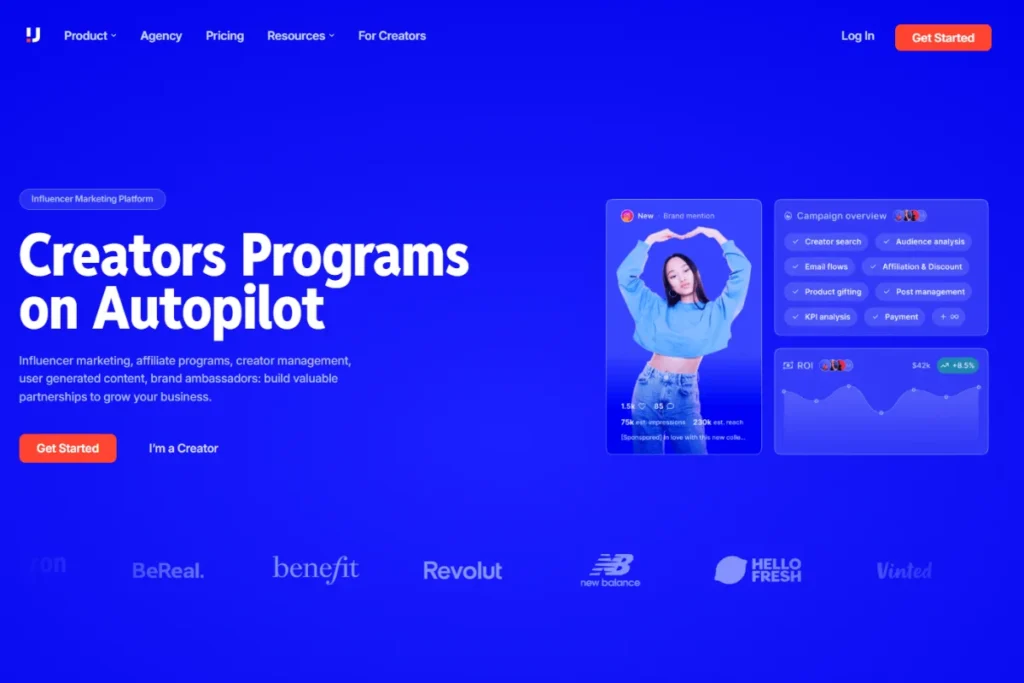
Alternatives to CreatorIQ are now competing on their ability to automate this oversight. Platforms that can automatically flag posts missing disclosure tags or those that fail to meet regional standards (such as the specific wording required in the French market) are becoming indispensable. This is no longer just a "feature" but a core requirement for any brand operating in the public eye.
Implementation and Migration Strategy
Switching enterprise software is a high-stakes endeavor. Industry experts recommend a phased migration. The first step involves exporting historical creator lists and campaign performance data from CreatorIQ. Brands are then advised to run a "pilot" program on the new platform for a single brand or region before migrating the entire organization.
The final test in any demo should be a "live attribution check." Prospective buyers should ask a vendor to trace a specific sale from the previous month back to the creator who drove it. If the platform cannot do this in a few clicks, it likely fails the performance-marketing test.
Conclusion: Matching Technology to Team Structure
The "best" CreatorIQ alternative is entirely dependent on the organizational structure of the marketing team. For multi-brand conglomerates with heavy compliance needs, staying with CreatorIQ or moving to Traackr is the logical choice. For European brands, Kolsquare offers the most regulatory peace of mind. However, for the vast majority of ecommerce-driven brands and performance agencies, the future lies in platforms that prioritize store integration and AI automation. As influencer marketing moves from an "experimental" budget item to a "core" revenue driver, the tools used to manage it must prioritize the bottom line over the bureaucratic process.


 Pevita Pearce

 Neng Nana