

The landscape of digital commerce and information retrieval has undergone a fundamental transformation as of 2026, rendering traditional website analysis methods—once focused almost exclusively on traffic volume and keyword rankings—insufficient for modern business survival. In the current era, a user’s journey to a website is rarely linear; buyers may discover a brand through a prompt in ChatGPT, compare service providers within Perplexity’s interface, or consume a brand summary via a Google AI Overview before ever clicking a direct link. Consequently, website analysis has evolved into a multi-dimensional discipline that must account for machine readability, AI discoverability, and the reduction of conversion friction across increasingly fragmented touchpoints. This shift necessitates a comprehensive re-evaluation of how digital assets are measured, optimized, and maintained to ensure they remain visible to both human users and the large language models (LLMs) that now mediate the majority of online discovery.
The Evolution of Discovery: From Search Engines to Answer Engines
The historical reliance on Search Engine Optimization (SEO) as the primary driver of web traffic has been disrupted by the rise of “Answer Engines.” Industry projections from Gartner previously indicated that traditional search engine volume would likely drop by 25% by 2026, a prediction that has materialized as users increasingly favor AI chatbots and virtual agents for immediate, synthesized information. Data from the Pew Research Center further underscores this transition, revealing that when an AI-generated summary appears in search results, the likelihood of a user clicking a traditional organic link drops from 15% to a mere 8%.
This shift has introduced a new layer to website analysis: AI Visibility. Organizations must now analyze not only how they rank in Google’s SERPs (Search Engine Results Pages) but also how they are cited within the training data and real-time outputs of generative AI models. This involves evaluating “machine readability”—the ease with which AI crawlers can parse, understand, and accurately summarize a site’s value proposition. Analysis must now answer two critical questions: first, can users find the brand through traditional search, and second, does the brand appear as a recommended solution when an AI agent is asked to compare vendors or solve a specific problem?
A Chronology of Analytical Methodologies
The journey toward 2026’s complex analytical environment began in the late 1990s with simple “hit counters” and evolved through the 2000s into the era of Page Views and Bounce Rates. By the 2010s, the focus shifted toward User Experience (UX) and Mobile-First indexing, culminating in Google’s introduction of Core Web Vitals. However, the current period represents the most significant pivot since the inception of the commercial internet.
In 2024, the widespread integration of Search Generative Experience (SGE) began the “zero-click” era, where the search engine itself provides the answer, removing the need for the user to visit the source website. By 2025, Generative Engine Optimization (GEO) became a standard practice, requiring analysts to look at “citation shares” within AI responses. Today, in 2026, website analysis is a holistic health checkup that combines technical performance, behavioral psychology, and algorithmic compatibility.
Five Essential Pillars of Modern Website Analysis
To conduct a rigorous analysis in the current market, digital strategists must focus on five distinct yet interconnected areas of performance.
1. Search and AI Visibility Metrics
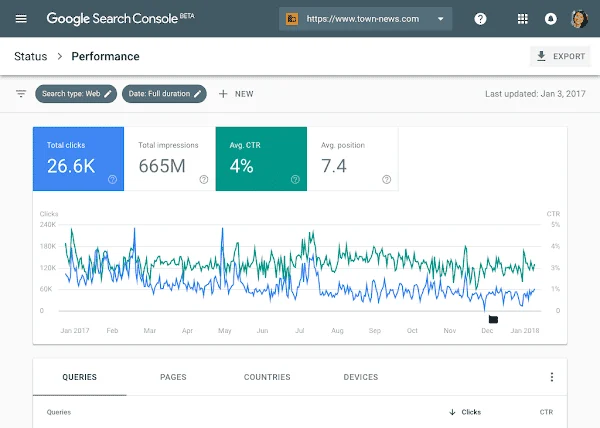
Beyond traditional keyword tracking, analysts must use tools like Google Search Console (GSC) to monitor the “Performance” report, comparing rolling three-month periods to identify shifts in click-through rates (CTR) and impression share. A critical component of this is the “Indexing” report; if priority pages are labeled as “Crawled – currently not indexed,” it suggests a lack of perceived value by the search engine’s quality algorithms. Furthermore, manual “AI Audits” are now mandatory. This involves querying ChatGPT, Gemini, and Copilot with specific buyer-intent questions—such as “What are the best CRO tools for enterprise e-commerce?”—to determine if the brand is included in the synthesized recommendations.
2. Technical Health and Machine Readability
A website must be technically flawless to be parsed by AI agents. This includes optimizing schema markup, ensuring high-speed server responses, and maintaining a clean site architecture. Technical analysis involves identifying duplicate canonical issues or pages inadvertently blocked by robots.txt, which could prevent AI models from accessing the most current data.
3. User Behavior and Conversion Rate Optimization (CRO)
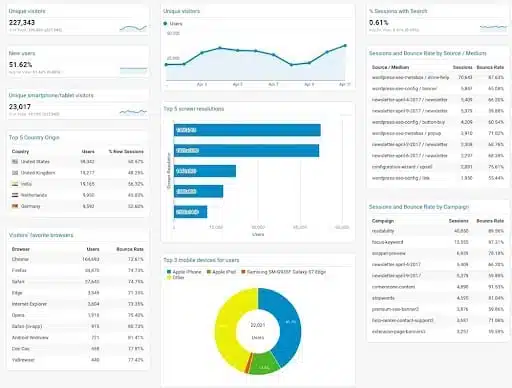
Once a visitor lands on a site, the focus shifts to a 360-degree evaluation of their interaction. This is divided into quantitative and qualitative data. Quantitative metrics—provided by platforms like Google Analytics or Similarweb—measure session duration and abandonment rates. Qualitative insights are gathered through session recordings and heatmaps (using tools like FigPii), which visualize where users click, how far they scroll, and where they encounter “friction.”
Messaging analysis is equally vital. Because users arrive from diverse touchpoints (ads, AI summaries, or social media), the website’s copy must resonate immediately with their specific intent. Analysts must verify that the value proposition is clear within the first three seconds of a page load to prevent “bounce” behavior.
4. Content Quality and Trust Signals (E-E-A-T)
In an era of AI-generated “slop,” or low-quality automated content, human-centric trust signals have become a primary ranking factor. Analysis must evaluate a site’s E-E-A-T (Experience, Expertise, Authoritativeness, and Trustworthiness). This includes auditing author biographies, checking for updated citations, and ensuring that content provides original insights rather than merely regurgitating existing information. AI models are increasingly programmed to favor sources that demonstrate “real-world” experience and verified authority.
5. Functionality and Heuristic Evaluation
Usability analysis involves two critical components: functionality assessments and expert reviews. Functionality asks whether buttons work, whether navigation is intuitive, and whether the site is accessible to users with disabilities. Expert reviews often utilize Jakob Nielsen’s 10 Usability Heuristics, which remain the gold standard for interface design. These include:
- Visibility of system status: Keeping users informed about what is happening.
- Match between system and the real world: Using language and concepts familiar to the user.
- User control and freedom: Providing clear “emergency exits” for mistaken actions.
- Consistency and standards: Ensuring elements don’t mean different things in different places.
- Error prevention: Designing to minimize the likelihood of user mistakes.
Implementing a Comprehensive Analysis Roadmap
Conducting an effective website analysis requires a structured, goal-oriented approach rather than a sporadic check of metrics. The process begins with defining a clear objective, such as reducing cart abandonment or recovering lost organic traffic.

Following objective setting, analysts must select the appropriate toolset. For SEO and AI visibility, Ahrefs, Semrush, and Google Search Console are indispensable. For behavioral analysis and CRO, tools like FigPii, Hotjar, or Mouseflow provide the necessary visual data. Usability testing can be enhanced through platforms like Qualaroo or UserTesting, which offer direct feedback from real individuals.
The third stage is the creation of an analysis roadmap. This involves benchmarking current performance against industry standards and mapping the ideal customer journey. By identifying where the actual user path diverges from the intended path, businesses can pinpoint specific “leaks” in their conversion funnel. Data collection must be followed by iterative testing—often through A/B testing—to ensure that changes based on the analysis actually result in improved performance.
The Role of Competitive Intelligence
A significant point of contention among digital marketers is the necessity of competitive analysis. However, in the 2026 environment, understanding the “citation share” and SEO strategy of competitors is essential. By analyzing a competitor’s organic traffic and customer demographics through tools like iSpionage or Similarweb, a business can identify underserved market segments or “Blue Ocean” opportunities where competition is low but intent is high. Furthermore, studying a competitor’s Pay-Per-Click (PPC) creatives and ad funnels can provide insights into which messaging strategies are currently resonating with the target audience.
Broader Implications for Digital Strategy
The move toward comprehensive website analysis signals a broader shift in digital strategy: the end of the “set it and forget it” era. As AI models update their training data and search algorithms become more sophisticated, a website that was optimized six months ago may be obsolete today.
Industry experts suggest that the most successful organizations are those that treat website analysis as a continuous habit rather than an annual project. This ongoing optimization ensures that the site remains relevant to human visitors while remaining a “preferred source” for AI agents. The ultimate goal of modern analysis is to create a seamless, high-trust environment that minimizes the cognitive load on the user, thereby maximizing the probability of conversion.
In conclusion, as we navigate the complexities of 2026, the power of comprehensive website analysis lies in its ability to bridge the gap between machine requirements and human needs. By leveraging both quantitative data and qualitative behavioral insights, businesses can ensure their digital presence is not only discoverable but also influential in the final decision-making process of the modern buyer. Organizations that fail to adapt to these multi-dimensional analytical requirements risk becoming invisible in an increasingly AI-mediated world.







