In the high-stakes environment of emergency services, the margin for error is non-existent, and the cost of delay is measured in human lives. Traditional emergency helplines often rely on legacy infrastructure where callers are met with automated “press-button” menus or long hold times during peak hours. This friction in the moments of greatest distress can lead to “pure chaos,” where a panicking individual is unable to navigate a keypad to reach the correct department. To address these critical vulnerabilities, a new generation of artificial intelligence (AI) voice agents is being developed. These agents, such as the ARIA (AI Emergency Response Assistant) framework, are designed to listen, triage, and act in real-time, eliminating the need for manual inputs and providing immediate, calm, and life-saving intervention.
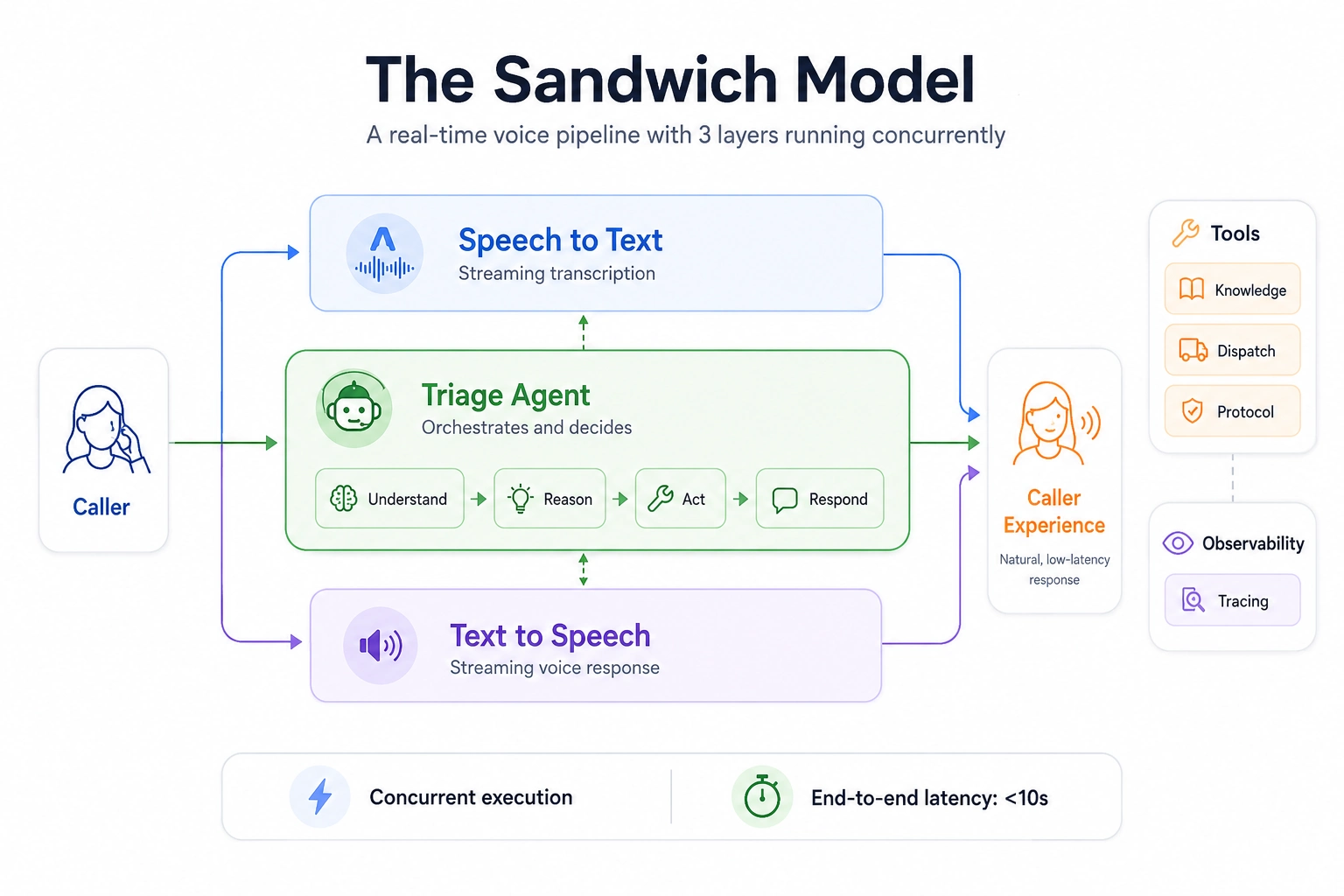
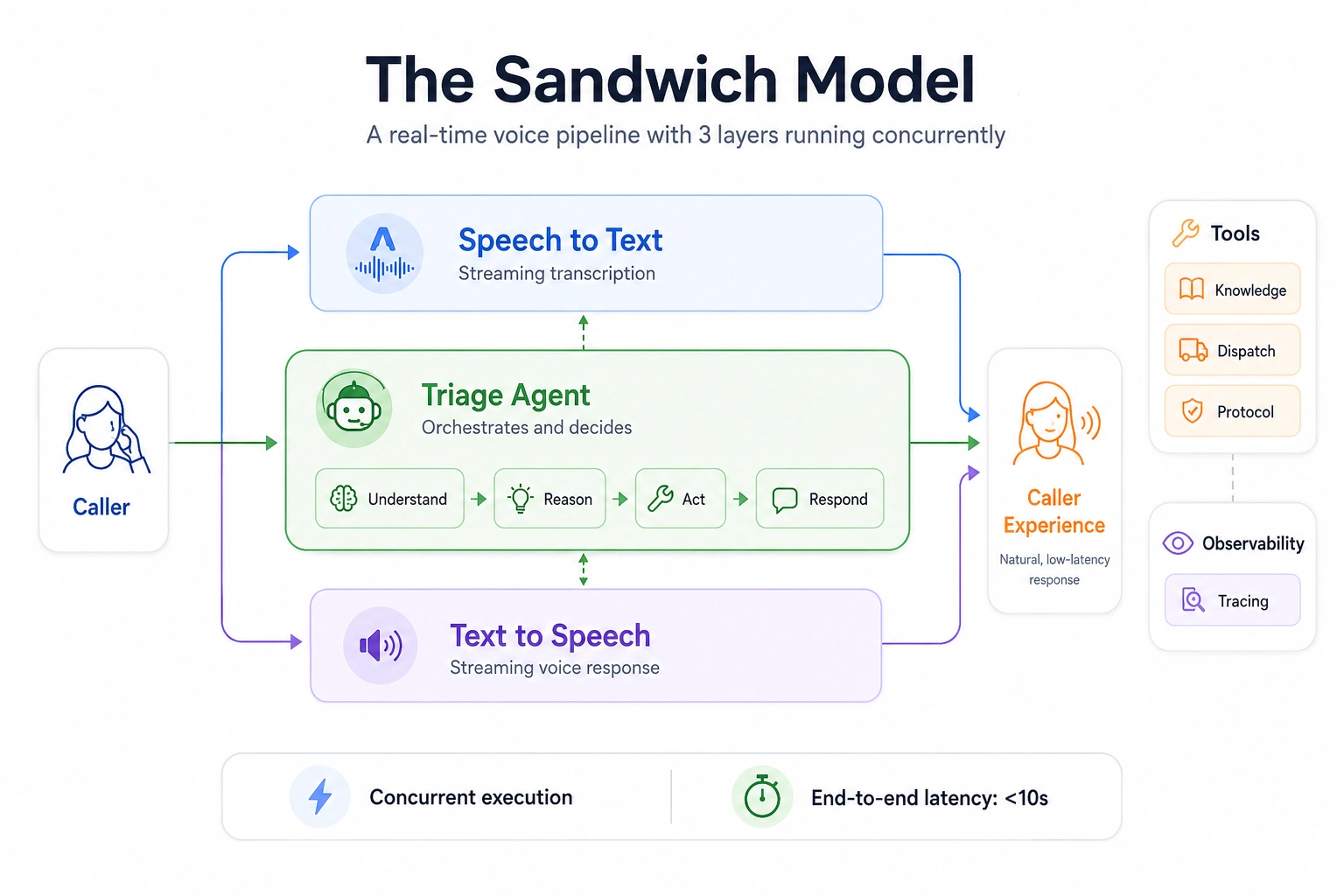
The shift toward AI-driven emergency response comes at a time when public safety answering points (PSAPs) are under immense pressure. In the United States alone, emergency dispatchers handle approximately 240 million calls annually. Staffing shortages and the high-stress nature of the job have led to burnout, resulting in increased response times in several major metropolitan areas. By implementing high-speed voice agents that utilize the “Sandwich Model” of architecture—integrating Speech-to-Text (STT), Large Language Models (LLMs), and Text-to-Speech (TTS) concurrently—emergency services can ensure that no call goes unanswered and that triage begins the millisecond a caller speaks.
The Architecture of Immediacy: The Sandwich Model
The technical backbone of a modern emergency AI agent is the Sandwich Model, a tripartite architecture designed for ultra-low latency. Unlike traditional sequential processing, where each step must finish before the next begins, the Sandwich Model operates concurrently. This allows for a response time often under 700 milliseconds, mimicking the natural cadence of human conversation.
The first layer of this architecture is the STT stage, which serves as the “ears” of the agent. Utilizing advanced WebSocket APIs, such as those provided by AssemblyAI, the system transcribes audio chunks in real-time. This stage is critical because it must handle not only the spoken words but also the metadata of the distress. Modern STT providers now include content safety detection, which can flag distress signals or high-intensity keywords (e.g., “gun,” “breathless,” “fire”) before the full transcript is even processed by the central brain. This provides a secondary layer of situational awareness for human supervisors who may be monitoring the AI’s performance.
The second layer is the LLM, or the “brain.” For emergency use cases, developers are increasingly turning to models like OpenAI’s GPT-4o-mini, which offers a balance of reasoning capability and extreme speed. This agent is equipped with specific tools: location lookup, emergency dispatch protocols, human operator escalation, and calming protocols. The integration of “memory” through tools like LangGraph’s InMemorySaver is vital. In a trauma-induced state, callers often repeat themselves or lose their train of thought; a stateless AI would fail to maintain the context of the emergency, but a stateful agent remembers that the caller mentioned a “heart condition” three sentences ago, ensuring the dispatch remains accurate.
The final layer is the TTS stage, the “voice” of the assistant. In an emergency, the tone of the voice is as important as the information it conveys. Testing has shown that voices like OpenAI’s “shimmer”—characterized as calm, steady, and rational—perform better in de-escalating caller panic than more authoritative or overly casual tones. By using raw PCM (Pulse-Code Modulation) audio streaming, the system can begin speaking the first word of a sentence while the rest of the response is still being generated, further shaving precious milliseconds off the total response time.
Operational Scenarios and Triage Logic
The effectiveness of an AI emergency agent is best demonstrated through its handling of diverse, high-pressure scenarios. Each situation requires a different set of logic and a tailored emotional response.
Medical Emergencies: Cardiac Distress
In a scenario involving a suspected cardiac arrest, the AI must move from listening to action in seconds. If a caller reports chest pain and numbness, the ARIA framework is programmed to bypass standard questioning and trigger an immediate ambulance dispatch. While the vehicle is en route, the agent maintains a “calming protocol,” providing guided breathing or instructions on how to assist the patient. Data suggests that immediate dispatcher-led CPR or stabilization instructions can increase survival rates by up to 30% in cardiac events.
Active Threats: Crime in Progress
For calls involving break-ins or domestic violence, the AI’s primary goal is caller safety and covert communication. The agent is trained to keep its responses short—under three sentences—and to avoid any language that might escalate the situation if overheard by an intruder. The logic here prioritizes police dispatch and instructs the caller to remain silent and hidden, providing a “digital presence” that monitors the situation until officers arrive on the scene.
Fire and Evacuation
When smoke or fire is reported, the AI acts as a coordinator. It cross-references the caller’s location with building registries to determine if it is a multi-family dwelling. The agent dispatches the fire department and immediately pivots to evacuation instructions, such as alerting neighbors or checking doors for heat. This multi-tasking capability ensures that the physical dispatch happens while the caller is being actively guided to safety.
Mental Health and Emotional Crisis
Not every emergency requires a siren. In cases of panic attacks or emotional distress, the AI utilizes a “de-escalation” tool. By employing grounding techniques—such as the 4-4-4 breathing method—the agent can stabilize a caller before determining if a medical or psychological professional needs to be dispatched. This reduces the burden on emergency rooms and ensures that resources are allocated to life-threatening situations.
Data Integration and Human-in-the-Loop Oversight
A common concern regarding AI in public safety is the “black box” nature of machine learning. To mitigate this, the implementation of agents like ARIA includes robust auditing through platforms like LangSmith. Every interaction is traced, logged, and timestamped. This serves two purposes: it allows for real-time human monitoring, where a supervisor can “barge in” if the AI misinterprets a situation, and it provides a legal audit trail for post-incident review.
Furthermore, the integration of location data is a significant leap forward. Traditionally, 911 dispatchers rely on Phase II wireless location data, which can sometimes be inaccurate in high-rise buildings. AI agents can be integrated with GPS-enabled registries and “last known location” databases to provide responders with a more precise “dispatchable location,” potentially saving minutes spent searching for the correct apartment or entrance.
The Broader Impact on Public Safety Infrastructure
The implications of widespread AI emergency agents extend beyond the immediate call. By automating the initial triage of “functional” or “routine” emergency calls, human dispatchers are freed to focus on the most complex, high-nuance situations that require human intuition and empathy. This hybrid model—AI for speed and scale, humans for complexity—represents the future of Next-Generation 911 (NG911).
Market analysts suggest that the integration of AI into public safety is expected to grow as municipal budgets tighten and the demand for faster response times increases. Critics, however, point to the risks of “hallucinations” or errors in speech recognition due to thick accents or background noise. To counter this, developers are implementing strict “guardrails” within the system prompts: the AI is instructed to never use markdown, never use emojis, and to escalate to a human immediately if a situation is ambiguous or if the caller becomes unresponsive.
Conclusion: A Shift in Emergency Paradigms
The development of the ARIA AI emergency response agent marks a shift from reactive technology to proactive life-saving tools. By utilizing the Sandwich Model to achieve sub-second latency and incorporating specialized tools for medical, fire, and police dispatch, these agents provide a level of reliability that traditional systems cannot match.
The primary value of such a system is its ability to remain “calm under pressure.” Unlike human operators, an AI does not experience trauma or fatigue, ensuring that the 1,000th call of the day is handled with the same precision and composure as the first. As these technologies continue to evolve, with future enhancements like live video monitoring and multi-lingual support, the “press-button” menu will become a relic of the past, replaced by a voice that is always ready to listen, act, and save lives. The transition to AI-augmented emergency services is not merely a technical upgrade; it is a fundamental reimagining of the social contract between technology and public safety.