rifanmuazin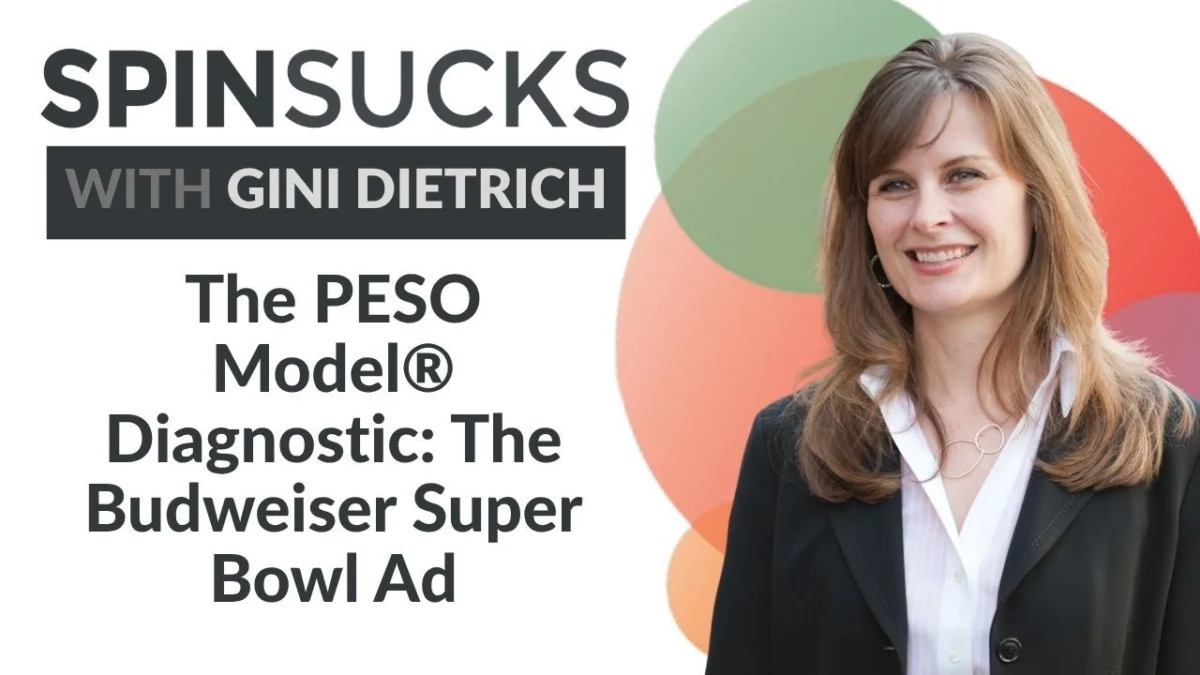
The morning after Super Bowl LX, the advertising world converged on a singular narrative: Budweiser had reclaimed its throne. With the debut of its 60-second "American Icons" commercial, the brand secured its 10th victory on USA Today’s Ad Meter, a feat that solidified its status as a cornerstone of American marketing. Directed by Oscar nominee Henry-Alex Rubin and featuring the emotional pairing of a Clydesdale foal and a baby bald eagle to the strains of Lynyrd Skynyrd’s "Free Bird," the spot was a masterclass in high-production nostalgia. However, beneath the surface of this creative triumph lies a complex case study in modern communications strategy. While "American Icons" served as the centerpiece for Budweiser’s "Made of America" program—a multi-faceted campaign celebrating the brand’s 150th anniversary and the United States’ 250th birthday—industry analysts are now looking past the creative execution to evaluate the campaign through the lens of the PESO Model® (Paid, Earned, Shared, and Owned). The resulting diagnosis suggests that while Budweiser executed the most coordinated campaign of the 2026 Super Bowl cycle, it stopped short of achieving a truly integrated communication system.
The Strategic Framework of Made of America
The "Made of America" campaign was designed as a year-long initiative, far exceeding the traditional 48-hour buzz cycle of a Super Bowl advertisement. The timing is particularly significant; 2026 marks the U.S. Semiquincentennial, providing a unique cultural backdrop for Budweiser’s own 150th anniversary. To capitalize on this, Anheuser-Busch InBev (AB InBev) deployed several high-visibility tactical elements:
- The Super Bowl LX Anchor: The "American Icons" spot, which utilized the brand’s most recognizable intellectual property—the Clydesdales—to anchor the national conversation.
- Heritage Packaging: The release of "Heritage Cans," collectible packaging that serves as a physical narrative device, placing the brand’s history directly into the hands of consumers.
- Sports Marketing Longevity: An extension of Budweiser’s partnership with Major League Baseball (MLB) through 2032, ensuring the brand remains synonymous with "America’s Pastime" for the next decade.
- Loyalty and Scarcity: The launch of the "150 Club," an exclusive fan engagement platform designed to reward the brand’s most loyal advocates with unique experiences and limited-edition merchandise.
This multi-channel approach represents a significant evolution in brand storytelling, moving away from isolated "big moments" toward a sustained narrative arc. However, the distinction between a "coordinated" campaign and an "integrated" system is where the most valuable lessons for modern CMOs are found.
Chronology of the 2026 Campaign Rollout
The rollout of the "Made of America" program followed a deliberate timeline, beginning well before the kickoff of Super Bowl LX:
- Q4 2025: Budweiser began teasing its 150th-anniversary milestones, aligning its internal heritage storytelling with the national preparation for the 250th anniversary of the United States.
- January 2026: The announcement of the MLB partnership extension served as a strategic "pre-game" move, establishing Budweiser’s dominance in the sports vertical before the Super Bowl hype reached its peak.
- Early February 2026: Release of the "Heritage Cans" to retail outlets nationwide, creating a tangible connection between the upcoming television spot and the point of purchase.
- Super Bowl Sunday (February 8, 2026): The premiere of "American Icons" during the broadcast, reaching an estimated audience of over 120 million viewers.
- Post-Super Bowl: The transition into the "150 Club" activations and the preparation for the 2026 MLB season opener, intended to carry the momentum through the summer months.
Supporting Data and Market Performance
The financial and social metrics surrounding Super Bowl LX highlight the scale of Budweiser’s investment. In 2026, the cost of a 30-second advertisement during the Super Bowl reached an estimated $8 million, making Budweiser’s 60-second "American Icons" a $16 million investment in airtime alone, excluding production costs which likely exceeded $3 million given the high-profile direction and animal handling involved.
According to preliminary data, the "American Icons" spot generated:
- Ad Meter Score: Ranked #1 overall, marking the brand’s 10th win in the history of the ranking.
- Social Sentiment: 88% positive sentiment in the first 24 hours, driven largely by the nostalgic use of "Free Bird" and the Clydesdale imagery.
- Search Volume: A 400% spike in searches for "Budweiser Heritage" during the third quarter of the game.
Despite these impressive figures, the "PESO Diagnostic" reveals that the campaign operated in functional silos. While the Paid media (the Super Bowl spot) was exceptionally strong, the other pillars of the PESO Model did not provide the "compounding value" that an integrated system would offer.
The PESO Diagnostic: Identifying the Integration Gaps
The PESO Model, developed by Gini Dietrich, provides a framework for ensuring that Paid, Earned, Shared, and Owned media work in a virtuous cycle. When applied to Budweiser’s 2026 campaign, several gaps emerge.
Owned Media vs. Paid Paperwork
In a fully integrated system, Owned media acts as the "source of truth"—a hub where consumers can dive deep into the brand’s story. Budweiser’s primary owned assets for this campaign were largely limited to news releases and product landing pages. While effective for announcing the "Heritage Cans," these assets functioned more as "paid’s paperwork" than as a durable content property. An integrated approach would have seen the launch of a comprehensive "Made of America" digital hub months in advance, featuring long-form stories about the generational brewers, the farmers, and the historical impact of the brand. This would have provided a "landing pad" for the millions of viewers who saw the Super Bowl ad, converting a 60-second emotional flash into a long-term relationship.
Earned Media vs. Publicity
The media coverage surrounding the campaign was predominantly "announcement-driven." Major outlets reported that Budweiser had released an ad and extended its MLB deal. While this is successful publicity, it lacks the "credibility transfer" of true earned media. An integrated PESO strategy would have involved pitching deep-dive heritage pieces to publications like The Atlantic or Smithsonian Magazine months prior, focusing on the brand’s role in American history. This would have shifted the media narrative from "Budweiser bought an ad" to "Budweiser is an essential thread in the American fabric."
Shared Media and the Community Engine
The "150 Club" and collectible cans represent high-quality merchandising, but they do not necessarily create a "User-Generated Content (UGC) loop." In a PESO-native version of this campaign, the brand would have invited the public to share their own "Made of America" stories—veterans, small-town heroes, and multigenerational families. By folding these stories back into the brand’s owned and paid channels, Budweiser could have turned its audience into a distribution engine rather than just a group of consumers.
Paid Media Precision
Budweiser’s paid strategy relied on "anchor buys"—massive, high-reach moments like the Super Bowl and MLB. While these are effective for cultural presence, an integrated system uses "precision paid" to retarget hub visitors and sequence messages. Without this layer, the $16 million investment in the Super Bowl spot remains a localized event rather than the start of a sophisticated customer journey.
Industry Reactions and Broader Implications
Marketing experts have noted that Budweiser’s approach reflects a common challenge within large-scale corporate structures: the "silo effect." When different agencies or internal departments handle sports marketing, merchandising, social media, and traditional advertising, the result is often a series of high-quality, coordinated events that lack a central "editorial spine."
Industry analysts suggest that the "Made of America" campaign serves as a bellwether for the future of brand storytelling. As AI-driven search and fragmented media consumption make it harder to capture attention, the value of an integrated PESO system becomes paramount. The primary takeaway for the industry is that creative excellence—even the kind that wins Ad Meter for the 10th time—is no longer sufficient on its own.
Broader Impact and Future Outlook
The "Made of America" program will continue to roll out through the remainder of 2026, with the MLB season and the national July 4th celebrations serving as key milestones. The success of the "Heritage Cans" in the retail sector will be a critical metric for AB InBev, as the company seeks to translate cultural sentiment into volume growth in a competitive beverage market.
For the wider marketing community, the Budweiser Super Bowl LX campaign highlights a shifting standard. In the 2010s, a well-coordinated multi-channel program was the gold standard. In the 2020s, that is merely the floor. The "integration gap" identified in this diagnostic suggests that the next frontier for legacy brands is the development of a "central nervous system" for communication—one that connects the emotional power of a Paid advertisement to the durable authority of Owned media and the community-driven reach of Shared and Earned channels.
As Budweiser moves forward with its 150th-anniversary celebrations, the "American Icons" spot will undoubtedly be remembered as a high point in advertising history. However, the true measure of the campaign’s success will be whether it can bridge the gap from a "parade" of activations to a sustained, integrated system of proof that compounds in value long after the Super Bowl LX lights have dimmed.