PHILADELPHIA, PA – June 24, 2026 – AWeber, a long-standing innovator in email marketing and automation, today announced a significant enhancement to its AI Signup Form Builder, introducing the capability to create and visually place inline forms directly onto websites without requiring any coding expertise. This advancement, detailed by Chris Vasquez, represents a pivotal step in democratizing website optimization and empowering businesses of all sizes to seamlessly integrate lead capture mechanisms into their content strategies. The update allows users to generate sophisticated inline forms using artificial intelligence and then intuitively position them on live web pages with a simple point-and-click interface, marking a substantial leap forward in user-friendly web development.
The strategic placement of signup forms has long been a critical factor in optimizing conversion rates for website visitors into email subscribers. Traditional analytics consistently show that a form’s proximity to engaging content significantly impacts its effectiveness. A form embedded within the natural flow of an article or blog post, often referred to as an "inline form," capitalizes on a reader’s peak interest, capturing their attention precisely when they are most engaged with the site’s content. This contrasts sharply with sidebar forms, which, while ubiquitous, tend to capture the attention of scanning visitors rather than deeply engaged readers, often resulting in lower conversion efficacy. AWeber’s latest innovation directly addresses this nuanced challenge by making optimal form placement accessible to every user, irrespective of their technical background.
Detailing the Innovation: AI-Powered Form Creation and Visual Placement
The core of this new offering lies in AWeber’s enhanced AI Signup Form Builder. Users now have three distinct pathways to initiate the creation of an inline form, catering to various preferences and workflows. The first method, a "Custom Prompt," allows users to describe their desired form in natural language, specifying that it is an inline form intended for their website. This leverages the AI’s understanding of user intent to generate a tailored form design and copy. The second approach, a "Fill-in-the-Blanks" interface, guides users through a series of structured prompts, where they can select "embeds directly on my website" as the form type. This provides a more structured yet equally intuitive creation process. Finally, for those who prefer visual inspiration, a "Template Gallery" offers a curated selection of pre-designed inline templates that can be customized to fit any brand aesthetic.
Regardless of the starting point, all creation paths converge into a unified, user-friendly form editor. Here, marketers and website owners can fine-tune every aspect of their form, from adjusting the call-to-action copy and input fields to refining design elements such as colors, fonts, and button styles. This iterative design process ensures that the final form not only looks professional but also aligns perfectly with the website’s branding and user experience goals. The AI’s role extends beyond initial generation, often suggesting improvements for clarity, conciseness, and conversion optimization based on best practices learned from vast datasets of successful forms.

Revolutionizing Placement: A Four-Click Process
The most groundbreaking aspect of this update is undoubtedly the visual placement mechanism, which transforms a historically complex, code-dependent task into a remarkably simple four-step process. Once the form has been designed and refined within the editor, users navigate to the "Settings" tab.
- Accessing Settings: The first step involves clicking the "Settings" tab within the form editor, a standard interface element that users are already familiar with.
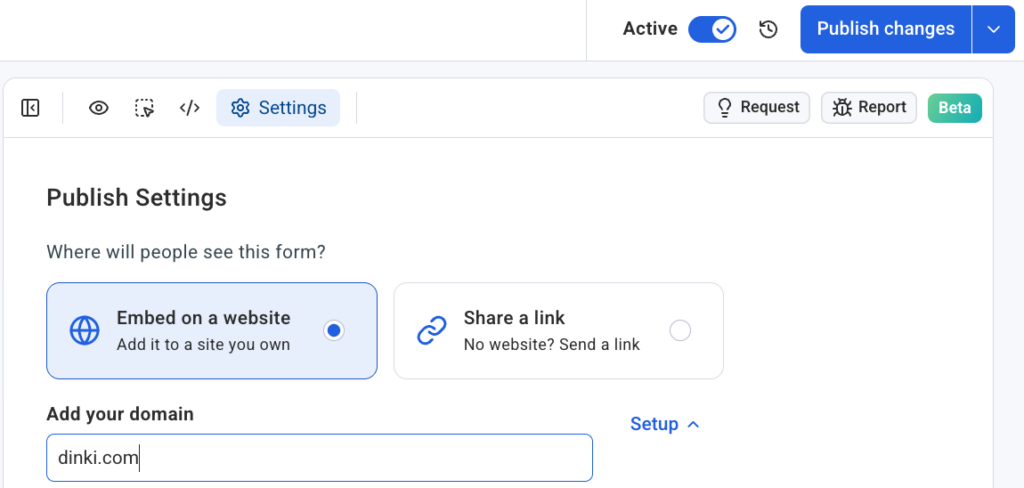
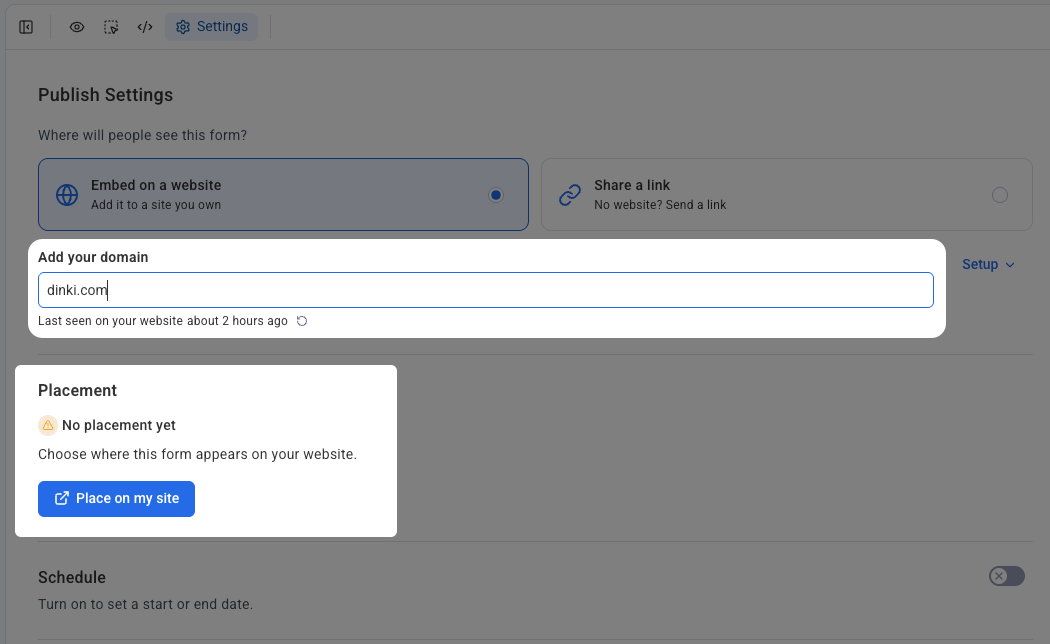
- Domain Configuration and Snippet Verification: Users are then prompted to specify the domain where the form is intended to appear. Crucially, the system also verifies that AWeber’s universal signup form snippet is already installed on the target website. This one-time installation of a small JavaScript snippet acts as the conduit, enabling AWeber to dynamically inject and manage forms on the site without requiring subsequent manual code insertions for each new form.
- Initiating Placement Mode: With the domain confirmed, the user simply clicks "Place on my site." This action initiates a secure connection to the specified website and prepares the visual placement widget.
- Visual Confirmation and Deployment: The system then opens the user’s live website in a special placement mode. This is not a simulated preview or a wireframe, but the actual, live web page. The user can visually identify the precise section or area where they wish the form to appear. A simple click on that location highlights the chosen spot, followed by a final "Confirm placement" button. Upon confirmation, the form is instantly published and live on the website, embedded exactly where desired. This real-time, visual interaction eliminates guesswork, potential coding errors, and the need for developer intervention, drastically cutting down deployment time from hours or days to mere seconds.
Strategic Importance of Form Placement: Data-Driven Decisions
The efficacy of email marketing hinges significantly on the ability to consistently grow a subscriber list. Industry data consistently highlights the substantial return on investment (ROI) offered by email marketing, often cited as high as $36 for every dollar spent. However, achieving this ROI begins with effective lead capture. Studies by various marketing analytics firms have repeatedly shown that forms embedded within content can achieve significantly higher conversion rates compared to those relegated to sidebars or footers. While specific numbers vary by industry and content quality, inline forms can see conversion rates ranging from 3% to 10%, whereas sidebar forms often hover in the 1-3% range. This difference is attributed to the psychological principle of "contextual relevance" – users are more likely to take action when the prompt is directly relevant to what they are currently consuming.
Prior to AWeber’s visual placement tool, achieving optimal inline form placement often required a degree of technical proficiency, involving manual HTML editing, CSS styling, or reliance on complex content management system (CMS) plugins. This barrier often led small businesses and independent content creators to opt for less effective, but easier-to-implement, form placements. AWeber’s innovation directly addresses this historical impediment, allowing users to leverage data-backed best practices for form placement without needing to understand the underlying code.
Universal Compatibility and Scalability
A key advantage of AWeber’s new system is its broad compatibility. The AI Signup Form Builder with visual placement works seamlessly across a wide array of self-hosted website platforms, including industry giants like WordPress, e-commerce platforms such as Shopify, website builders like Wix and Squarespace, and numerous other content management systems. This universal applicability is facilitated by the single, lightweight AWeber snippet, which, once installed, empowers the visual placement tool to operate across diverse web environments.
For businesses managing multiple websites or agencies handling numerous client accounts, the system offers robust organizational capabilities. Each domain connects independently within the AWeber settings, ensuring that forms and their placements are meticulously organized and managed across different digital properties. This prevents conflicts and streamlines workflows for marketers and developers overseeing a portfolio of sites, ensuring scalability and efficiency.
AWeber’s Vision and Market Position
Founded in 1998, AWeber has established itself as a pioneer and a steadfast presence in the email marketing industry. Throughout its history, the company has consistently focused on empowering small businesses and entrepreneurs with user-friendly tools to build and nurture customer relationships through email. This latest release aligns perfectly with AWeber’s long-standing mission to simplify complex marketing tasks.
The integration of advanced AI capabilities into form building and the introduction of visual, no-code placement reflect a broader industry trend towards intelligent automation and user-centric design in marketing technology. As the digital landscape becomes increasingly competitive, tools that reduce friction for content creators and marketers become invaluable. AWeber’s move positions it strongly in a market segment that values both advanced functionality and ease of use, appealing to a wide spectrum of users from nascent startups to established SMEs.
Expert Perspectives and Industry Reactions
Industry analysts anticipate that AWeber’s new feature will have a significant impact on how small and medium-sized businesses approach lead generation. "The ability to visually place forms without code is a game-changer for marketers who are not developers," commented Sarah Jenkins, a leading MarTech analyst. "It dramatically lowers the barrier to entry for advanced conversion optimization techniques. Historically, achieving optimal inline form placement required either technical expertise or a budget for web development. AWeber is effectively democratizing a powerful conversion strategy."
A spokesperson for AWeber, while not specifically named in the initial release, is likely to emphasize the company’s commitment to empowering its users. "Our goal has always been to provide powerful tools that are incredibly easy to use," an inferred statement might read. "This update to our AI Signup Form Builder with visual inline placement is a testament to that commitment. We believe every business, regardless of technical resources, should be able to maximize their website’s potential and effectively grow their audience."
Broader Implications for Digital Marketing
The introduction of such an intuitive, AI-powered visual placement tool carries several broader implications for the digital marketing landscape:
- Democratization of Web Design: It further blurs the lines between content creation and web development, enabling marketers and content creators to take greater control over their website’s lead generation strategy without needing to consult a developer for every form placement.
- Enhanced Conversion Rates: By facilitating optimal form placement, businesses are likely to see an uptick in their email subscriber acquisition rates, directly impacting their ability to nurture leads and drive sales.
- Agility and Experimentation: The ease of placement encourages more frequent experimentation with form locations and designs. Marketers can quickly A/B test different placements and iterations of their forms, leading to faster optimization cycles and improved performance.
- Focus on Content Quality: With the technical hurdle of form placement removed, businesses can dedicate more resources and attention to creating high-quality, engaging content that naturally draws visitors towards an inline call to action.
- Evolution of AI in MarTech: This development underscores the accelerating trend of artificial intelligence becoming an integral component of marketing technology, moving beyond mere analytics to active content generation and deployment. It suggests a future where AI handles more of the technical intricacies, allowing human marketers to focus on strategy and creativity.
Conclusion
AWeber’s launch of the enhanced AI Signup Form Builder with visual inline placement capabilities marks a significant milestone in the evolution of email marketing tools. By combining sophisticated AI-driven form generation with an intuitive, no-code visual placement interface, AWeber has empowered businesses to seamlessly integrate highly effective lead capture mechanisms into their online presence. This innovation not only streamlines the process of building and deploying signup forms but also fundamentally alters how marketers can leverage their website content to build engaged subscriber lists. As the digital economy continues to prioritize direct audience engagement, tools like AWeber’s AI Signup Form Builder are poised to play an increasingly critical role in helping businesses convert website attention into lasting customer relationships.


 Asro
Asro
 Nana
Nana