The United States is currently grappling with one of the most devastating public health crises in its history, characterized by a staggering rise in opioid-related overdose deaths that now outpace several other leading causes of accidental death. While the crisis is often discussed in the context of personal narratives and local tragedies, a comprehensive analysis of data from the Centers for Disease Control and Prevention (CDC), the United Nations Office on Drugs and Crime (UNODC), and independent research entities like FiveThirtyEight reveals a complex global and domestic pattern. This data-driven perspective highlights not only the unique severity of the epidemic within American borders but also its specific demographic targets and the evolving nature of drug lethality compared to traditional substances like cocaine or crack.
The Genesis and Evolution of the Opioid Crisis
The current epidemic did not emerge in a vacuum but is the result of a multi-decade progression often categorized by public health experts into three distinct waves. The first wave began in the late 1990s, following a significant increase in the prescription of opioids for pain management. This was spurred by pharmaceutical marketing campaigns that downplayed the addictive potential of these substances. As prescriptions surged, so did misuse and overdose deaths involving prescription opioids.
The second wave arrived around 2010, marked by a rapid increase in overdose deaths involving heroin. As the medical community and regulators began to tighten the supply of prescription painkillers, many individuals already suffering from opioid use disorder transitioned to heroin, which was often cheaper and more readily available on the illicit market.
The third and most lethal wave began in 2013, characterized by a sharp rise in overdose deaths involving synthetic opioids, particularly illicitly manufactured fentanyl. Fentanyl, a synthetic opioid that is 50 to 100 times more potent than morphine, has fundamentally altered the risk profile of drug use. Its integration into various illicit drug supplies—including being pressed into counterfeit pills or mixed with cocaine and methamphetamine—has led to a surge in accidental overdoses among populations that may not even realize they are consuming opioids.
A Comparative Global Perspective: The United States as a Statistical Outlier
When examining the opioid crisis through a global lens, the United States stands as a significant outlier in both absolute numbers and per capita mortality rates. Data sourced from the UNODC reveals that while drug misuse is a worldwide phenomenon, the lethality of the US market is unparalleled.
In a comparative analysis of overdose deaths per million people, the United States consistently leads the global community. While countries like Iceland show high per-million rates, analysts note that Iceland’s status as a statistical outlier is largely due to its extremely small population; a relatively low absolute number of deaths (approximately 45 in the studied period) results in a high per-capita figure. Conversely, the US figures represent a massive volume of fatalities across a diverse and massive population.
Other nations with notable overdose rates include Sweden, Australia, and El Salvador. However, even in these instances, the rates often remain less than half of what is observed in the United States. The discrepancy suggests that the US crisis is driven by factors unique to its healthcare system, drug availability, and socio-economic landscape. The UNODC data underscores a grim reality: the United States accounts for a disproportionate share of global drug-related mortality, primarily driven by the opioid category.
Demographic Trends and the Lethality Gap
One of the most striking findings in the analysis of drug usage data—specifically the "Drug Use by Age" dataset provided by FiveThirtyEight—is the disconnect between the number of users and the number of fatalities. When comparing heroin to other "hard" drugs such as cocaine or crack, the data reveals that heroin has a significantly smaller user base relative to its death toll.
Heroin usage is most heavily concentrated in the 20-34 age demographic. In contrast, drugs like cocaine and crack show much wider adoption across older age groups. This suggests several possibilities: either heroin is so lethal that users do not survive into older age brackets at the same rates as users of other drugs, or the current epidemic is a generational phenomenon that has taken a particularly strong hold on younger millennials and older members of Generation Z.
The "lethality gap" is a critical metric for public health officials. While marijuana or alcohol may have significantly higher usage rates across all age groups, their immediate lethality in terms of acute overdose is negligible compared to opioids. The data indicates that even a small uptick in opioid experimentation among the 20-34 demographic leads to a disproportionate spike in regional mortality rates, a trend that is not mirrored by other substances.
Regional Hotspots and Domestic Development Trends
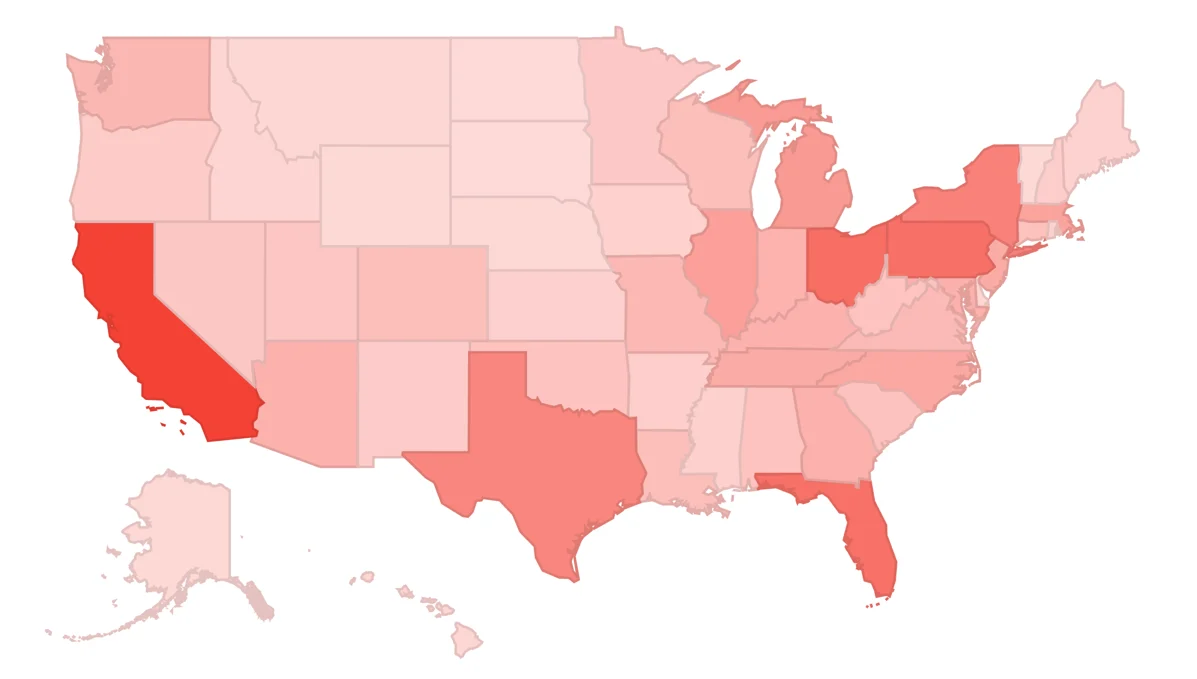
Within the United States, the epidemic is not uniformly distributed. Data from the CDC allows for a granular look at which states are suffering the most and which are seeing the fastest deterioration of public health. Historically, the "Appalachian Trail" of the crisis—including West Virginia, Ohio, and Kentucky—has seen the highest rates of overdose. These regions were heavily targeted by early prescription opioid marketing and have struggled with the economic shifts that often correlate with "deaths of despair."
However, the data visualization of development trends shows that the crisis is expanding into the Northeast and parts of the Midwest with renewed intensity. Analysts utilize "trend patterns" to identify states where the rate of increase is accelerating, even if the total death count hasn’t yet reached the levels of West Virginia. These "growth states" represent the next frontier for emergency intervention and resource allocation.
Conversely, some states have shown a relative stabilization in death rates, often attributed to aggressive public health interventions, such as the widespread distribution of Naloxone (an opioid overdose reversal agent), the implementation of robust Prescription Drug Monitoring Programs (PDMPs), and expanded access to Medication-Assisted Treatment (MAT).
Institutional Responses and Policy Implications
The scale of the crisis has prompted various levels of government and medical institutions to react, albeit often at a pace that critics argue lags behind the escalating death toll. In 2017, the US Department of Health and Human Services (HHS) declared the opioid crisis a public health emergency. This declaration was intended to waive certain federal requirements and allow for the more rapid deployment of resources.
The Food and Drug Administration (FDA) has also faced intense scrutiny and has subsequently moved to change how opioids are labeled and marketed. There is now a greater emphasis on "comparative effectiveness" research—determining if an opioid is truly the best course of treatment compared to non-opioid alternatives.
Furthermore, legal actions against pharmaceutical manufacturers and distributors have resulted in multi-billion dollar settlements. These funds are increasingly being earmarked for state-level recovery and prevention programs. However, the data suggests that money alone is not a panacea; the transition from prescription pills to illicit synthetic fentanyl requires a shift in strategy from regulating doctors to disrupting international supply chains and addressing the underlying socio-economic drivers of addiction.
The Role of Data Science in Public Health
The 3-month data journey highlighted in the source material emphasizes a broader truth in modern journalism and sociology: words and videos provide the emotional context, but data provides the map. For analysts, the ability to visualize these trends using tools like Google Data Studio is essential for communicating the "immensity of the problem" to policymakers and the public.
Data allows for the identification of patterns that are invisible to the naked eye. It can show, for instance, that an increase in fentanyl seizures in a particular border sector is a leading indicator of an overdose spike in a New England city three months later. By synthesizing datasets from the CDC, UNODC, and FiveThirtyEight, researchers can move beyond reactive measures and toward predictive modeling.
Broader Impact and Future Outlook
The long-term implications of the opioid epidemic extend far beyond the immediate loss of life. There is a profound economic impact, estimated by some reports to exceed $1 trillion annually when accounting for healthcare costs, lost productivity, and the burdens on the criminal justice system. There is also the "shadow" crisis of the children left behind—a generation of "opioid orphans" who require social services and long-term psychological support.
As the United States moves deeper into this crisis, the data suggests that the "fourth wave" may already be beginning: a combination of opioids with stimulants (methamphetamine and cocaine), creating a polydrug crisis that is even harder to treat with traditional reversal agents.
The call to action for data analysts and public health officials is clear. The planet requires a sophisticated, data-driven approach to understand and mitigate the factors that lead to such high rates of addiction and mortality. Through the rigorous analysis of global and domestic trends, society can begin to craft interventions that are as dynamic and pervasive as the epidemic itself. The journey from a single tweet to a comprehensive data project mirrors the path the country must take: from awareness to deep understanding, and finally, to evidence-based action.