rifanmuazin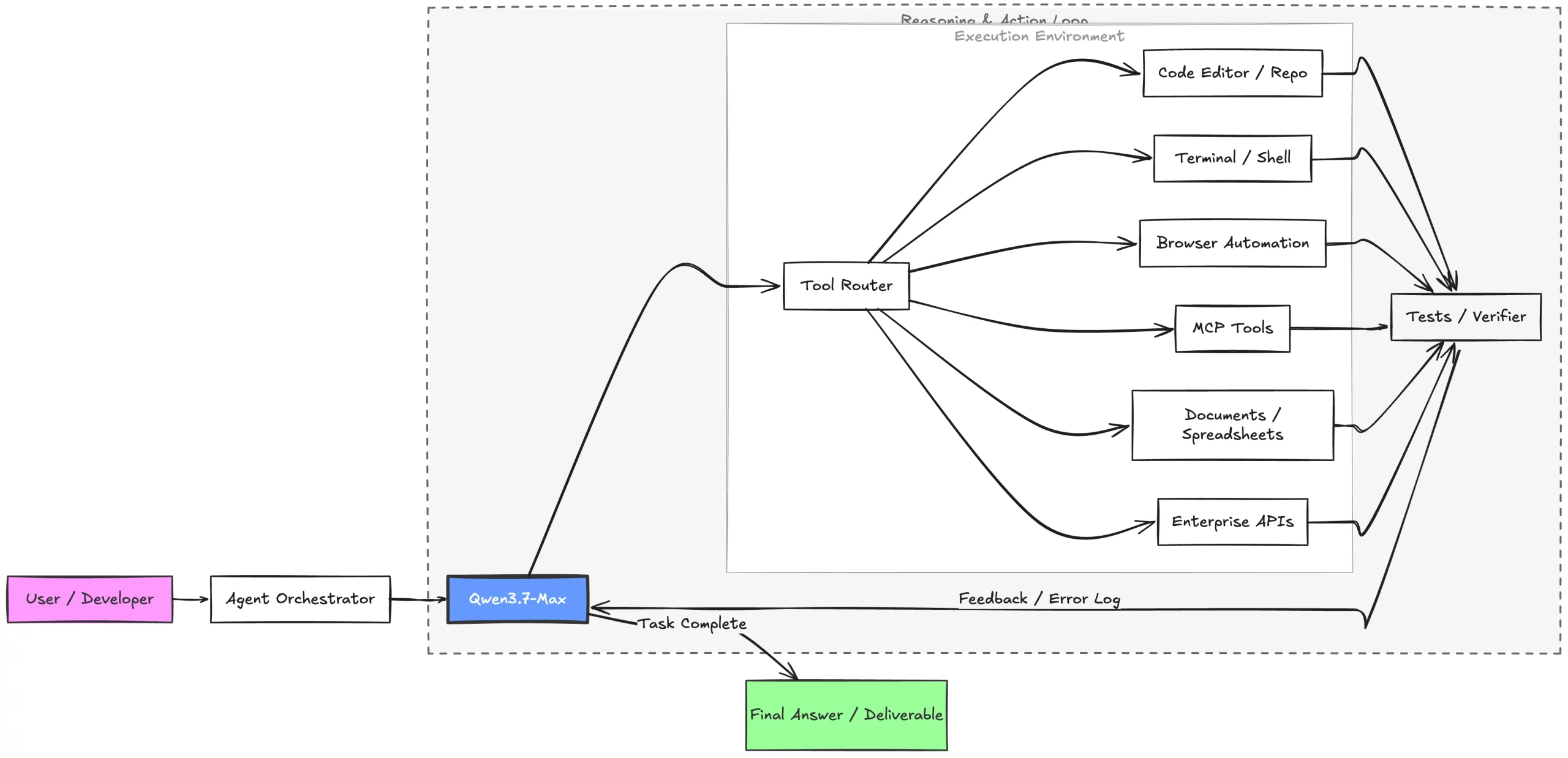
The Qwen team at Alibaba Group has officially launched Qwen3.7-Max, a flagship large language model (LLM) engineered specifically to serve as the foundation for the next generation of autonomous AI agents. This release marks a significant pivot in the artificial intelligence landscape, shifting the focus from standard conversational chatbots toward “agentic” systems capable of independent reasoning, complex coding, and long-term task execution. Unlike previous iterations in the Qwen series that emphasized open-weight accessibility, Qwen3.7-Max is a proprietary, hosted model designed to compete directly with the industry’s most advanced closed-source offerings, such as OpenAI’s GPT-4o and Anthropic’s Claude 3.5 Sonnet.
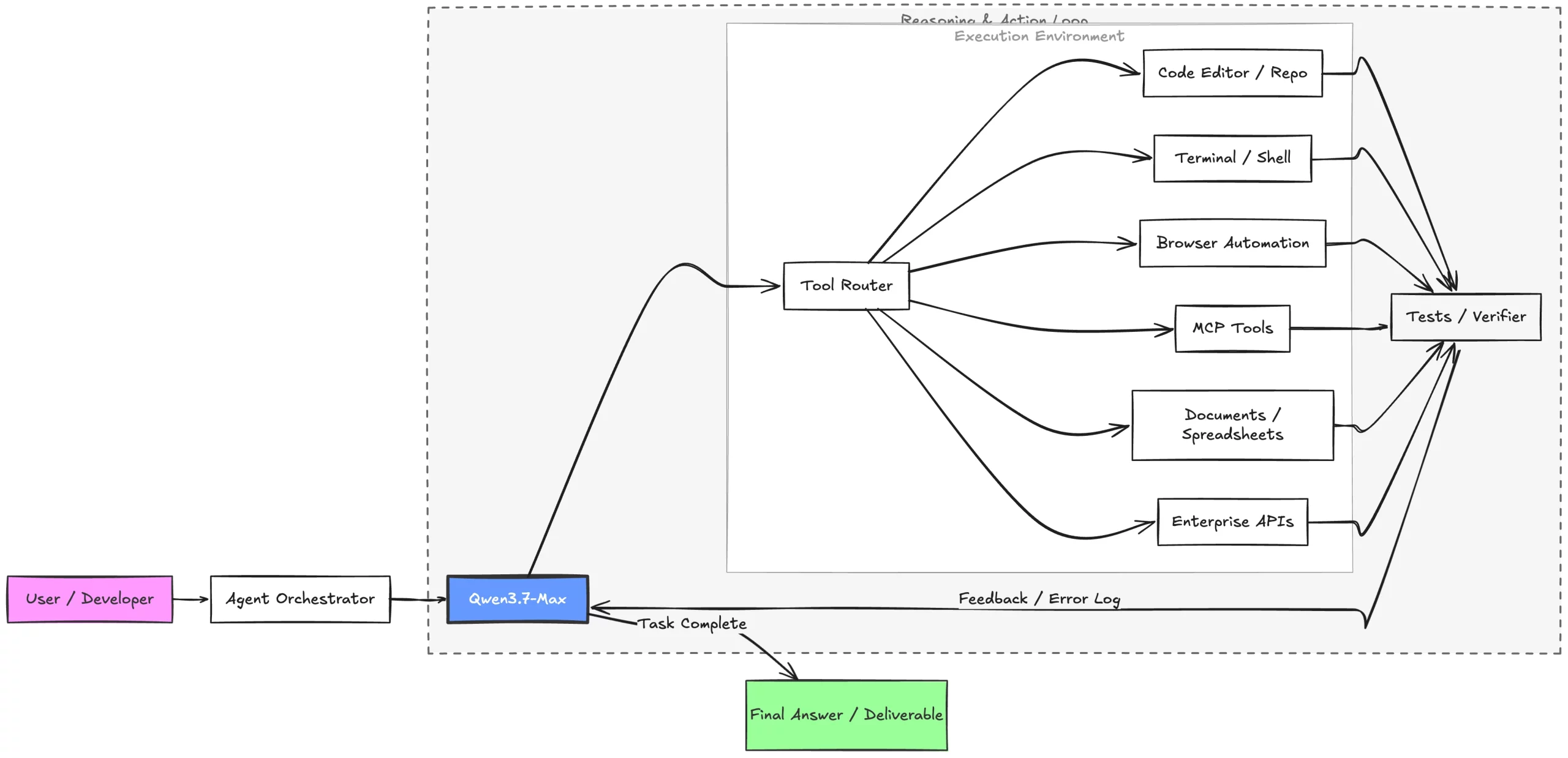
The introduction of Qwen3.7-Max comes at a time when the AI industry is moving beyond simple prompt-and-response interactions. Alibaba’s new model is built to handle the rigors of “agentic workflows,” where an AI must not only understand a user’s goal but also formulate a plan, invoke external tools, interpret results, and self-correct when errors occur. According to technical data released by Alibaba, the model can operate autonomously for up to 35 hours without a degradation in performance and is capable of supporting over 1,000 consecutive tool calls within a single task chain. This level of reliability is intended to solve the “agent fragility” problem, where AI agents frequently lose track of their objectives during multi-step enterprise processes.
The Strategic Evolution of the Qwen Series
The launch of Qwen3.7-Max represents a critical milestone in Alibaba’s AI roadmap. To understand its significance, one must look at the chronology of the Qwen ecosystem. Alibaba Cloud first introduced the Qwen (Tongyi Qianwen) series in early 2023, initially positioning it as a versatile LLM for the Chinese market. However, through subsequent updates—including the widely acclaimed Qwen2 and Qwen2.5 releases—the team expanded its scope to become a global leader in open-source AI.
The Qwen2.5 series, in particular, gained massive traction among developers for its exceptional performance in mathematics and coding, often outperforming much larger models in specialized benchmarks. With Qwen3.7-Max, Alibaba is building upon this technical foundation but altering its distribution strategy. By keeping this “Max” version proprietary and hosted on Alibaba Cloud Model Studio, the company is targeting enterprise-grade stability and security. This move aligns with the broader industry trend of “tiering” models: offering high-performance, smaller models for the open-source community while reserving the “frontier” capabilities for a managed, commercial ecosystem.
Technical Architecture and Agentic Reliability
While Alibaba has not disclosed the exact parameter count or the specific Mixture-of-Experts (MoE) configuration for Qwen3.7-Max, the company has provided extensive details regarding its “Agent Training Architecture.” The model’s design philosophy centers on “Environment Scaling.” Unlike traditional LLMs trained primarily on static text corpora, Qwen3.7-Max has been trained within diverse agent environments. This training involves exposing the model to various software harnesses, API documentation, and verification systems that simulate real-world workflows.
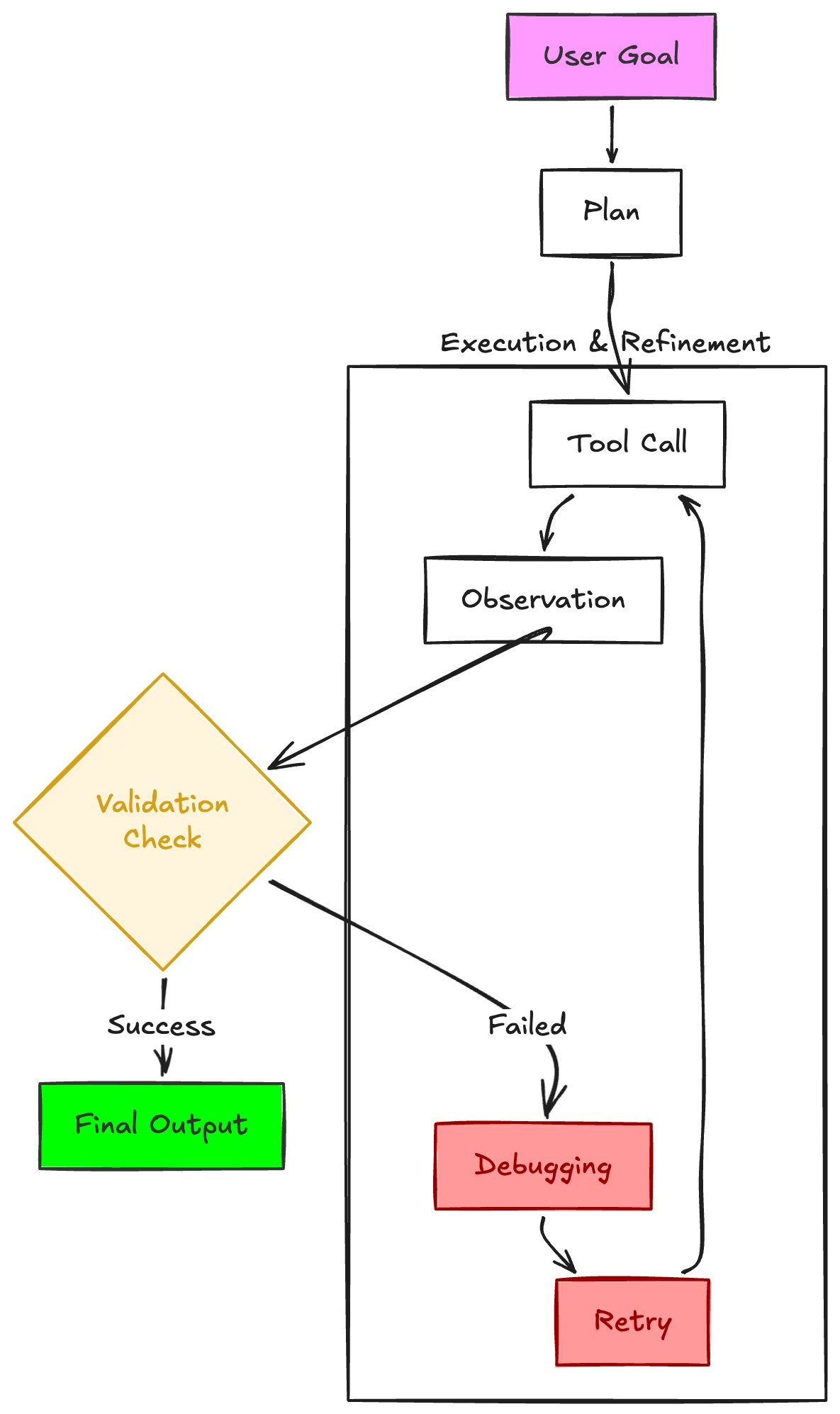
The primary objective of this training is to enable the model to master the four critical variables of an agentic loop:
- Planning: Deconstructing a high-level goal into actionable sub-tasks.
- Execution: Utilizing tool calls (e.g., Python interpreters, SQL databases, web browsers) to perform actions.
- Observation: Analyzing the feedback or data returned by the tools.
- Refinement: Debugging code or revising the plan based on observations.
The reported ability to handle 1,000 consecutive tool calls is particularly noteworthy. In standard LLMs, “context drift” often occurs as the conversation history grows, leading the model to ignore instructions or hallucinate. Qwen3.7-Max utilizes advanced attention mechanisms and state-management techniques to ensure that the agent remains anchored to the user’s original intent, even after dozens of recursive loops.
Multimodal Capabilities: Beyond Text and Code
A standout feature of Qwen3.7-Max is its integrated multimodal pipeline, which extends into high-fidelity image and video generation. During initial testing phases, the model demonstrated the ability to interpret complex creative prompts and generate cinematic visuals that maintain thematic consistency.
In a notable demonstration of its “image-to-video” capabilities, the model can take a generated image—such as a futuristic control room—and use it as a reference frame to produce a coherent video sequence. This suggests that Qwen3.7-Max is not just a text-based reasoning engine but a unified multimodal system. For enterprise users, this translates to applications in automated marketing, digital twin visualization, and dynamic content creation, where the AI agent can draft a script, generate a storyboard, and produce the final video assets autonomously.
Enterprise Integration and API Access
Alibaba has streamlined the accessibility of Qwen3.7-Max to ensure it can be integrated into existing developer stacks. The model is accessible through two primary channels:
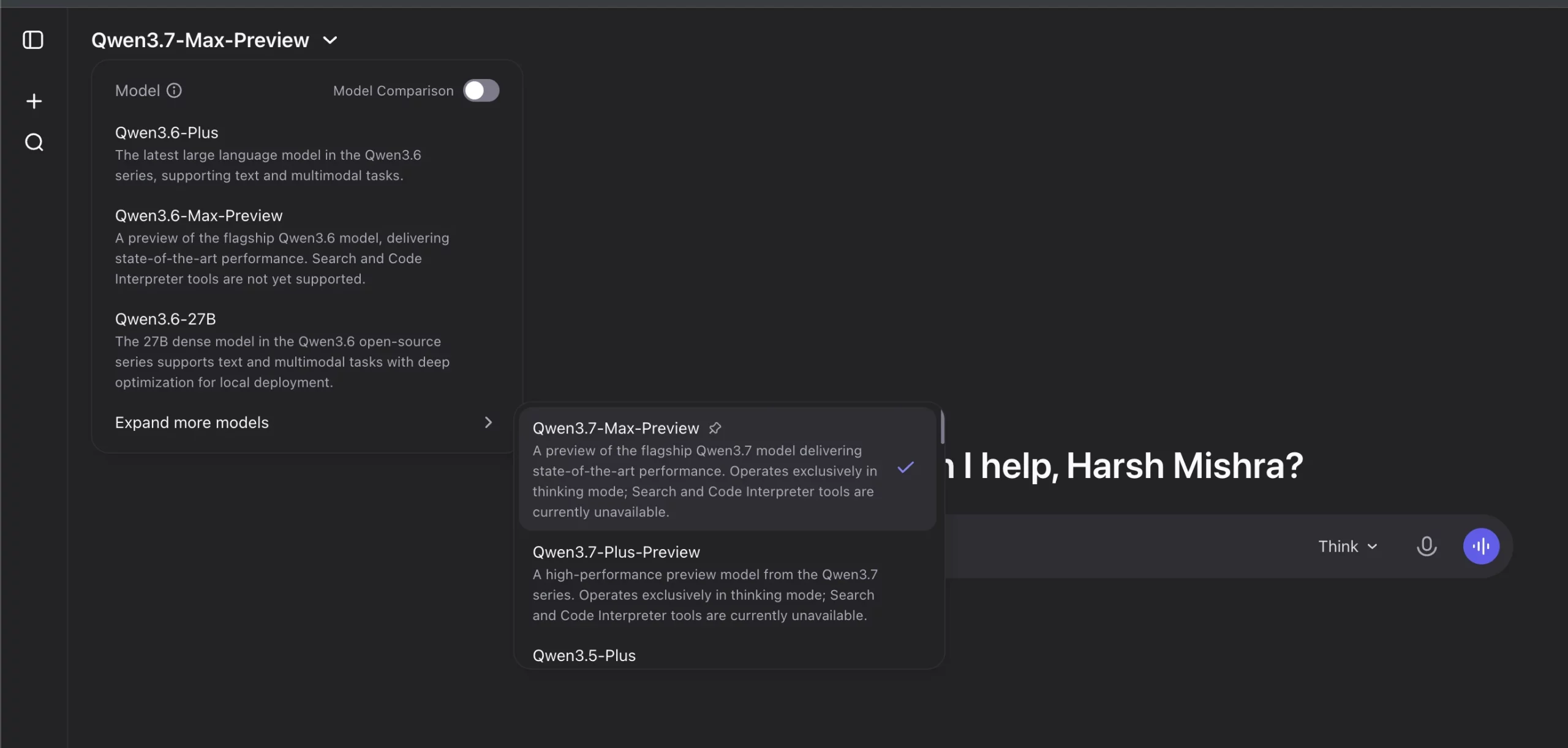
Qwen Studio
Qwen Studio serves as the consumer-facing portal, providing a web-based interface where users can interact with “Preview” versions of Qwen3.7-Max and Qwen3.7-Plus. This environment allows for rapid prototyping and testing of the model’s reasoning and multimodal capabilities without requiring any coding infrastructure.
Alibaba Cloud Model Studio
For enterprise-scale deployment, Alibaba Cloud Model Studio (formerly DashScope) provides a robust API. Recognizing the dominance of existing AI frameworks, Alibaba has ensured that the Model Studio API is compatible with the OpenAI SDK. This allows developers to swap their existing backend models for Qwen3.7-Max by simply changing the base URL and API key, significantly lowering the barrier to entry for international organizations.
Comparative Performance and Benchmark Implications
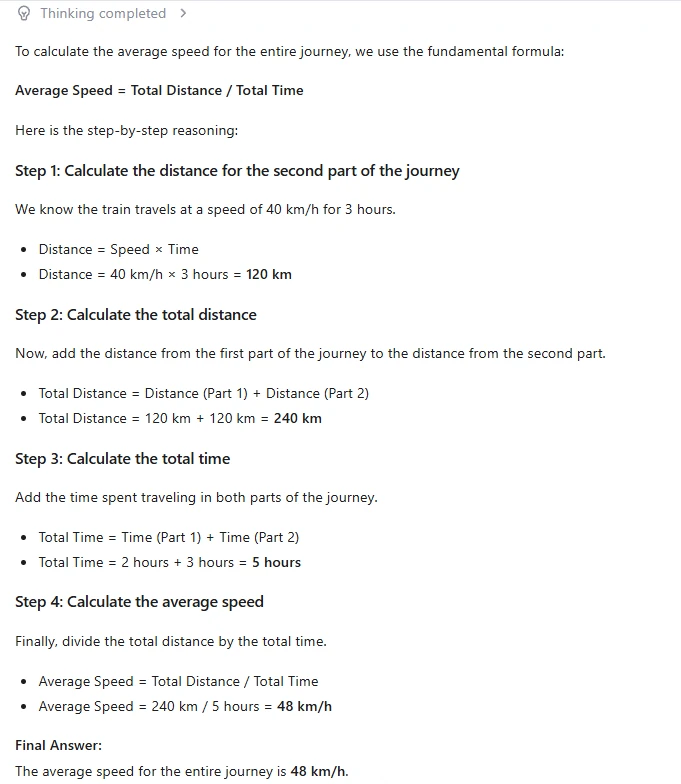
Initial hands-on evaluations of Qwen3.7-Max suggest a model that excels in technical precision. In reasoning tasks involving complex physics or mathematical calculations, the model provides step-by-step logic that rivals the “Chain of Thought” (CoT) capabilities of specialized reasoning models.
In coding benchmarks, Qwen3.7-Max demonstrates a sophisticated understanding of scalable data processing. When tasked with creating Python scripts for data cleaning and merging, the model does not merely provide a basic script; it suggests optimizations for large datasets, such as using Parquet files instead of CSVs or implementing out-of-core frameworks like Dask or Polars. While some early users have noted that the model’s responses can occasionally be overly verbose—a common trait in models trained for high instruction-following—the technical accuracy of the code remains high.
The model’s performance is being closely watched in the context of the “Global AI Race.” With the recent rise of other high-performance models from the region, such as DeepSeek-V3, Qwen3.7-Max positions Alibaba as a formidable contender in the pursuit of “Agentic AGI.” By focusing on reliability and long-horizon tasks, Alibaba is addressing the specific needs of the industrial and corporate sectors, where the cost of AI failure is high.
Broader Impact and Industry Analysis
The release of Qwen3.7-Max is likely to have several long-term implications for the AI ecosystem. First, it signals a shift in how “flagship” models are evaluated. While traditional benchmarks like MMLU (Massive Multitask Language Understanding) remain relevant, the new metric for success is becoming “success rate per task,” which measures how often an agent successfully completes a complex workflow from start to finish.
Second, the proprietary nature of Qwen3.7-Max suggests that the era of “free-for-all” high-end model weights may be reaching a plateau for the largest tech conglomerates. As the compute costs for training these “Max” tier models skyrocket, companies are increasingly looking toward subscription and API-based revenue models to recoup their investments.
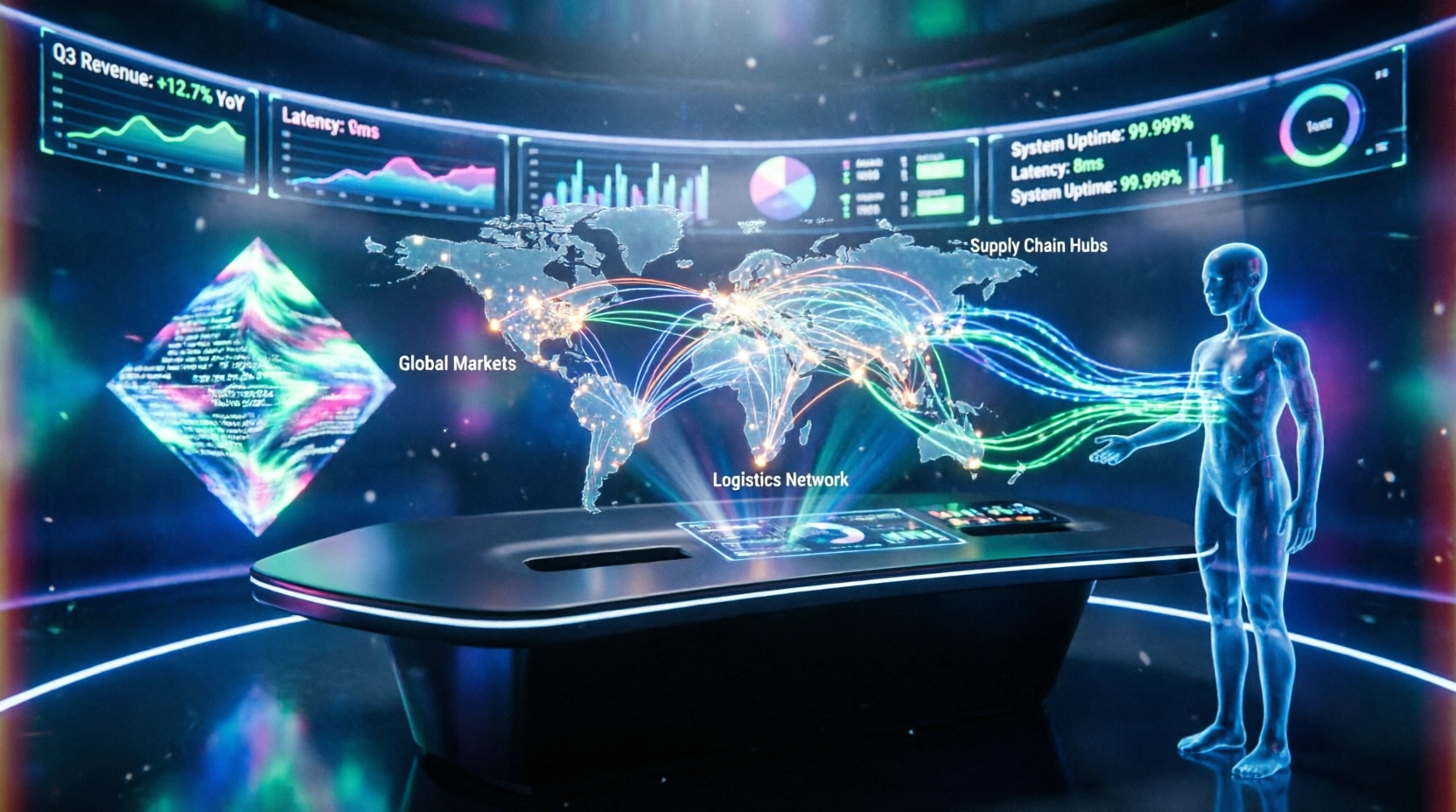
Finally, the focus on 35-hour autonomous operation suggests a future where AI “workers” operate in the background of corporations, handling tedious back-office tasks, monitoring supply chains, or managing software deployments with minimal human oversight. This “set-and-forget” capability is the holy grail for enterprise automation, and Alibaba’s latest release brings the industry one step closer to that reality.
Technical leaders and AI architects are encouraged to evaluate Qwen3.7-Max through internal “red-teaming” and pilot projects. The true test of the model will not be in a vacuum of benchmarks, but in its ability to navigate the messy, unpredictable data environments of real-world business operations. As Alibaba continues to roll out the full capabilities of the Qwen3.7 series, the competition for the dominant agentic platform is set to intensify, benefiting the global developer community through increased choice and rapid innovation.