rifanmuazin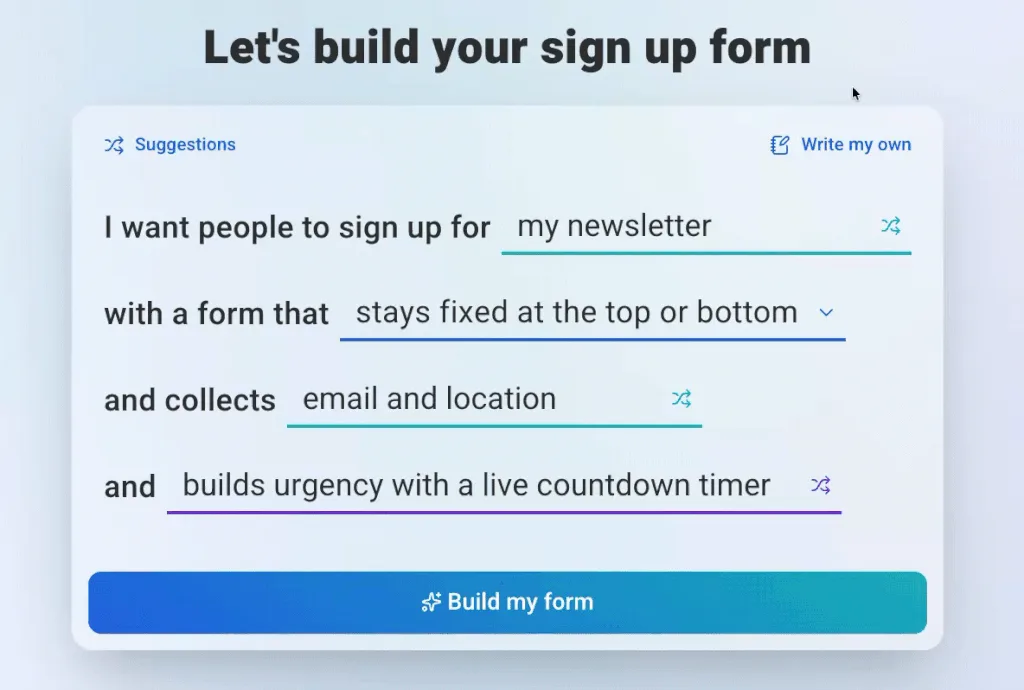
The landscape of digital marketing and web development is undergoing a significant transformation with the advent of Artificial Intelligence (AI) form builders, tools designed to create sophisticated signup forms from simple, plain-language descriptions. This innovative approach promises to democratize advanced web design, making complex interactive elements accessible to businesses of all sizes without the need for coding, extensive design experience, or significant financial investment. Leading this charge, AWeber, a prominent email marketing platform, has launched its AI Signup Form Builder, now available in open beta, marking a pivotal shift from traditional, manual form creation processes.
Understanding AI Form Builders: A Paradigm Shift
An AI form builder fundamentally reimagines the creation of web forms. Instead of requiring users to manually select templates, drag and drop elements, or write custom code, these intelligent tools interpret natural language descriptions to generate fully functional and visually appealing signup forms. A user might simply describe, “Create a popup with a countdown timer and email field,” and the AI builder constructs it, handling layout, styling, animations, and field mapping automatically. This represents a profound departure from conventional methods, which often involve meticulous, field-by-field editing and troubleshooting across various devices.
The core of an AI form builder lies in its utilization of large language models (LLMs). These advanced AI systems are trained on vast datasets, enabling them to understand nuanced human instructions and translate them into executable design commands. The process typically unfolds in three iterative stages:

- Input Provision: Users initiate the process by providing an input, which can take several forms. This might be a written description (“Design a scratch-card signup form that offers a 15% discount”), a screenshot of an existing form from another website, or selections from a guided prompt that walks the user through various options like form type, required fields, and desired behaviors.
- AI Interpretation and Generation: The AI system interprets the provided input, processing the natural language or visual cues to generate a working form. Crucially, a capable AI form builder doesn’t just produce static HTML. It constructs interactive elements such as scroll triggers, entrance animations, and conditional display rules, ensuring the form is engaging and dynamic.
- Conversational Refinement: Post-generation, users can refine the form through a conversational interface. Instead of navigating complex menus, users describe desired changes in plain language (“Make the button larger,” “Change the background to dark blue,” “Add a progress bar”). The AI updates the form in real-time, allowing for iterative preview and adjustment until the desired outcome is achieved. This describe-generate-refine loop dramatically streamlines the design process, replacing traditional manual configuration and cross-device layout adjustments.
Evolution of Web Forms: From Manual Code to Intelligent Automation
The history of web forms is one of continuous simplification and increasing sophistication. In the early days of the internet, creating a functional web form required intricate knowledge of HTML, CSS, and often server-side scripting to handle data submission. This was a task primarily for web developers. The late 2000s and 2010s saw the rise of drag-and-drop form builders, which abstracted much of the coding complexity, allowing marketers and small business owners to create basic forms through visual interfaces. These tools, while empowering, still presented users with a “blank canvas” and a multitude of options, often leading to decision fatigue or uninspired designs.
The current wave of AI form builders represents the next evolutionary leap. By leveraging the power of generative AI, these tools move beyond simply simplifying manual tasks; they automate the creative and technical decisions involved in form design. This shift is particularly timely, as businesses increasingly rely on digital channels for customer acquisition and engagement. Industry reports suggest that the global market for AI in marketing is projected to grow substantially, indicating a widespread adoption of intelligent automation across various marketing functions, including lead generation through forms.
Addressing the Small Business Challenge
For small businesses, the introduction of AI form builders is particularly impactful. AWeber’s research indicates that 43% of small businesses have 500 or fewer email subscribers, highlighting a significant need for effective lead generation tools. Many of these businesses recognize the importance of signup forms but are often hindered by the perceived complexity and time investment required by traditional builders. The “blank canvas” phenomenon—where users are overwhelmed by a plethora of options and unsure how to begin—often leads to generic forms or, worse, abandonment of the task altogether.

AI form builders directly address this friction. By allowing users to articulate their needs in natural language, these tools remove the initial barrier of design expertise. A business owner can focus on what they want to achieve (e.g., “collect emails for a weekly newsletter with a welcome discount”) rather than how to build it. This simplification accelerates the path from idea to deployment, empowering small businesses to implement sophisticated marketing strategies previously exclusive to larger enterprises with dedicated design and development teams. The time savings alone can be substantial, freeing up valuable resources for core business activities.
Key Features of a Robust AI Form Builder
While the core concept of AI-driven form generation is shared, not all AI form builders offer the same level of capability. A truly useful AI form builder, as opposed to a mere automated template picker, should possess several distinguishing features:
- Multiple Input Methods: A versatile AI builder should offer various ways to initiate form creation. This includes free prompting for maximum creative freedom, guided prompts for users seeking structured assistance, screenshot uploads for replicating existing designs with custom branding, and a template gallery for quick starts that can then be customized conversationally.
- Conversational Refinement: The ability to iteratively refine the form using natural language commands is paramount. This conversational loop, allowing users to describe changes and see them implemented instantly, is where the true power of AI shines, eliminating tedious menu navigation. The system should also retain context, allowing users to return to their work seamlessly.
- Interactive and Animated Elements: Modern web forms need to capture attention. A robust AI form builder should be capable of generating advanced interactive and animated elements like animated popups with custom scroll triggers, floating 3D buttons with hover effects, gamified experiences such as scratch-card reveals or spin-the-wheel signups, and multi-step forms with progress bars. These features, traditionally requiring significant development effort, become accessible with AI.
- Custom Field Mapping: Beyond basic name and email collection, businesses often need to gather specific data (e.g., “favorite product,” “company size,” “location”). A capable AI form builder should automatically map this data to the correct fields in the integrated email platform or customer relationship management (CRM) system, and even create new fields if they don’t already exist.
- Display and Targeting Controls: An effective form must reach the right audience at the right time. Essential display controls include page-level targeting, device targeting (mobile, desktop, or both), frequency controls (e.g., show once per visitor, once per session, or every visit), and scheduling capabilities for time-sensitive promotions.
- Preview Before Publish: Before deployment, users must be able to thoroughly preview and test the form’s appearance and behavior, including animations, field validation, entrance triggers, and thank-you page actions, in a real-world environment.
AWeber’s Foray into AI: The Signup Form Builder in Detail
AWeber’s AI Signup Form Builder exemplifies these advanced capabilities, providing a comprehensive solution for creating dynamic and effective lead generation forms. Launched in open beta on May 20, 2026, it integrates seamlessly into the AWeber ecosystem.
Getting Started: Users have four distinct pathways to begin:
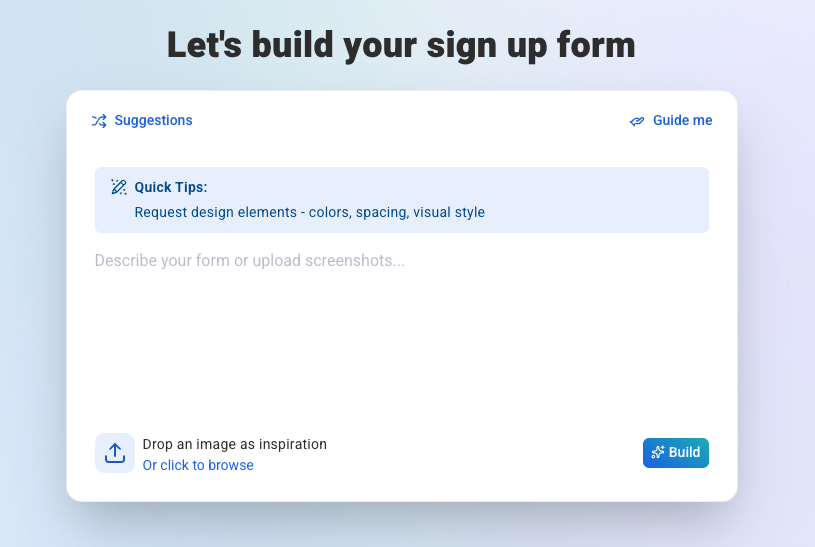
- Free Prompting: Users can simply open the builder and describe their desired form in detail, such as “Create a scratch-card signup form where visitors scratch off to reveal a hidden discount. Always reveal 15% off.” The AI then generates the form with all specified mechanics and logic.
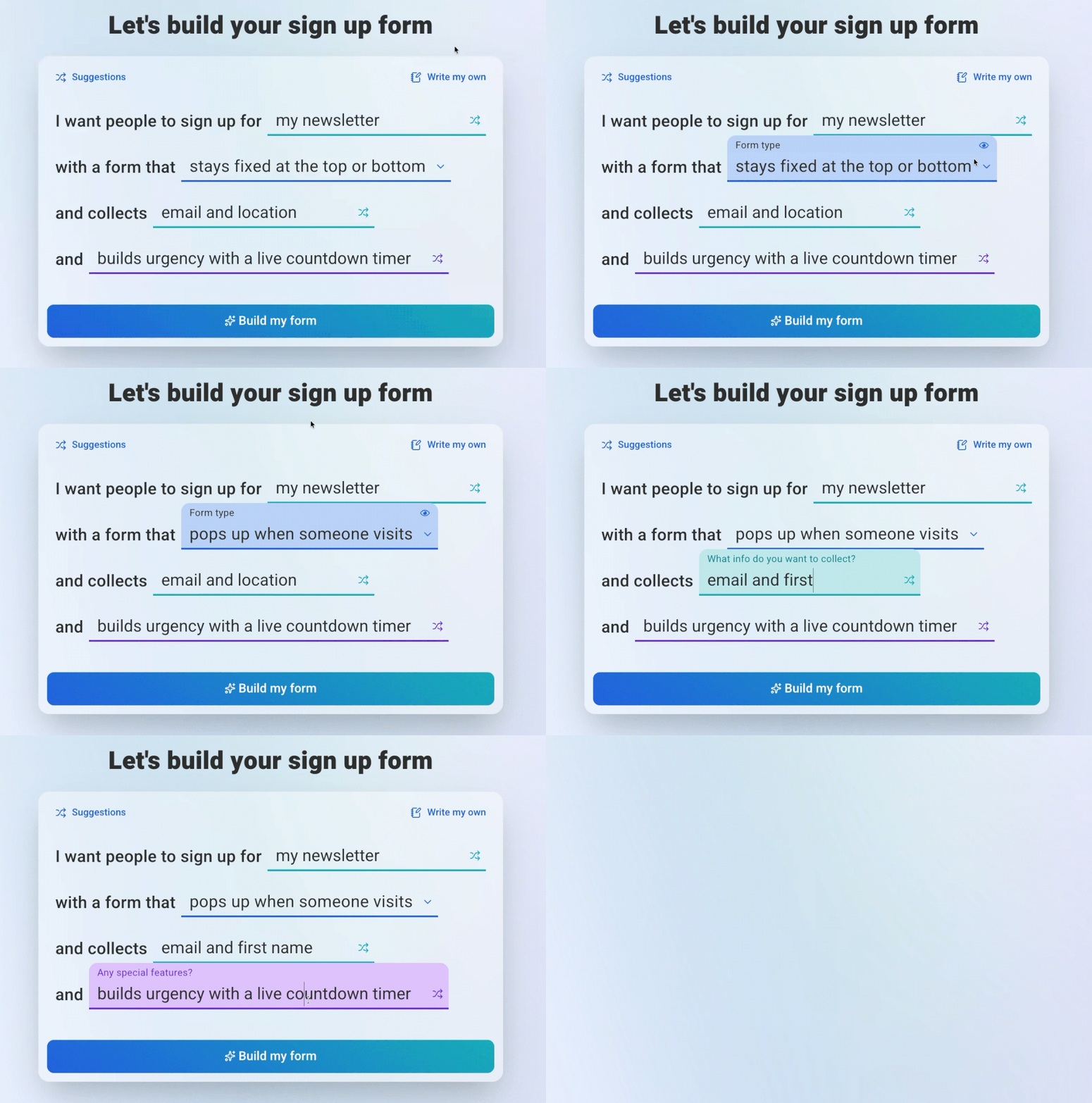
- Guided Prompts: For those who prefer a more structured approach, guided prompts walk users through a series of questions about form type (popup, slide-in, floating button), fields to collect, and desired behaviors (urgency timers, gamification).
- Screenshot Upload: Users can upload an image of a form they admire from another website. The AI analyzes the screenshot and recreates the design, allowing users to customize it with their own branding and content.
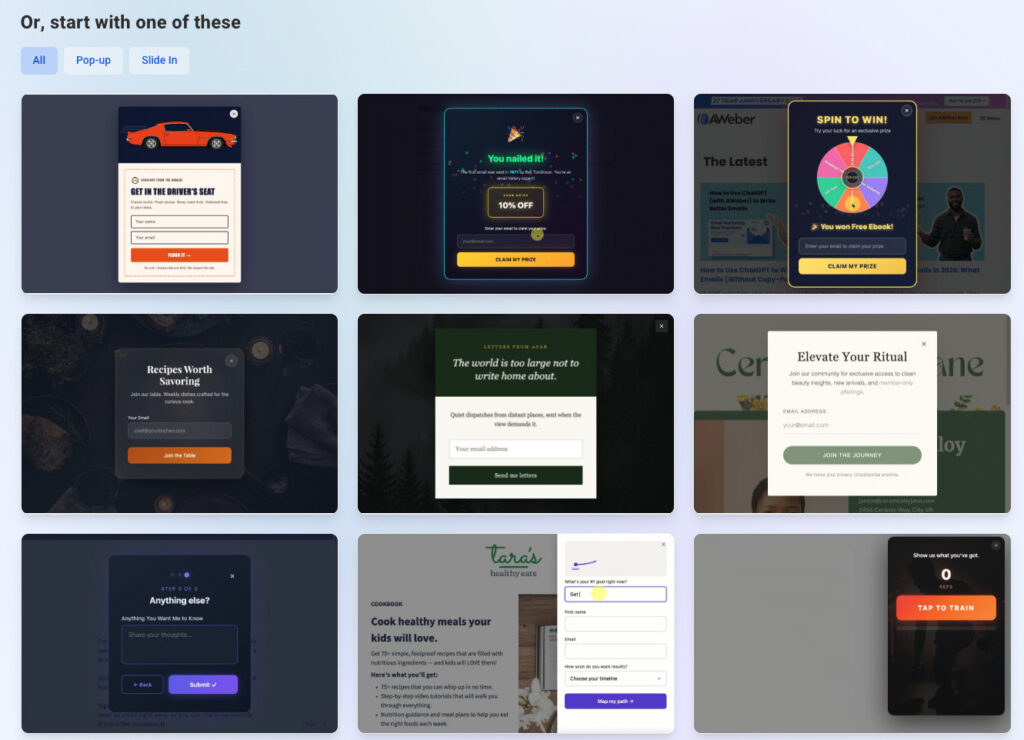
- Template Gallery: A curated collection of ready-to-use forms, categorized by type, offers a starting point for quick deployment and subsequent conversational customization.
Making Edits: Once a form is generated, a chat interface serves as the primary tool for revisions. Users can describe any change in natural language, or directly click on elements like text or buttons to move, copy, or edit them. The system maintains full context of the current form, allowing users to pause and resume work at any time.
Publishing and Targeting: Publishing is streamlined with robust display settings. Users can choose to show forms on specific pages, across an entire site, or based on device type. Frequency controls manage how often a visitor encounters the form, and scheduling options allow for automatic activation and deactivation of seasonal promotions. A simple on/off switch provides instant control without requiring website code changes.
Custom Field Mapping: AWeber’s AI builder intelligently maps collected data to existing custom fields within the user’s AWeber account. If a corresponding field doesn’t exist, the system automatically creates one upon publication, ensuring seamless data integration.
Previewing and Testing: A dedicated preview mode allows users to thoroughly test the form’s appearance, animations, field validation, and thank-you page behavior before it goes live, ensuring a flawless user experience.
Unlocking Interactive Experiences: Advanced Form Types
The AWeber AI Signup Form Builder is capable of generating a wide array of advanced, interactive forms that traditionally required significant technical expertise:
- Animated Popups: Beyond static boxes, these popups can slide, bounce, or fade into view, triggered by specific user actions like scroll depth. A single prompt can define the animation, timing, and trigger.
- Floating 3D Buttons: These buttons feature a subtle 3D shadow effect and hover animations, making them stand out and draw attention to the call to action without being intrusive.
- Scratch-Card Reveals: A gamified element where visitors use their mouse or finger to “scratch off” a hidden area to reveal a discount or offer. The AI handles the scratch mechanic, prize logic, and email capture.
- Spin-the-Wheel Signups: Another engaging gamified form where visitors enter their email for a chance to win a prize or discount, with the AI managing the wheel generation, prize logic, and data capture.
- Multi-Step Forms with Progress Bars: For longer forms, the AI can break them into digestible steps, complete with progress indicators and field validation, improving completion rates by reducing perceived effort.
- Countdown Timer Forms: These forms incorporate live countdown timers to create urgency for limited-time offers, with the timer, form fields, and display logic generated as a cohesive unit.
Each of these form types, once the domain of developers and designers wielding custom CSS and JavaScript, is now accessible through a simple textual description, empowering marketers and small business owners to create highly engaging lead capture experiences.
Market Impact and Broader Implications
The emergence of sophisticated AI form builders like AWeber’s signifies a broader trend in the SaaS industry: the democratization of complex digital tools. This technology not only saves significant time and resources for businesses but also lowers the barrier to entry for advanced digital marketing strategies. Industry analysts predict that AI-powered tools will increasingly become standard, transforming how businesses interact with their online audiences. The ability to rapidly deploy A/B tested, highly interactive forms can lead to measurable improvements in conversion rates, which are crucial for business growth. Data suggests that interactive and gamified forms can achieve significantly higher engagement rates compared to static forms, sometimes increasing conversions by 20-30% or more.
The implications extend beyond just form creation. This technology hints at a future where entire web pages and marketing campaigns could be generated and optimized through conversational AI, making web development more intuitive and efficient. For web developers, this doesn’t necessarily mean obsolescence, but rather a shift in focus from repetitive coding tasks to more strategic problem-solving and custom AI model training.
Availability and Accessibility
AWeber’s AI Signup Form Builder is currently available in open beta, offering full access to all AWeber users. This includes those on the free plan, which supports up to 500 subscribers. This accessibility underscores AWeber’s commitment to empowering small businesses and individual marketers with cutting-edge tools at no additional cost for basic usage. The company’s lead product manager, Sean Tinney, emphasized the builder’s mission, stating, “Our goal is to eliminate the ‘blank canvas’ paralysis and enable every business, regardless of technical skill, to create highly effective and engaging signup forms in seconds. We believe this tool will be a game-changer for lead generation.”
In conclusion, AI form builders represent a significant leap forward in digital marketing. By transforming complex design processes into intuitive conversational interactions, they are poised to enhance online engagement, streamline workflows, and ultimately drive growth for businesses of all sizes, making advanced web capabilities truly accessible to everyone.