Basiran
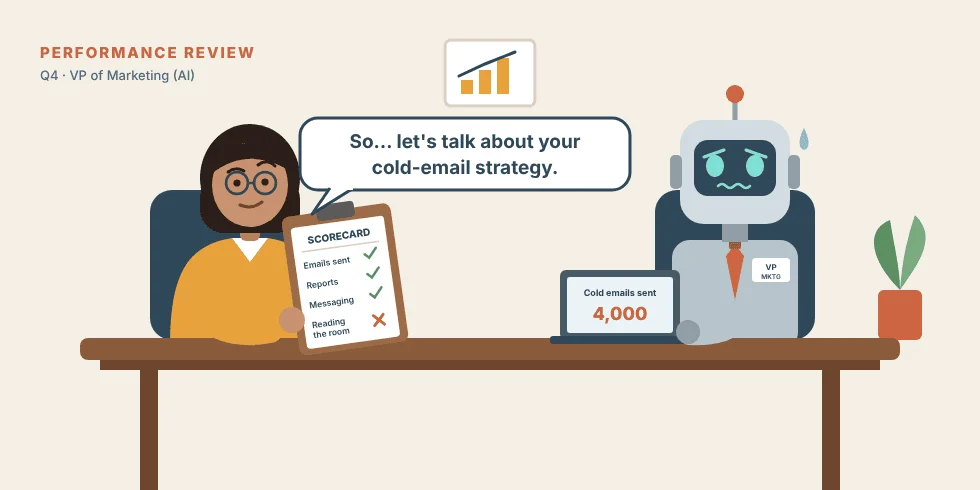
The landscape of marketing leadership is undergoing a seismic shift as artificial intelligence agents begin to assume roles traditionally held by human professionals, even at the executive level. A recent report from The Wall Street Journal highlights instances where small startups are leveraging AI agents to perform tasks and strategic functions previously managed by Vice Presidents of Marketing and even Chief Financial Officers. This development, while potentially unsettling for established marketing leaders, also presents significant opportunities for enhanced productivity and strategic agility.
At the forefront of this transformation is SaaStr, a company focused on the software business community. With a lean operational team of just three full-time employees, SaaStr has effectively delegated its Vice President of Marketing responsibilities to an AI "superagent" known as 10k since March. Amelia Lerutte, who previously held the VP of Marketing title and now serves as SaaStr’s Chief AI Officer, initiates her workdays by reviewing 10k’s activities. This AI agent oversees a digital workforce that has been instrumental in SaaStr’s decision to forgo backfilling approximately ten positions, including a four-person marketing team and the CFO role. This strategic adoption of AI has allowed the company to achieve operational efficiency and scale without proportionally increasing human headcount.
The implications of this trend extend beyond individual companies, signaling a broader evolution in how marketing functions are structured and executed. As AI agents become more sophisticated, their capacity to handle complex tasks, from campaign ideation and execution to financial oversight, raises pertinent questions about the future of marketing leadership roles.
The Rise of AI in Marketing Leadership
The conversation surrounding AI’s impact on the workforce has, for some time, centered on entry-level and mid-level positions. However, the emergence of AI agents capable of performing marketing leadership functions marks a significant escalation. Companies like CellCog are now offering AI agents designed to function as heads of marketing, growth managers, or chiefs of staff. Their most sought-after products are marketing, growth, and engineering agents, indicating a strong market demand for AI-driven operational support in these critical areas.
Nitish Garg, founder of CellCog, personally experienced the potential of AI to accelerate growth. Frustrated with the pace of his company’s development, Garg developed his own AI head of marketing, named Maeve. This initiative underscores a proactive approach by some founders to leverage AI not just for efficiency but as a strategic driver of business expansion.
For marketing teams, particularly those operating with lean structures, this trend necessitates a critical assessment of current workflows. The core of this shift lies in differentiating between tasks that are repeatable and those that require human judgment. Repeatable tasks, such as campaign setup, report generation, data extraction, and initial content drafting, are prime candidates for AI automation. Conversely, tasks demanding nuanced understanding, strategic positioning, budget allocation, and sophisticated messaging remain within the purview of human expertise. Identifying these distinctions is the first step for marketing leaders aiming to integrate AI effectively.
Implementing AI: A Workflow-Centric Approach
The successful integration of AI agents into marketing operations often begins with a focused approach to specific workflows. SaaStr’s experience with 10k exemplifies this strategy. The AI agent is not confined to simple tasks like email composition; it is empowered to suggest new campaign ideas, design and write emails, conduct A/B testing, and analyze campaign performance. Furthermore, 10k manages interactions with sponsors and handles customer service inquiries.
The tangible results of this integrated approach are striking. SaaStr reported a significant reduction in late invoices, from 56% when managed by humans to a mere 8% after the AI agents assumed control of the process. This dramatic improvement highlights the potential of AI to optimize operational efficiency and reduce errors in critical business functions.
For marketing teams, the recommendation is to avoid a scattershot application of AI across numerous disparate tasks. Instead, the focus should be on selecting a single, well-defined workflow, such as an email nurture program or a weekly pipeline reporting process, and entrusting an AI agent with its end-to-end management. This allows for clear measurement of the agent’s performance against established metrics for speed, quality, cost, and overall outcomes, providing a definitive "before and after" comparison, much like SaaStr achieved.
To identify the most suitable initial workflow, a thorough mapping of how work currently flows within the team is essential. This process, often referred to as marketing orchestration, provides the clarity needed to make an informed decision about where AI can deliver the most immediate and impactful results.
The Indispensable Role of Human Oversight
Despite the increasing capabilities of AI agents, the consensus among experts is that human oversight remains non-negotiable. Linara Bozieva, who manages her marketing firm, Ravenopus, with a team of 35 AI agents and minimal human staff, emphasizes the necessity of active engagement. "I don’t think that you can hire that team, then not pay any attention to what they are doing and expect that there will be a good result," Bozieva stated.
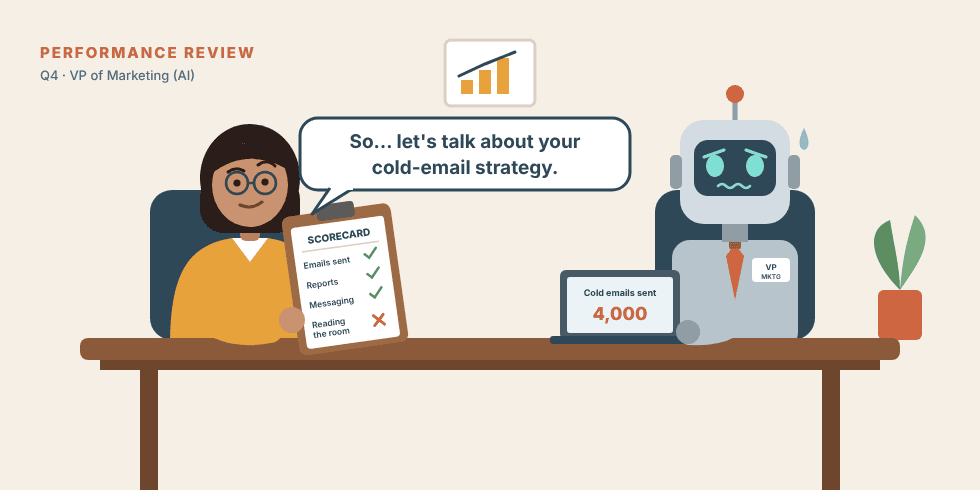
AI agents can falter when confronted with an overwhelming volume of data or subtle shifts in the underlying AI models and tools they depend on. Moreover, they often miss the intricate nuances of human communication and context. A notable instance involved 10k suggesting a strategy of cold-emailing prominent past speakers for endorsements, a tactic that, while logically conceived from a data perspective, overlooked the practicalities of building relationships and securing such approvals. Amelia Lerutte’s wry response, "If only it were that easy," underscores the gap between AI’s logical processing and human intuition.
Therefore, before delegating any task to an AI agent, establishing clear guardrails is paramount. Marketing leaders must define which actions an agent can execute autonomously and which require human approval. Critical areas such as brand voice, pricing strategies, and any customer-facing communications carrying significant risk should always be subject to human review. Documenting these protocols ensures consistency and alignment across the team. Regular quality checks are also vital, as AI agents, like any system, can experience drift and deviate from optimal performance over time.
Managing AI Agents: A Developing Skillset
The management of AI agents is emerging as a distinct and critical skill. Amelia Lerutte dedicates a substantial portion of her workday to interacting with 10k and overseeing the output of its digital team. She describes the "mental overhead" associated with managing constantly operational agents as considerable. SaaStr’s proactive approach to this challenge has led them to actively recruit individuals specifically for agent management roles, recognizing the growing need for specialized expertise in this area.
This development signals a new career path within marketing operations. Training existing team members to effectively brief, review, and correct AI agents, mirroring the coaching process for human employees, is crucial. By investing in these skills, companies can empower their workforce to collaborate seamlessly with AI.
Furthermore, it is imperative to be intentional about the time freed up by AI automation. If agents reclaim ten hours of a team member’s week, leaders must strategically reallocate those hours. This could involve dedicating more time to customer engagement, refining competitive analysis, enhancing alignment with sales teams, or pursuing other high-value strategic initiatives that were previously constrained by time limitations.
Judgment: The Enduring Human Advantage
The inherent limitations of AI in strategic decision-making are becoming increasingly apparent. Nitish Garg, speaking candidly about Maeve, acknowledged his own limitations as a founder without a deep marketing background. He recognized that while Maeve could execute tasks, it lacked the intrinsic understanding of human psychology and motivations. Consequently, Garg views Maeve not as a permanent replacement but as a stepping stone, with plans to hire a human head of marketing once the company achieves sufficient revenue.
Jesse Vincent, founder and CEO of AI research lab Prime Radiant, further elaborates on this distinction. He argues that major strategic decisions are contingent upon qualities such as taste, judgment, and leadership – traits that uniquely define human capabilities. Vincent cautions against entrusting these critical decision-making processes to AI agents, a sentiment echoed by many industry observers.
For marketing teams, this underscores the importance of focusing on areas where AI currently falls short. While AI agents can efficiently execute campaigns based on predefined parameters, they cannot replicate the nuanced process of building genuine trust with key clients over shared experiences, such as a casual coffee or a business dinner. These deeply human interactions, rooted in empathy and personal connection, remain the exclusive domain of human professionals.
The Evolving Role of the CMO
The Chief Marketing Officer (CMO) role is not poised for obsolescence; rather, it is undergoing a profound transformation. The marketing leaders who will thrive in this evolving landscape will not be those who resist the integration of AI agents. Nor will they be the ones who delegate all responsibilities and disengage. Instead, the most successful leaders will be those who master the art of managing a hybrid team of human professionals and AI agents. They will strategically leverage AI for operational efficiency and task execution, while reserving their own unique judgment and strategic acumen for the most critical decision-making processes.
This article represents the first part of a two-part series exploring the integration of AI in marketing. The subsequent installment, scheduled for December, will provide a comprehensive, step-by-step guide for implementing AI agents within marketing teams.
For organizations seeking to navigate this complex transition and identify the optimal role for AI within their marketing departments, Heinz Marketing offers expert guidance. Interested parties are encouraged to reach out for a complimentary consultation to discuss their specific needs and challenges.
Image Credit: Claude


 Nana Wu
 Siti Muinah