rifanmuazin
The shift toward high-efficiency lead generation is driven by the realization that most websites suffer from "conversion leaks"—points where potential customers drop off due to friction, lack of clarity, or technical delays. According to recent performance audits, the gap between a standard homepage and a dedicated, optimized landing experience can represent a difference of over 100% in measurable ROI. This analysis explores 17 specific, data-backed strategies that modern marketing teams are utilizing to regain control over their lead pipelines without the traditional reliance on lengthy development cycles.
The Evolution of Lead Capture: From Static to Dynamic
The chronology of website lead generation has undergone three distinct phases over the last decade. In the early 2010s, the "Information Era" saw websites acting as repositories of data, where the goal was simply to provide as much information as possible. By 2018, the "Responsive Era" forced a focus on mobile compatibility and user experience (UX). Today, in the "Personalization and AI Era," the standard for success is the ability to present the right offer to the right visitor at the exact moment of their intent.
Market analysts observe that the modern consumer is increasingly protective of their personal data. The "value exchange"—the trade of an email address for a resource—has become more expensive. Generic "sign up for our newsletter" prompts have seen a steady decline in efficacy, replaced by hyper-targeted solutions that address immediate pain points. This evolution necessitates a more sophisticated approach to how companies structure their online presence.
Core Strategies for Modern Lead Generation
1. The Implementation of Dedicated Landing Pages
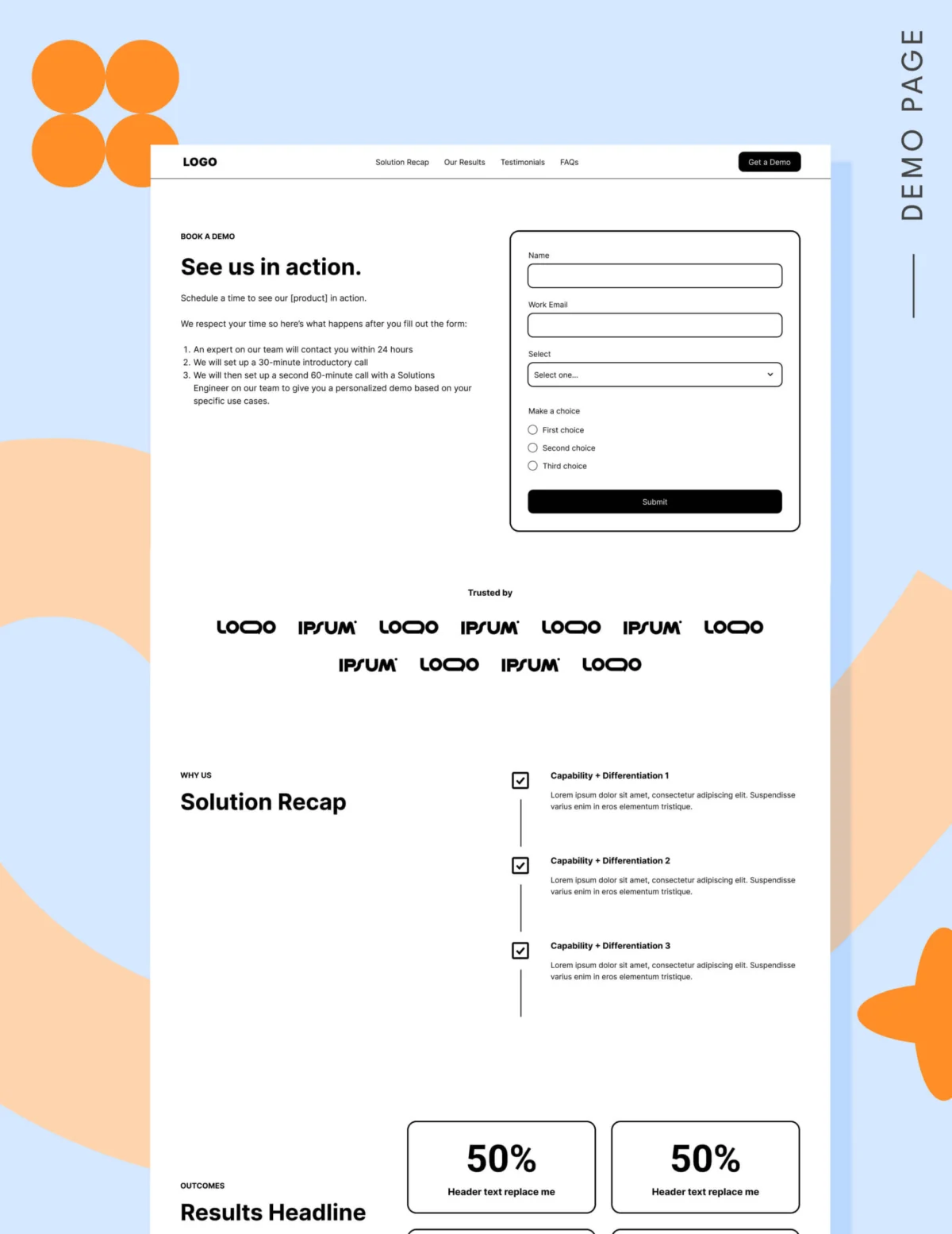
The primary failure of the modern homepage is its attempt to be everything to everyone. By contrast, dedicated landing pages are designed with a 1:1 attention ratio: one campaign for one specific goal. Data suggests that landing pages remove the "paradox of choice" by eliminating navigation menus and extraneous links that lead visitors away from the conversion goal. Industry benchmarks show that specialized pages consistently outperform generic homepages in lead capture by significant margins.
2. Rigorous A/B Testing of High-Impact Elements
Continuous optimization is no longer optional for competitive firms. The practice of A/B testing—comparing two versions of a webpage to see which performs better—has yielded dramatic results. In one notable case study from the travel firm Going, changing a single call-to-action (CTA) from "Sign up for free" to "Trial for free" resulted in a 104% increase in month-over-month conversions. This highlights that minor linguistic shifts can double lead volume without increasing advertising spend.

3. High-Utility Lead Magnets
The era of the "fluffy" 10-page PDF is ending. Modern lead magnets must provide immediate, actionable value. High-converting assets in 2025 include:
- Interactive Calculators: Tools that provide personalized financial or operational projections.
- Audit Checklists: Step-by-step guides that help users identify their own gaps.
- Proprietary Data Reports: Original research that cannot be found elsewhere.
4. Form Simplification and Conditional Logic
Conversion friction is often a byproduct of overly complex lead forms. Every additional field added to a form increases the likelihood of abandonment. Professional marketers are now adopting "progressive profiling" and conditional logic. This technology allows forms to show only the most relevant questions based on previous answers, reducing the cognitive load on the visitor while still gathering high-quality data for the sales team.
5. AI-Driven Traffic Routing
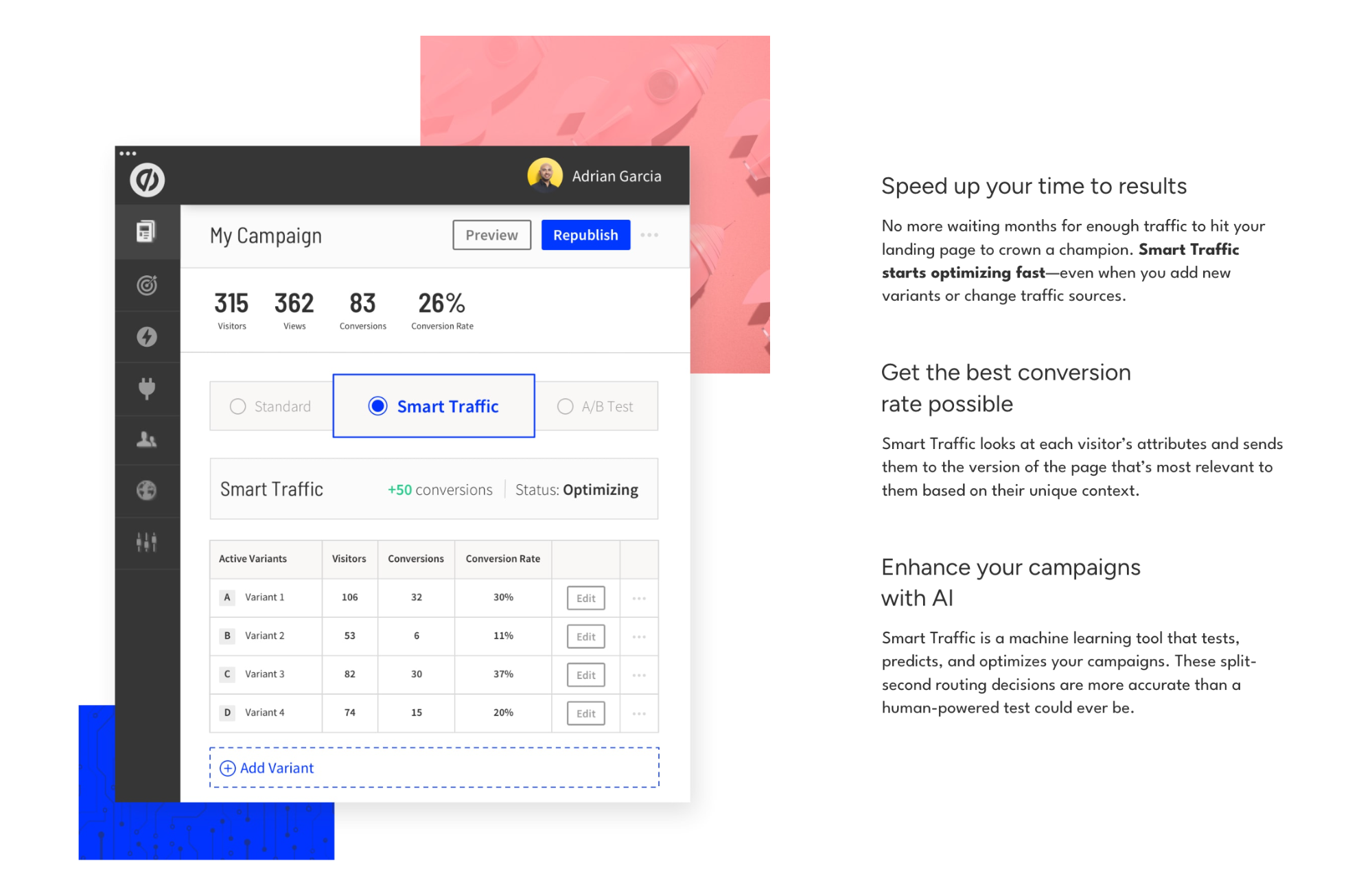
The emergence of AI-powered "Smart Traffic" solutions marks a significant departure from traditional testing. Rather than waiting weeks for statistical significance in an A/B test, AI algorithms can now analyze visitor attributes—such as geographic location, device type, and time of day—to automatically route them to the page variant most likely to convert them. Reports indicate that AI optimization can begin showing results after as few as 50 visits.
6. Contextual Call-to-Action (CTA) Placement
The placement of CTAs must mirror the user’s natural scanning patterns. Utilizing "above the fold" placement for immediate intent and "end of content" placement for educational intent ensures that a conversion opportunity is always within reach. Furthermore, "sticky" CTAs that remain visible as the user scrolls have become a standard for long-form content pages.
7. Strategic Deployment of Social Proof
Trust is the primary currency of the internet. Beyond simple testimonials, effective social proof now includes:
- Real-time Activity Feeds: Showing when other users have recently signed up or purchased.
- Industry Badges: Third-party certifications and security seals.
- Quantifiable Results: Statements such as "Joined by 50,000+ professionals" rather than vague praise.
Technical Performance and Site Speed
The relationship between technical performance and lead generation is absolute. Research conducted by web performance firms indicates that 53% of mobile visitors will abandon a page if it takes longer than three seconds to load. Furthermore, conversion rates are shown to drop by approximately 4.42% for every additional second of load time.

To mitigate this, firms are increasingly focusing on image compression, the use of Content Delivery Networks (CDNs), and the elimination of "bloated" scripts. A fast-loading site is no longer just a technical requirement; it is a fundamental component of the sales funnel.
Content Strategy: Solving Before Selling
Modern content marketing must prioritize the "Value-First" model. This involves creating resources that address the specific "pain points" of a target audience. By solving a small problem for free through a blog post or video, a company establishes the authority required to solve a larger problem for a fee.
Experts suggest that content should be mapped to the buyer’s journey:
- Awareness Stage: Educational content addressing "why" a problem exists.
- Consideration Stage: Comparison guides and "how-to" frameworks.
- Decision Stage: Case studies and product demonstrations.
Conversational Marketing and Real-Time Engagement
The expectation for instantaneous communication has led to the rise of live chat and AI chatbots. When a visitor has a question during the consideration phase, the absence of an immediate answer often leads to a bounce. Integrating real-time chat allows companies to capture leads at the moment of peak interest. Modern chatbots are now capable of qualifying leads by asking preliminary questions before handing the conversation over to a human representative.
Personalization Through Dynamic Text Replacement
Generic messaging is increasingly ignored by sophisticated buyers. Dynamic Text Replacement (DTR) allows a landing page to automatically update its headlines and copy to match the specific search terms or ad copy that brought the visitor to the site. If a user clicks an ad for "Small Business Accounting," the landing page should specifically highlight small business solutions rather than enterprise-level features.
The Critical Role of Lead Qualification
A high volume of leads is meaningless if the quality is low. The friction between marketing and sales departments often stems from "unqualified" leads—individuals who have no intention or budget to purchase.
To resolve this, organizations are implementing lead scoring systems. These systems assign numerical values to leads based on:
- Demographic Fit: Company size, industry, and job title.
- Behavioral Signals: Number of pages visited, specific resources downloaded, and time spent on site.
- Budget and Authority: Information gathered through strategic form fields.
By filtering leads through a scoring model, marketing teams can ensure that the sales department only focuses on high-probability prospects, thereby increasing overall organizational efficiency.
Broader Impact and Industry Implications
The transition toward these 17 strategies reflects a broader shift in the global economy. As customer acquisition costs (CAC) rise, the ability to maximize the value of existing web traffic becomes a competitive necessity. Companies that fail to optimize their conversion engines are effectively subsidizing their competitors’ growth by paying for traffic that never converts.
Furthermore, the "democratization" of web optimization—where marketing teams can build and test pages without deep technical knowledge—is accelerating the pace of business. The "IT bottleneck" that once delayed campaigns by weeks or months has been largely bypassed by no-code and AI-driven platforms.
In conclusion, turning a website into a lead-generating powerhouse requires a shift from a "design-first" mindset to an "optimization-first" mindset. By implementing dedicated landing pages, leveraging AI for traffic routing, and maintaining a rigorous focus on site speed and lead qualification, businesses can transform their digital presence from a static cost center into a dynamic engine for revenue growth. The data is clear: small, strategic tweaks to the user experience are the most effective levers for driving measurable ROI in the modern digital landscape.