rifanmuazin
Instagram is once again directing its strategic focus towards long-form content, a significant pivot that signals the platform’s re-evaluation of its content development priorities. This renewed emphasis aims to enhance audience engagement, align with evolving digital media consumption trends, and provide expanded opportunities for creators. The announcement comes as part of Instagram’s broader effort to remain competitive in a rapidly changing digital landscape, where different content formats vie for user attention and advertising revenue.
The initiative was brought to light by Tessa Lyons, Instagram’s Vice President of Product, during her address at last week’s Scalable Summit. Lyons articulated that long-form content is now a pivotal element in the app’s future planning, indicating a deliberate move away from an exclusive focus on the short-form, TikTok-inspired video format that has dominated the platform in recent years. Instead, Instagram appears to be charting a course closer to a YouTube-like model, recognizing the inherent value of deeper, more expansive storytelling in fostering creator loyalty and driving sustained engagement.
The Evolving Digital Content Landscape: A Strategic Imperative
In an era defined by dynamic shifts in digital content consumption, platforms are under constant pressure to adapt their offerings to meet both user preferences and creator needs. The rise of short-form video, epitomized by TikTok’s explosive growth and Instagram Reels’ subsequent success, demonstrated the immense power of bite-sized, engaging content. However, as the market matures, there’s a growing recognition that an exclusive reliance on brevity may not suffice for long-term platform health or creator prosperity. Creators, increasingly sophisticated in their content strategies, often seek avenues for more in-depth expression, community building, and diversified monetization. This includes podcasts, intricate live-streams, documentaries, and narrative series—formats that inherently demand longer runtimes.
Instagram’s strategic recalibration reflects a broader industry trend where platforms are converging on a comprehensive content ecosystem rather than specializing in a single format. While short-form content excels at discovery and rapid consumption, long-form content fosters deeper immersion, builds stronger creator-audience relationships, and often commands higher advertising rates due to increased watch times and more engaged audiences. The imperative for Instagram, a subsidiary of Meta Platforms, is to cultivate an environment where creators can thrive across a spectrum of content lengths, thereby capturing a larger share of their creative output and audience’s screen time.
A Retrospective: Instagram’s Long-Form Journey and Past Challenges
Instagram’s foray into long-form content is not unprecedented; rather, it marks a return to a concept that previously struggled to gain traction. Understanding this history is crucial to contextualizing the current strategic shift.
-
The Genesis of IGTV (2018): In June 2018, Instagram made its first major push into long-form video with the launch of IGTV. Positioned as a direct competitor to YouTube, IGTV was conceived as a standalone application designed for vertical, long-form video content. At its launch, regular users could upload videos up to 10 minutes long, while larger, verified creators were granted the ability to upload videos up to 60 minutes in length. The vision was ambitious: to provide a home for professional-grade, episodic content within the Instagram ecosystem, allowing creators to tell more comprehensive stories and potentially tap into new monetization streams. The emphasis on vertical video was a nod to mobile-first consumption habits, differentiating it from YouTube’s largely horizontal format. Instagram’s then-CEO, Kevin Systrom, touted IGTV as a new way for users to engage with their favorite creators and for creators to connect with their audiences on a deeper level. The company hoped to capitalize on the growing video consumption trend and offer a compelling alternative for creators looking to expand beyond the main Instagram feed’s shorter video limits.
-
The Rise of Reels and the Decline of IGTV (2020-2022): Despite its initial promise, IGTV struggled to achieve widespread adoption. Several factors contributed to its lukewarm reception. Users often found the separate app clunky and preferred to consume content within the familiar main Instagram interface. Creators, too, expressed frustration with the platform’s monetization options and the effort required to drive traffic to a separate app. The launch of Instagram Reels in August 2020, directly integrated into the main app and designed to counter TikTok’s meteoric rise, further complicated IGTV’s position. Reels quickly became a dominant feature, capturing significant user engagement and platform resources. This shift underscored Instagram’s focus on short-form, viral content.
By 2021, Instagram began to de-emphasize IGTV, first by integrating all video content into a single "Video" tab on user profiles, blurring the distinction between feed videos and longer-form content. This move hinted at a broader simplification strategy. Then, in February 2022, Instagram officially announced the closure of the standalone IGTV app. The company stated that this decision was part of a larger effort to streamline the Instagram experience, with all videos shorter than 15 minutes being posted as Reels. This effectively meant the end of IGTV as a separate entity and also led to the discontinuation of its mid-roll ad offering, a crucial monetization tool for creators. The prevailing sentiment within Instagram’s management at the time was that user engagement primarily resided within the main app, making a separate long-form video platform untenable. -
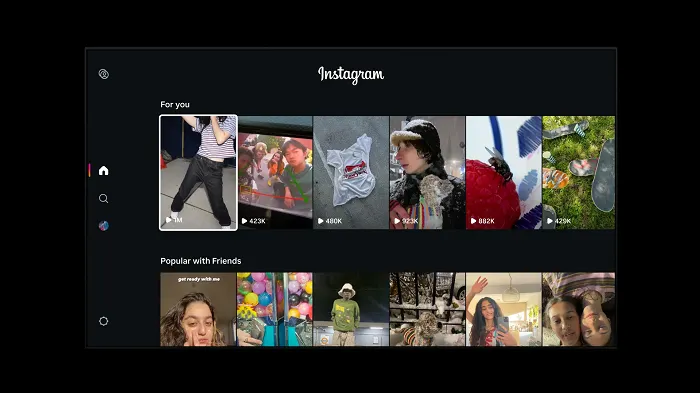
Simplification and Re-evaluation: The decision to sunset IGTV was seen by many as Instagram conceding defeat in the long-form video war against YouTube. However, it also marked a period of strategic re-evaluation. While short-form video, particularly Reels, continued to perform strongly, the underlying need for diverse content formats, especially for a maturing creator economy, likely persisted. The company’s continued investment in a connected TV (CTV) app, updated in December 2022 with a user interface strikingly similar to YouTube’s CTV offering, provided an early clue that Instagram was not entirely abandoning the big screen or longer content experiences. While initially focused on short-form content, this move laid the groundwork for a potential return to longer material, driven by the desire to increase CTV engagement and provide creators with expanded avenues for content creation and audience building.
YouTube’s Blueprint: The Power of Connected TV and Long-Form
Instagram’s renewed interest in long-form content is undoubtedly influenced by the undeniable success of YouTube, particularly in the realm of Connected TV (CTV) and its robust creator economy. YouTube’s dominance provides a clear blueprint for the potential benefits Instagram seeks to unlock.
-
Nielsen Gauge Report Insights: According to Nielsen’s Gauge report, YouTube has consistently held the title of the most-watched streaming video service in the U.S., surpassing traditional streaming giants like Netflix, Disney+, and Prime Video by a significant margin. For instance, in December 2023, YouTube captured an impressive 8.6% of total TV usage, far exceeding Netflix (7.7%), Prime Video (3.2%), and other individual platforms. This leadership position underscores the immense consumer appetite for diverse, user-generated long-form video content and its strong appeal on larger screens. YouTube’s success is not merely about volume but also about the depth of engagement and the breadth of its content library, catering to virtually every niche and interest.
-
The Allure of CTV Advertising: YouTube’s dominance in CTV has translated into a highly valuable income stream. CTV advertising combines the broad reach and resonant impact of traditional television advertising with the precise targeting capabilities and cost-effectiveness of digital platforms. Advertisers are increasingly shifting budgets to CTV due to its ability to reach engaged audiences on premium screens, often with higher completion rates for ads compared to mobile or desktop. For platforms, this means higher Cost Per Mille (CPM) rates and more lucrative advertising partnerships. By facilitating long-form content, Instagram aims to tap into this lucrative CTV advertising market, offering brands a new channel to reach its massive user base with more impactful, longer-format advertisements that can generate substantial revenue. This strategic move allows Instagram to compete directly for a share of the burgeoning CTV ad spend, which is projected to grow significantly in the coming years.
Tessa Lyons on the Future: Beyond Short-Form Verticals
Tessa Lyons’ statements at the Scalable Summit were unequivocal regarding Instagram’s strategic direction. She explicitly acknowledged the limitations of an exclusive focus on short-form vertical content, particularly concerning its viability on larger screens.
-
Direct Quotations and Their Significance: Lyons stated, "I don’t think short-form vertical content is going to be enough to succeed on TV. What we’re thinking about is, how do we best serve the creators who do short-form content, but also do long-form content?” This quote is highly significant as it directly addresses the challenge of adapting mobile-first content for a different viewing environment (TV) and highlights Instagram’s intention to support a more diverse creator base. It implies a recognition that while Reels are powerful, they don’t fully serve all creators or all consumption contexts.
She further projected that two years from now, Instagram "will be a unique part of creators’ long-form strategy in addition to their short-form strategy.” This forward-looking statement outlines a clear vision: Instagram aims to become an indispensable platform for creators, offering comprehensive support for both quick, viral content and more substantial, in-depth narratives. It suggests a complementary rather than a competing relationship between short- and long-form content within the app.
-
Anticipated Content Formats: Lyons also outlined potential content types that Instagram envisions supporting within this expanded long-form strategy. These include:
- Podcasts: Reflecting the audio boom and the desire for deeper conversational content.
- Live-streams: Offering real-time, extended engagement opportunities for events, Q&As, and interactive sessions.
- Longer stories told through mini-dramas: A format that has gained significant popularity on platforms like TikTok, demonstrating that even short-form platforms are experimenting with serial narratives.
These formats underscore Instagram’s ambition to cater to a broader range of creative expression and user preferences, moving beyond simple entertainment to more educational, informative, and serialized content.
-
The Role of the Updated CTV App: Conceptually, this renewed focus on long-form content aligns perfectly with Instagram’s updated CTV app, which was launched in December 2022. While initially serving as a hub for short-form Reels and other existing video content, the app’s YouTube-esque user interface strongly hinted at a future where longer-form material could thrive. The existence of a dedicated CTV experience suggests that Instagram is building the infrastructure necessary to deliver premium, longer-form video consumption on big screens, thereby maximizing viewer engagement and advertising potential. The integration of long-form content into this CTV platform would allow Instagram to compete more directly with established players in the home entertainment space.
Implications for Creators: New Horizons for Engagement and Monetization
The pivot towards long-form content carries significant implications for content creators, potentially opening up new avenues for engagement, creative expression, and monetization.
- Diversifying Content Strategies: For creators, this means Instagram will likely evolve into a more holistic platform capable of supporting a wider array of content strategies. Creators who currently produce long-form videos for YouTube or podcasts for other platforms may find it easier to repurpose or create original long-form content specifically for Instagram, reaching their existing audience on the platform and potentially attracting new viewers. This could reduce the need for creators to scatter their audience across multiple platforms for different content lengths.
- Monetization Pathways: The re-introduction of long-form content could pave the way for new monetization features. While details are yet to be announced, it is reasonable to infer that Instagram will explore various options, including:
- Mid-roll ads: Similar to YouTube, allowing ads to be placed within longer videos, providing direct revenue for creators.
- Subscription models: Offering exclusive long-form content to paying subscribers.
- Enhanced brand partnerships: Longer content provides more opportunities for integrated brand storytelling and product placements.
- Creator funds: Incentivizing the creation of high-quality long-form content through direct financial support.
These opportunities are crucial for fostering a sustainable creator economy on Instagram, making it a more attractive home for professional content producers.
- AI’s Potential in Long-Form Creation: The original article briefly touches upon the potential role of artificial intelligence. With advancements in AI tools for video editing, script generation, voiceovers, and content optimization, creating longer, more complex narratives could become more accessible and efficient for creators. AI could assist in generating mini-dramas, compiling research for podcasts, or even automating aspects of live-stream production. This technological leap could lower the barrier to entry for long-form content creation, enabling a wider range of creators to experiment with and produce this format, thereby enriching Instagram’s content library.
Broader Market Impact: Competition and Convergence
Instagram’s renewed commitment to long-form content will undoubtedly reshape the competitive landscape and contribute to the ongoing convergence of digital media platforms.
- Intensifying Rivalry with YouTube: This move places Instagram in more direct competition with YouTube, the undisputed leader in long-form video. While Instagram will likely aim for a unique niche, perhaps leveraging its existing social graph and visual-first identity, the fight for creator talent, viewer attention, and advertising dollars will intensify. Instagram’s challenge will be to offer a compelling value proposition that encourages creators to invest their time and resources into producing long-form content for its platform, learning from the lessons of IGTV’s past.
- A Holistic Content Ecosystem: For Meta Platforms, Instagram’s parent company, this strategy represents a move towards building a more comprehensive and resilient content ecosystem. By offering both short-form (Reels) and long-form content, Instagram aims to capture users at various points of their content journey, from quick entertainment to deep dives. This holistic approach can increase overall time spent on the app, strengthen creator loyalty, and diversify revenue streams, making the platform less vulnerable to shifts in user preferences for a single content format. It also aligns with Meta’s broader vision of a metaverse where diverse content experiences are paramount.
- Challenges and Strategic Execution: Despite the strategic rationale, Instagram faces significant challenges. It must overcome the perception of its past failure with IGTV and convincingly demonstrate its commitment to long-form content with robust tools, clear monetization pathways, and effective content discovery mechanisms. The success will hinge on seamless integration of long-form video into the main app experience, avoiding the friction points that plagued IGTV. Furthermore, Instagram will need to carefully curate and moderate long-form content to maintain quality and prevent saturation. Incentivizing creators to shift their established long-form workflows from YouTube to Instagram will require competitive revenue sharing models and strong platform support.
Conclusion: A Calculated Risk for Instagram’s Future
Instagram’s strategic re-engagement with long-form content is a calculated risk, informed by past lessons and driven by current market dynamics. It acknowledges that short-form content, while immensely popular, may not be sufficient to capture the full spectrum of creator ambition or user demand, particularly in the growing Connected TV landscape. By embracing podcasts, live-streams, and longer narrative formats, Instagram aims to become a more versatile and indispensable platform for creators, offering a complete content ecosystem that caters to both quick consumption and deep engagement.
This shift has profound implications for creators seeking new monetization opportunities, for advertisers looking for premium CTV inventory, and for Instagram itself, as it seeks to solidify its position as a leading global media platform. The success of this renewed effort will ultimately depend on Instagram’s ability to seamlessly integrate long-form content, provide compelling creator tools and monetization options, and effectively learn from its past ventures to build a sustainable and thriving long-form video community. The future of Instagram appears to be one where brevity and depth coexist, offering a richer, more diverse experience for its billions of users worldwide.