rifanmuazin
The landscape of digital discovery is undergoing a profound transformation, with Search Engine Optimization (SEO) at its epicenter. Far from diminishing, SEO in 2026 is expanding its scope, integrating cutting-edge technologies like AI-driven discovery, the pervasive influence of social platforms, and the interactive nature of chatbots, alongside the enduring importance of traditional search engines. While the fundamental principles of clarity, structure, established authority, and demonstrable relevance remain sacrosanct, the platforms through which these principles are applied have multiplied dramatically. A recent survey conducted by Yoast, involving 59 SEO professionals ranging from industry veterans with over a decade of experience to relative newcomers, offers a critical snapshot of this evolving industry, revealing an ecosystem in flux where practitioners are actively adapting to unprecedented shifts.
Background and the Evolution of Digital Discovery
To fully grasp the current state of SEO, it’s essential to understand the journey of digital information retrieval. For decades, SEO largely revolved around optimizing websites for traditional search engines like Google and Bing, aiming for prominent placement in the "10 blue links" of the Search Engine Results Page (SERP). Early SEO, rooted in the late 1990s and early 2000s, focused heavily on keyword stuffing and basic technical optimizations. The mid-2000s saw the rise of more sophisticated algorithms, emphasizing backlinks and content quality. The advent of mobile internet in the 2010s ushered in mobile-first indexing and a focus on user experience (UX). Semantic search, voice search, and schema markup further refined the discipline, pushing SEOs to think beyond keywords towards user intent and structured data.
The most recent and arguably most disruptive phase began in the early 2020s with the widespread adoption of Generative Artificial Intelligence (AI) and Large Language Models (LLMs). Tools like OpenAI’s ChatGPT, Google’s Bard (now Gemini), and other AI assistants have fundamentally altered how users access information. Instead of browsing a list of links, users increasingly receive synthesized answers directly from AI, often without needing to click through to a source website. Concurrently, social media platforms, initially conceived for connection, have evolved into powerful discovery engines. Platforms such as TikTok, Instagram, and Pinterest are now primary search interfaces for younger demographics, influencing purchasing decisions, learning, and trend identification. This confluence of AI and diversified platforms presents both challenges and unparalleled opportunities for the SEO community.
The Enduring Core: Principles Over Platforms
Despite the rapid technological advancements, the core tenets of effective SEO have not wavered. The Yoast survey highlights a consensus that principles such as clarity, structural integrity, established authority, and demonstrable relevance are more critical than ever. These elements form the bedrock upon which successful visibility is built across all digital channels, from Google’s traditional SERP to an AI chatbot’s summary or a TikTok video’s discoverability. The best SEO professionals are not merely reacting to new technologies but are strategically leveraging them to reinforce these foundational strengths. This involves a renewed focus on robust technical foundations, the creation of genuinely high-quality and unique content, and the meticulous cultivation of true brand authority.
SEO’s Identity: Evolving, Not Dying
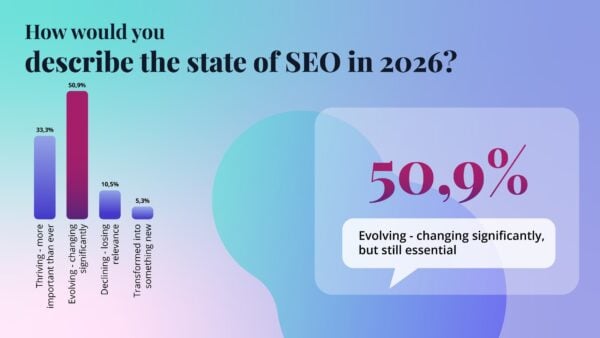
A central debate within the industry revolves around the very definition and nomenclature of SEO. The Yoast survey revealed that a significant majority of respondents view SEO as "evolving" (51%) or "thriving" (33%), with only a marginal 10% believing it to be "declining." Interestingly, a demographic split emerged: seasoned professionals with over a decade of experience were more likely to categorize SEO as "thriving," suggesting a deeper understanding of its cyclical adaptability. Newer entrants, perhaps overwhelmed by the pace of change, leaned towards "evolving." This dynamic reflects the natural tension between established expertise and the perceived disruption by emerging technologies.
Alex Moss, a Principal SEO at Yoast, succinctly captured this sentiment: "SEO has always adapted to changes in the SERP, and now it’s adapting again. The traditional SERP is gone, but SEO isn’t." Carolyn Shelby, another Principal SEO at Yoast, added depth, stating, "SEO is evolving, but not because its fundamentals are breaking. The interfaces between users and information are changing. Search is no longer confined to ten blue links, but the need for structured, relevant, trustworthy content hasn’t diminished." The collective Yoast perspective firmly asserts that SEO is here to stay, but its practitioners must master both traditional optimization and the emerging AI-driven discovery landscapes.
The Name Game: "Search Engine Optimization" vs. "Search Everywhere Optimization"
The discussion around SEO’s evolving nature naturally extends to its name. The survey found considerable support for relabeling the discipline, with 39% advocating for "Search Everywhere Optimization" compared to 32% who preferred to retain "Search Engine Optimization." Even among veterans, 41% favored the broader "Search Everywhere" moniker, reflecting the expanded reach of optimization efforts beyond traditional search engines. This preference underscores the growing recognition that content must be optimized for diverse touchpoints beyond just Google or Bing.
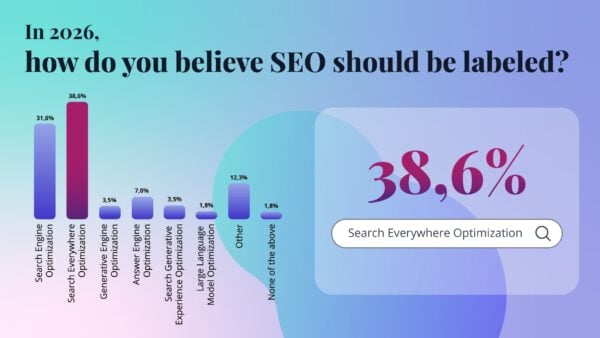
However, Yoast’s experts, including Alex Moss and Carolyn Shelby, argued against a rebranding. Moss contended, "The term ‘SEO’ will stay. The role will widen to include AI and other disciplines, but the name doesn’t need to change." Shelby elaborated, "The term ‘SEO’ still holds shared meaning, credibility, and market recognition. There’s no strong evidence that rebranding the discipline itself is necessary or beneficial. Responses favoring ‘Search Everywhere Optimization’ reflect where SEO outcomes now surface, not a fundamentally different practice." The consensus from Yoast is that while the scope of SEO has expanded to encompass diverse platforms, the core practice remains consistent. The established brand recognition of "SEO" outweighs the perceived need for a new title, requiring instead a clearer explanation of its modern applications to AI and social channels. The risk of fragmenting understanding and diluting an established term in the market also weighs heavily on this decision.
LLM Optimization: An Extension of Good SEO
One of the most compelling findings from the survey is the strong correlation between traditional SEO practices and effective LLM optimization. A substantial 64% of respondents agreed that LLM optimization is essentially the same as traditional SEO. Surprisingly, 59% admitted they are not actively optimizing for LLMs as a separate discipline, a stance that Yoast attributes to either efficiency or, less charitably, complacency. This indicates that many SEOs implicitly understand that optimizing for core principles naturally benefits AI visibility. This efficiency often stems from the understanding that well-structured, clear, and authoritative content, regardless of its target platform, will be more easily processed and utilized by LLMs.
The minority (9%) who strongly disagreed with this assertion pointed out that LLMs prioritize synthesis over direct rankings, emphasizing structured data and brand mentions. However, as Yoast’s experts noted, these considerations do not contradict the broader principle. Alex Moss stated, "If you’re undertaking good SEO, you’re already optimizing well for LLMs. The tactics don’t change—just the audience." Carolyn Shelby reinforced this: "The same practices that make content discoverable and trustworthy for search engines also make it usable for LLMs. The confusion arises when people treat LLMs as a completely separate system. In reality, LLM visibility rewards clarity, relevance, and authority—all long-standing SEO principles."
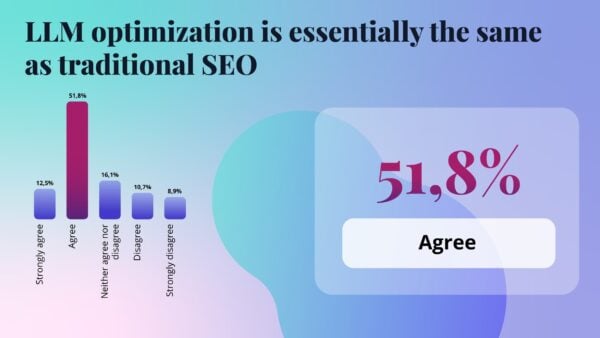
The implication is clear: LLM optimization is not a distinct field but rather a specialized application of SEO for AI systems. These systems, while sophisticated, are also less forgiving of mediocre content. The bar for quality, accuracy, and structured presentation is significantly higher, demanding meticulous attention to detail and factual integrity. Organizations that have historically invested in E-E-A-T (Experience, Expertise, Authoritativeness, Trustworthiness) are inherently better positioned for LLM visibility.
Redefining Success: Beyond the #1 Ranking
The traditional metric of success in SEO—achieving the coveted #1 ranking—is undergoing a significant re-evaluation. While 52% of survey respondents still consider rankings "equally important" as before, a notable 30% believe they are "less important." This shift reflects the reality of AI overviews and other "zero-click" results, where users find answers without ever visiting a website. In this new paradigm, visibility no longer automatically equates to direct traffic, leading to a broader reconsideration of key performance indicators (KPIs).
Alex Moss explained that traditional rankings still hold weight because "agents still search the web to ingest information. If you aren’t visible there, it’s less likely an agent will identify and select you into their responses." Carolyn Shelby offered a crucial distinction: "Rankings still matter, but they are no longer the end goal. They are a proxy for visibility, not a guarantee of impact." This highlights a strategic pivot where rankings serve as an initial signal of authority to AI systems, rather than the sole arbiter of user engagement.
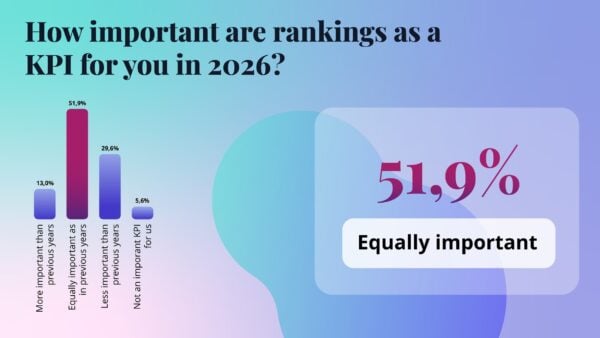
Yoast’s perspective advocates for a paradigm shift: SEOs must move beyond obsessing over a singular ranking position. Instead, the focus should expand to tracking overall visibility and presence across diverse channels. This includes monitoring citations in AI-driven answers, mentions in industry discussions, and broader brand reputation. In essence, AI visibility and credible citations are becoming the new proxies for what rankings once represented, signaling authority and trustworthiness to both human users and AI systems. Tracking these nuanced metrics offers a more comprehensive understanding of a brand’s digital influence.
The Paradox of Organic Traffic: Quality Over Quantity
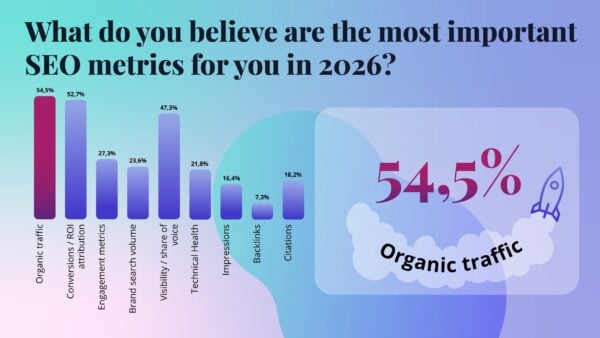
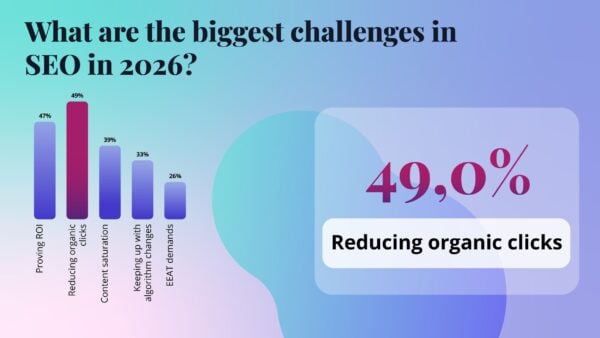
Organic traffic has long been considered the lifeblood of many online businesses, and in 2026, 55% of SEOs still identify it as their top metric. However, this commitment exists alongside a significant challenge: 49% of respondents cited "reducing organic clicks" as their biggest hurdle. This presents the "great paradox of 2026," where the quantity of traffic may decrease, but its intrinsic value could simultaneously increase. This phenomenon is supported by market data indicating a plateau in organic click-through rates (CTRs) for traditional search results, even as overall search queries rise, attributed largely to AI overviews and enhanced SERP features.
The hypothesis is that while AI overviews might reduce casual clicks, the clicks that do occur are often driven by higher intent. Users who navigate past AI summaries to a website are likely seeking deeper information, validation, or specific actions (e.g., purchase, inquiry). Carolyn Shelby articulated this nuance: "As AI reduces the need for some visits, success looks like being represented correctly rather than merely visited. Visibility in AI overviews doesn’t always drive clicks, but it builds legitimacy. Being included signals that you’re a credible source, even when users don’t click." This suggests a strategic shift from pure volume to qualified engagement and brand authority, where conversion rates and customer lifetime value become more prominent KPIs.
Content Saturation and the Demand for Authenticity
The proliferation of AI-generated content poses a significant threat to content quality and discoverability. A striking 39% of SEOs identified "competing with AI-generated content" as their top challenge, far outstripping concerns about a "talent gap" (4%). While AI can produce subpar content, the greater concern arises when AI generates "good enough" content at an unprecedented scale, potentially flooding the web with noise and making it increasingly difficult for original, human-created content to penetrate. This surge in automated content creation risks diluting the overall quality of information available online.
Alex Moss underscored the human element: "AI-generated content is artificial. Humans connect with stories, not regurgitated lists." Carolyn Shelby further emphasized the elevated standard: "AI doesn’t change what good content is, but just raises the bar. Mediocrity doesn’t just rank lower; it disappears." This necessitates a strategic pivot towards creating content that is truly exceptional—deeply researched, uniquely insightful, genuinely authoritative, and infused with human perspective and empathy. Content that merely summarizes or regurgitates existing information, regardless of whether it’s human or AI-generated, will struggle to gain traction. The emphasis shifts to demonstrating unique value, original research, and distinct brand voice.
The Unseen Frontier: Social Platforms as Search Engines
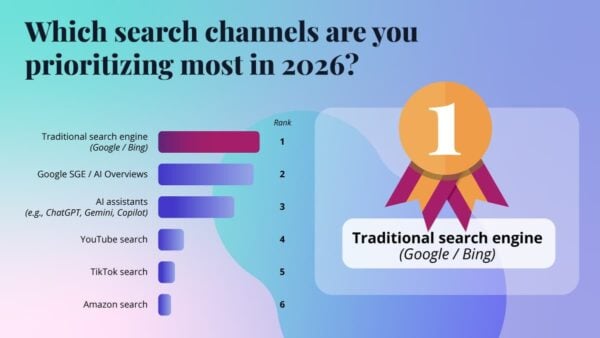
Perhaps one of the most significant "blind spots" identified in the survey is the underestimation of fast-growing search channels, particularly social media platforms. While traditional search engines (Google/Bing) predictably remain the top priority for SEOs, TikTok search ranked fifth, surprisingly lower than Amazon. This overlooks a critical demographic shift: younger generations increasingly use platforms like TikTok, YouTube, and Instagram for diverse information-seeking behaviors, including entertainment, product recommendations, tutorials, and even B2B advice. Data from various market research firms consistently shows Gen Z and younger millennials often begin their product and information searches on social media rather than traditional search engines.
Alex Moss highlighted the indirect impact of social platforms on AI systems: "Social platforms influence how LLMs perceive freshness and authority. Ignoring them means missing out on signals that AI systems value." Carolyn Shelby added, "You don’t need to rank on TikTok, but you do need to be discoverable there. LLMs scrape social platforms for real-world signals." Yoast’s experts contend that social platforms are now integral to the broader SEO ecosystem. While direct "ranking" on these platforms might not be the primary goal, establishing a discoverable presence is crucial. A strong video channel, for instance, can significantly boost a brand’s perceived authority, which AI responses can then leverage. This mandates a more integrated content strategy that considers discoverability across all relevant digital touchpoints, recognizing social media as a vital component of the overall digital authority signal.
Implications for SEO Professionals and Businesses
The insights from the Yoast survey paint a clear picture of the evolving role of SEO professionals. They are no longer solely technical specialists focused on algorithms but must adopt a blended mindset, operating as marketers, brand builders, and communication strategists. Alex Moss stated, "Brand and marketing have become intertwined with SEO as our role expands." Carolyn Shelby agreed, emphasizing, "A blended mindset is essential. SEO can’t operate in isolation from brand, product, or communications." This implies a need for continuous upskilling in areas like content strategy, data analytics, user experience, and multi-channel digital marketing. The modern SEO professional is a holistic digital strategist, capable of understanding and influencing discovery across a fragmented digital landscape.
For businesses, the implications are equally profound. A diversified digital strategy is no longer optional; it’s imperative. Relying solely on traditional Google rankings is a precarious position in 2026. Investment in creating truly high-quality, authoritative, and human-centric content across various formats (text, video, audio) is paramount. Brands must actively cultivate their presence and authority not just on their websites but also across social media, industry forums, and within the outputs of AI assistants. Success will be measured not just by clicks, but by brand legitimacy, accurate representation in AI summaries, and overall digital footprint. Companies neglecting these diverse channels risk ceding significant market share and brand visibility to more adaptive competitors.
Conclusion: Adapt or Be Left Behind
The state of SEO in 2026 is one of dynamic evolution, driven by the relentless pace of technological innovation, particularly in artificial intelligence, and the diversification of user discovery habits. The Yoast survey provides a crucial compass, indicating that while the landscape is undeniably changing, the fundamental principles of good optimization remain constant