
 rifanmuazin
Klaviyo, a prominent marketing automation platform favored by e-commerce businesses, operates a multi-channel customer support system that includes live chat, email, a comprehensive Help Center, and an active Community Forum. However, access to these channels, particularly direct human interaction, is significantly tiered, aligning with a user’s subscription plan. This structured approach means that the speed and depth of support a user receives are largely contingent on their financial investment in the platform, a strategy that both optimizes resource allocation for the company and creates distinct experiences for its diverse user base. While higher-tier subscribers benefit from expedited responses and direct access to dedicated support specialists, users on the free plan face considerable limitations, particularly after an initial 60-day grace period, often relying solely on AI assistance and self-service resources.
Understanding Klaviyo’s Support Ecosystem
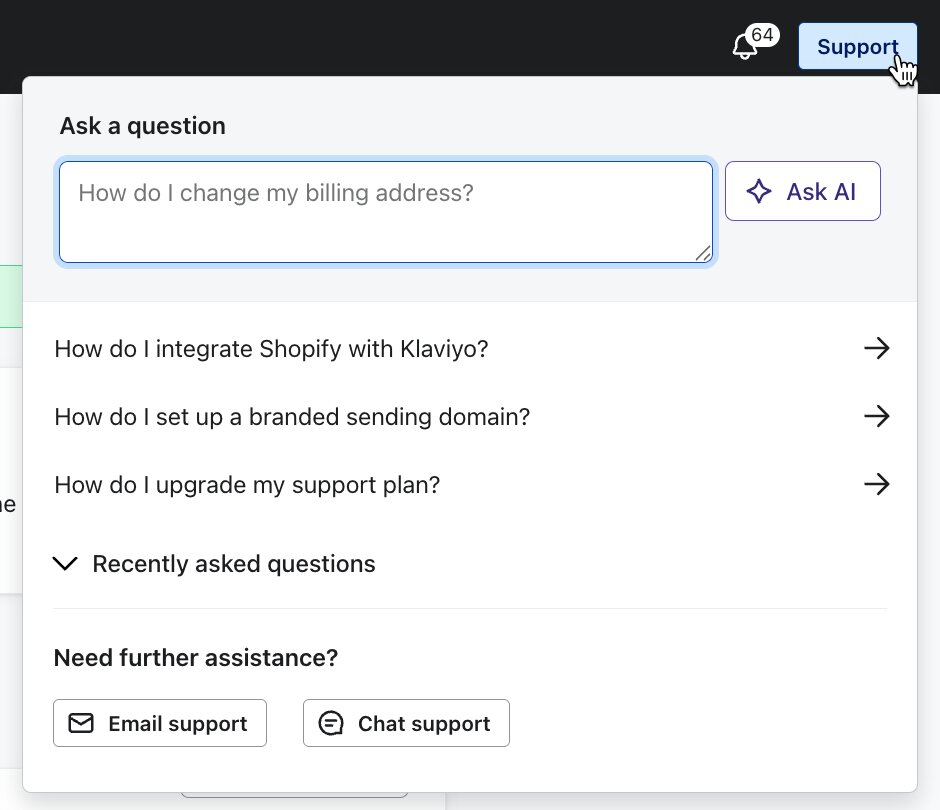
Klaviyo’s support infrastructure is designed to cater to various user needs and urgency levels. The primary contact point for most users is an in-app support widget, accessible after logging into their Klaviyo account. This widget acts as a gateway to both live chat and email support, dynamically presenting options based on the user’s current plan. Beyond direct interaction, Klaviyo offers robust self-service options through its Help Center and Community Forum, which are universally available regardless of subscription status.
Live chat is positioned as the fastest option for paid plans, offering real-time assistance for immediate concerns. For complex issues requiring detailed documentation, email ticketing provides a structured channel with a clear paper trail. Kira, Klaviyo’s in-product AI chatbot, serves as a first line of defense, capable of answering common questions and guiding users to relevant resources. Specialized email addresses are also provided for specific departments like billing or deliverability, indicating a specialized approach to common high-volume inquiries. Notably, Klaviyo does not offer phone support for technical issues; any listed phone numbers are typically for sales inquiries only, a point of confusion for some users seeking direct assistance.
The Tiered Approach: A Deeper Dive into Subscription Levels
Klaviyo’s support model is a clear reflection of its commitment to prioritizing higher-value customers, a common practice in the Software-as-a-Service (SaaS) industry. This tiered system is explicitly outlined in their pricing structure, linking the depth and responsiveness of support directly to the chosen plan: Free, Standard, Professional, and Enterprise.
For the first 60 days, free plan users receive a taste of paid-tier support, with access to live chat (including human agents after interacting with Kira) and email support. This initial period is crucial for new users to onboard and explore the platform’s capabilities with some level of human guidance. However, after this introductory phase, human interaction via live chat or email is revoked. Free users are then relegated to Kira, the Help Center, and the Community Forum, which, while valuable, can be a significant hurdle for those grappling with complex setup or troubleshooting issues.
Standard plan users gain consistent access to live chat (24/5 on weekdays) and 24/7 email support. Service Level Agreements (SLAs) for this tier include a four-hour response time for urgent issues, 12 hours for high-priority, 24 hours for normal, and 48 hours for low-priority requests. This means that while human support is available, responses for less critical issues can take up to two business days, a timeframe that can be challenging for fast-moving e-commerce businesses.
The Professional plan elevates the support experience further, often including weekend live chat access and improved SLAs: two hours for urgent issues, eight hours for high-priority, 12 hours for normal, and 24 hours for low-priority. This tier also introduces the possibility of an onboarding specialist and varying access to a Customer Success Manager (CSM), indicating a more proactive and personalized support journey.
At the pinnacle, the Enterprise plan offers the most comprehensive support. Users at this level receive 24/7 live chat, dedicated onboarding specialists, full access to Customer Success Managers, deliverability strategists, and solutions architects. The SLAs are significantly reduced: one hour for urgent issues, four hours for high-priority, six hours for normal, and 12 hours for low-priority. This top-tier service ensures rapid resolution and strategic guidance, reflecting the substantial investment these businesses make in the platform. During peak sales events like Black Friday and Cyber Monday, Klaviyo also extends 24/7 live chat and email support to all paid plans, acknowledging the critical nature of uninterrupted operations for e-commerce clients during these periods.
The Free Plan Conundrum: Limitations and Workarounds
The transition from the initial 60 days on the free plan to a state of limited human support often catches new users by surprise. While the idea of a comprehensive free trial is appealing, the abrupt cessation of human chat and email support can leave users feeling stranded, especially when they are still in the critical learning and implementation phases. This model effectively incentivizes upgrading to a paid plan for any user requiring direct, real-time assistance beyond basic queries.
For free plan users facing challenges, the primary avenues become self-reliance through the Help Center, peer support via the Community Forum, and basic troubleshooting with Kira. The Help Center, with over 1,000 articles, serves as an extensive knowledge base, while the Community Forum allows users to tap into the collective experience of other Klaviyo users and "Champions" (experienced users recognized by Klaviyo). While these resources are robust, they lack the immediate, personalized problem-solving capacity of a human agent who can access account-specific data.
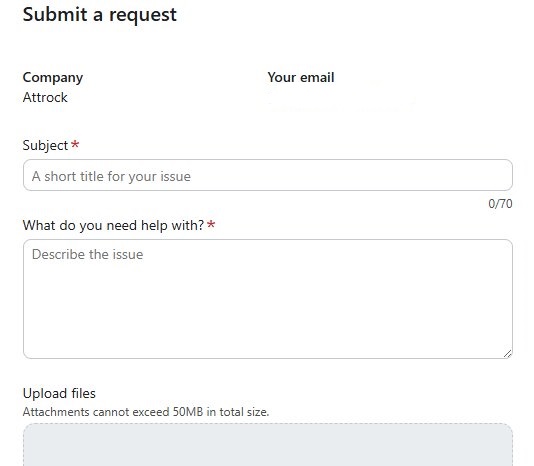
For critical issues where account access is compromised, Klaviyo does provide a universal support form accessible outside the logged-in environment (help.klaviyo.com/hc/en-us/requests/new). This ensures that even free users facing severe technical or access problems have a pathway to contact support, albeit with potentially longer response times.
AI in Action: The Role of Kira

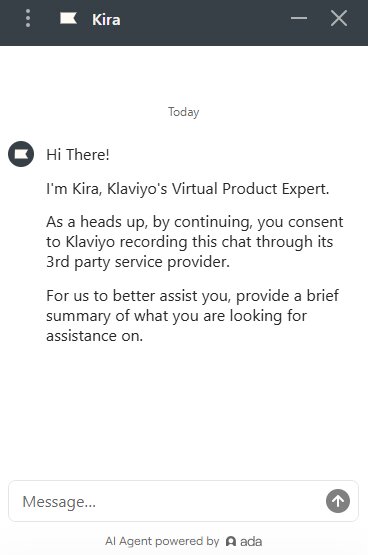
Kira, Klaviyo’s AI assistant, plays a central role in their support strategy, particularly for free and lower-tier users. Available 24/7, Kira is designed to handle a wide range of common inquiries, from basic how-to questions about segment creation or flow setup to navigating account settings. Kira can efficiently direct users to relevant Help Center articles, providing instant, self-service solutions.
However, Kira has limitations. It cannot access account-specific data, such as private campaign performance, billing details, or troubleshoot unique integration issues that require a deeper dive into a user’s setup. For paid plan users, Kira acts as a filter, allowing human agents to focus on more complex, account-specific problems. A "pro tip" suggests typing "connect to a person" to expedite the process of reaching a human agent, bypassing some of Kira’s automated responses. This highlights the ongoing balance between AI efficiency and the persistent need for human empathy and nuanced problem-solving in customer service.
Self-Service and Community Resources: Klaviyo’s Strengths
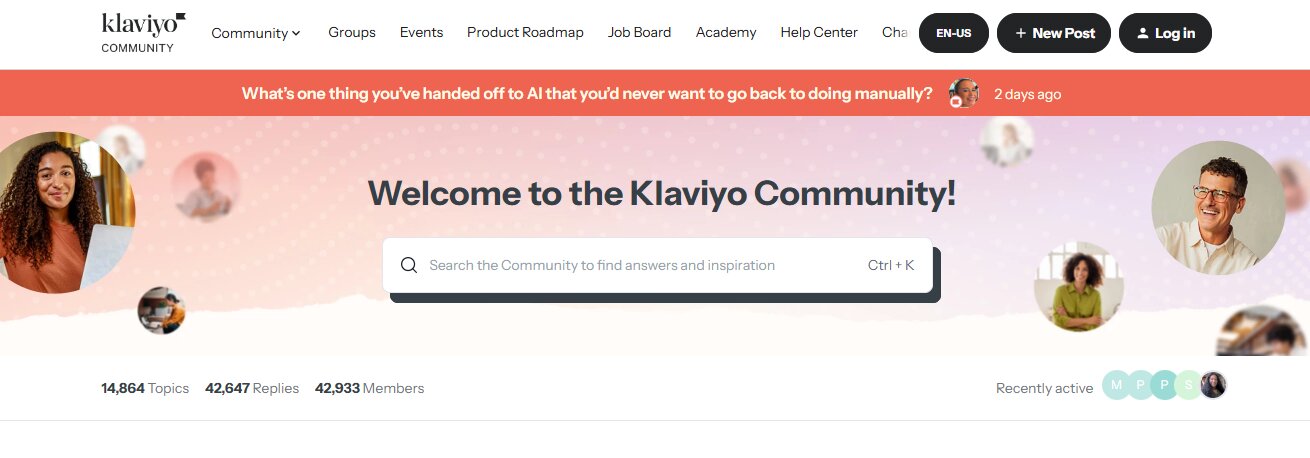
Beyond direct support channels, Klaviyo heavily invests in self-service resources. The Help Center is a vast repository of articles, guides, and tutorials covering virtually every aspect of the platform. The Klaviyo Academy offers structured video courses, providing a more guided learning experience. The Community Forum, robust and active, acts as a peer-to-peer support network where users can post questions, share insights, and get advice from fellow marketers and Klaviyo staff. With thousands of topics and replies, it serves as an invaluable resource, especially for those on plans with limited direct human support. These resources are consistently praised in user reviews, underscoring their effectiveness in empowering users to find solutions independently.
User Experiences: A Spectrum of Reviews
Customer sentiment regarding Klaviyo’s support is polarized, reflecting the platform’s tiered approach and the varying expectations of its user base. On platforms like G2 (4.6/5) and Capterra (4.3/5 for support), where reviews often come from experienced marketers or businesses leveraging the platform for strategic growth, feedback tends to be positive. Users praise the expertise of human agents, particularly for paid plans, and the quality of self-service documentation. These users often understand the complexity of the platform and appreciate the in-depth assistance when they can access it.
Conversely, platforms like Trustpilot (1.8/5) often reveal a different picture. Reviews here are frequently driven by frustration, particularly from users encountering billing issues, unexpected account suspensions, or grappling with the limitations of the free plan. Common complaints include slow response times for lower-tier plans, difficulty escalating issues past Kira, and a perceived lack of empathy for users facing critical problems. The disparity in scores across platforms highlights the "support gap" experienced by different user segments. While Enterprise users might laud the swift, expert assistance, a small business on a free or Standard plan might find the support experience frustrating and insufficient for their needs.
Industry Context: The Evolution of Customer Support in SaaS
Klaviyo’s tiered support model is not unique; it reflects a broader trend in the SaaS industry where customer support is increasingly seen as a feature, not just a service. As platforms grow in complexity and user base, companies must balance providing high-quality support with managing operational costs. Tiered support allows companies to allocate their most experienced agents and fastest response times to clients generating the most revenue, while leveraging AI and self-service for broader accessibility. This strategy is also influenced by the increasing sophistication of AI chatbots, which can handle a significant percentage of routine inquiries, freeing up human agents for more complex tasks. However, this shift often comes with the trade-off of decreased human touch for lower-tier users, leading to the kind of polarized feedback seen in Klaviyo’s reviews.
Competitive Landscape: Klaviyo’s Support vs. Alternatives
When evaluating Klaviyo, potential users often compare its support model with alternatives in the e-commerce marketing automation space. Competitors like Omnisend, Mailchimp, ActiveCampaign, and Brevo each offer distinct support packages.
Omnisend frequently stands out in comparisons for its commitment to offering 24/7 live chat and email support across all plans, including its free tier, boasting an average first-response time of just four minutes. This approach directly contrasts with Klaviyo’s tiered model, appealing to businesses that prioritize consistent, real-time support regardless of their spend.
Mailchimp, a long-standing player, offers support that scales with its paid plans, including phone support for its premium tier. ActiveCampaign and Brevo also provide support primarily for paid users, with phone support generally reserved for their highest enterprise plans. The absence of phone support for technical issues across most of Klaviyo’s plans is a notable difference compared to some competitors who offer it at higher tiers.
The choice between these platforms often boils down to a business’s budget, the complexity of its needs, and its reliance on immediate human assistance versus self-service options. For lean teams or rapidly growing businesses that cannot afford to wait 24-48 hours for a response, alternatives offering more inclusive real-time support can be a compelling draw.
Strategic Implications and User Recommendations
Klaviyo’s support strategy implies a clear focus on retaining and nurturing its high-value, high-spending clients, while providing a foundational, self-service-driven experience for smaller businesses and free users. This strategy aims to ensure that the most complex and critical issues from their largest clients are handled with utmost priority and expertise, which in turn helps maintain the platform’s reputation for advanced capabilities.
For users, understanding this model is key to managing expectations and optimizing their experience. Even if not ready to switch platforms, users can implement strategies to improve their support interactions:
- Always log in: Initiate support requests while logged into your Klaviyo account to automatically link your account ID and data, accelerating the troubleshooting process.
- Clear subject lines: Use precise and descriptive subject lines for email tickets (e.g., "Abandoned cart flow not sending to Gmail users after [Date]") to ensure requests are routed to the correct specialist team.
- Provide context: Detail the steps taken, screenshots, error messages, and relevant IDs (flow IDs, campaign IDs) to help agents understand the issue quickly.
- Utilize self-service: Before opening a ticket, search the Help Center or Community Forum for common solutions. Many issues, like email deliverability problems, have extensive documentation.
- Consider off-peak hours: For live chat, reaching out during non-peak times might result in quicker connection to a human agent.
- Upgrade if critical: If your business cannot tolerate multi-hour or multi-day waits for issue resolution, upgrading to a higher Klaviyo tier might be a necessary investment.
Common Support Triggers: Addressing Key User Issues
Several recurring issues consistently drive users to Klaviyo support, highlighting common pain points within the platform:
- Email Deliverability Problems: This is arguably the most frequent reason for support tickets. Users report lower open rates, emails landing in spam, or sudden spikes in bounces. While Klaviyo provides extensive guides on domain authentication (SPF, DKIM, DMARC) and deliverability best practices, complex cases often require expert intervention, which is more readily available to paid users, particularly those with access to a deliverability strategist.
- Account Suspensions or Disablement: Unexpected account lockouts due to failed payments, compliance reviews, or poor sending habits (e.g., high bounce rates, spam complaints) are highly disruptive. Klaviyo’s proactive monitoring aims to protect its overall sending reputation, which benefits all users. However, the process for reinstatement can be frustrating, requiring users to submit detailed explanations of their sending practices.
- Billing Disputes and Price Increases: Recent changes to Klaviyo’s pricing model, which now charges based on the number of active profiles (including suppressed contacts), have led to unexpected price jumps and billing disputes. These issues often generate significant frustration, as they directly impact a business’s operational costs.
- Integration Sync Failures: Problems with data synchronization between Klaviyo and e-commerce platforms like Shopify, WooCommerce, or Magento are common. These can stem from API connection issues, missing permissions, or conflicts with other apps. While Klaviyo offers platform-specific help guides, intricate integration problems often require direct support.
- Flow Automation Not Triggering: When critical automation flows (e.g., abandoned cart, welcome series) fail to send, it directly impacts revenue. Users frequently seek help debugging flow settings, filters, audience rules, and consent configurations. The Community Forum can be particularly useful for peer advice on these common automation challenges.
Conclusion
Klaviyo’s customer support system is a robust, yet distinctly tiered, offering. While it delivers highly responsive and expert assistance to its high-tier Enterprise clients, the experience for Standard and, particularly, free plan users can be significantly more challenging, characterized by longer wait times and a heavy reliance on self-service and AI. This model, while strategically sound for a company serving a wide spectrum of businesses, necessitates careful consideration from users. Small to mid-sized e-commerce businesses, especially those with lean teams or a critical need for rapid problem resolution, must weigh the benefits of Klaviyo’s powerful marketing automation against the potential limitations of its support for their specific budget and operational needs. For those prioritizing immediate and consistent human support across all plan levels, exploring alternatives that offer more inclusive support models may be a prudent step. The choice ultimately reflects a balance between platform capability, cost, and the perceived value of responsive, human-driven assistance.
FAQs
How do I contact Klaviyo support?
To contact Klaviyo customer support, log into your account and click the "Support" icon in the top-right corner. You can then choose to initiate a "Live chat" or submit an "Email" ticket. The Help Center and Community Forum are also available for self-service. For critical account access or billing issues, you can use the universal support form at help.klaviyo.com/hc/en-us/requests/new.
Does Klaviyo have live chat support?
Yes, Klaviyo customer support includes live chat. However, access varies by plan. Paid users typically have 24/5 access during weekdays, with expanded weekend hours for Professional and Enterprise tiers. Free plan users have access to human chat for the first 60 days, after which they are limited to Kira, the AI chatbot.
How long does Klaviyo support take to respond?
Klaviyo customer support response times (SLAs) depend on your plan and the priority of your issue. Enterprise users can expect urgent replies within one hour and normal replies within six hours. Standard plan users may wait four hours for urgent issues and up to 24 hours for normal issues, with low-priority requests taking up to 48 hours. During peak periods like Black Friday, wait times may increase.
Is Klaviyo support free?
Klaviyo customer support offers limited free access. For the first 60 days, free plan users have access to human live chat and email support. After this period, free users are restricted to Kira, the AI assistant, the Help Center, and the Community Forum, losing direct access to human agents unless they upgrade to a paid plan.
What is Kira in Klaviyo?
Kira is Klaviyo’s in-product AI assistant, an intelligent chatbot designed to provide instant answers to common questions, offer troubleshooting steps, and direct users to relevant articles within the Help Center. Kira is available 24/7 to all users. For paid plan users, Kira can also facilitate the connection to a human agent if the AI cannot resolve the issue.









