rifanmuazin
In the dynamic realm of modern marketing, understanding a brand’s competitive standing is paramount, and Share of Voice (SOV) has emerged as a crucial metric, far transcending its traditional perception as mere executive fodder. While often relegated to board decks, SOV is, in practice, a powerful leading indicator of a brand’s visibility and potential market trajectory, often signaling shifts long before they manifest in sales pipelines. The challenge, however, lies in the inconsistent measurement approaches across diverse channels and the resultant dashboards that frequently fail to inform actionable strategy. This comprehensive guide aims to demystify SOV, dissecting its various forms across SEO, social media, paid advertising, and the rapidly emerging domain of AI search, while also highlighting the essential tools and methodologies required to transform SOV from a static report into a dynamic growth system.

The Shifting Paradigm of Brand Visibility
The concept of Share of Voice, historically rooted in traditional advertising spend relative to competitors, has undergone a profound transformation. With the advent of digital media, and now the accelerating influence of artificial intelligence, brand visibility is no longer a monolithic entity. It’s a complex tapestry woven from organic search rankings, social media mentions, earned media coverage, and, critically, how a brand is recommended by AI-powered answer engines. This fragmentation of attention demands a sophisticated, multi-channel approach to SOV measurement, recognizing that "visibility" carries distinct meanings and requires tailored tools for each platform.

The increasing complexity is underscored by research from entities like Kantar, which consistently demonstrates a strong correlation between a rising Share of Search (a close cousin to SOV) and future market share gains, often with a lead time of 6 to 12 months. This underscores SOV’s strategic importance, positioning it not as a vanity metric, but as a forward-looking indicator that can predict and influence market dominance. Marketing leaders across industries are increasingly recognizing that neglecting SOV in the current fragmented media landscape is akin to navigating without a compass, risking market erosion that becomes apparent only when it’s too late to easily course-correct.
Deconstructing Share of Voice: Key Types and Their Metrics

Share of Voice is fundamentally the percentage of visibility a brand secures compared to its competitors within a defined market or channel. In essence, it quantifies how much attention a brand captures within its category. While the core calculation – Your Brand Metrics ÷ Total Market Metrics × 100 – remains constant, the "brand metrics" and "total market metrics" vary significantly by channel, leading to distinct SOV types:
-
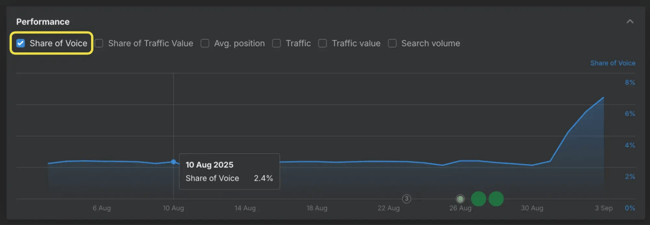
SEO Share of Voice: This measures a brand’s relative organic visibility for a targeted set of keywords. It quantifies the estimated organic clicks or impressions a brand captures against the total available organic clicks for those keywords. A high SEO SOV indicates strong organic authority and relevance in search engine results. For example, if a company’s chosen keywords collectively generate 500,000 organic searches monthly, and their site is estimated to attract 75,000 of those clicks due to its ranking positions, their SEO SOV stands at 15%. Critically, aligning keywords to specific buyer personas and funnel stages is non-negotiable to derive actionable insights, preventing the pitfall of gaining visibility on low-intent queries while losing ground on high-value terms.
-
Social Media Share of Voice: This metric tracks the proportion of brand mentions and conversation volume across selected social platforms. It’s a highly responsive indicator, reacting quickly to campaigns, PR events, or product launches. While excellent for short-term campaign measurement, its insights must be carefully contextualized. Challenges include platform coverage gaps (e.g., neglecting TikTok or Reddit), and the quality of sentiment, as a surge in negative mentions can artificially inflate SOV while simultaneously damaging brand equity.
-
PR and Media Share of Voice: This measures earned media visibility across various outlets, segmented by geography, message, and sentiment. It answers how much media coverage a brand receives within its category compared to competitors. Often underutilized by growth marketing teams, PR SOV offers early signals of competitor traction, which can precede increases in branded search volume and domain authority, ultimately influencing SEO and social SOV downstream. Recognizing a competitor’s outsized media coverage on a specific topic can prompt a strategic response in content or PR.

-
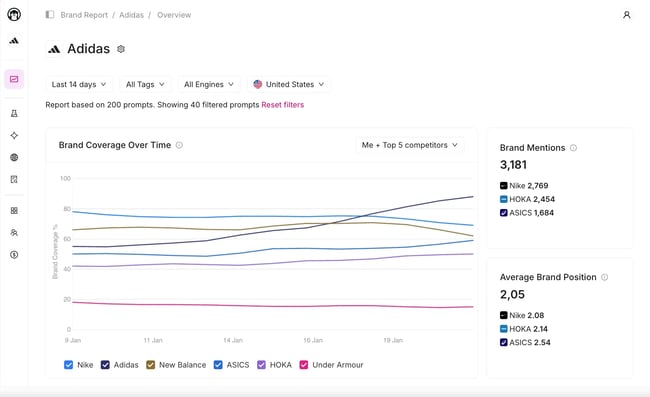
AI Share of Voice: The newest and rapidly evolving frontier, AI SOV quantifies how often a brand is mentioned or cited in AI-generated answers provided by platforms like ChatGPT, Gemini, or Perplexity. This is arguably the most critical emerging SOV type, reflecting whether a brand is actively recommended in conversational AI queries. Its accuracy heavily depends on building a prompt set that truly mirrors buyer thinking, avoiding the trap of simply repurposing SEO keywords, which might yield high citation share but low entity mentions (direct brand recommendations). The distinction between entity mentions (brand recommended) and citations (brand content sourced) is crucial, with entity mentions often being more actionable for growth teams.
The AI Frontier: Measuring Influence in Answer Engines

The rise of AI-powered answer engines represents a significant paradigm shift in information discovery, moving beyond traditional ten blue links. As users increasingly turn to AI for recommendations and solutions, a brand’s AI Share of Voice becomes a direct indicator of its authoritative standing in these new digital gatekeepers. This makes AI SOV not just a metric, but a strategic imperative for any forward-thinking marketing team.
Measuring AI SOV presents unique challenges, primarily around "prompt bias." A prompt set built solely from top SEO keywords, for instance, might result in high citation share if a brand’s blog posts are frequently referenced, but near-zero entity mentions if the brand itself is rarely recommended as a solution. This distinction demands a nuanced approach to prompt set construction:

- Ground Prompts in Competitive Reality: Begin by defining the specific categories a brand aims to dominate, from broad industry terms to highly niche use cases (e.g., "project management software" vs. "project management software for remote engineering teams under 50"). The precision of this definition directly impacts prompt relevance.
- Leverage First-Party Voice-of-Customer Data: Sales call transcripts, demo recordings, support tickets, and win/loss interviews are invaluable sources. The questions actual buyers ask before converting are often highly similar to the detailed, personalized queries they now input into AI systems.
- Mine Community and Forum Insights: Platforms like Reddit, G2, Capterra, and industry Slack communities reveal the authentic, pre-brand-awareness questions buyers pose. Look for comparison prompts ("Tool A vs. Tool B for X"), "best-for" prompts ("best [category] for [constraint]"), and problem-solution queries ("struggling with [problem], what are people doing?"). These natural language queries are ideal for AI prompt sets.
- Triangulate with Search Data: Use traditional keyword research to validate and prioritize prompts, mapping high-volume, commercial-intent keywords to high-value AI prompt categories.
- Segment Prompt Sets Strategically: Organize prompts into distinct clusters: brand/category, persona-based, funnel-stage (awareness, consideration, decision), and competitor comparison. A balanced set of 100-200 well-crafted prompts is often more reliable and actionable than a vast, undifferentiated list.
Given the rapid evolution of AI models (e.g., Google’s integration of Gemini 3 into AI Overviews in February 2026, as noted in the original article), AI SOV prompt sets require frequent refreshing, at least quarterly, to ensure they accurately reflect current buyer behavior and model responses. Continuous tracking, rather than one-off audits, is essential to stay abreast of significant fluctuations in brand citation and recommendation patterns.
Standardization and the SOV Calculation: Ensuring Accuracy

The core calculation for Share of Voice is universal: Share of Voice (%) = Your Brand Metrics ÷ Total Market Metrics × 100. However, the input data sources fundamentally differ across channels. This inherent variability is a common source of confusion and leads to discrepancies when comparing SOV numbers reported by different tools or teams. These differences typically stem from:
- Varying Data Sources: One tool might rely on a proprietary data feed, while another aggregates public APIs or estimated traffic data.
- Differing Competitive Sets: Marketers often compare their brand to different sets of competitors across channels or even within the same channel over time, invalidating comparisons.
- Inconsistent Keyword/Topic Definitions: The precise keywords, phrases, or topics monitored can vary, leading to different "total market metrics."
To ensure accurate and actionable SOV measurement, standardization is critical. A robust standardization checklist should include:

- Defining a fixed competitive set: This prevents comparing "apples to oranges" over time.
- Agreeing on channel-specific metrics: What constitutes a "mention" on social versus an "impression" in SEO?
- Standardizing keyword/topic sets: Use the same set of keywords or topics for all competitors within a given channel.
- Establishing a consistent reporting cadence: Regular, scheduled reporting helps track trends and react to shifts.
Building a competitive analysis template before initiating SOV measurement can align these variables with the team’s broader competitive intelligence strategy, preventing common reporting mistakes.
Connecting Visibility to Value: From SOV to Revenue

The most significant hurdle in SOV measurement is translating visibility metrics into tangible business outcomes like pipeline generation and revenue. Many SOV programs falter here, presenting impressive dashboards that fail to answer leadership’s fundamental question: "What does this mean for the business?"
A four-layer framework can bridge this gap:
- Channel-Level SOV: Track SOV across SEO, social, PR, and AI, segmented by key categories, personas, and funnel stages.
- Leading Indicators: Correlate SOV shifts with direct impacts on metrics like organic traffic, website conversions (e.g., content downloads), branded search volume, and social engagement rates. For instance, a rise in SEO SOV should ideally precede an increase in organic traffic and lead volume.
- Pipeline Impact: Connect these leading indicators to sales pipeline metrics, such as marketing-qualified leads (MQLs), sales-qualified leads (SQLs), and pipeline value influenced by SOV-driven channels. Tools that integrate SOV data directly into CRM records are invaluable here.
- Revenue Outcomes: Ultimately, link pipeline influence to closed-won revenue, demonstrating the return on investment (ROI) of SOV-enhancing activities.
This framework necessitates setting clear annual SOV targets for each channel (e.g., "grow SEO SOV from 12% to 18% in our core keyword cluster") and establishing a consistent review cadence—monthly for SEO, weekly for social campaigns, and quarterly for the rapidly evolving AI SOV landscape. Integrating SOV data into a centralized marketing analytics dashboard, ideally one connected to the CRM, allows for a unified view of the visibility-to-pipeline chain, eliminating manual data aggregation and making the business impact of SOV transparent.
Strategic Implementation: Getting Started with SOV Measurement
For teams embarking on their SOV measurement journey, a phased approach can prevent overwhelm and ensure sustainable implementation:
- Define Your Competitive Landscape: Clearly identify 3-5 primary competitors for each SOV channel. This consistency is foundational.
- Establish a Baseline: Before investing in tools, use readily available free resources (e.g., Google Search Console for organic visibility, HubSpot’s AEO Grader for initial AI SOV insights, social platform analytics for basic mentions) to gauge your current standing.
- Prioritize One Channel: Based on the baseline assessment, identify the channel with the most significant competitive gap or the highest potential for impact. Focus initial efforts and tool investment there.
- Select the Right Tools for Your Growth Stage:
- Startups: Focus on cost-effective solutions. Google Search Console (free), HubSpot AEO Grader (free), Brand24 (social/PR monitoring), and Ahrefs/Semrush (entry-level SEO SOV).
- Mid-Market: Invest in dedicated channel depth. Semrush/Ahrefs (comprehensive SEO SOV), Sprout Social/Brandwatch (advanced social SOV with sentiment), Meltwater/Cision (PR SOV), HubSpot AEO or Otterly.AI (dedicated AI SOV).
- Enterprise: Prioritize platform consolidation and revenue attribution. BrightEdge (enterprise SEO/AI SOV), Brandwatch (integrated social/PR), Profound (AI SOV with attribution), HubSpot Marketing Hub (unified marketing and AI AEO).
- Standardize and Segment: Implement the standardization checklist and segment SOV data (by persona, funnel stage, product line) to derive actionable insights.
- Connect to Business Outcomes: Integrate SOV data with CRM and attribution reporting to demonstrate its influence on pipeline and revenue.
- Iterate and Adapt: The digital and AI landscapes are constantly evolving. Regularly review and refresh competitive sets, keyword lists, and especially AI prompt sets to ensure ongoing relevance.
The Future of Brand Resonance

Share of Voice has transcended its origins as a simple metric to become a multi-layered, strategic view of a brand’s omnipresence across an increasingly complex digital ecosystem. The integration of AI-driven discovery, in particular, marks a pivotal moment, shifting the focus from passive visibility to active recommendation. As AI models continue to shape how buyers discover and evaluate solutions, a brand’s AI SOV will become an indispensable measure of its influence and authority.
The true value of SOV measurement lies in its consistent application: defining clear competitive boundaries, standardizing metrics, and, most importantly, linking visibility data directly to tangible business outcomes. This holistic approach transforms SOV from a static report into a powerful growth system, enabling continuous optimization and strategic advantage in a competitive market. The journey begins with a single step: choosing one channel, establishing a baseline, and commencing the disciplined process of measurement and action. From there, layering in additional SOV types, especially AI, will build towards a unified, actionable understanding of brand visibility and its profound impact on growth.