rifanmuazin
Brand visibility, defined as the frequency and prominence of a brand’s exposure to its target audience across relevant channels, stands as a critical determinant of business success in an increasingly fragmented and algorithm-driven digital ecosystem. Far from being a mere byproduct of other marketing efforts, deliberate and measured investment in visibility has emerged as one of the highest-leverage strategies available to marketing teams. In an era where potential customers encounter brands not only through traditional search results and social feeds but also, with growing frequency, via AI-generated answers, the capacity to be seen is inextricably linked to the ability to thrive.
The conventional approach, often characterized by a reactive posture of running advertisements and publishing content in hopes of attracting attention, is rapidly proving insufficient. Leading organizations, those consistently outperforming their industry peers, are instead adopting a proactive stance: meticulously building visibility, rigorously measuring its impact, and directly correlating it with pipeline generation and revenue. Anecdotal evidence from numerous enterprises underscores this shift, with some reporting sales cycle reductions of nearly 50% simply by ensuring prospects arrive at initial conversations already familiar with and receptive to the brand. This foundational familiarity significantly lowers friction, accelerates trust-building, and streamlines the sales process.
This comprehensive analysis delves into the nuances of brand visibility, clarifying its distinction from mere brand awareness. It outlines seven pivotal strategies for enhancing visibility across both established digital channels and the burgeoning landscape of AI-powered platforms. Furthermore, it details six key metrics that offer a robust framework for assessing the tangible impact of these efforts, moving beyond superficial impressions to demonstrate direct contributions to the bottom line.
Understanding Brand Visibility in a Dynamic Environment
While often used interchangeably, brand visibility and brand awareness represent distinct, albeit interconnected, concepts. Brand awareness refers to a buyer’s cognitive ability to recognize or recall a brand, essentially residing within memory. It signifies an existing mental imprint. Brand visibility, conversely, pertains to the external presence of a brand—how often and how prominently it appears in the environments where target buyers are actively engaged, be it searching, scrolling, or querying an AI assistant. Visibility, therefore, functions as the input, the strategic effort to place the brand in view, while awareness is the desired output, the resulting recognition and recall.
The strategic prioritization between these two is crucial. In nascent markets or during new product launches, visibility takes precedence, aiming to establish initial contact and widespread recognition. Awareness becomes paramount when a brand has achieved broad reach but struggles with conversions, indicating that while prospects see the brand, they may not remember it or, more critically, trust it sufficiently to act. The most successful brands cultivate both memory and trust simultaneously, recognizing that true brand equity—the commercial value derived from consumer perception of the brand—is a synergistic outcome of consistent visibility fostering deep awareness and credibility.
The Evolution of Discovery: From Directories to AI
The journey of brand discovery has undergone a profound transformation over the past decades. From early print directories and television advertisements, the shift to the internet brought forth search engines and websites, making SEO and content marketing indispensable. The rise of social media further fragmented attention, introducing new avenues for brand interaction. Today, we stand at the precipice of another paradigm shift with the proliferation of artificial intelligence. AI-powered search, conversational interfaces, and recommendation engines are fundamentally altering how information is consumed and, consequently, how brands are discovered.
This chronological evolution underscores why a static approach to visibility is no longer viable. Brands must continuously adapt their strategies to meet customers where they are, and increasingly, where AI directs them. As Dr. Eleanor Vance, a prominent digital marketing futurist, noted in a recent industry forum, "The future of brand discovery isn’t about being found, it’s about being presented. AI systems are becoming the gatekeepers of information, and brands that fail to optimize for these new ‘answer engines’ risk becoming irrelevant."
Why Brand Visibility is Indispensable for Sustainable Growth
Investing in brand visibility is not a discretionary expense but a strategic imperative for long-term growth, yielding benefits across multiple critical business functions:
-
Demand Generation Before Intent: Research from institutions like the B2B Institute at LinkedIn consistently highlights that a significant majority—approximately 95%—of B2B buyers are not actively in-market at any given time. This "dark funnel" period, characterized by passive information gathering and problem identification, is where brand visibility exerts its most potent influence. Brands that maintain consistent visibility during these months of passive exposure disproportionately capture consideration when buyers eventually enter the market. As the adage goes, "You don’t win deals at the moment of purchase; you win them during the months of passive exposure that preceded it."
-
Influencing Pipeline Generation: A strong brand presence significantly reduces friction in the sales process. When a prospect already recognizes and has a degree of familiarity with a brand before a sales representative makes contact, the initial barrier to engagement is substantially lowered. A 2023 Forrester study revealed that 68% of B2B buyers already have a preferred vendor in mind at the very outset of their purchasing journey, and they ultimately select that front-runner in 80% of cases. This demonstrates the profound advantage of establishing preference through sustained visibility.
-
Improving Sales Efficiency: Direct observation across numerous companies that consistently invest in content and SEO over two to three years reveals a material shortening of sales cycles. This efficiency gain is not primarily attributable to product changes but to the fact that prospects arrive at sales conversations pre-educated and pre-disposed. Sales representatives spend less time building fundamental credibility and more time addressing specific needs, navigating objections, and ultimately, closing deals. This translates directly to higher productivity and better resource allocation within sales teams.
-
Reducing Dependence on Paid Acquisition: While paid media serves a vital role, over-reliance on it for reach can be unsustainable. Brand loyalty data consistently indicates that organically acquired customers tend to exhibit higher customer lifetime value (LTV) and lower churn rates. Building organic visibility is akin to building an appreciating asset, one that continues to generate value over time without recurring direct expenditure. Conversely, paying for reach is a transactional expense that ceases the moment the budget is paused, offering no enduring equity.
Seven Strategies to Enhance Brand Visibility
In a multi-channel, AI-influenced landscape, a multifaceted approach is required to maximize brand visibility:
1. Build AEO-Ready Content for AI Answers
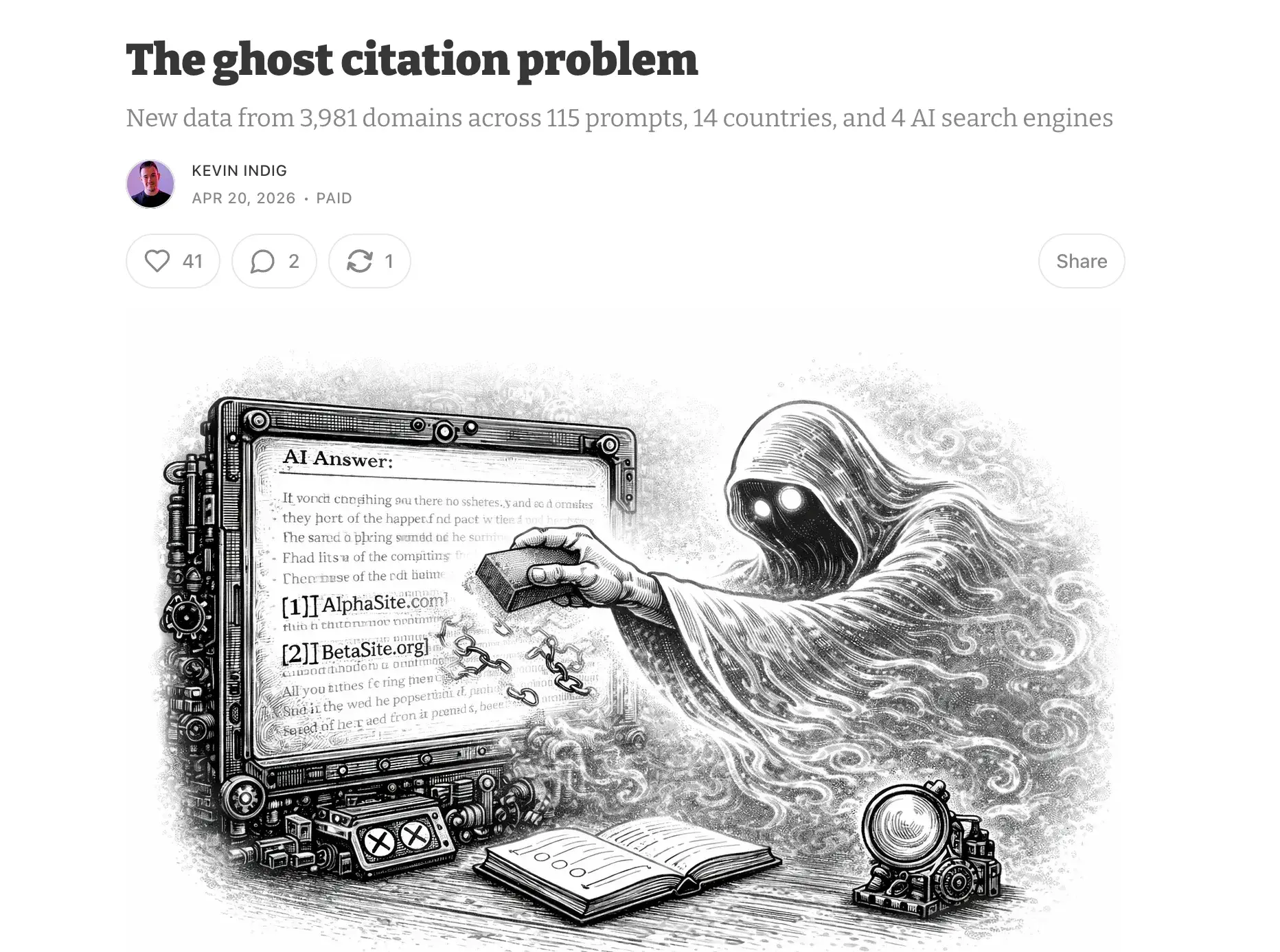
The rise of Answer Engine Optimization (AEO) represents the most significant shift in visibility strategy currently underway. AEO is the deliberate practice of structuring content so it is not only discoverable but also explicitly cited by AI-powered search tools, including Google’s AI Overviews, ChatGPT, Perplexity, and Bing Copilot. These platforms increasingly provide direct answers to user queries, often preempting traditional search results. If content is not architected for AI selection, a brand risks invisibility to a rapidly growing segment of its audience.
Key characteristics of AEO-ready content include: explicit definitions (clearly stating what things are, what they do, and how they differ); a question-and-answer structure, often with headings phrased as common queries; verifiable data with meticulously cited sources to enhance trustworthiness; comprehensive topic coverage that addresses all facets of a subject; and strategic implementation of schema markup (e.g., FAQ, HowTo, Article) to provide structured data hints to AI models. Tools like HubSpot’s AEO Grader can assist in identifying structural deficiencies. This strategy is particularly effective for educational content addressing "what is," "how to," and "why does" queries within a brand’s category.
2. Dominate Branded and Category Search
Organic search remains a cornerstone of visibility, capturing buyers who are actively seeking solutions. Brands must aim to dominate two primary query types: branded search (queries for the company or product by name) and category search (queries related to the problems the brand solves or the solutions it offers).
To enhance search visibility, marketers should: identify the keywords buyers use before they are aware of the brand and construct comprehensive content hubs around these topics; build topical authority through interconnected content clusters rather than isolated articles, signaling depth and expertise to search engines; and optimize for featured snippets and "People Also Ask" boxes, which serve as crucial intermediate steps toward AI citation. Platforms like HubSpot Content Hub offer integrated SEO recommendations and content clustering tools, streamlining this process.
3. Maintain Consistent Brand Content Across Every Channel
Consistency in brand presentation is not merely an aesthetic choice but a powerful driver of revenue. Research consistently demonstrates that a unified brand presentation across all channels—website, social media, email, and paid advertisements—can increase revenue by up to 23%. When buyers encounter the same visual identity, tone, and core message repeatedly, impressions accumulate and reinforce each other. Conversely, inconsistencies dilute impact, forcing each impression to build recognition from scratch.
Critical elements to standardize include: a crystal-clear core message (articulating who the brand helps, how it helps, and why it matters); an identical visual identity across every touchpoint; and a documented tone and voice guide that is specific enough for any new team member to produce on-brand content from day one. Brands renowned for stellar, consistent branding—such as Apple or Coca-Cola—treat these elements as fundamental infrastructure, not mere style preferences.
4. Earn Visibility Through Thought Leadership
Thought leadership, encompassing original research, strong opinions, and proprietary frameworks, generates a form of visibility that paid media cannot replicate. When a brand’s content is cited in influential industry publications, shared by respected voices, or becomes the basis for industry discourse, it gains exposure to highly engaged audiences with an inherent level of credibility.
The formula for effective thought leadership involves: saying something specific and novel; supporting it with robust evidence, preferably primary data; and taking a clear, defensible position. Vague statements like "Marketing is changing" are noise. Assertions like "Brands investing in AEO now will capture significantly more organic visibility in AI search—here’s the data" are shareable and impactful. Content that adopts a clear stance consistently outperforms generic "balanced overview" content across all visibility metrics. High-leverage tactics include: conducting original research (primary data is inherently citable), contributing guest articles to industry publications, and providing informed commentary on industry debates, backed by evidence.

5. Optimize for AI Entity Recognition
Beyond merely structuring content for AEO, a deeper layer of visibility lies in AI entity recognition. AI systems construct complex knowledge graphs that map brands to their categories, attributes, and relationships with other entities. If these systems lack a clear, consistent, and authoritative representation of a brand, that brand will be underrepresented in AI-generated answers, irrespective of its content quality.
To strengthen entity presence, brands should: claim and thoroughly complete their profiles on critical platforms such as Google Business Profile, LinkedIn, Crunchbase, and Wikipedia; utilize a consistent brand name, logo, and description across all external profiles; actively seek mentions on authoritative domains within their industry; and explicitly define their brand within their own content—articulating its category, differentiation, and the problems it solves. It is a critical error to assume that AI systems inherently understand a brand’s identity and offerings.
6. Leverage Social Proof and Community
Visibility gains significant momentum when amplified by customers and the broader community. Reviews, detailed case studies, user-generated content (UGC), and active community participation extend a brand’s reach into networks that its owned channels cannot access directly. This organic amplification builds trust and expands influence exponentially.
Practical strategies include: proactively requesting G2 or Google reviews at moments of peak customer satisfaction; cultivating even a small, highly engaged community (e.g., a dedicated Slack group or LinkedIn community) within a channel the brand controls; and engaging in co-marketing initiatives with complementary brands. Joint webinars, co-authored reports, or shared campaigns expose a brand to a partner’s entire audience, often more efficiently and credibly than standalone marketing efforts.
7. Use Paid Media to Amplify Organic Visibility, Not Replace It
Paid media, when strategically deployed, functions as a powerful amplifier for organic efforts, rather than a standalone substitute. The most efficient approach involves: retargeting organic visitors who have already engaged with a brand’s content, as they are typically 2-5 times more likely to convert than cold audiences; and building lookalike audiences derived from the highest-LTV segments within a brand’s CRM for awareness-level campaigns.
A recommended sequence is to run thought leadership content and original research campaigns to these warm, relevant audiences initially, before launching direct conversion campaigns. This strategy effectively buys visibility with an audience already pre-disposed to engagement, building trust and familiarity ahead of a direct sales pitch. HubSpot Marketing Hub, with its CRM-integrated targeting capabilities, exemplifies how paid visibility can be made more precise and its path from impression to pipeline more measurable.
Brand Visibility Metrics for Revenue Accountability
To demonstrate the tangible return on investment for visibility initiatives, marketers must move beyond vanity metrics and focus on those directly correlating with business outcomes.
1. Share of Search
This metric calculates a brand’s branded search volume divided by the total branded search volume within its category, multiplied by 100. Pioneering research by Les Binet has established a strong correlation between a brand’s share of search and its market share or revenue share, often with a predictive lag of 6-12 months. Tracking this monthly via Google Search Console, complemented by tools like Semrush or Ahrefs, provides a robust indicator of future market performance.
2. Share of AI Visibility
A nascent but increasingly critical metric, Share of AI Visibility quantifies how often a brand appears in AI-generated answers for category-relevant queries, relative to competitors. This requires a systematic approach: monitoring a consistent set of 20-50 relevant queries monthly across major AI platforms (e.g., ChatGPT, Perplexity, Google AI Overviews) and recording which brands are cited and their frequency. The percentage of these appearances attributed to a specific brand establishes its AI visibility benchmark.
3. Branded Search Volume
The clearest and most direct signal that visibility efforts are translating into brand salience is a rising branded search volume. This indicates that individuals are actively seeking the brand by name, a compounded result of every impression across every channel. Tracking this in Google Search Console allows marketers to observe spikes after specific campaigns, validating the efficacy of visibility investments in driving recall and direct intent.
4. Organic Impressions and Share of Voice
Organic impressions represent the total number of times a brand’s content appears in search results. Share of Voice, specifically, measures a brand’s percentage of total impressions for a predefined set of tracked keywords, indicating its competitive standing. Both metrics, readily available through Google Search Console, Semrush, or Ahrefs, provide fundamental insights into a brand’s reach within organic search.
5. Assisted Conversions
Brand visibility’s impact is profoundly measured through assisted conversions—conversions where a brand appeared at some point in the buyer’s journey, even if it wasn’t the final touchpoint. Google Analytics 4’s attribution reports are invaluable here. If branded content consistently appears in the paths of high-value deals, it provides direct, empirical evidence that visibility efforts are influencing revenue generation, challenging the limitations of last-click attribution models.
6. Pipeline Influenced by Visibility Channels
The ultimate lagging indicator of visibility’s success is the ability to trace closed deals back to contacts who first engaged through organic search, social media, earned media, or referral channels. Multi-touch attribution reporting, such as that offered by HubSpot Marketing Hub, makes this connection traceable—linking a closed deal back to, for instance, a blog post a prospect read six months before ever interacting with a sales team. This provides undeniable proof of brand investment as a direct growth driver.
For optimal analysis and leadership reporting, consolidating all six metrics into a single dashboard is highly recommended. When branded search volume, assisted conversions, and pipeline attribution are viewed holistically, marketing teams can construct a compelling case that brand investment is a compounding growth driver, rather than a mere cost center.
Frequently Asked Questions about Brand Visibility
-
How do I measure brand visibility online beyond impressions? Focus on branded search volume (are people seeking you by name?), share of search (what percentage of category search is yours?), and assisted conversions (do visibility touchpoints appear in paths leading to closed deals?). Together, these connect what your audience sees to what they actually do.
-
What is the share of visibility, and how do I track it? Share of visibility is your brand’s percentage of total search impressions, AI citations, or social mentions in your category relative to competitors. For search: divide your branded search volume by the combined total of your top 3-5 competitors and multiply by 100. For AI: run 20-50 category queries monthly across major AI platforms and track mention frequency.
-
How do I increase brand visibility in AI search? Three elements work synergistically: AEO-ready content structure (explicit definitions, Q&A formatting, factual grounding, schema markup); entity authority (consistent presence across Google Business Profile, LinkedIn, Crunchbase, Wikipedia, industry publications); and topical completeness (comprehensively covering your category’s questions such that AI systems consistently recognize you as a reliable source).
-
How do I tie brand visibility to the pipeline? Through CRM attribution. Track which contacts first engaged through a visibility channel, follow their journey through the funnel, and credit pipeline to those initiating touchpoints—not just the last touch before conversion. Start by pulling an assisted conversions report and identifying which content and channels consistently appear in the paths of your highest-value deals.
-
How long does it take to see improvements? Paid visibility can yield results within days. SEO improvements typically manifest in rankings and branded search volume within 3-6 months. Thought leadership and earned media effects compound over 6-18 months. AI search visibility can shift faster, with structural content updates influencing AI citations in weeks, but consistent entity presence takes several months to build. A common pattern observed: branded search lift around months 3-4, meaningful organic impression growth around months 6-9, and provable pipeline influence by months 9-12.
Visibility: A Compounding Asset, Not a Fleeting Campaign
The brands destined to dominate the coming decade will be those that consistently appear across every channel where buyers make decisions, crucially including the AI surfaces that are rapidly reshaping the discovery process. Brand visibility is not a fleeting campaign but a strategic, compounding asset that, when meticulously built and measured, underpins sustained growth.
Integrated platforms such as HubSpot’s Marketing Hub, Content Hub, and Smart CRM provide the essential infrastructure to construct, distribute, and measure visibility across all these diverse channels from a unified vantage point. This holistic approach ensures that from the initial AI citation to the ultimate closed deal recorded in the CRM, every touchpoint contributes to a cohesive, measurable path to revenue.
Explore HubSpot Marketing Hub to see how teams are effectively transforming brand visibility into a tangible, measurable pipeline.