rifanmuazin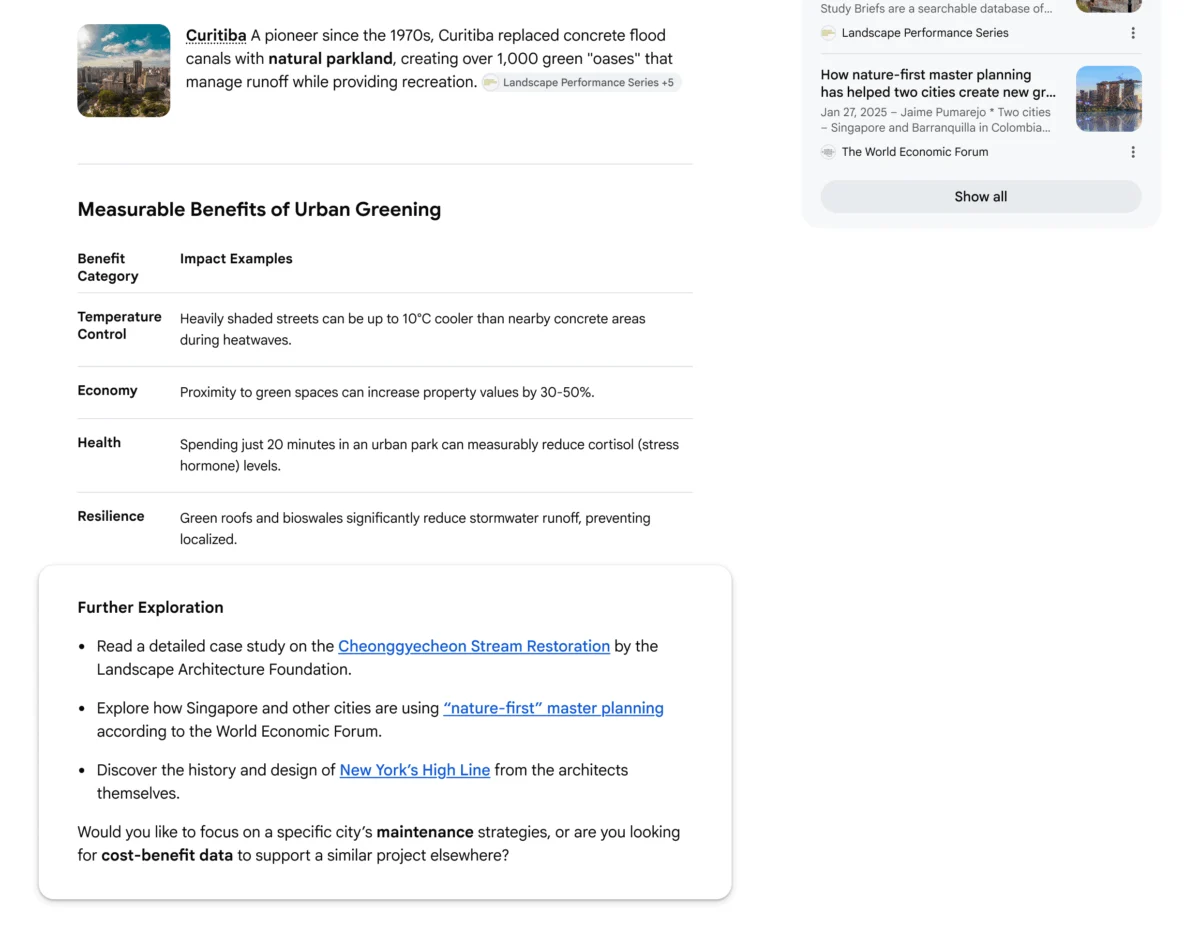
Google has officially rolled out five significant enhancements to how it integrates and displays links to web pages within its generative AI Search experiences, specifically AI Mode and AI Overviews. This strategic update aims to address ongoing discussions about the role of AI in guiding users to valuable web content, reinforcing Google’s commitment to connecting users with “authentic voices and explore useful information across the web,” as stated by Hema Budaraju, VP, Product Management at Google. These improvements, some of which had been observed in earlier testing phases, signify a concerted effort by the tech giant to refine the user experience, improve attribution, and maintain a symbiotic relationship with content creators and publishers in the evolving landscape of AI-powered search. The company emphasized its continued reliance on techniques like "query fan-out" to delve deeper into the web, ensuring the most relevant sites are surfaced, and reiterated its pledge to ongoing testing and refinement based on user feedback.
The Evolution of Generative AI in Search: A Contextual Overview
The introduction of generative AI into Google Search marked a pivotal moment in the history of information retrieval. First unveiled as the "Search Generative Experience" (SGE) and later evolving into "AI Overviews," this initiative represented Google’s ambitious leap into integrating large language models (LLMs) directly into its core search product. The underlying premise was to provide users with synthesized, conversational answers to complex queries, reducing the need to click through multiple links. While offering undeniable convenience, this paradigm shift immediately sparked widespread debate among publishers, content creators, and SEO professionals.
A primary concern centered on the potential for AI Overviews to diminish organic traffic to websites. If users could obtain comprehensive answers directly from Google’s AI, the argument went, why would they navigate to the original source? This apprehension was not unfounded, given Google’s historical dominance as the primary conduit for web traffic. Many feared that AI summaries, while attributing sources, might act as "terminal answers," effectively keeping users within Google’s ecosystem and thereby undermining the open web’s economic model, which largely relies on advertising revenue generated from website visits.
Google, acutely aware of these criticisms, has consistently iterated on its AI search features, emphasizing its role as a "gateway to the web," not a replacement for it. From the outset, spokespeople like Prabhakar Raghavan, Google’s Senior Vice President of Search, have stressed the importance of driving traffic to publishers. Early iterations of SGE featured carousels of links at the top or sidebar, but their prominence and integration were subject to ongoing experimentation. These latest five improvements can be seen as a direct response to these concerns and a continuation of Google’s efforts to strike a delicate balance: leveraging the power of generative AI for summarization while simultaneously ensuring robust, transparent, and user-friendly pathways back to the original content sources. The company’s strategy involves not just presenting links, but enriching their context and making them more discoverable and enticing, thus fostering a healthier ecosystem for both users and content producers.

Five Pillars of Enhanced Linking in AI Search
The recently announced updates are designed to enhance the discoverability, transparency, and utility of web links within Google’s AI-powered search results. Each improvement addresses a specific facet of user interaction and content attribution:
1. Suggestions for Further Exploration at the Bottom of AI Responses
One of the most significant enhancements is the introduction of a dedicated section at the conclusion of many AI responses, offering "suggestions for where to go next." This section is designed to link to "unique articles or in-depth analyses on different facets of your topic," thereby making it easier for users to satisfy their curiosity beyond the initial AI summary. This feature directly tackles the "terminal answer" critique by explicitly encouraging deeper dives.
Analysis and Implications: This move is crucial for content creators who produce comprehensive, long-form content. While AI Overviews might provide a concise answer, the "Further Exploration" links offer an avenue for users to engage with more nuanced perspectives, detailed research, or alternative viewpoints. For instance, if an AI Overview summarizes a historical event, these suggestions might lead to academic papers, investigative journalism, or personal accounts that delve into specific aspects of that event. This could potentially increase qualified traffic to authoritative sites, as users who click these links are likely seeking more in-depth information rather than just a quick fact. It also subtly educates users that AI summaries are a starting point, not the definitive end, for complex topics, thus promoting a more active and inquisitive approach to information consumption.
2. Highlight News Subscriptions in AI Mode and AI Overviews

Google is now highlighting links from users’ news subscriptions directly within AI Mode and AI Overviews. This means that if a user is subscribed to a news outlet, and an article from that outlet is relevant to an AI response, the link will be visibly labeled as a "subscription." Google has provided specific documentation for developers to implement subscription linking, making it a standardized feature.
Analysis and Implications: This is a substantial win for news publishers and the broader journalism industry, which has struggled with declining subscription numbers and the challenge of monetizing quality content online. By explicitly recognizing and highlighting subscribed content, Google offers tangible value to both users and publishers. Users benefit from quicker access to trusted content they’ve already paid for, while publishers gain increased visibility and a stronger incentive for users to maintain or initiate subscriptions. Google’s internal testing has already shown promising results, with users being "significantly more likely to click links that were labeled as their subscriptions." This suggests a direct positive impact on publisher engagement and potentially revenue, reinforcing the value of premium, paid content in an age of abundant free information. It positions Google as an ally in the battle for sustainable journalism models, moving beyond simple traffic referral to active support for content monetization.
3. Showing Name and Handle for Online Discussions, Social Media, and Firsthand Sources
AI responses will now include a preview of perspectives drawn from public online discussions, social media platforms, and other firsthand sources. Crucially, Google is adding more context to these links, such as the creator’s name, handle, or community name. This enhancement builds upon earlier testing phases where Google experimented with including author names and source information in AI Overviews.
Analysis and Implications: This improvement acknowledges the growing importance of "firsthand experiences" and community-driven content, often found on platforms like Reddit, Quora, or niche forums. In an era where personal insights and practical advice are highly valued, especially for product reviews, travel planning, or troubleshooting, integrating these sources with clear attribution is vital. By providing the creator’s name or handle, Google enhances transparency and helps users assess the credibility and relevance of the source before clicking. For instance, seeing a specific Reddit username known for expertise in a particular hobby might encourage a click, whereas an anonymous post might not. This also serves to combat misinformation by allowing users to better contextualize the source of information, fostering a more discerning approach to online content. It also represents Google’s recognition that valuable information isn’t solely confined to traditional publishing houses but also resides within vibrant online communities.
4. Links Closer to Relevant Text within AI Responses

Google is increasing the granularity of link placement, promising to show "more links directly within AI responses, right next to the relevant text." This represents a shift from simply listing sources at the end of a summary to embedding them contextually.
Analysis and Implications: This is a fundamental improvement in attribution and user experience. Rather than having to cross-reference an AI-generated statement with a general list of sources, users can now immediately identify the source for a specific piece of information. This improves trust in the AI’s summary, as facts can be easily verified. For content creators, this means more targeted traffic. If a user is interested in a particular statistic or a specific detail mentioned in the AI summary, an inline link can guide them directly to the part of the source article that discusses that point. This granular linking strategy can lead to higher-quality clicks, as users are more likely to find exactly what they are looking for when they land on the linked page. It makes the AI response less of a "black box" and more of a transparent gateway to the original content, reinforcing the AI’s role as a helpful assistant rather than an autonomous knowledge provider.
5. Hover-Over Previews for Inline Links on Desktop
For desktop users, Google is introducing a "quick preview of a website when you hover over an inline link in our AI experiences." This preview will display helpful information such as the name of the website or the title of the web page, offering users a better idea of the destination before they commit to clicking. This feature was also observed in earlier testing phases.
Analysis and Implications: This seemingly small enhancement significantly improves user confidence and efficiency. In the past, users might hesitate to click on a link if they were unsure about the source or the exact content behind it. The hover-over preview provides a crucial layer of context, allowing users to make more informed decisions. For example, if an AI response mentions a study, hovering over the link might reveal the specific journal or research institution, assuring the user of its academic rigor. This feature reduces bounce rates by setting clear expectations and minimizes wasted clicks on irrelevant or untrustworthy sites. It contributes to a smoother and more transparent browsing experience, empowering users with more control and information, which in turn can lead to higher engagement with the linked content. It also showcases Google’s attention to detail in refining the interactive elements of its AI search interface.
Official Responses and Google’s Guiding Philosophy

The driving philosophy behind these enhancements is rooted in Google’s long-standing mission to organize the world’s information, now adapted for the generative AI era. Hema Budaraju’s statements underscore this commitment: "These experiences are most helpful when they make it easy for you to connect with authentic voices and explore useful information across the web." This encapsulates Google’s ambition to leverage AI not as an information silo, but as an advanced tool that facilitates deeper engagement with the vast resources of the internet.
The company’s focus on "query fan-out" is particularly noteworthy. This technique, where a single user query expands into multiple related searches to gather a broader spectrum of information, indicates an algorithmic approach to ensure comprehensive sourcing. It suggests Google is actively working to prevent AI Overviews from becoming overly narrow or biased in their source selection, instead aiming for a richer, more diverse set of results to draw from.
Google’s explicit mention of continuous testing, learning, and improvement based on user feedback is a standard but critical reassurance. It acknowledges the dynamic nature of AI development and the necessity of adapting these features based on real-world usage patterns and evolving user expectations. This iterative approach is vital for building trust and ensuring that the AI Overviews remain a valuable and reliable component of the search experience, rather than a source of frustration or concern for content creators. The company understands that the success of AI in search hinges not just on its ability to generate accurate summaries, but also on its capacity to respectfully and effectively integrate with the established web ecosystem.
Broader Impact and Implications for the Digital Ecosystem
These five improvements collectively represent a significant evolution in Google’s approach to integrating generative AI with traditional web search, carrying substantial implications for various stakeholders:
For Publishers and Content Creators: The immediate impact is largely positive, offering renewed hope for traffic generation and improved attribution. The "Further Exploration" links and more granular inline links could drive more qualified and contextualized traffic to websites. The highlighting of news subscriptions is a clear boon for premium content providers, potentially bolstering subscription models and recognizing the value of paid journalism. For community-driven content and social media, the improved attribution with names and handles validates these sources and offers new avenues for visibility. However, the onus remains on publishers to create high-quality, authoritative, and unique content that AI models deem valuable enough to summarize and link to. The challenge of optimizing content for AI visibility, beyond traditional SEO, will likely become a new frontier for digital strategy.

For Users: The enhancements promise a richer, more transparent, and more empowering search experience. Users will have more context before clicking, greater ease in verifying information, and clearer pathways to explore topics in depth or access content from their trusted subscriptions. The ability to see creator names and community discussions also adds a layer of human perspective, which AI summaries often lack. This fosters a more informed and discerning user base, capable of navigating the complexities of online information with greater confidence.
For Google: These updates reinforce Google’s position as a leader in AI innovation while simultaneously attempting to mitigate criticisms regarding AI’s potential to cannibalize web traffic. By demonstrating a clear commitment to the open web and improving link integration, Google aims to strengthen its relationship with publishers and maintain the trust of its vast user base. In a competitive landscape where other AI models and search engines are vying for market share, these refinements could be crucial for Google to differentiate its offering and underscore its foundational role in organizing and making the world’s information accessible. The continued development of "query fan-out" and other algorithmic techniques also ensures that Google’s AI capabilities are continuously refined, striving for both breadth and depth in information retrieval.
The Future Outlook for AI in Search
The integration of generative AI into search is not a static event but an ongoing process of innovation and adaptation. Google’s commitment to "keep testing, learning and improving" these features signals that further refinements are inevitable. The success of these changes will depend heavily on real-world user engagement data and feedback from the publishing community. As AI models become even more sophisticated, the interplay between AI-generated summaries and human-created web content will continue to evolve. The ultimate goal for Google appears to be a harmonious ecosystem where AI serves as an intelligent assistant, enhancing discoverability and understanding, while simultaneously acting as a robust conduit to the vast, diverse, and human-driven information landscape of the open web. These five improvements mark a significant step forward in that intricate balancing act.