
 rifanmuazin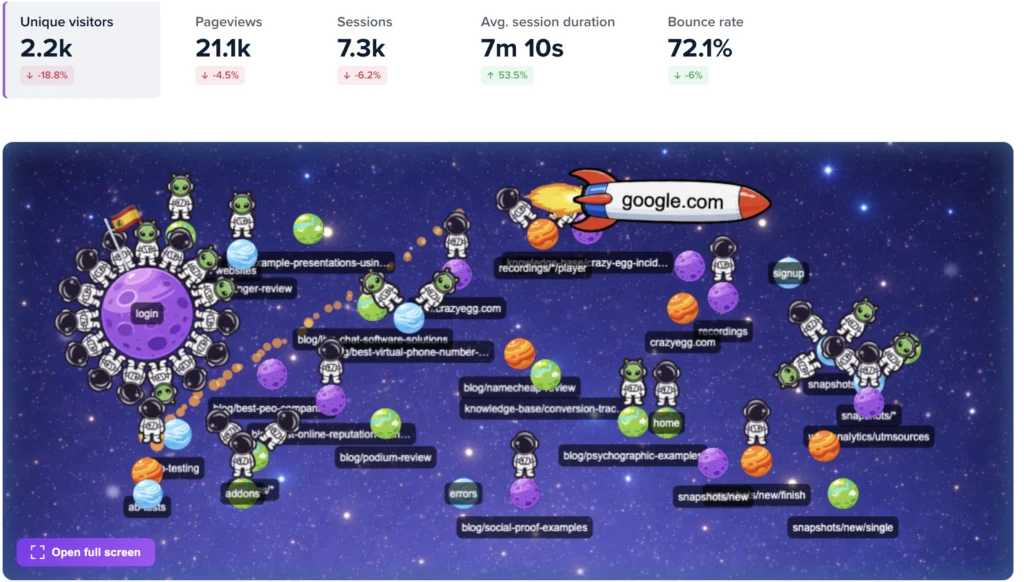
Crazy Egg, a pioneer in the field of heatmapping and conversion rate optimization, has officially announced the launch of its latest innovation, the Astro Map, a real-time visualization tool integrated directly into its Web Analytics platform. The new feature represents a significant departure from traditional, table-based data reporting by transforming live visitor traffic into an interactive, celestial-themed map. By visualizing users as astronauts and aliens navigating a planetary system of web pages, the Astro Map aims to provide digital marketers, UX designers, and business owners with an immediate, intuitive understanding of how visitors are interacting with their websites at any given second.
A New Paradigm in Real-Time Data Visualization
The introduction of the Astro Map addresses a long-standing challenge in the analytics industry: the "data fatigue" often associated with interpreting complex spreadsheets and static graphs. While real-time reporting has been a staple of platforms like Google Analytics for years, Crazy Egg’s approach focuses on the human element of the traffic. When users toggle their date range to "Today" within the Crazy Egg Web Analytics dashboard, they are no longer presented with mere digits; instead, they see a live digital ecosystem.
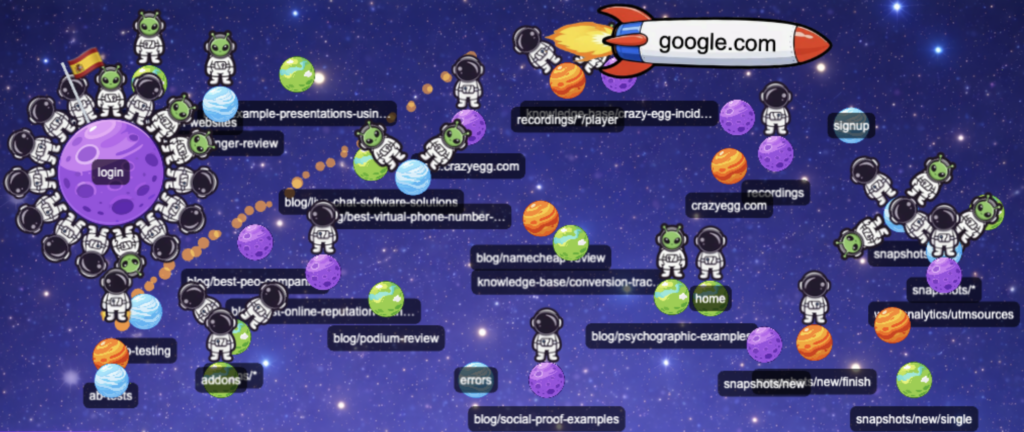
In this environment, each visitor is represented by a unique figure—an astronaut or an alien—landing on the site. These figures are not static; they are grouped around various "planets," which represent the specific pages or sections of the website currently being viewed. This spatial representation allows site administrators to see at a glance which areas of their site are "hot" and which are currently dormant, providing a level of situational awareness that traditional metrics struggle to convey.
Functional Mechanics of the Astro Map
The Astro Map is designed to track a variety of critical user actions as they occur. According to technical specifications provided by Crazy Egg, the tool monitors five primary events in real time: Visits, Scrolls, Clicks, Conversion Goals, and Errors. Each of these actions is communicated through a visual "speech bubble" that appears above the visitor’s avatar.
- Referral Tracking: When a visitor arrives from an external source—such as a social media platform, a search engine, or a backlink—the Astro Map visualizes this as a rocket dropping the visitor off at their destination. This provides immediate feedback on the efficacy of active marketing campaigns or social media posts.
- Interaction Logging: As the visitor engages with the content, the speech bubbles update to reflect their behavior. A "Scroll" bubble indicates deep engagement with the content, while a "Click" bubble highlights interaction with specific elements like buttons or links.
- Goal Tracking: One of the most vital aspects of the tool is its ability to highlight conversions. When a visitor reaches a predefined goal—such as signing up for a newsletter or completing a purchase—the visual cue allows the site owner to see the exact path that led to that success.
- Error Identification: Perhaps the most useful feature for web developers is the real-time reporting of errors. If a user encounters a broken link or a script error, the Astro Map displays an "Error" bubble. This allows teams to identify and troubleshoot technical glitches the moment they occur, potentially saving thousands of dollars in lost revenue.
Beyond the broad overview, the tool offers granular data. By clicking on any individual astronaut or alien figure, users can access a comprehensive visitor profile. This profile includes the visitor’s geographic location (country), the type of device being used (mobile, desktop, or tablet), the referral source, and a detailed chronological log of their recent activity on the site.
Strategic Positioning and Market Context
The decision to include the Astro Map as a free feature for all users, regardless of their subscription tier, is a strategic move by Crazy Egg to solidify its position in a highly competitive market. Since its founding in 2006 by Hiten Shah and Neil Patel, Crazy Egg has focused on making data accessible to non-technical users. The "Astro Map" continues this legacy by democratizing real-time analytics.
In the current landscape of web analytics, the industry is shifting toward more privacy-centric and user-friendly models. With the recent transition from Universal Analytics to Google Analytics 4 (GA4), many small to medium-sized businesses have found the new interfaces to be overly complex. By offering a simplified, visual alternative that requires no data crunching, Crazy Egg is positioning itself as an essential tool for "at-a-glance" management.
Industry analysts suggest that the real-time nature of the Astro Map is particularly valuable for e-commerce brands during high-traffic events such as Black Friday or product launches. During these periods, the ability to see where customers are getting stuck or where they are dropping off in real time can inform immediate adjustments to the site’s UI, which can have a direct impact on conversion rates.
Chronology of Innovation at Crazy Egg
The launch of the Astro Map is the latest in a series of updates designed to transform Crazy Egg from a niche heatmap tool into a full-stack analytics suite.
- 2006: Crazy Egg launches with its signature Heatmap and Confetti reports, revolutionizing how visual data is used to track clicks.
- 2015-2018: The company introduces A/B testing and individual session recordings, allowing users to watch playbacks of visitor behavior.
- 2020-2022: Crazy Egg expands into SEO auditing and general Web Analytics, providing a broader view of site health beyond just visual interactions.
- 2024: The debut of the Astro Map marks the company’s deepest dive into real-time, gamified data representation.
This timeline demonstrates a clear trajectory toward total site visibility. The company has moved from showing where people click to showing who people are and how they move through the digital space in real time.
Supporting Data and Industry Implications
The importance of real-time data is supported by recent industry trends. According to a 2023 report on digital experience, websites that respond to user friction in real time see a 15% higher retention rate than those that rely on post-hoc analysis. Furthermore, the "visual data" market is expected to grow as the human brain processes images 60,000 times faster than text, making tools like the Astro Map more efficient for quick decision-making.
The inclusion of the "Error" bubble is particularly significant. Statistics show that the average e-commerce site loses approximately 7% of its conversions for every one-second delay in page load or technical glitch. By providing an instant alert system via the Astro Map, Crazy Egg enables businesses to mitigate these losses significantly faster than traditional error-logging software might allow.
Official Perspectives and User Impact
While Crazy Egg has focused on the user-friendly nature of the tool, the underlying technology relies on advanced event listeners and low-latency data processing. The company has emphasized that despite the "fun" visual style of astronauts and aliens, the data is rigorous and accurate.
"Now in one glance, you can understand how visitors use your website," the company stated in its product release. "Where they come from, the pages they see, what they’re doing, and where they get stuck. No need to crunch numbers or analyze trends."
This sentiment reflects a broader movement in SaaS (Software as a Service) toward "actionable intelligence." The goal is not just to provide data, but to provide data that immediately suggests a course of action. If a business owner sees a cluster of "alien" visitors stuck on a "planet" (page) with an "Error" bubble, the action—contacting the dev team—is immediate and obvious.
Conclusion: The Future of the "Live Web"
The launch of the Astro Map signifies a shift in how digital professionals interact with their audience. By humanizing the data points, Crazy Egg is encouraging a more empathetic approach to user experience design. Instead of viewing visitors as bounce rates and session durations, they are viewed as active explorers navigating a digital landscape.
As web analytics continue to evolve, the integration of real-time, visual, and behavioral data will likely become the standard. For now, Crazy Egg’s Astro Map stands as a unique offering that combines the power of deep analytics with the simplicity of visual storytelling. By making the tool 100% free for all users, Crazy Egg is not only adding value to its existing platform but is also challenging the rest of the industry to make data more accessible, more immediate, and more engaging. This development marks a new chapter for the company as it seeks to remain at the forefront of the conversion rate optimization and web analytics industry.








