rifanmuazin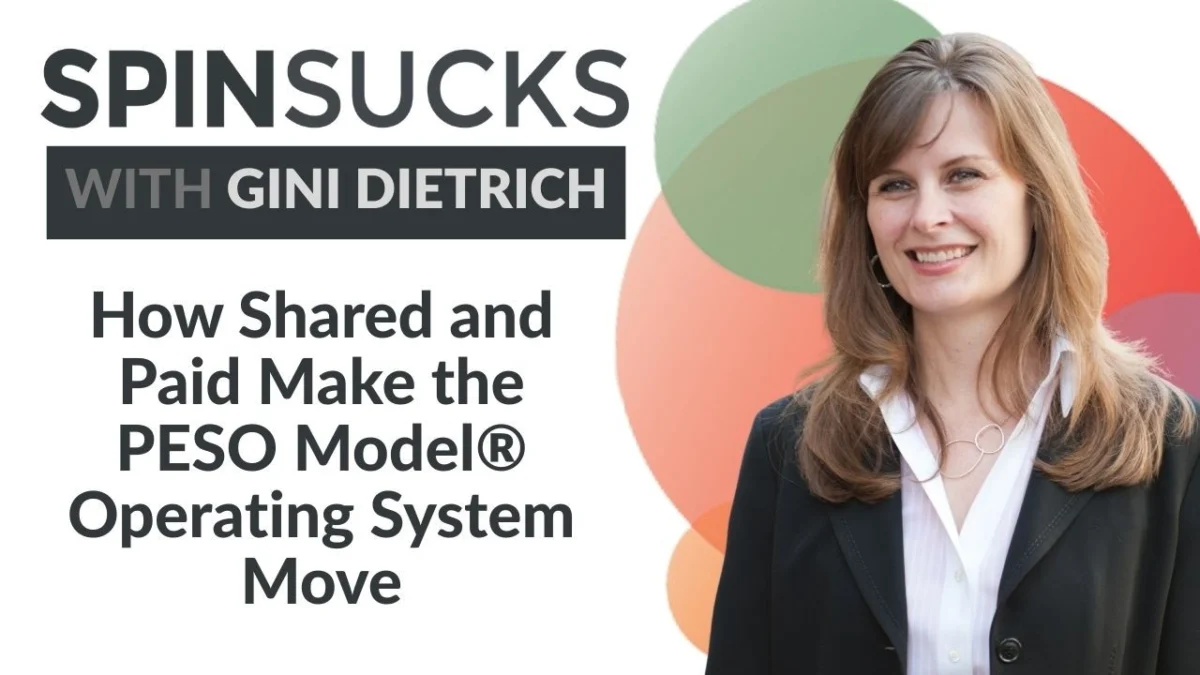
The landscape of professional communications is undergoing a fundamental transformation as traditional boundaries between marketing, public relations, and advertising continue to dissolve. At the center of this shift is the newly refined PESO Model©—an acronym for Paid, Earned, Shared, and Owned media—which has been restructured to address a fragmented digital ecosystem characterized by decentralized information and the rise of artificial intelligence. While owned and earned media provide the foundational authority and credibility for a brand, the integration of shared and paid media has emerged as the critical mechanism for distribution and acceleration. Industry experts argue that without these two layers, even the most authoritative content remains stagnant, failing to reach the audiences that drive commercial outcomes.
The current evolution of the PESO Model, as detailed in the latest certification standards, emphasizes a move away from "posting and boosting" toward a repeatable operating system. This transition comes at a time when the way humans and AI systems consume information has diverged from traditional search and discovery patterns. According to data from media analysts, the average consumer no longer follows a linear path to a website; instead, they encounter brand signals across a multitude of touchpoints, often forming a complete opinion before ever engaging with a company’s primary digital assets.
The Context of Fragmented Media Realities
The necessity for a systemic approach to shared and paid media is underscored by the increasing fragmentation of the media landscape. Research conducted by Axios highlights the emergence of 12 distinct "media realities," ranging from traditional news consumers and social media enthusiasts to "lurkers" who consume content without active engagement. This fragmentation means that brand narratives are often shaped in spaces where the brand has no direct presence, such as private Slack communities, encrypted messaging groups, and niche industry forums.
In this environment, shared media is no longer synonymous with managing a corporate Facebook or LinkedIn page. It represents the movement of "proof" through trusted networks. When a brand’s point of view is summarized by a creator, screenshotted in a professional community, or cited in a peer-to-peer recommendation, it gains a level of velocity that owned channels cannot achieve alone. This "distributed ecosystem" requires a strategy that prioritizes the shareability of proof points over the volume of daily posts.
Furthermore, the rise of AI-generated answers—from platforms like Perplexity, OpenAI’s SearchGPT, and Google’s AI Overviews—has changed the stakes for consistency. These systems function by corroborating information across multiple sources. If a brand’s message is consistent across owned, earned, and shared channels, AI models are more likely to surface that brand as a trusted authority. Inconsistency, conversely, acts as a signal of unreliability, effectively burying the brand in the synthetic search era.
Shared Media: From Social Management to Network Distribution
The modern interpretation of shared media within the PESO framework focuses on movement rather than activity. Historically, social media management was measured by vanity metrics such as likes, follows, and comments. However, the updated PESO Model Certification® suggests that the primary output of shared media should be "distribution designed on purpose."
To achieve this, communications teams are being encouraged to move away from the "hamster wheel" of constant content creation. Instead, the focus has shifted to four specific pillars of shared media distribution:
- Network Identification: Determining where the target audience actually gathers, whether in public social feeds or private "dark social" channels.
- Asset Adaptation: Creating "portable proof" assets—such as checklists, specific methodologies, or data visualizations—that are easy for others to share and remix.
- Engagement Rules: Establishing guidelines for how the brand participates in conversations to build trust rather than just broadcasting messages.
- Feedback Integration: Using shared media as a research and development layer to understand which messages resonate before committing significant resources to them.
Industry data suggests that "dark social"—the sharing of content via private channels—now accounts for as much as 84% of outbound sharing activity. This shift necessitates a shared media strategy that provides value high enough to be forwarded in a private message, rather than just scrolled past in a public feed.
Paid Media: The Strategic Accelerator
While shared media facilitates organic movement, paid media serves as the intentional acceleration of proven signals. In many organizations, paid media is often treated as a "panic button" used to manufacture demand when quarterly targets are missed. The PESO Model’s 2026 standards argue that this reactive approach is inherently inefficient and expensive.
Strategic amplification through paid media is designed to do four things:
- Guarantee Reach: Ensuring that high-authority proof points reach specific stakeholders who may have missed them organically.
- Create Consistency: Maintaining a "drumbeat" of messaging that builds long-term brand recall.
- Test and Refine: Using small-scale ad spend to validate which headlines or proof points earn the highest engagement.
- Retargeting and Sequencing: Guiding prospects through a logical journey from initial awareness (earned/shared) to deep consideration (owned).
The risk of decoupled paid media is the "acceleration of confusion." If a brand’s positioning is weak or its story is inconsistent, paying for reach simply exposes more people to a flawed message. This is why the PESO operating system dictates that paid media should only be deployed once a message has been validated through owned and earned channels.
A Chronology of the PESO Model’s Evolution
The PESO Model was first introduced by Gini Dietrich in her 2014 book, Spin Sucks, as a way to help PR professionals communicate their value in a digital-first world. Over the past decade, the model has evolved through several distinct phases:
- 2014–2017 (The Integration Phase): The model focused on breaking down silos between PR and marketing, encouraging professionals to look beyond media relations.
- 2018–2021 (The Measurement Phase): Focus shifted toward tying PESO activities to lead generation and business outcomes, moving away from "Advertising Value Equivalency" (AVE).
- 2022–2024 (The Authority Phase): With the explosion of content, the model emphasized "Owned" and "Earned" as the primary drivers of authority to combat misinformation.
- 2025–Present (The Operating System Phase): The current iteration treats PESO as a technical operating system designed to navigate AI-driven discovery and highly fragmented "media realities."
This latest evolution, reflected in the updated Certification program, acknowledges that the "Shared" and "Paid" components are no longer optional add-ons but are essential for maintaining visibility in an era where organic reach on major platforms continues to decline.
Industry Reactions and Expert Analysis
Marketing and PR leaders have largely welcomed the move toward a more systemic approach to distribution. "The era of ‘spray and pray’ social media is over," says Marcus Thorne, a digital strategist specializing in B2B communications. "The cost of customer acquisition is rising, and the only way to offset that is by ensuring that every dollar spent on paid media is amplifying a message that has already been proven to work in the earned and shared categories."
Analysts also point to the psychological impact of the integrated model. When a consumer sees a brand mentioned in a reputable news outlet (Earned), reads a consistent deep-dive on the brand’s blog (Owned), sees a colleague share a helpful graphic from that brand (Shared), and then encounters a targeted ad (Paid), the cumulative effect is the creation of "objective truth" in the consumer’s mind.
However, some critics argue that the complexity of managing all four layers simultaneously can be a barrier for smaller teams. The PESO Model Certification® addresses this by advocating for "decision rules"—pre-set criteria that dictate when a piece of content should move from one category to the next, thereby reducing the daily cognitive load on communications staff.
Implications for the Future of Communications
The integration of shared and paid media into a unified operating system has significant implications for how corporate budgets are allocated. Traditionally, PR budgets (Earned/Shared) and Advertising budgets (Paid) were managed by different departments with different KPIs. The PESO Model forces a convergence of these budgets, prioritizing the "signal strength" of the message over the channel itself.
As AI continues to change the mechanics of how information is surfaced, the "corroboration" aspect of the PESO Model will likely become its most valuable feature. Brands that can maintain a consistent presence across all four media types will find themselves favored by both human decision-makers and the algorithmic systems that serve them.
In conclusion, the modern PESO Model represents a shift from tactical execution to strategic distribution. By treating shared media as a distribution network and paid media as an acceleration tool, organizations can move beyond the volatility of platform algorithms. The result is a durable visibility engine that not only captures attention but builds the repeatable trust necessary for long-term growth in a distributed digital world. The transition from "posting and boosting" to a systemic operating model is no longer a luxury for innovators; it is becoming the standard for any brand seeking to remain relevant in the complex media landscape of the mid-2020s.