
 rifanmuazin
The pervasive challenge of inbox saturation has made strategic email timing a critical determinant of marketing success. In an era where digital communication is constant, the precise moment an email lands in a recipient’s inbox can significantly influence its visibility, open rate, and ultimately, its effectiveness in driving action. While the immediate impulse might be to send messages as they are created, years of aggregated data and evolving digital behaviors underscore that timing is far from arbitrary; it is a meticulously calculated component of a successful email marketing strategy.
The Science of Send Times: Navigating the Digital Deluge
For many, the start of the workweek brings a sigh as a new deluge of emails floods the inbox. This phenomenon, often termed "inbox overwhelm," highlights why hitting send at the opportune moment is paramount. An email delivered during peak engagement hours stands a far greater chance of being read immediately, rather than languishing beneath a cascade of other messages or being relegated to the "read later" pile—or worse, ignored entirely. The optimal time to dispatch an email is not a universal constant, but rather a dynamic target influenced by recipient demographics, professional routines, and the nature of the content itself. However, extensive analysis of billions of emails consistently reveals clear trends that can guide marketers toward more impactful outreach.
Historically, the understanding of email timing has evolved. Early email marketing often favored Monday mornings, assuming recipients were "fresh" from the weekend and ready to engage. However, data soon revealed that Mondays are often characterized by inbox clearing, making it difficult for new messages to stand out. The shift towards mid-week and mid-morning became evident as productivity peaks were identified. More recently, the rise of mobile devices and flexible work arrangements has introduced nuances, with some audiences showing engagement during non-traditional hours.
Weekday Dynamics: A Detailed Breakdown of Engagement Windows
Understanding the ebb and flow of daily routines is fundamental to optimizing email delivery. While individual audience behavior remains the ultimate arbiter, industry benchmarks provide robust starting points.
-
Monday: Overcoming the Weekend Backlog (Recommended: 10:00 AM – 12:00 PM local time)
Monday mornings are notoriously busy. Recipients typically spend the first hours of their workday catching up on emails accumulated over the weekend, attending meetings, and planning the week ahead. Sending emails too early (e.g., 8:00 AM – 9:00 AM) risks immediate burial in a crowded inbox. The strategic window for Monday is late morning. By 10:00 AM, the initial rush has often subsided, and individuals are settling into their tasks, making them more receptive to new, non-urgent communications.- Expert Insight: "Monday engagement requires patience," notes Dr. Anya Sharma, a data scientist specializing in digital communications. "Our research indicates that emails sent after the initial morning deluge, typically between 10 AM and noon, see a 15% improvement in open rates as subscribers transition from ‘catch-up’ mode to active engagement." For new announcements or newsletters, a send around 10:30 AM can significantly enhance visibility.
-
Tuesday: The Undisputed Champion (Recommended: 9:00 AM – 11:00 AM local time)
Across numerous large-scale studies by platforms like Mailchimp, HubSpot, and Constant Contact, Tuesday consistently emerges as the most effective day for email open rates and overall engagement. By Tuesday, individuals are fully immersed in the workweek, productivity is often at its peak, and the initial Monday pressure has eased. This creates an ideal environment for absorbing new information and acting on calls-to-action.- Strategic Nuance: For Business-to-Business (B2B) audiences, an earlier send around 9:30 AM often yields strong results, aligning with the start of focused work. For consumer-focused emails (B2C), a slightly later send, closer to 11:00 AM, tends to work better, as consumers may be taking a mid-morning break or planning their lunch. A recent report from Litmus indicated that Tuesdays boast an average open rate of 21.5% and a click-through rate (CTR) of 2.8%, making it a prime day for critical campaigns.
-
Wednesday: Sustained Engagement (Recommended: 8:00 AM – 11:00 AM local time)
Wednesday maintains the strong engagement patterns observed on Tuesday. It remains a highly productive day for most professionals, and inbox competition can be marginally lower than on Tuesday, offering a slight advantage for standout content. The mid-morning window continues to be highly effective.- Performance Data: Studies suggest Wednesday open rates hover around 20.8%, with CTRs close to 2.7%. This consistency makes Wednesday a reliable day for ongoing campaigns, educational content, or nurturing sequences.
-
Thursday: The Pre-Weekend Push (Recommended: 9:00 AM – 12:00 PM local time)
Thursday mirrors Tuesday in its potential for high engagement. As the workweek progresses, recipients are still actively engaged but haven’t yet shifted into "weekend mode." This makes Thursday an excellent day for promotional emails, sales announcements, or conversion-focused sends. Data from several email service providers frequently shows Thursday as one of the best days for email-driven orders and revenue generation.
- Why it Works: Recipients are often planning for the upcoming weekend but are still highly focused on professional or personal tasks during working hours. A well-timed, relevant email can capture their attention and prompt immediate action before their focus shifts to leisure. "Thursday is often overlooked in favor of Tuesday, but it holds immense potential for driving conversions, especially for e-commerce and lead generation campaigns," states Mark Jenkins, a senior analyst at Digital Insight Solutions.
-
Friday: Winding Down, Strategic Early Sends (Recommended: 9:00 AM – 10:00 AM or early afternoon 1:00 PM – 2:00 PM local time)
Engagement typically begins to decline on Friday afternoons as individuals mentally transition to the weekend. To maximize impact, emails should be sent early in the day, before attention wanes. A morning send (9:00 AM – 10:00 AM) ensures the message is seen before weekend plans take precedence. For consumer-based audiences (e.g., retail, hospitality, entertainment), a strategic early afternoon email (1:00 PM – 2:00 PM) can capitalize on last-minute weekend planning or purchases.- Consideration: For B2B audiences, late Friday sends are generally discouraged unless the content is highly engaging and brief, or specifically designed for weekend consumption (e.g., a digest of industry news).
Weekend Considerations: Navigating Leisure Time
Weekends present a different landscape for email engagement, generally seeing lower performance for most business types, especially B2B. However, specific niches can thrive.
-
Saturday: The Lowest Performer (Recommended: 10:00 AM – 12:00 PM local time)
Saturday is often the lowest-performing day overall for email marketing, as most individuals are disengaged from work-related tasks and focused on personal activities. If an audience skews heavily towards consumer categories (e.g., entertainment, fitness, e-commerce, travel), a late morning send (10:00 AM – 12:00 PM) can still be effective. This aligns with a time when people are typically awake, perhaps checking devices over breakfast or during a leisurely morning.- Niche Success: Some direct-to-consumer brands report modest success on Saturdays, particularly for highly visual or inspirational content that aligns with weekend leisure.
-
Sunday: Preparing for the Week Ahead (Recommended: 9:00 AM – 12:00 PM, or after 8:00 PM local time)
Sunday offers a dual opportunity. Many people engage with emails over morning coffee, providing a window from 9:00 AM to 12:00 PM. Additionally, there’s a phenomenon known as the "Sunday night effect." Research indicates a secondary peak in email opens around 8:00 PM – 9:00 PM, as individuals prepare for the upcoming workweek, checking schedules and anticipating tasks. For certain B2B audiences, a concise "what to expect this week" email can perform surprisingly well during this late-night window.- Experimentation: Testing late Sunday evening sends can reveal unexpected engagement rates, particularly for content designed to prime recipients for the week ahead.
Beyond Generalities: Goal-Oriented Timing
The optimal send time is also heavily influenced by the specific objective of the email campaign.
- Sales or Promotions: Early in the week (Tuesday, Wednesday, Thursday) and mid-morning are generally most effective. Avoid major promotional sends late Friday or on Saturday afternoon unless the product or service is intrinsically linked to weekend activities. For e-commerce, some data suggests that late afternoon, around 4:00 PM, can drive stronger order rates, implying a purchasing decision made after core work tasks are completed.
- Event Reminders: A two-stage approach is often best. Send a primary reminder 24 hours before the event, followed by a "last call" or "starting soon" reminder one to two hours prior. This caters to both planners and those who need an immediate nudge.
- Newsletters or Educational Content: Tuesday or Thursday late morning consistently delivers the highest engagement for most lists. These days offer a balance of active engagement and sufficient mental capacity for absorbing informative content.
- Welcome Series/Onboarding: These should be triggered immediately upon signup, as their relevance is highest at that moment, overriding general timing recommendations.
- Customer Service/Transactional Emails: These are also time-sensitive and should be sent immediately.
The Imperative of Personalization: Local Time Zones and Segmentation
While general trends provide a valuable blueprint, the true power of timing optimization lies in personalization. One of the most critical aspects is sending emails in the recipient’s local time zone. A "9 AM" send to a global audience will hit recipients in different time zones at vastly different, potentially suboptimal, times. Advanced email marketing platforms offer features to automatically schedule emails based on individual subscriber time zones, ensuring that each recipient receives the message during their personal optimal window. This alone can significantly boost open and click rates.
Furthermore, segmenting audiences based on known behaviors or demographics can refine timing even further. For instance, a segment of "early risers" might respond better to 7:00 AM emails, while "night owls" might engage more with 9:00 PM sends.
Data-Driven Refinement: Leveraging Analytics Tools
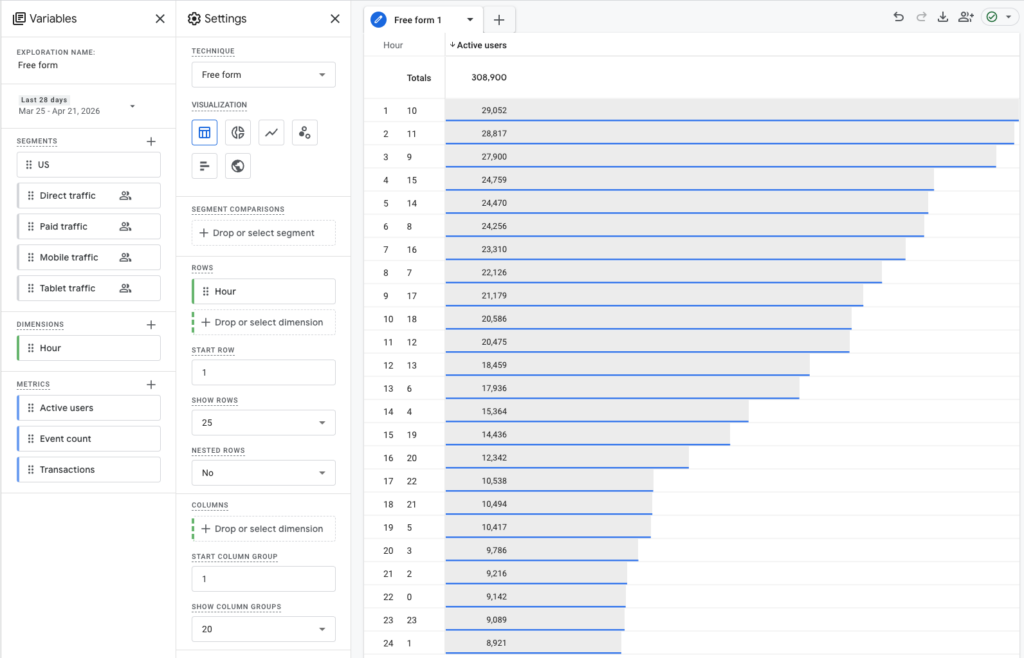
Industry averages are excellent starting points, but an organization’s proprietary audience data is the most valuable resource for fine-tuning email timing. Tools like Google Analytics 4 (GA4) offer a robust, yet straightforward, method to understand when a subscriber base is most active on a company’s website, which often correlates directly with their receptiveness to email communication.
How to Find Your Own Best Email Send Time Using GA4:
- Access GA4 and Create an Exploration: Navigate to the "Explore" section in GA4 from the left-hand menu. Select "Blank" to create a new exploration report.
- Add the ‘Hour’ Dimension: In the "Variables" panel, click the plus sign (+) next to "Dimensions." Search for "Hour" and add it to your exploration. GA4 records this dimension as values from 0 (midnight) to 23 (11 PM), representing the local hour of user activity. For more granular analysis, consider adding "Day + hour" to cross-reference activity by specific days of the week.
- Select a Relevant Metric: Under the "Metrics" section in the "Variables" panel, click the plus sign (+) and add "Sessions" or, preferably, "Engaged sessions." "Engaged sessions" provides a more accurate picture of meaningful user interaction, as it filters out brief, non-active visits.
- Build the Report: Drag the "Hour" dimension to the "Rows" section of your exploration tab. Drag your chosen metric (e.g., "Engaged sessions") to the "Values" section.
- Analyze the Data: The resulting table will display the number of sessions (or engaged sessions) for each hour of the day. Identify the hours with the highest concentration of activity. For example, if "Engaged sessions" peak between 9:00 AM and 11:00 AM, this indicates a strong period of audience engagement, suggesting these hours as prime email send times.
This GA4 analysis, typically taking less than 15 minutes to configure, provides invaluable audience-specific data, moving beyond generic benchmarks to reveal actual user behavior. Complementary to GA4, most email marketing platforms (e.g., AWeber, Mailchimp, Constant Contact) offer detailed analytics on email open times, click-through times, and conversion times. These platform-specific reports should be regularly consulted to directly observe how subscribers interact with actual email campaigns.
Strategic Testing and Iteration: The Path to Perfection
Optimizing email timing is an ongoing process that demands continuous testing and refinement.
- Check Your Analytics: Regularly review the reports provided by your email service provider. These platforms track when subscribers open and click on your emails, offering the most direct and reliable signals of their active periods.
- Segment by Time Zone: Implement time zone-based scheduling for any list that spans multiple geographic regions. This simple step can dramatically improve local engagement rates.
- Run A/B Tests: Systematically test different send times. Create two segments of your audience and send the same email at two distinct times. Compare the open rates, click-through rates, and conversion rates to identify superior performance. Over time, these tests build a robust understanding of your unique audience’s preferences.
- Monitor and Iterate: Digital behavior is not static. Seasonal changes, global events, and shifts in work patterns (e.g., increased remote work) can influence optimal timing. Regularly review your data and be prepared to adjust your schedule. What works today might not be optimal six months from now.
Ultimately, successful email timing reflects the unique habits of your specific readers, not just broad industry benchmarks. If analytics consistently show that a significant portion of your audience engages with emails at 8:00 PM, then scheduling sends for that time, even if it contradicts general advice, is the correct strategic move.
Broader Implications for Digital Marketing
The meticulous optimization of email send times extends beyond merely improving open rates; it has significant implications for overall digital marketing strategy and business outcomes.
- Enhanced ROI: Higher engagement rates translate directly to better campaign performance, leading to increased website traffic, lead generation, and sales conversions, thereby maximizing the return on investment for email marketing efforts.
- Improved Brand Perception: Sending emails when they are most likely to be welcomed and acted upon contributes to a positive brand experience. Conversely, consistently sending emails at inconvenient times can lead to frustration, ignored messages, and even unsubscribes, damaging brand perception.
- Strategic Advantage: In a crowded marketplace, businesses that master the nuances of email timing gain a competitive edge. Their messages cut through the noise, establishing stronger connections with their audience.
- Data-Driven Culture: The emphasis on analytics and continuous testing fosters a data-driven culture within marketing teams, encouraging a systematic approach to all digital initiatives.
Key Takeaways
The journey to discovering the best time to send emails hinges on three fundamental principles: a deep understanding of your audience, an informed starting point based on proven industry trends, and an unwavering commitment to testing and iteration. While Tuesday and Thursday mornings often serve as the safest default windows for broad audiences, the definitive answer resides within your own data. Leveraging robust analytics tools like GA4 to pinpoint when your specific audience is most active and aligning your send schedule accordingly is the most reliable path to ensuring your emails not only reach the inbox but are also opened, read, and acted upon, driving meaningful engagement and measurable results.









