rifanmuazin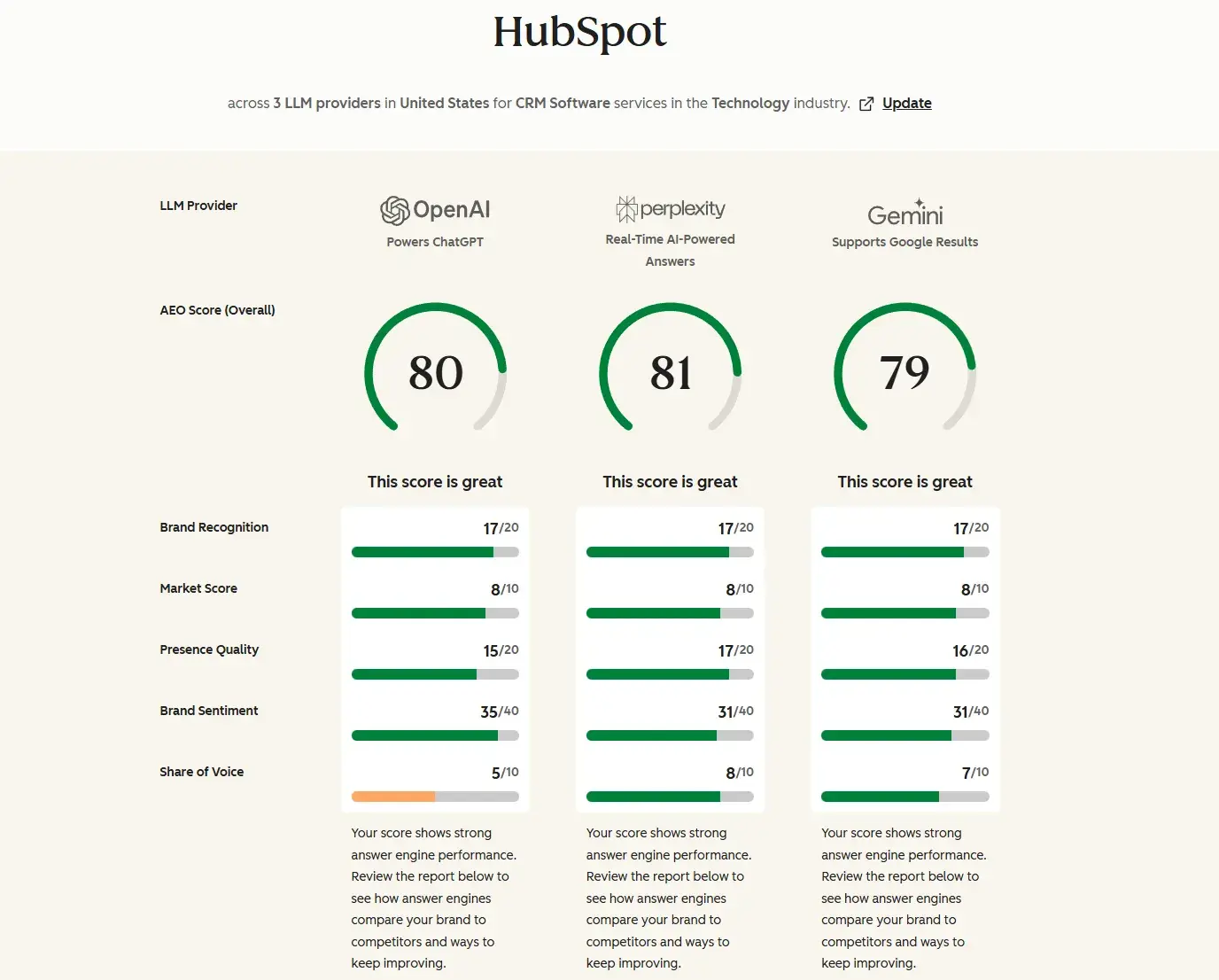
Generative Engine Optimization (GEO) has definitively carved out its niche within the digital search landscape, signaling a guaranteed future for AI-driven discovery. A recent report, Datos’ State of Search Q4-2025, highlights a pivotal moment: for the first time, AI tools consistently captured between 1.31% and 1.34% of all U.S. web visits. This stabilization, following a period of rapid growth, suggests that AI search tools have established a firm, albeit evolving, presence in the broader search ecosystem, fundamentally altering how brands achieve visibility and connect with their audiences.
The Emergence of Generative Engine Optimization
The concept of Generative Engine Optimization represents the next evolution in digital marketing, moving beyond the traditional Search Engine Optimization (SEO) paradigm. While SEO primarily focused on ranking websites within search engine results pages (SERPs) based on keywords, backlinks, and technical factors, GEO shifts the emphasis to optimizing content for large language models (LLMs) and AI-powered search interfaces. These advanced systems don’t just point users to websites; they synthesize information, provide direct answers, and offer contextual recommendations, often without requiring a click to an external site. This profound shift has been driven by rapid advancements in artificial intelligence, particularly in natural language processing and understanding, enabling AI tools to interpret complex queries and generate comprehensive responses that fulfill user intent directly.
Historically, the internet evolved from simple directories to complex search algorithms. Early SEO was a nascent field, focused on keyword stuffing and basic linking. Over decades, it matured into a sophisticated discipline centered on user experience, content quality, and authority signals. However, the advent of generative AI, exemplified by tools like ChatGPT, Google AI Overviews, Claude, and Perplexity, introduced a new layer of interaction. These AI models act as intelligent intermediaries, processing vast amounts of information to deliver concise, synthesized answers. This development necessitates a new approach to digital visibility, leading to the rise of GEO. It’s no longer just about being found; it’s about being understood, trusted, and cited by AI.
Key Data Signals a New Equilibrium in AI Search
The Datos’ State of Search Q4-2025 report serves as a critical benchmark, confirming that AI search tools are no longer merely experimental features. Their stable traffic share, hovering around 1.3% of U.S. visits, indicates a maturing phase where these tools are integrating into daily user habits. While this percentage might appear modest compared to the dominant share held by traditional search engines, its consistency is a testament to AI’s growing utility, particularly for specific types of queries where users seek immediate, summarized information rather than a list of links. Industry analysts suggest that this stability marks a transition point, where AI-powered search is solidifying its role as a distinct discovery layer.
Further underscoring this paradigm shift, HubSpot’s comprehensive State of Marketing report, based on a survey of over 1,500 global marketers, revealed compelling insights into user behavior. A striking 58% of marketers reported that AI referral traffic exhibits significantly higher intent compared to traditional organic users. This finding is crucial, as it indicates that users arriving from AI-generated answers are often much further along in their buyer journey. They have likely already conducted initial research within the AI interface, using LLMs to shortlist vendors, compare options, understand technical concepts, and validate decisions before ever clicking through to a brand’s website.
This heightened intent translates directly into superior conversion rates. For instance, a notable B2B client showcased a remarkable conversion rate of 7.12% from AI-driven referral traffic, starkly contrasting with the 1.37% conversion rate from traditional organic search. This empirical evidence validates the hypothesis that AI serves as a powerful pre-qualification filter, ensuring that clicks to a website are driven by specific needs and a readiness to evaluate options or take action. The implications for return on investment (ROI) in marketing are profound, shifting the focus from sheer traffic volume to the quality and intent of visitors.
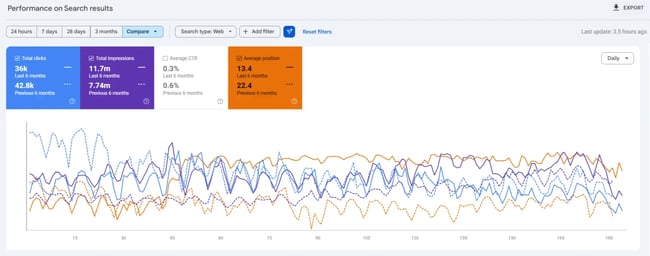
Moreover, the phenomenon of "zero-click searches" has become increasingly prevalent, with research indicating that approximately 60% of Google searches now conclude without a user clicking on any search result. This trend is amplified by AI Overviews and other generative search experiences, which aim to fulfill informational needs directly within the search interface. For marketers, this means that visibility alone, even with improved average positions in SERPs, no longer guarantees engagement. The battle for attention has moved from securing a top organic link to ensuring a brand’s presence and accurate representation within AI-generated summaries and recommendations.

Redefining the Buyer’s Journey and Marketer’s Role
The rise of GEO forces a fundamental re-evaluation of marketing strategies, particularly in the realm of inbound and loop marketing. With AI search, alongside platforms like Reddit and new social media channels, marketers face an increasingly fragmented digital landscape. The challenge is no longer just about optimizing for a single search engine but about ensuring content is accessible and impactful across diverse AI-powered and traditional platforms.
Buyers are increasingly leveraging LLMs to conduct preliminary research, creating a new "discovery layer" that precedes traditional website visits. This means generative engines are shaping perception much earlier in the customer journey. If a brand is absent from, or inaccurately represented within, these AI-generated answers, it risks becoming invisible during critical evaluation moments, even if its SEO fundamentals remain strong. The reason is simple: AI-generated answers frequently appear prominently, often above sponsored placements and organic listings, dictating the initial narrative a user encounters.
Unlike traditional search results that merely list web pages, AI responses delve deeper, answering long-tail and nuanced queries with contextual recommendations. They filter out noise, selecting brands that best align with a user’s specific intent. The new goal for marketers is to ensure their content is not filtered out, but rather amplified. This requires a holistic approach, emphasizing relevance, clear content structure, authoritative signals, and consistent messaging across all digital touchpoints—both on the brand’s own site and across the wider web. This signals that GEO is not replacing SEO but profoundly redefining where influence and visibility truly reside.
Strategic Pillars for Generative Engine Optimization
To thrive in this AI-first search landscape, marketing teams must adapt their strategies. Several key trends and actionable tactics are emerging:
1. Cultivating Brand Consistency and Third-Party Credibility
In the generative era, how others describe a brand is as crucial as how a brand describes itself. AI systems synthesize information from a multitude of external sources—including media coverage, industry directories, customer reviews, analyst reports, partner sites, forums, and social media platforms—to construct a consistent and authoritative understanding of a product, service, or company. This aggregated external narrative heavily influences whether an AI model confidently recommends or cites a brand.
Brands must, therefore, establish robust brand guidelines that extend beyond internal usage to dictate how third-party entities should represent them. This includes standardizing product names, key features, unique selling propositions, and target audiences. Consistent messaging across all external touchpoints reinforces expertise and category leadership, making it significantly easier for generative models to integrate and recommend the brand in their synthesized answers.
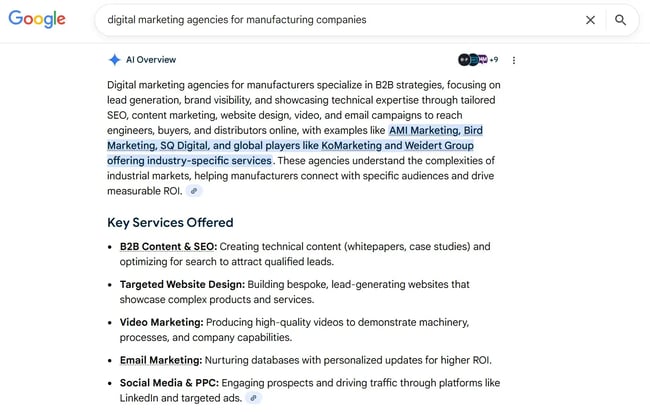
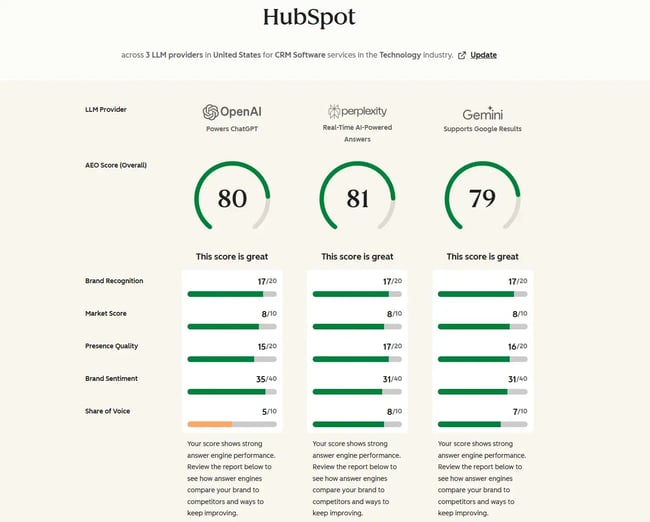
A compelling example of this is Bird Marketing, a digital marketing agency specializing in manufacturing. By creating highly targeted landing pages on their website and simultaneously ensuring their expertise in manufacturing was clearly tagged and validated on a credible third-party site like Semrush Agency Partners, Bird Marketing secured a feature in Google’s AI Overview. This occurred even when their own site might not have ranked in traditional organic search for that specific query, demonstrating the power of aligned third-party validation. Tools like HubSpot’s AEO Grader become invaluable for monitoring how consistently a brand is recognized and represented across AI-generated results, tracking brand sentiment, and assessing competitive presence.
2. Structuring Content for AI Readability: The Power of Semantic Triples and Schema
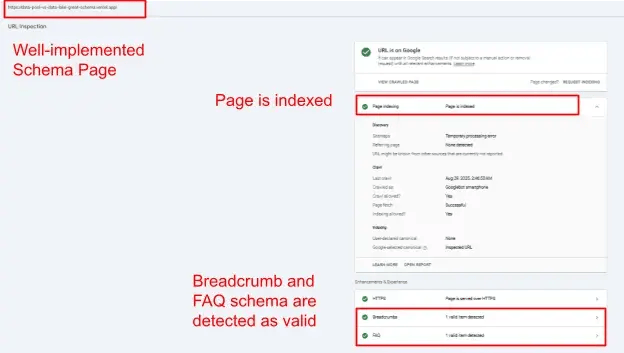
Generative engines don’t merely scan for keywords; they strive to understand entities, their relationships, and the overall meaning conveyed by content. Structured data plays a critical, foundational role in this interpretive process. Schema markup, in particular, is no longer just an enhancement for rich results; it’s becoming essential for reducing ambiguity and enabling AI crawlers to confidently extract, summarize, and cite content.
On-page content must be formatted in a way that is inherently machine-readable. This includes using:
- Clear Headings (H1, H2, H3): To delineate topics and subtopics, providing a hierarchical structure.
- Bullet Points and Numbered Lists: For presenting information concisely and in an easily digestible format.
- Tables: To compare data or present structured information clearly.
- Definitions: Explicitly stating "X is Y" helps AI understand core concepts.
- Accordions and Expandable Sections: While often for user experience, these can also segment information for AI.
Beyond visual formatting, content marketers should adopt a definitive writing style, employing "semantic triples" (Subject-Predicate-Object). For example, "HubSpot is a CRM platform" or "AI Overviews provide synthesized answers." This structure explicitly expresses relationships, making it effortless for AI systems to interpret, summarize, and reuse information accurately. Many teams are now leveraging AI assistants, such as HubSpot Breeze AI, to generate first drafts that naturally adhere to these structural patterns, ensuring scalability of AI-readable content.
For the technical layer, schema markup is paramount. Relevant schema types, such as Article, FAQPage, Organization, Product, and HowTo, help AI systems identify what a page is about, how concepts relate, and the authority of the source. The proper implementation of a schema graph, which maps entities and their relationships across a site, significantly increases a brand’s chances of future-proofing its GEO visibility. Tools like HubSpot’s Content Hub can assist in surfacing relevant SEO and GEO recommendations and simplifying schema implementation directly within the content creation workflow.
3. Mastering Query Fan-Out and Strategic FAQs
The concept of "query fan-out" recognizes that a single user question rarely exists in isolation. An initial query often expands into a series of related follow-up questions as users (and AI systems) seek deeper clarity, validation, and next steps. For instance, a search for "What is enterprise SEO?" can quickly fan out into questions about cost, tools, risks, timelines, comparisons, implementation, and target audiences. AI search tools, like Sigma Chat, often visualize these follow-up questions, demonstrating how comprehensive content addresses a broader informational need.
Content that provides broad, structured coverage around a topic is far more likely to be trusted, summarized, and reused in AI-generated responses than content that addresses only a narrow slice of a query. This is where a strategic approach to Frequently Asked Questions (FAQs) becomes invaluable.
Marketers can leverage FAQ-style content in two primary ways:
- Dedicated FAQ Articles: These are suitable for complex topics, comparisons, or comprehensive guides that warrant their own page. Examples include "What is Quantum Computing?", "Comparison of CRM Software Solutions," or "A Step-by-Step Guide to Digital Transformation."
- In-Page FAQ Modules: Best for supporting a main piece of content by addressing common questions related to a specific product feature, troubleshooting, or pricing. Examples might include "Common Questions about HubSpot’s Marketing Hub" or "Troubleshooting Guide for Your New Smart Device."
By anticipating the full spectrum of user queries around a topic and structuring answers clearly, brands can position their website as a comprehensive knowledge base, worthy of continuous citation by generative AI.
Measuring Success in the Generative Era
The metrics for success in GEO are evolving beyond traditional clicks and conversions. While clicks still matter, marketers must increasingly track inclusion in AI answers, citation frequency, and competitive presence. A "reference rate"—how often a brand, its content, or its core concepts appear in AI-generated answers across platforms like ChatGPT, Perplexity, and Google’s AI surfaces—is becoming a critical indicator of visibility. This involves a blend of prompt testing, brand-mention tracking, and competitive analysis to gauge a brand’s share of voice within LLM-driven environments. Specialized platforms like xfunnel help operationalize this by tracking brand inclusion and citation trends.
Frequently Asked Questions About the Future of Generative Engine Optimization
- How is GEO different from SEO in day-to-day work? GEO shifts the daily focus from ranking mechanics to ensuring content can be understood, trusted, and reused by AI systems. This means more time on entity clarity, comprehensive question coverage, internal consistency, source-worthiness, and content structure, rather than solely on individual keywords or SERP positions.
- When should you create an
llm.txtorai.txtfile? Developers should consider creating anllm.txtorai.txtfile as soon as they are ready to explicitly define AI crawler directives. These files, though still largely experimental and not universally accepted, offer a proposed method for helping AI crawlers understand content access permissions, similar torobots.txtfor traditional search engines. Platforms like WordPress and Yoast are making their implementation increasingly user-friendly. - How do you measure "reference rate" in practice? Measuring reference rate involves a multi-faceted approach. This includes systematic prompt testing across various AI platforms, tracking brand mentions and citations through dedicated monitoring tools, and conducting competitive analyses to compare inclusion frequency for similar query sets. It’s about qualitative and quantitative assessment of AI’s acknowledgment of a brand, rather than a single, easily quantifiable metric.
- Should SMBs invest in GEO now or wait? Most Small and Medium-sized Businesses (SMBs) should integrate GEO principles into their existing SEO strategies rather than treating it as a separate, significant investment. The smartest approach is to prioritize SEO fundamentals that naturally support GEO, such as implementing schema, structuring content clearly, and ensuring consistent brand messaging across the web. These efforts will yield benefits in both traditional and generative search.
- Do you need GEO services or a course to get started? No, most teams can begin by strengthening their existing SEO fundamentals: improving content structure, expanding topical coverage, ensuring technical accessibility, and clarifying brand positioning. GEO services or specialized courses become valuable when an organization has exhausted internal capabilities, needs to systematize its efforts, or aims to scale its generative optimization strategies, not as a prerequisite for participation.
The Path Forward for Generative Engine Optimization
The future of GEO is not about abandoning traditional SEO or chasing ephemeral hacks; it’s about amplifying and enhancing proven digital marketing tactics. It necessitates a doubling down on strategies that foster clear entity understanding, comprehensive question coverage, structured answers, and technically accessible content across an entire website. These elements not only contribute to higher rankings in traditional search but also significantly increase a brand’s likelihood of being accurately interpreted, cited, and recommended by generative AI.
For businesses and marketing teams, embracing GEO means recognizing that visibility now occurs inside AI-generated answers, not just on external websites. Platforms with years of experience in search engine optimization, like HubSpot’s Content Hub, are well-positioned to guide brands through this transition, offering tools and recommendations that support both traditional SEO and the emerging demands of generative engine optimization, including simplified schema implementation and AI content writing assistants. The imperative is clear: adapting to GEO is not an option but a necessity for maintaining and expanding digital influence in an AI-first world.