
 rifanmuazin
AI eCommerce optimization represents a paradigm shift from subjective guesswork to objective, data-derived intelligence. By utilizing machine learning algorithms to analyze behavioral signals, UX patterns, and content performance, businesses can now identify friction points in real-time. This technological evolution arrives at a critical juncture for the industry, as brands seek more efficient ways to scale their operations without significantly increasing their overhead or relying on large teams of specialized consultants.
The Chronology of eCommerce Optimization: From Guesswork to Automation
The history of eCommerce optimization can be divided into three distinct eras. The first, occurring in the early 2000s, was defined by "gut-feeling" changes. Webmasters would alter button colors or page layouts based on personal preference or basic heatmaps. The second era, which dominated the 2010s, introduced structured A/B testing and manual CRO. This period saw the rise of specialized agencies that conducted deep-dive audits, often taking weeks or months to produce static reports. While more scientific than the previous era, it remained slow and inaccessible to many smaller businesses.
The third and current era is defined by AI-driven intelligence. In this phase, the speed of analysis has shifted from weeks to minutes. AI tools can now ingest massive datasets—including clickstreams, scroll depth, and form abandonment rates—across thousands of pages simultaneously. This allows for a level of granularity that was previously impossible for human analysts to achieve. The transition to AI-driven models is not merely a matter of convenience; it is a response to the sheer volume of data generated by modern consumers, which has long since surpassed the processing capacity of manual human review.
The Structural Failures of Traditional UX Audits
To understand the value of AI in this space, one must first examine the limitations of the traditional audit model. Historically, a comprehensive UX audit involved hiring an external agency, a process that typically lasted between four and six weeks. At the conclusion of this period, the client would receive a lengthy PDF document—often exceeding 60 pages—containing dozens of recommendations based on "industry best practices."
The fundamental issue with this approach is that it is inherently static. A traditional audit captures a single moment in time and often relies on generic advice that may not apply to a specific brand’s unique audience. Furthermore, these reports are frequently disconnected from live behavioral data. By the time a development team is ready to implement the recommendations, the market conditions or user behavior patterns may have already shifted.
In contrast, AI-powered optimization tools provide dynamic intelligence. Rather than offering broad generalizations, these systems inspect individual websites to flag specific issues unique to that site’s architecture and user flow. This shift from "best practices" to "data-backed specifics" allows eCommerce teams to move away from the "one-size-fits-all" mentality that has historically plagued the industry.
Technical Mechanics: How AI Identifies Conversion Friction
AI eCommerce optimization functions by creating a "tighter loop" between data collection and actionable insights. The technology focuses on several key areas of the digital experience:
- Behavioral Signal Analysis: AI monitors how users interact with various elements on a page. If users consistently stall at a specific form field or abandon their journey on a specific mobile device, the AI identifies this as a high-priority friction point.
- Content Impact Measurement: Beyond simple grammar checks, AI evaluates the efficacy of product descriptions and calls-to-action (CTAs). It analyzes whether the language used answers the specific questions that lead to a purchase or if it contributes to cognitive load and "noise."
- Visual Hierarchy and Contrast: Using computer vision, AI can determine if critical elements—such as the "Add to Cart" button—are sufficiently visible and positioned correctly relative to the user’s natural scanning patterns.
- Trust Signal Optimization: AI identifies the optimal placement for security badges, guarantees, and customer reviews. Placing these trust signals too early or too late in the funnel can have a measurable impact on the final conversion rate.
By processing these elements through the lens of context, AI provides findings that are significantly more relevant than a standard checklist. This level of analysis allows businesses to understand not just what is happening on their site, but why it is happening.
Expert Perspectives: The Shift in Strategy and Mindset
The adoption of AI in CRO is also changing the professional landscape for digital strategists. Anwar, a senior practitioner in the field, notes that traditional CRO relied on "manual depth," requiring slow and meticulous analysis by senior experts. He suggests that AI-CRO enables "scalable depth," providing mid-level strategists with the reach and insight previously reserved for those with decades of experience. According to Anwar, the focus is shifting from being a technical expert on a specific platform to having the right "decision mindset" and building AI workflows that support that mindset.
The impact of this shift is visible in the success rates of experimentation programs. Garret Cunningham, an expert in the field, highlights the use of AI predictors trained on years of experimentation data and psychological principles. By using AI to estimate the likelihood of a test’s success before it is even run, his team was able to move from assumption-based testing to a strategy-led approach. This transition resulted in doubling their "win rate"—the percentage of A/B tests that yield a positive result—from 20% to over 40%.
This data suggests that AI is not replacing the human element of marketing; rather, it is augmenting it. It allows strategists to focus on high-level creative and strategic decisions while the AI handles the heavy lifting of data processing and pattern recognition.
The VWO Initiative: Democratizing UX Intelligence
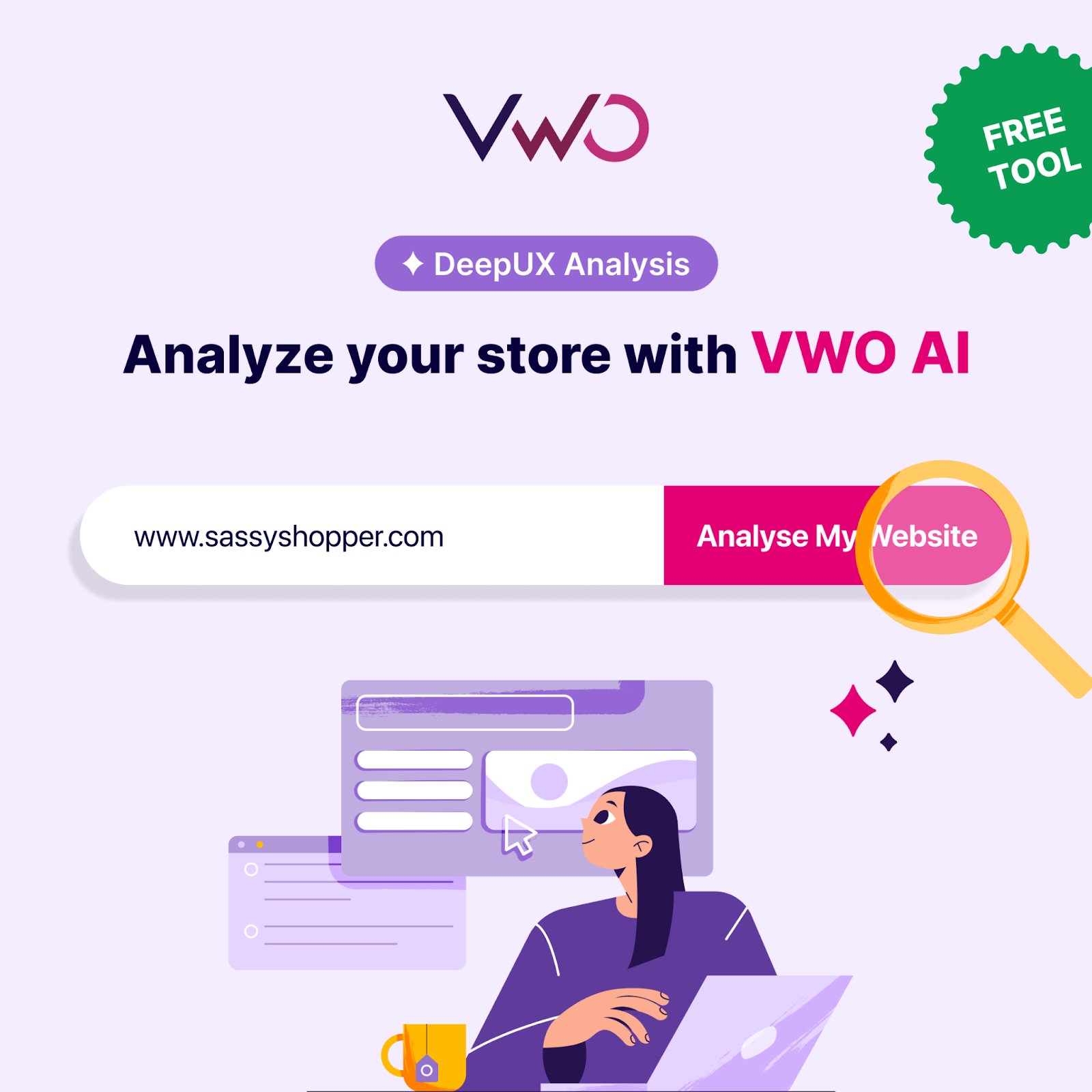
Recognizing the barriers to entry for many eCommerce businesses, VWO has introduced a free AI-powered tool designed to make sophisticated UX audits accessible to any brand, regardless of size. This initiative aims to remove the "guesswork" for teams that may not have the budget for a six-figure agency retainer or a dedicated data science department.
The process is designed for speed and simplicity. A user enters their website URL, and the VWO AI engine—the same technology behind one of the world’s most established experimentation platforms—scans the site for UX gaps, content issues, and conversion friction. The resulting report is delivered in an interactive two-column format that clearly pairs every identified problem with a specific, actionable recommendation.
This approach addresses the "implementation gap" that often stalls optimization efforts. By providing clear answers rather than dense reports, the tool allows teams to move immediately from insight to action. This is particularly relevant for businesses operating on platforms like Shopify or WooCommerce, where the ability to iterate quickly is a significant competitive advantage.
Broader Implications and the Future of eCommerce
The integration of AI into eCommerce optimization is more than just a technological trend; it is a fundamental change in how digital commerce functions. As AI tools become more sophisticated, we can expect to see a move toward "predictive optimization," where websites automatically adjust their layouts and content in real-time based on the predicted needs of the individual user.

Furthermore, the democratization of these tools levels the playing field. Smaller boutiques can now access the same level of UX intelligence as enterprise-level retailers, allowing them to compete more effectively in a crowded marketplace. The focus is shifting from who has the largest optimization budget to who can most effectively leverage AI-driven insights to improve the customer journey.
The economic implications are also significant. By reducing the reliance on high-cost consultants and increasing the efficiency of advertising spend through higher conversion rates, AI optimization contributes to healthier profit margins. In an era of economic uncertainty, the ability to "do more with less" is a vital survival strategy for any online business.
Conclusion: The Bottom Line for Digital Retailers
AI has moved beyond the "hype" phase and into a period of practical, proven application. For eCommerce businesses, the message is clear: the era of relying on intuition or static, months-old audits is coming to an end. The smarter way to grow revenue is to embrace the speed, objectivity, and scalability of AI-driven optimization.
Whether a business is managing a small catalog or a vast enterprise storefront, the core principle remains the same: identify the friction, understand the user behavior, and test smarter, not harder. With tools like the VWO AI free UX audit now available, the barrier to entry has been lowered, making it possible for any team to stop guessing and start growing based on real, data-backed intelligence. The future of eCommerce belongs to those who can turn data into action with the greatest precision and speed.








