
 rifanmuazin
Google Maps has unveiled its latest artificial intelligence-driven feature, "Ask Maps," a conversational chatbot designed to provide users with instant, personalized local recommendations. This innovative tool represents a significant opportunity for small and medium-sized businesses (SMBs) to elevate their visibility, particularly those with lower brand awareness or operating in niche markets. By leveraging this new functionality, local enterprises can connect with potential customers who are in the exploration phase of their purchasing journey, often unaware of specific businesses or products that could meet their needs.
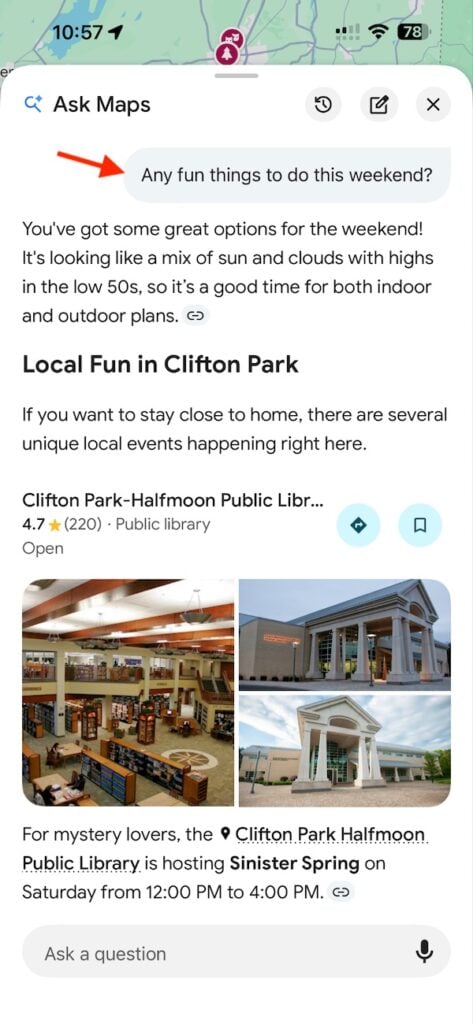
The "Ask Maps" feature allows consumers to interact with the platform using natural language queries, similar to engaging with a knowledgeable local guide. For instance, a user might ask, "Any fun things to do this weekend?" or "Where can I find a unique gift for a birthday?" In response, the AI analyzes the query and draws upon a vast dataset, including information from Google Business Profiles and business websites, to generate tailored suggestions. Early testing has shown that these responses can encompass a diverse range of local options, from workshops and markets to specialized retail stores and entertainment venues. This capability is particularly valuable for businesses that may not consistently rank for direct search terms but offer compelling experiences or products that align with broader user interests.
The Power of Conversational Discovery
Historically, consumers have relied on keyword-based searches within mapping applications. This often required them to have a clear idea of what they were looking for, such as "coffee shop near me" or "bookstore downtown." The introduction of "Ask Maps" shifts this paradigm. It enables a more fluid and exploratory discovery process, catering to what the article refers to as "low-intent queries." These are queries where the user has a general need or desire but hasn’t yet identified a specific solution or business.
Consider the example of a user asking, "Any fun things to do this weekend?" The AI, through "Ask Maps," can now proactively suggest activities like local art classes, farmer’s markets, pop-up events, or even live music performances at nearby venues. For a small pottery studio offering weekend workshops, this represents a direct pathway to reaching an audience that might not have actively searched for "pottery classes" but is open to creative experiences. Similarly, a boutique selling handcrafted jewelry could be recommended to someone looking for a "unique gift." This conversational approach democratizes visibility, moving beyond purely transactional search intent to encompass experiential and interest-based discovery.
Understanding the AI’s Data Sources: The Foundation for Visibility
To effectively leverage the "Ask Maps" feature, businesses must understand the primary data sources the AI utilizes. The article highlights two crucial pillars: Google Business Profile and a business’s own website.
Optimizing Your Google Business Profile: The Cornerstone of Local Discovery
Google Business Profile (GBP) serves as the foundational directory for local businesses within Google’s ecosystem, including Maps. The AI prominently pulls information from these profiles to generate responses. Therefore, a comprehensive and up-to-date GBP is paramount. Businesses should meticulously fill out every section of their profile, ensuring accuracy and detail. This includes:

- Accurate Business Information: Name, address, phone number, website, and operating hours are non-negotiable. Ensuring consistency across all online listings is vital for building trust and authority.
- Category Selection: Choosing the most relevant business categories helps the AI understand what the business offers.
- Services and Products: Detailed descriptions of services and product listings, including pricing where applicable, provide valuable context for the AI.
- Attributes: Highlighting key attributes such as "wheelchair accessible," "free Wi-Fi," "outdoor seating," or "offers gift cards" allows the AI to match businesses with specific user needs and preferences.
- Photos and Videos: High-quality visual content significantly enhances a business’s appeal and provides the AI with richer material to draw from.
- Reviews: Positive customer reviews build social proof and are often considered by the AI when making recommendations. Actively encouraging and responding to reviews is a best practice.
Furthermore, the "Updates" feature within Google Business Profile is a powerful tool for communicating time-sensitive information. Businesses can use this to announce upcoming sales, special events, product launches, or limited-time offers. The AI can then integrate these updates into its responses, making businesses appear more dynamic and relevant to current user queries. For example, if a local bakery announces a "Weekend Pastry Special" via an update, "Ask Maps" could potentially recommend this bakery to a user asking about "treats this weekend."
Enriching Your Website Content: Providing Depth for Deeper Connections
While GBP provides essential metadata, a business’s website offers the opportunity to provide much greater depth and detail. The article emphasizes that consumers ask "Maps about seemingly anything." To be discoverable by the AI, websites need to cater to this broad spectrum of potential inquiries. This means going beyond basic product listings and offering comprehensive information that addresses common customer questions and concerns.
Key areas to focus on for website content enrichment include:
- Detailed Product and Service Descriptions: Beyond just naming a product, describe its features, benefits, materials, dimensions, and potential use cases. For example, a clothing store could detail the fabric composition, care instructions, and styling suggestions for an item.
- Pricing Transparency: Including prices, even if approximate, helps users filter options and makes the business more accessible.
- Availability and Inventory: Clearly indicating whether products are in stock or can be made to order is crucial.
- Warranty and Return Policies: Providing clear information on warranties and return policies builds trust and reduces purchase friction.
- Testimonials and Case Studies: Genuine customer feedback and examples of how products or services have solved problems can be highly persuasive and informative for the AI.
- Answering Frequently Asked Questions (FAQs): A well-maintained FAQ section directly addresses common customer queries, providing the AI with ready-made answers.
- Blog Content and Guides: Publishing content that solves common consumer needs or addresses industry-specific problems can position a business as an authority and provide rich data for the AI. For instance, a gardening supply store could publish a blog post titled "Best Plants for Shady Gardens in [Your City]," which "Ask Maps" could then surface to a user inquiring about gardening advice.
By providing this level of detail, businesses equip the AI with the necessary context to make informed and relevant recommendations, effectively bridging the gap between a user’s broad inquiry and a business’s specific offerings.
Leveraging Events and Unique Offerings for Broader Reach
The "Ask Maps" feature also presents a significant opportunity for businesses to highlight unique events and market offerings, attracting shoppers who may not be actively seeking their specific products but are drawn to experiences. This is particularly beneficial for businesses that rely on foot traffic and local engagement.
Beyond the "Updates" feature in Google Business Profile, businesses can further promote their events through:
- Dedicated Event Pages on their Website: Creating specific, well-optimized pages for workshops, sales, or community gatherings provides the AI with detailed information about the event’s date, time, location, description, and any associated costs.
- Local Event Listing Sites: Submitting events to relevant local calendars and community websites can increase their discoverability and provide additional data points for the AI.
- Social Media Promotion: While direct AI integration from social media is complex, consistent promotion of events on platforms like Facebook and Instagram can drive traffic to website event pages or Google Business Profile, indirectly informing the AI.
Unique events like seasonal promotions, pop-up shops, or interactive workshops can capture the attention of consumers who are simply looking for something engaging to do. "Ask Maps" can serve as a powerful discovery engine for these types of offerings, introducing businesses to new audiences that might otherwise remain unaware of their existence. This is especially true for businesses that may not have the marketing budget to compete with larger, more established brands for direct search visibility.
The Broader Implications for Local Economies
The advent of "Ask Maps" signifies a crucial evolution in how consumers discover and interact with local businesses. In an era where e-commerce giants often dominate search results, this AI-driven feature offers a much-needed equalizer for brick-and-mortar establishments and local service providers.
Boosting Local Economies: By driving more localized discovery and foot traffic, "Ask Maps" has the potential to significantly boost local economies. It empowers small businesses to compete more effectively, fostering entrepreneurship and strengthening community ties. Consumers are increasingly seeking authentic, local experiences, and this feature aligns perfectly with that trend.
Shifting Marketing Strategies: The implications for local business marketing strategies are profound. While traditional SEO and paid advertising remain important, businesses must now prioritize optimizing their presence for conversational AI. This means a greater emphasis on rich content, accurate data, and engaging event promotion. The focus shifts from merely ranking for keywords to being a comprehensive and valuable resource that the AI can confidently recommend.
Data-Driven Insights: The performance of "Ask Maps" will likely provide businesses with valuable data on what types of queries lead to recommendations and, ultimately, to customer engagement. This data can inform future marketing efforts, product development, and customer service strategies.
The Future of Local Search: "Ask Maps" is not merely a new feature; it represents a fundamental shift in the user experience for local discovery. As AI continues to evolve, we can anticipate even more sophisticated ways for consumers to interact with their local environments through digital platforms. Businesses that adapt and embrace these changes will be best positioned to thrive in the evolving landscape of local commerce.
In conclusion, Google Maps’ "Ask Maps" feature is more than just a technological advancement; it is a powerful new avenue for local businesses to connect with potential customers. By focusing on comprehensive Google Business Profiles, enriching website content with detailed information, and strategically promoting unique events, businesses can harness this AI-driven tool to significantly enhance their visibility, drive foot traffic, and ultimately, achieve greater success in an increasingly competitive marketplace. This development is a clear indication that the future of local discovery is conversational, contextual, and deeply integrated with the AI capabilities of platforms like Google Maps.









