rifanmuazin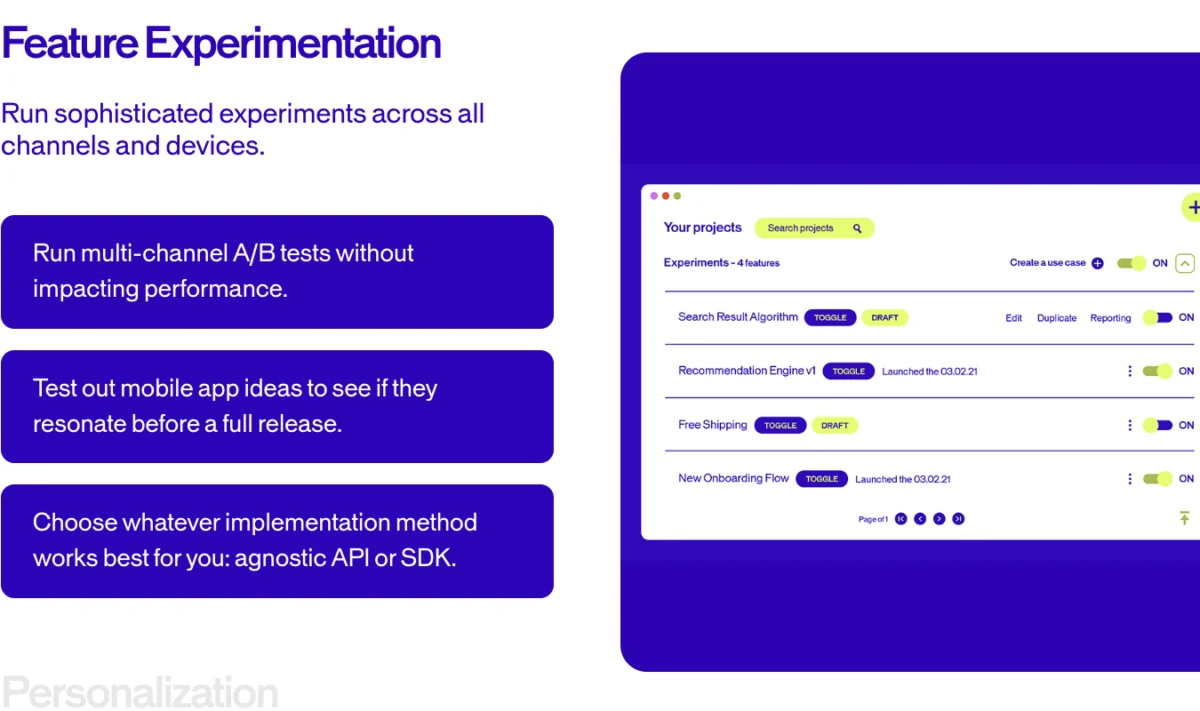
The global digital experience platform (DXP) market is currently undergoing a period of rapid transformation, driven by the sunsetting of legacy tools like Google Optimize and the increasing demand for sophisticated, AI-driven personalization. In this evolving landscape, two titans have emerged as the primary contenders for mid-market and enterprise-level dominance: AB Tasty and Optimizely. While both platforms offer robust split-testing capabilities, they represent fundamentally different philosophies regarding digital optimization. AB Tasty positions itself as an agile, user-centric solution designed for rapid experimentation and psychological targeting, whereas Optimizely has evolved into a comprehensive, engineering-heavy ecosystem built to manage the entire product lifecycle for global enterprises.
The Evolution of Digital Experimentation: A Market Overview
The shift from simple A/B testing to full-scale experience optimization has changed the requirements for modern marketing and product teams. Historically, Optimizely, founded in 2010 by Dan Siroker and Pete Koomen, was the pioneer that popularized web experimentation. However, following its acquisition by Episerver in 2020, the platform shifted its focus toward a broad Digital Experience Platform (DXP) model. This move opened a significant market gap for more agile, specialized tools.
AB Tasty, also founded in 2010 in France by Alix de Sagazan and Rémi Aubert, initially gained traction in the European market before expanding globally. By focusing on the intersection of user psychology and data, AB Tasty carved out a niche for brands that require sophisticated personalization without the heavy technical overhead associated with legacy enterprise suites. Today, the choice between these two platforms is often dictated not just by features, but by an organization’s technical maturity, team structure, and long-term digital strategy.
Core Experimentation Capabilities and Methodologies
At the heart of both platforms is the ability to conduct controlled experiments, yet the execution styles vary significantly. AB Tasty is engineered for accessibility. Its primary strength lies in its "low-code" approach, featuring a powerful visual editor that allows marketers to modify UI elements, swap images, and alter copy without involving a developer. This speed-to-market is critical for growth teams operating in fast-paced retail or media environments.
Beyond basic A/B testing, AB Tasty offers "sequential testing alerts." This statistical feature is designed to protect budgets by automatically flagging underperforming variations early in the experiment cycle. By reducing the "noise" of failing tests, teams can reallocate traffic to winning variations more efficiently.
Optimizely, conversely, is built for depth and complexity. While it offers a visual editor, its true power is realized through its Server-Side testing and Full Stack capabilities. Optimizely is designed to handle multi-armed bandit testing—an advanced form of experimentation that uses machine learning to dynamically allocate traffic to the best-performing variation in real-time. For large-scale organizations like Microsoft or eBay, which require experimentation across backend logic, mobile apps, and interconnected IoT devices, Optimizely’s infrastructure provides a level of scalability that few competitors can match.
Personalization and the Rise of Psychological Targeting
As conversion rate optimization (CRO) matures, personalization has moved from a "nice-to-have" feature to a core requirement. AB Tasty has differentiated itself through "EmotionsAI," a proprietary technology that segments users based on their emotional needs and psychological profiles. Rather than relying solely on demographic data (location, device, or browser), EmotionsAI analyzes navigation patterns to determine if a user is motivated by "reassurance," "urgency," or "innovation."
This allows brands to deliver hyper-personalized experiences. For instance, a "reassurance-seeking" customer might be shown trust badges and extended warranty information, while an "impulse" shopper sees a countdown timer. This tight integration of AI-driven psychology into the experimentation workflow is a hallmark of the AB Tasty philosophy.
Optimizely approaches personalization through the lens of data orchestration and audience management. Within the Optimizely ecosystem, personalization is a thread that runs through the Content Management System (CMS), the experimentation engine, and the data platform. It allows for the creation of highly reusable audience segments that can be deployed across multiple channels. For an enterprise with a complex multi-channel strategy—spanning email, web, and in-app experiences—Optimizely provides a unified "source of truth" for personalization, though it often requires a more extensive data integration process to function at peak capacity.
Feature Management: Managing the Product Lifecycle
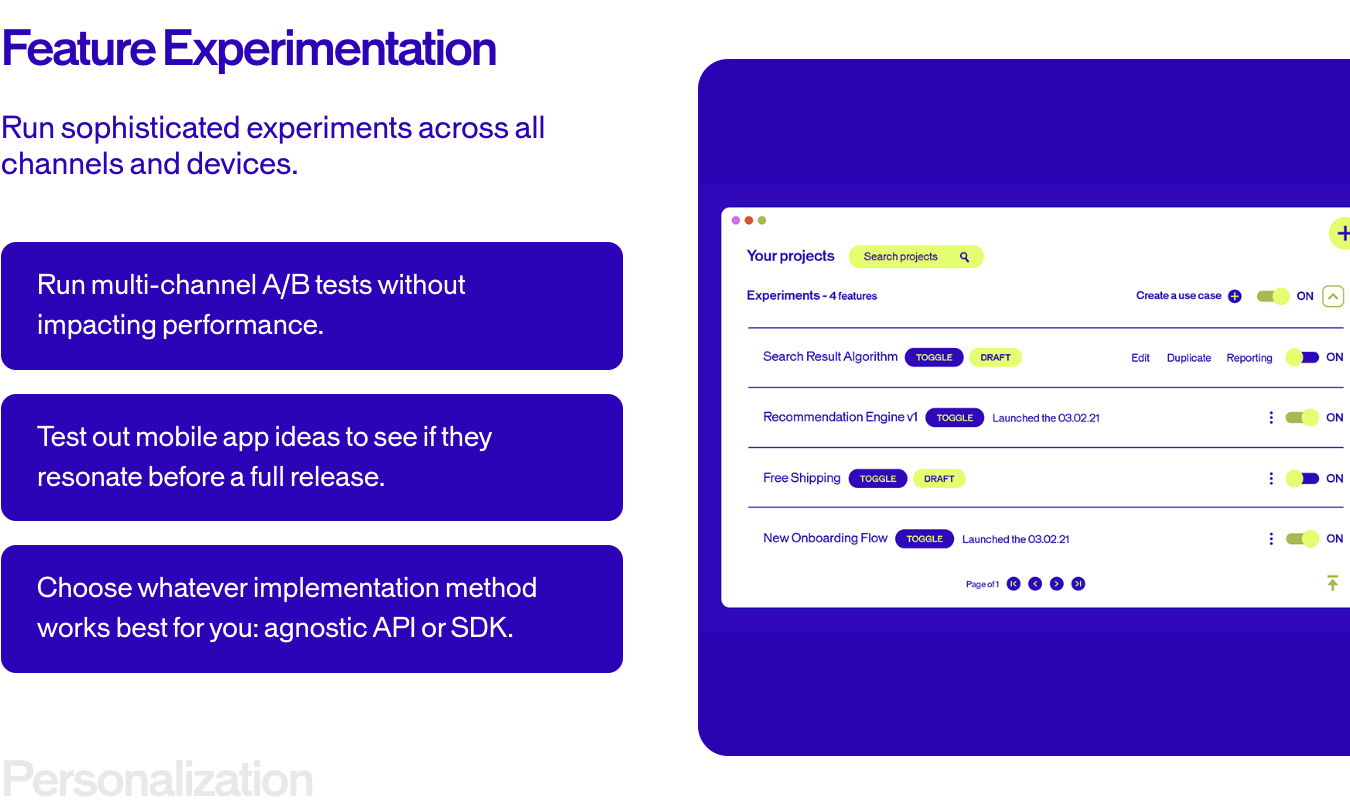
One of the most significant points of divergence between the two platforms is how they handle feature management and product rollouts. Optimizely treats feature flagging as a core component of the development process. Its feature management tools allow engineering teams to perform "canary releases," where a new feature is rolled out to a small percentage of users to monitor performance and stability before a full launch. This "test-and-rollout" workflow integrates experimentation directly into the DevOps pipeline, making it a favorite for Product Managers and CTOs.
AB Tasty also offers feature flagging, but it is primarily positioned as a support mechanism for experimentation rather than a standalone product release system. It excels in "cross-team workflows," where marketing and product teams need to collaborate on a release. For example, a product team can use AB Tasty to release a new checkout flow while the marketing team simultaneously tests different promotional banners within that flow. While highly effective for collaborative environments, it lacks the deep backend governance and advanced deployment controls found in Optimizely’s dedicated feature experimentation suite.
The AI Frontier: EmotionsAI vs. Opal AI
Artificial Intelligence has become the primary battleground for DXP providers. AB Tasty’s AI strategy is focused on "better inputs"—using EmotionsAI to understand the why behind user behavior to improve the quality of experiments. While AB Tasty does provide AI-assisted setup and insights, its primary value proposition remains the psychological segmentation of the audience.
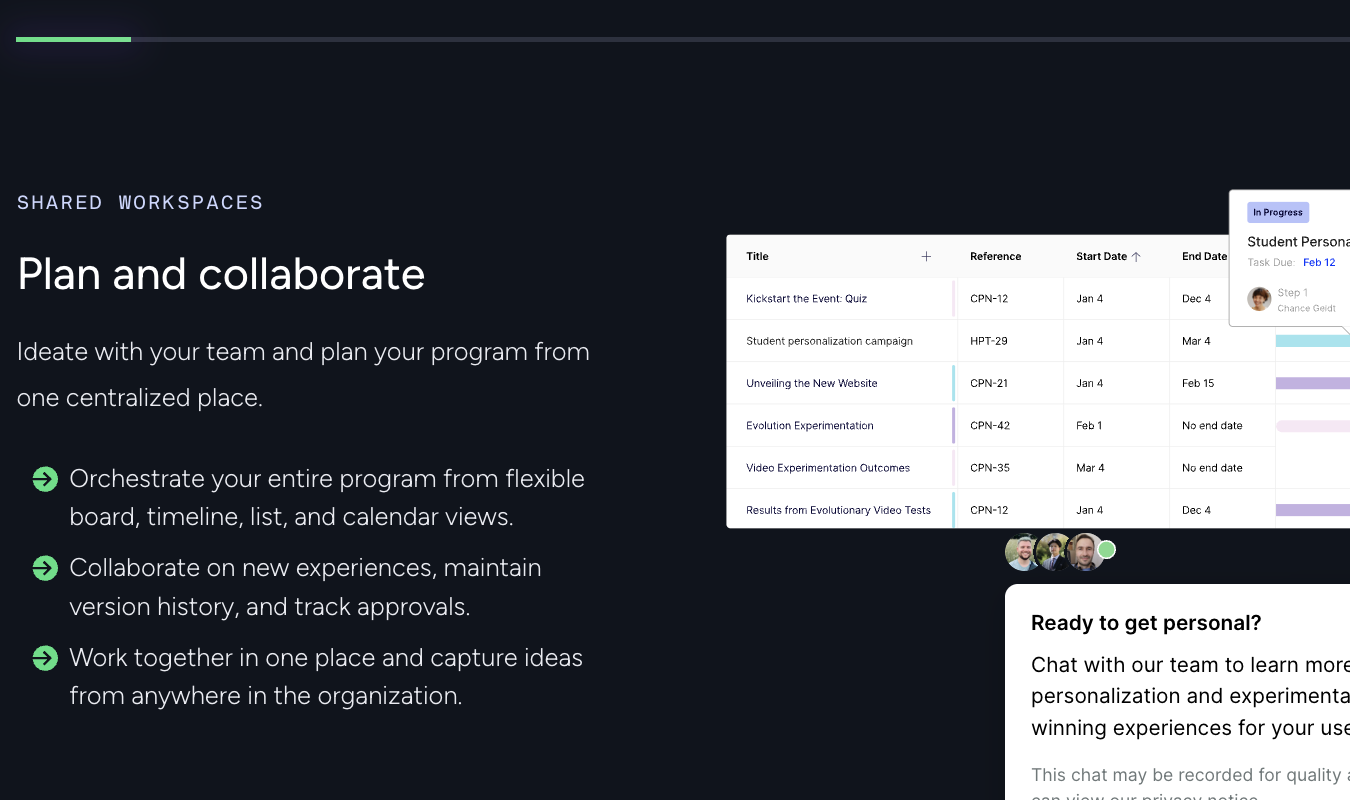
Optimizely has taken a more holistic approach with the introduction of "Opal," an AI assistant embedded across the entire platform. Opal is designed to act as a co-pilot for the experimentation team. It can:
- Summarize complex test results into plain-language executive reports.
- Generate ideas for new experiment variations based on historical data.
- Draft copy and content for different audience segments.
- Answer natural-language questions about data trends within the platform.
For organizations that struggle with the "analysis paralysis" often associated with big data, Optimizely’s Opal AI offers a significant advantage by automating the interpretation of results and suggesting clear next steps.
Implementation, Technical Overhead, and Team Requirements
The "total cost of ownership" for these tools extends far beyond the subscription fee. AB Tasty is widely considered the more "user-friendly" option for teams with limited developer resources. Its implementation typically involves a simple JavaScript snippet, and the visual editor allows marketing teams to be largely self-sufficient. This reduces the internal "friction" of launching a test, as teams do not have to wait for a development sprint to make UI changes.
Optimizely requires a more significant technical investment. To unlock its full potential, particularly in feature experimentation and server-side testing, teams must integrate various Software Development Kits (SDKs) into their codebase. This necessitates a close partnership between marketing and engineering. While this creates a higher barrier to entry, it results in a more robust and secure experimentation environment that is less prone to "flicker" (the momentary flash of original content before the variation loads) and other client-side performance issues.
Pricing Structures and Strategic Value
Neither AB Tasty nor Optimizely offers a transparent, self-serve pricing model; both operate on custom, quote-based enterprise contracts.
AB Tasty is generally seen as providing high value for mid-market and large enterprises that want an all-in-one bundle of experimentation, personalization, and basic feature management. Its pricing is often based on traffic volume and the specific modules required.
Optimizely’s pricing is modular, allowing enterprises to pay for specific products like "Web Experimentation," "Feature Experimentation," or the "Content Management System." However, when multiple modules are combined to create a full DXP, the cost can escalate significantly. Optimizely is positioned as a long-term infrastructure investment for organizations that view digital experience as their primary competitive advantage.
Market Implications and Final Verdict
The decision between AB Tasty and Optimizely ultimately depends on the organization’s "Experimentation Maturity Model."
Choose AB Tasty if:
- Your primary goal is marketing agility and rapid conversion rate optimization.
- Your team values psychological insights and emotional targeting.
- You have limited developer resources and need a low-code/no-code visual editor.
- You want a unified, easy-to-use platform that combines testing and personalization out of the box.
Choose Optimizely if:
- You are a large-scale enterprise requiring a centralized Digital Experience Platform.
- Your experimentation strategy is driven by product and engineering teams.
- You need advanced feature management, canary releases, and server-side testing.
- You require a sophisticated AI assistant (Opal) to automate analysis and content generation across a global organization.
As the industry moves toward a "privacy-first" future, both companies are investing heavily in server-side technologies and first-party data integrations. The competitive tension between AB Tasty’s psychological agility and Optimizely’s enterprise scale continues to drive innovation in the space, ensuring that digital teams have more powerful tools than ever to understand and influence the customer journey. For those seeking an alternative that bridges the gap between behavior analytics and testing, tools like Crazy Egg offer a more accessible entry point, but for the enterprise-grade "clash of the titans," AB Tasty and Optimizely remain the definitive choices for 2024 and beyond.

 Asro
Asro
 Dwi Wanna