rifanmuazin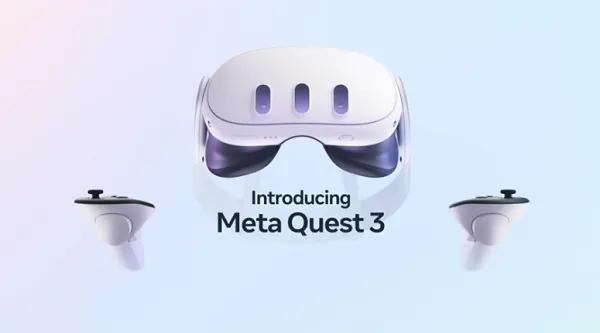
Meta Platforms, Inc. has announced substantial price increases for its Meta Quest VR headset lineup, specifically impacting the Meta Quest 3 and Meta Quest 3S units. The company attributes these adjustments, ranging from $50 to $100 per device, to a significant rise in hardware manufacturing costs, particularly for critical components like memory chips. This move, however, unfolds against a backdrop of Meta’s broader strategic reorientation, which has seen a pronounced shift in focus and investment away from its ambitious metaverse initiatives and towards the burgeoning field of artificial intelligence. The timing and magnitude of these price hikes are prompting industry observers to question the long-term commitment and strategic positioning of virtual reality within Meta’s evolving technological ecosystem.
Details of the Price Adjustments
Effective immediately, the Meta Quest 3, previously priced at $500, will now retail for $599. The Meta Quest 3S, a more budget-friendly option, will also see its price tags increase across its storage variants. The 128GB version of the Quest 3S, which was available for $300, will now cost $349. Meanwhile, the 256GB model of the Quest 3S will experience a similar increase, moving from an implied previous price point (often around $400 based on standard tiering) to $449.99. These adjustments represent increases of 10% to 20% across the affected models, potentially impacting consumer accessibility and market adoption for Meta’s flagship VR hardware.
In an official statement released by the company, Meta elaborated on the rationale behind these changes: "We’re making this change because the cost of building high-performance VR hardware has risen significantly. The global surge in the price of critical components — specifically memory chips — is impacting almost every category of consumer electronics, including VR. To keep delivering the quality of hardware, software, and support you expect from the Quest platform, we need to adjust our pricing." This explanation points to macro-economic factors, including persistent global supply chain complexities, inflationary pressures, and a tightened market for essential semiconductor components. The cost of raw materials, energy, and logistics has seen consistent upward trends, making it increasingly challenging for consumer electronics manufacturers to maintain previous price points without compromising product quality or profitability margins.
The Metaverse Dream and Reality Labs’ Financial Burden
To fully appreciate the significance of these price hikes, it is crucial to contextualize them within Meta’s grand vision for the metaverse. In October 2021, Facebook famously rebranded itself as Meta Platforms, Inc., signaling a monumental strategic pivot towards building a persistent, interconnected virtual world – the metaverse. CEO Mark Zuckerberg championed this vision as the next frontier of computing, promising immersive social experiences, new avenues for commerce, and transformative changes in work and entertainment. The company subsequently poured billions into its Reality Labs division, responsible for developing VR and AR hardware and software, including the Quest headsets and the Horizon Worlds platform.
However, this ambitious undertaking has come at a considerable financial cost. Since its inception, Reality Labs has consistently reported massive operating losses. For instance, in Q4 2023 alone, Reality Labs posted an operating loss of $4.65 billion, contributing to a staggering full-year loss of $16.12 billion for the division. These cumulative losses, which have exceeded $45 billion since Meta’s rebrand, have drawn scrutiny from investors and analysts alike, who questioned the pace of return on investment and the viability of mass metaverse adoption in the near term. Despite significant marketing efforts and technological advancements in its hardware, the metaverse, particularly platforms like Horizon Worlds, struggled to gain widespread consumer traction or demonstrate a clear "killer app" that would compel mainstream users to embrace virtual reality wholeheartedly. Reports often highlighted low user retention, limited engagement, and a generally underdeveloped user experience within Meta’s flagship metaverse environment.
A Chronology of Strategic Reorientation
The recent price adjustments for Quest headsets appear to be a critical juncture in a series of developments signaling a gradual but discernible shift in Meta’s core strategic priorities. The timeline of this reorientation reveals a company recalibrating its focus in response to market realities and emerging technological opportunities:
- 2014: Facebook acquires Oculus VR for approximately $2 billion, marking its foundational entry into the virtual reality space.
- October 2021: Facebook rebrands to Meta Platforms, Inc., officially announcing its pivot to building the metaverse and investing heavily in Reality Labs. This period sees a surge in VR hardware development and the promotion of Horizon Worlds.
- Throughout 2022-2023: Reality Labs continues to incur significant financial losses. Public skepticism grows regarding the metaverse’s immediate potential, and reports emerge detailing challenges with user engagement and retention in Horizon Worlds.
- Late 2023 – Early 2024: Mark Zuckerberg’s public discourse increasingly shifts towards artificial intelligence, emphasizing its transformative potential and Meta’s commitment to becoming a leader in the field.
- Recent Months (as per original article): Meta reportedly announced plans to "shut down" its Horizon Worlds VR social element, a move widely interpreted as a significant step back from its original metaverse vision. While the company later clarified that it would continue to support existing Horizon users, it also stated that the platform would no longer receive updates and would eventually become unstable. This nuanced clarification still underscored a de-prioritization of the platform’s active development.
- Concurrent with Horizon Worlds announcements: Meta publicly reiterates its focus on developing advanced AI technologies, including next-generation AI glasses and augmented reality (AR) versions, exemplified by projects like Project Aria.
- Early 2024: Meta commits an unprecedented $600 billion (as reported in the original article, though this figure is often cited as $60 billion over three years by some sources, highlighting the scale of investment in either case) into AI infrastructure over the next three years. This massive investment aims to build foundational AI capabilities, acquire advanced GPUs, and expand data center capacity to pursue "virtual superintelligence."
This chronological progression illustrates a clear pivot, with AI now occupying a more central role in Meta’s long-term strategic vision, seemingly overshadowing the immediate pursuit of a fully realized metaverse.
Analyzing the Strategic Pivot: From Metaverse to AI
The shift from an all-encompassing metaverse ambition to a pronounced focus on artificial intelligence is multi-faceted. Several factors contribute to this strategic rebalancing:
- Market Readiness and Adoption: While VR technology has advanced, mass consumer adoption remains a challenge. High hardware costs, the need for dedicated space, and a lack of compelling, widely accessible content have hindered widespread appeal. The metaverse, as initially envisioned, required a significant paradigm shift in user behavior and technological maturity that has not yet materialized.
- Technological Hurdles for Immersive Experiences: Building a truly persistent, interoperable, and high-fidelity metaverse demands immense computational power, advanced networking, and sophisticated content creation tools. These challenges proved more formidable and expensive than initially anticipated, extending the timeline for achieving Meta’s grand vision.
- The Immediate Impact and Tangibility of AI: In contrast, artificial intelligence has demonstrated immediate, tangible applications across various industries, including advertising, content moderation, personalized recommendations, and creative tools. For Meta, AI offers direct improvements to its core social media platforms (Facebook, Instagram, WhatsApp), enhancing user experience, engagement, and advertising effectiveness – all critical for its primary revenue streams.
- Competitive Landscape: The global race for AI supremacy is intense, with tech giants like Google, Microsoft, and OpenAI making rapid advancements. Meta cannot afford to fall behind in this crucial area, especially given AI’s potential to redefine computing and user interaction. Investing heavily in AI infrastructure and research is a strategic imperative to maintain its competitive edge and secure its future relevance.
- Investor Sentiment: Investors have shown increasing enthusiasm for AI-driven growth stories. A strategic shift towards AI can be seen as a move to reassure shareholders and capitalize on the current market excitement, potentially boosting Meta’s stock performance and investor confidence. The billions in Reality Labs losses stood in stark contrast to the perceived immediate value of AI.
Implications for the VR Market and Consumers
The price hikes for Quest headsets, coupled with Meta’s strategic reorientation, carry significant implications for the broader VR market and consumers:
- Impact on Accessibility: Higher prices for VR headsets could further dampen mass market adoption. VR is still considered a niche technology for many, and increasing the barrier to entry makes it less accessible to casual users or those on a budget, potentially slowing the growth of the overall VR user base.
- Competitive Dynamics: Meta has historically held a dominant market share in the standalone VR segment, largely due to its aggressive pricing strategy and accessible hardware. These price increases could open opportunities for competitors like Pico (ByteDance) or other PC VR manufacturers to gain ground, especially if they can offer more competitive pricing or superior experiences. The high-end market, now significantly influenced by Apple’s Vision Pro, operates on a different pricing tier, but Meta’s mid-range adjustments are still keenly watched.
- Developer Ecosystem: A perceived reduction in Meta’s primary focus on VR could influence developer sentiment. Developers might become more cautious about investing resources into building VR content for the Quest platform if they anticipate a shrinking user base or less aggressive platform development from Meta. This could, in turn, slow down the growth of high-quality VR content.
- Consumer Perception: For consumers, these price increases, especially when viewed alongside the shifting strategic narrative, might fuel concerns about Meta’s long-term commitment to VR. It could lead to questions about the longevity of support for existing hardware and the pace of future innovation in the Quest line.
Meta’s Official Stance and Future Outlook
Despite the clear strategic pivot towards AI, Meta has maintained an official stance of continued commitment to virtual reality. In its announcement regarding the price increases, the company affirmed, "We remain committed to investing in VR and leading the category because we believe this is the future of computing. We have a long-term roadmap full of new hardware and experiences, and this adjustment helps us stay on track to deliver that future."
Reconciling this statement with the operational changes, such as the de-prioritization of Horizon Worlds, and the massive AI investments, requires careful interpretation. It is plausible that Meta’s "commitment" to VR is evolving. Rather than being the singular, all-consuming focus of the company, VR may now be viewed as a complementary technology within a broader ecosystem increasingly powered by AI. VR could serve as an immersive interface for AI-driven experiences, or a platform for certain applications, while AI takes the lead in foundational technological development and revenue generation. The "long-term roadmap" for VR might now be more integrated with AR (augmented reality) and AI, perhaps envisioning a future where AI glasses provide seamless, context-aware digital overlays in the real world, eventually converging with full VR immersion.
The significant investment in AI infrastructure, including advanced GPUs and data centers, is not exclusively for AI software development. These powerful computing resources are also crucial for rendering complex virtual worlds, processing vast amounts of spatial data for AR, and enabling sophisticated virtual interactions. Therefore, Meta’s AI investments could indirectly benefit its long-term VR/AR ambitions, even if the immediate focus is on AI’s more conventional applications.
Conclusion
Meta’s decision to increase the prices of its Quest VR headsets marks a pivotal moment, reflecting both economic realities and a profound strategic reorientation within the tech giant. While the company cites rising hardware costs as the direct cause, the move is undeniably intertwined with its accelerating pivot towards artificial intelligence. The colossal investments in AI infrastructure, coupled with the scaled-back ambitions for platforms like Horizon Worlds, suggest that AI has now taken precedence over the metaverse as Meta’s primary long-term bet.
The implications for the VR market are significant, potentially affecting consumer adoption, competitive dynamics, and developer confidence. While Meta publicly reaffirms its commitment to VR, the nature of that commitment appears to be shifting, positioning VR as a component within a larger, AI-driven future rather than the standalone destination it once was. The ultimate success of this rebalancing act will hinge on Meta’s ability to effectively integrate AI with its immersive technologies, demonstrating how virtual and augmented realities can thrive as powerful interfaces in an increasingly intelligent digital world. The journey to the "future of computing" for Meta is clearly still being written, with AI now holding the pen.