
 rifanmuazin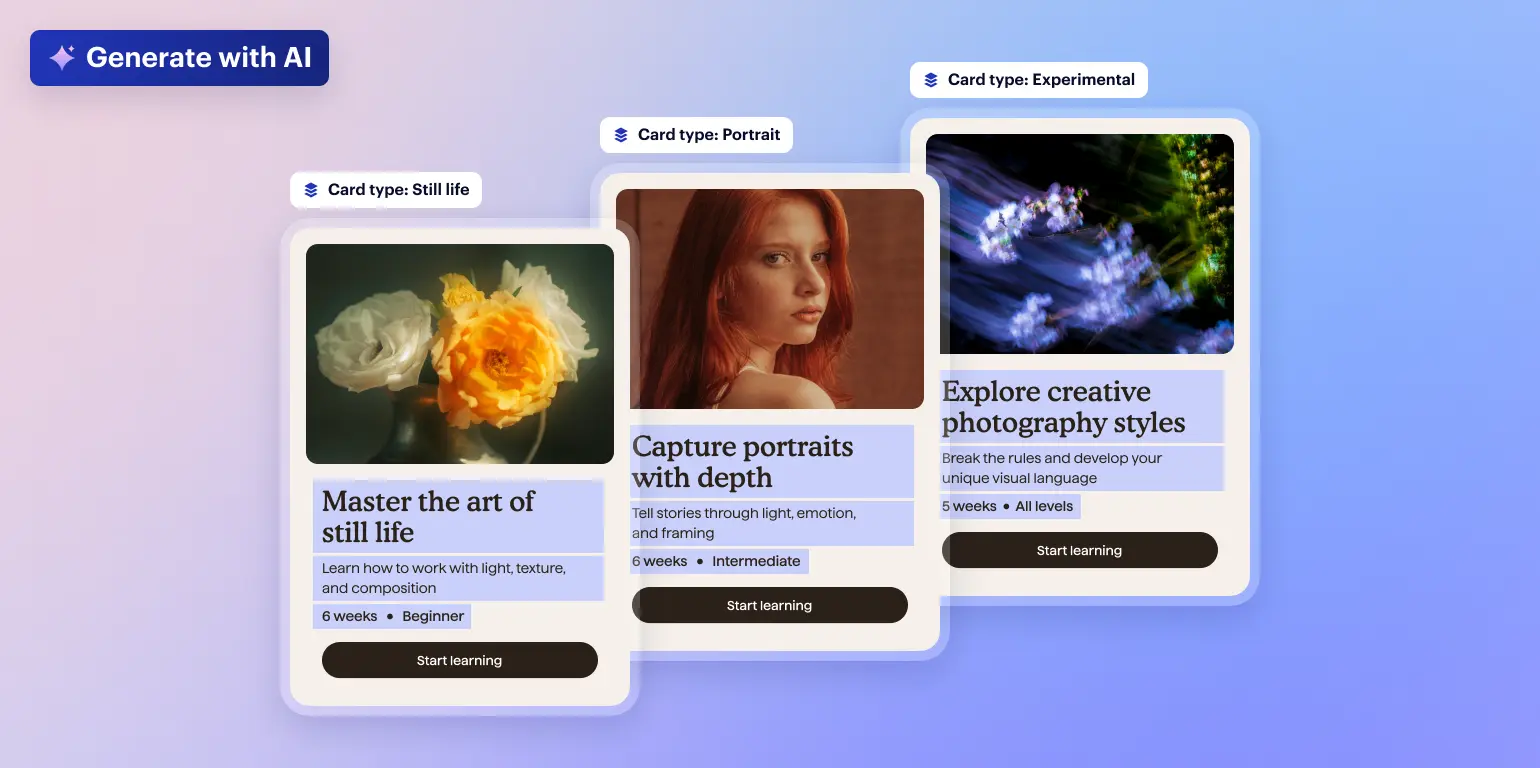
Instapage, a leading platform in the post-click automation space, has officially announced the release of AI Collections, a sophisticated new feature set designed to automate the creation and management of personalized landing pages at an unprecedented scale. This technological advancement addresses one of the most persistent bottlenecks in digital marketing: the labor-intensive process of tailoring individual web experiences for diverse audience segments. While the marketing industry has long acknowledged that personalization is a primary driver of conversion rates and return on ad spend (ROAS), the operational reality of building hundreds of unique pages has frequently proven prohibitive for even the most well-resourced teams. AI Collections seeks to resolve this by leveraging generative artificial intelligence to transform a single template into a vast array of dynamic, high-performing assets in a fraction of the time previously required.
The Personalization Gap in Modern Digital Marketing
For over a decade, digital marketers have operated under the mantra that "relevance is king." Data from global management consulting firm McKinsey & Company indicates that 71% of consumers now expect companies to deliver personalized interactions, and 76% get frustrated when this does not happen. Furthermore, companies that excel at personalization generate 40% more revenue from those activities than average players. Despite these compelling statistics, the "execution gap" remains wide.
Traditionally, creating personalized pages for a multi-channel campaign involved a series of manual, repetitive tasks. A marketing team would have to duplicate a base page, manually edit headlines, swap images, update call-to-action (CTA) buttons, and manage the resulting URLs in complex, often error-prone spreadsheets. As campaign complexity grew—incorporating dozens of keywords, multiple geographic locations, and various buyer personas—the workload scaled linearly, leading to "creative fatigue" and the eventual deprioritization of personalization in favor of generic, "one-size-fits-all" landing pages. AI Collections is positioned as a direct response to this systemic inefficiency, offering a workflow that Instapage claims is up to three times faster than manual methods.
Technical Framework: How AI Collections Operates
The architecture of AI Collections shifts the paradigm from individual page editing to a centralized, database-driven management model. At its core, the feature utilizes a "Content Table" structure that functions as the central nervous system for a campaign.
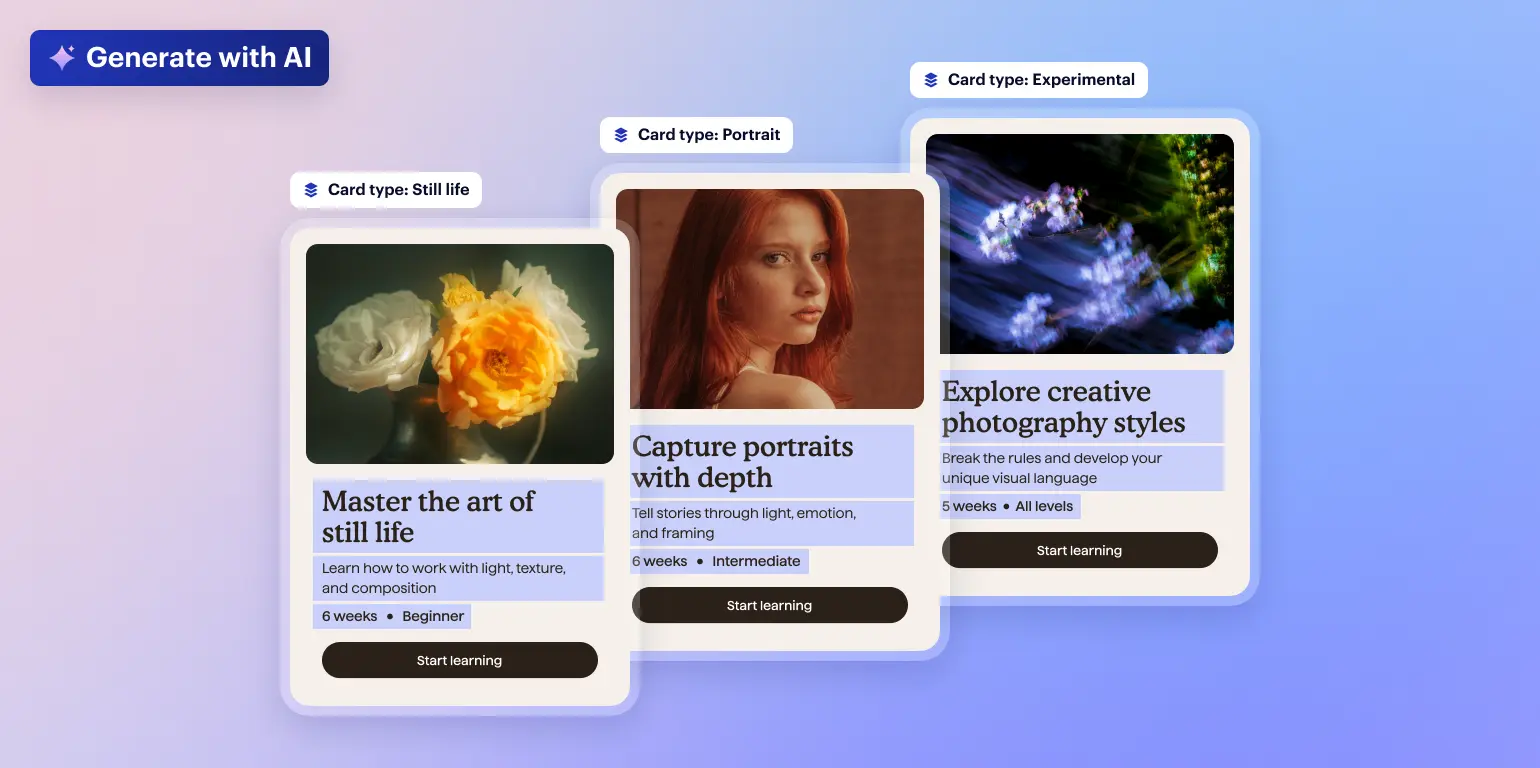
The process begins with the creation of a single "Collection Template." Rather than requiring a designer to manually place dynamic tags throughout the page code, the AI Collections system uses an "AI Placeholder" tool. This tool analyzes the visual and structural layout of the page to identify optimal locations for dynamic content. Once the layout is analyzed, the AI generates text placeholders that serve as variables.
Following the template setup, the user moves to the content table. In this environment, each row represents a unique page within the collection, while each column represents a specific content variable—such as a headline, sub-headline, or product description. This structured approach allows marketers to manage the content of hundreds of pages from a single interface. Instead of navigating through a maze of separate files, a marketer can update a value in the table, and that change is reflected instantly across the corresponding page in the collection.
The true power of the feature lies in its integration with generative AI. Marketers are no longer required to write every iteration of copy themselves. By providing a prompt that includes the target audience, the specific marketing goal, and the core brand messaging, the AI can populate the content table with publish-ready copy tailored to each specific entry. When combined with Instapage’s "Fluid Grid Blocks"—a responsive design technology that allows page elements to adjust automatically to varying text lengths—the system ensures that the visual integrity of the page remains intact regardless of the content generated.
A Chronology of Landing Page Evolution
To understand the significance of AI Collections, it is necessary to view it within the broader timeline of web development and marketing technology.
- The Static Era (1990s–Early 2000s): Landing pages were hard-coded HTML files. Personalization was virtually non-existent, and changes required developer intervention.
- The CMS and Template Era (Mid-2000s–2010): Content Management Systems (CMS) allowed non-technical users to edit pages. However, scaling remained difficult as each page still required individual management.
- The Visual Builder Era (2010–2020): Platforms like Instapage pioneered drag-and-drop interfaces, significantly lowering the barrier to entry for designers. A/B testing became standard, but the manual duplication of pages for different audiences remained the primary method for personalization.
- The Dynamic Text Replacement (DTR) Era (2015–Present): Basic dynamic text allowed marketers to swap out keywords based on search queries. While effective for PPC, it was limited in its ability to change the broader narrative or layout of a page.
- The AI Orchestration Era (2024–Future): With the launch of AI Collections, the industry moves into a phase where AI does not just assist in writing copy but manages the entire lifecycle of page creation, layout adjustment, and content synchronization across massive datasets.
Market Implications and Data-Driven Insights
The introduction of AI-driven collection management arrives at a critical juncture for the advertising industry. As privacy regulations like GDPR and CCPA, along with the phasing out of third-party cookies, make off-site targeting more difficult, the importance of the "on-site" experience has skyrocketed. First-party data utilization and immediate relevance upon clicking an ad are now the primary levers for maintaining low Customer Acquisition Costs (CAC).
Industry analysts suggest that the move toward automated personalization will have several key impacts:
- Reduction in Overhead: By automating the rote tasks of page duplication and copy editing, marketing departments can reallocate human capital toward high-level strategy and creative direction.
- Improved Quality Score and Ad Rank: Search engines and social platforms reward high-relevance landing pages with better quality scores. AI Collections allows for a 1:1 match between ad copy and landing page content, which typically results in lower Cost-Per-Click (CPC).
- Agility in Testing: Traditionally, testing a new value proposition across 50 segments would take weeks of preparation. With AI Collections, such a test can be deployed in minutes, allowing for a much faster "feedback loop" in growth marketing.
Industry Reactions and Expert Perspectives
While Instapage has been the primary driver of this specific feature launch, the broader MarTech community has signaled a strong shift toward "Generative UI." Industry experts note that the traditional "web page" is increasingly being viewed as a fluid set of components rather than a static document.
"The challenge has always been the ‘middle mile’ of marketing," says one independent digital strategy consultant. "We have incredible tools for targeting (the first mile) and great tools for analytics (the last mile). But the actual experience the user hits—the landing page—has been the bottleneck. Tools that can programmatically generate these experiences based on intent data are the logical next step."
Early adopters of the AI Collections beta have reportedly observed significant improvements in campaign launch speeds. Large-scale agencies, which often manage thousands of landing pages for diverse clients, are expected to be the primary beneficiaries, as the tool allows them to scale their services without a proportional increase in headcount.
Future Outlook: The End of the Generic Web
The launch of AI Collections suggests a future where the "generic" landing page may become obsolete. As AI becomes more adept at understanding user intent and context, the expectation for every digital touchpoint to be hyper-relevant will only increase. For Instapage, this release is a strategic move to solidify its position in an increasingly competitive market where platforms like Unbounce, Hubspot, and various "headless" CMS providers are also vying for the attention of performance-driven marketers.
By focusing on the "Collection" as the unit of management rather than the "Page," Instapage is betting on a future where marketing is managed through data structures and AI prompts. This shift reflects a broader trend in software where the interface is becoming secondary to the underlying data and the AI’s ability to manipulate it.
Conclusion
AI Collections represents a significant milestone in the democratization of high-level marketing technology. By lowering the technical and temporal barriers to personalization, Instapage is enabling mid-market companies to execute at the same level of sophistication as global enterprises with massive internal engineering teams. As the feature rolls out to the general public—starting with a 14-day free trial for new users—the industry will be watching closely to see how this automation affects conversion benchmarks and the broader landscape of digital advertising. The era of manual page management is rapidly drawing to a close, replaced by an automated, AI-driven approach that promises to deliver the right message to the right user at the right time, every time.








