rifanmuazin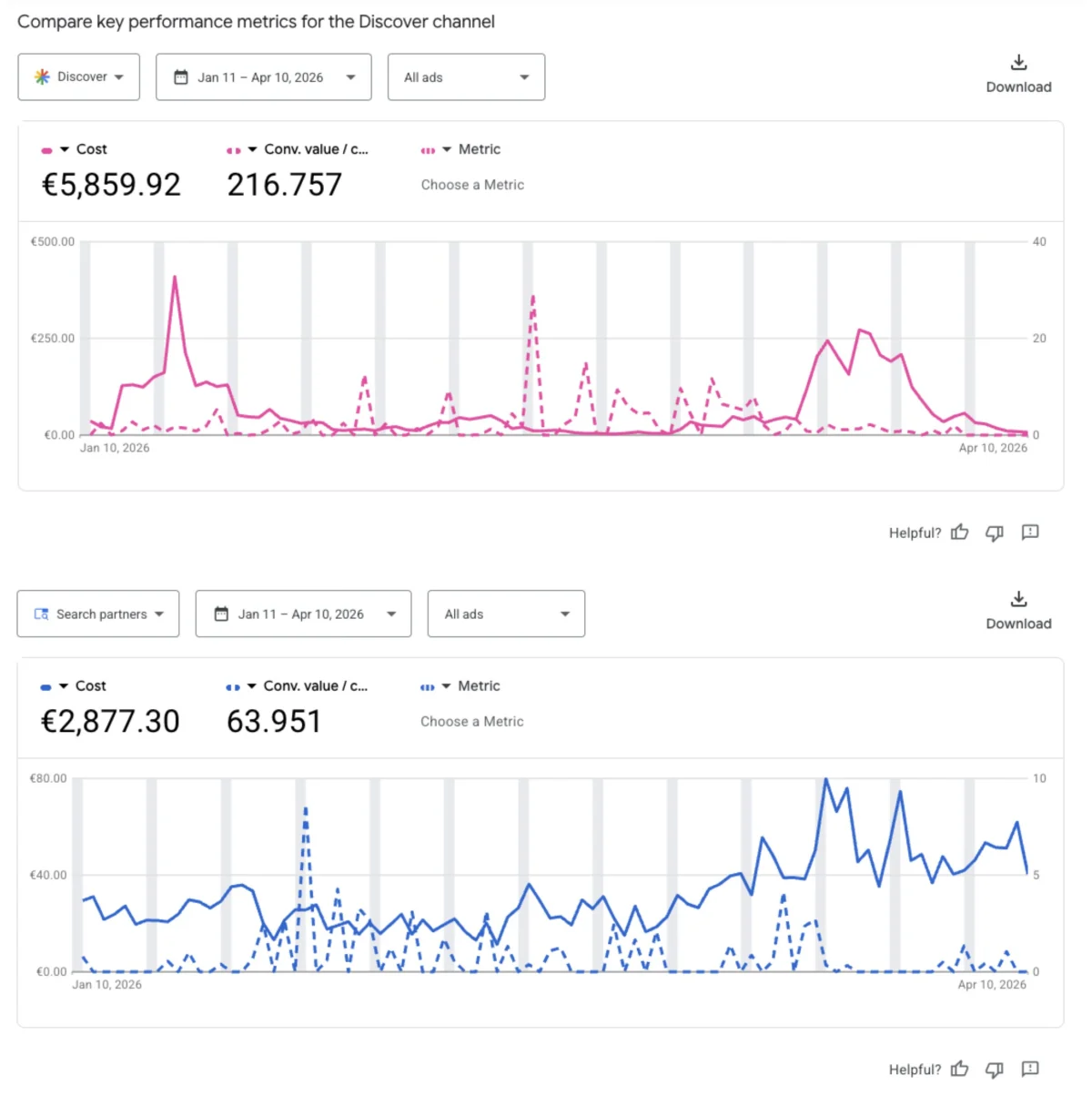
Unveiling the New Channel Performance Report
The latest iteration of the channel performance report presents a dynamic visualization of spend over time for individual channels contributing to a PMax campaign. This granular insight contrasts sharply with previous, often aggregated data, offering a more transparent look into how Google’s automated systems allocate budget across diverse platforms like Search, Display, YouTube, Gmail, Discover, and Maps. The update was brought to wider attention by Andrew Lolk, a prominent figure in the PPC community, who shared a screenshot on X (formerly Twitter). Lolk highlighted the feature’s utility, stating, "you can click into channel performance on the insights page and see spend over time per channel." He further emphasized its importance, particularly for campaigns heavily reliant on PMax, noting, "Super useful for checking if a high-spend channel is consistent or just spiking. For anyone running primarily PMax, this should be a staple now." This sentiment underscores a long-standing demand from advertisers for greater transparency within Google’s increasingly automated advertising ecosystem. The update has also been noted by other industry experts, with coverage appearing on platforms like Search Engine Land and in video analyses.
The Evolution of Performance Max and the Quest for Transparency
To fully appreciate the significance of this update, it is essential to understand the context of Google’s Performance Max campaigns and the ongoing dialogue surrounding their transparency. Performance Max, or PMax, was first introduced in beta in 2020 and rolled out globally in November 2021, designed to be Google’s fully automated, goal-based campaign type. Its promise was to maximize conversion value across all Google advertising channels by leveraging Google’s AI and machine learning capabilities. Advertisers simply provide their campaign goals, budget, assets (text, images, videos), and target audiences, and PMax automatically finds the best-performing combinations and placements.
While PMax delivered on its promise of automation and often strong performance for many advertisers, it quickly garnered a reputation as a "black box" due to its inherent lack of granular reporting. Unlike traditional campaign types where advertisers could meticulously dissect performance by keyword, placement, or audience segment, PMax offered a more consolidated view. This approach, while efficient, left many digital marketers feeling disempowered, unable to answer fundamental questions like:
- Which specific channels are driving the most conversions?
- How much budget is actually being allocated to Search versus YouTube?
- Are there any wasted spends on underperforming channels within the automated mix?
- Why did performance suddenly dip or surge?
This opacity was a significant point of contention. Digital marketing professionals, who are often tasked with optimizing budgets and justifying expenditures to clients, found it challenging to explain the intricacies of PMax performance without deeper insights. The absence of detailed channel-level spend data made it difficult to diagnose issues, identify opportunities, or provide robust explanations for campaign outcomes. This created a trust deficit for some, as they had to place complete faith in Google’s algorithms without fully understanding the underlying mechanics of budget distribution.
A Chronology of Transparency Enhancements
Google has not been entirely deaf to advertiser feedback regarding PMax transparency. The journey towards more insightful reporting has been gradual, marked by several incremental updates:
- Initial Launch (Late 2021): PMax launched with very limited reporting, primarily focusing on overall campaign performance metrics (conversions, cost-per-conversion, conversion value).
- Early Channel Group Reports (2022): Google began to introduce some aggregated data, showing performance broken down by broad channel groups (e.g., Search, Display, YouTube). However, these reports often lacked the granular detail, historical context, or spend allocation necessary for deep analysis. They typically provided a snapshot rather than a trend.
- Asset Group Reporting Improvements (Late 2022 – 2023): Subsequent updates focused on providing more insights into the performance of specific asset groups (collections of headlines, descriptions, images, and videos) within PMax campaigns. This allowed advertisers to understand which creative elements were resonating most, but still didn’t fully address channel-level spend allocation.
- Diagnostics and Explanations (2023): Google introduced tools designed to help advertisers understand why performance might have changed, offering insights into potential issues like budget constraints, policy violations, or competitive shifts. While valuable, these tools focused on diagnostic rather than detailed financial allocation.
- Today’s Update (Spend Over Time per Channel – Late 2023/Early 2024): The current enhancement, showing spend over time per channel, represents a significant leap forward. It directly tackles one of the most persistent criticisms by offering a temporal dimension to channel-level spend. This allows for trend analysis, anomaly detection, and a much clearer understanding of budget flow within the automated campaign structure. It moves beyond static snapshots to dynamic insights.
Each of these steps reflects Google’s ongoing effort to balance the power of automation with the advertiser’s need for control and understanding. The latest update, specifically, addresses the financial transparency aspect, which is critical for budget management and strategic planning.
Deep Dive: How the New Feature Empowers Advertisers
The addition of time-series spend data for each channel within PMax campaigns offers a wealth of practical benefits for advertisers:
- Anomaly Detection and Root Cause Analysis: Advertisers can now quickly identify unexpected spikes or drops in spend on particular channels. For instance, if YouTube spend suddenly surges while conversions remain stagnant, it prompts an immediate investigation. This could indicate an issue with creative fatigue, audience targeting, or even competitive shifts. Previously, such an anomaly would be buried in overall campaign spend, making diagnosis difficult.
- Performance Correlation and Strategic Adjustment: The ability to view spend alongside performance metrics over time allows advertisers to correlate changes. A sudden increase in Search spend might coincide with a new product launch or a seasonal trend, justifying the expenditure. Conversely, if Display spend spikes without a corresponding uplift in conversions, it might signal an opportunity to refine audience targeting or adjust bid strategies.
- Informed Budget Allocation Insights: While PMax automates budget allocation, understanding how the budget is being distributed over time provides valuable strategic insights. Advertisers can observe if certain channels consistently consume a disproportionate share of the budget and assess if this aligns with their business objectives. This data can inform decisions about overall PMax budget, potentially leading to adjustments in other campaign types or even within the PMax settings if available.
- Enhanced Client Reporting and Justification: For agencies and marketing consultants, this feature is invaluable for client communication. They can now present concrete data illustrating how budgets are being utilized across channels, even within an automated framework. This builds trust and provides a factual basis for performance discussions, moving beyond generalized statements about PMax efficacy.
- Optimisation Strategy Refinement: With better visibility into channel spend, advertisers can make more nuanced decisions. For example, if a specific channel shows consistent, high spend but diminishing returns, it might prompt a review of the assets used for that channel, or a consideration of audience exclusions to improve efficiency. It allows for a more proactive approach to managing automated campaigns.
- Identifying Potential Waste or Inefficiency: Persistent high spend on a channel with low conversion value over time can highlight areas of inefficiency. While PMax is designed to optimize, no algorithm is perfect. This visibility empowers human advertisers to intervene or adjust inputs (like audience signals or negative keywords) to guide the AI more effectively.
Industry Reactions and Expert Commentary (Inferred)
The introduction of this feature is likely to be met with widespread positive, albeit cautiously optimistic, reactions across the digital advertising industry.
- Digital Marketing Agencies and PPC Specialists: Many will express relief and validation. "This is a monumental step forward in PMax transparency," one might infer a seasoned PPC manager saying. "For too long, we’ve been operating with a partial view. This data empowers us to be better strategists, to better explain campaign performance to our clients, and to truly optimize rather than just manage." Another might add, "While PMax’s automation is powerful, the inability to see channel spend trends made diagnostics incredibly difficult. This feature finally gives us a crucial piece of the puzzle."
- Google (Inferred Official Statement): Google would likely frame this update as a direct response to advertiser feedback and a continuation of their commitment to empowering users. A hypothetical statement might read: "We are continuously listening to our advertisers and are dedicated to providing the tools and insights needed to succeed in an increasingly complex digital landscape. This enhancement to the PMax channel performance report reflects our ongoing commitment to transparency and empowering businesses with actionable data to optimize their campaign performance and understand budget allocation more deeply."
- Small and Medium Business (SMB) Owners: For businesses that rely on agencies or manage their own Google Ads, this feature offers peace of mind. "Finally, some real visibility into where my marketing budget is going within these automated campaigns," an SMB owner might infer. "It helps me understand the value I’m getting from each part of Google’s network."
Broader Implications for Digital Advertising
The enhancement to PMax reporting has several broader implications for the digital advertising ecosystem:
- Increased Trust in Automation: One of the biggest hurdles for widespread adoption of fully automated campaign types like PMax has been the "black box" concern. By incrementally adding transparency features, Google is working to build greater trust among advertisers. As more data becomes available, the perceived risk of relying on automation diminishes, potentially accelerating the shift towards AI-driven campaign management.
- Redefined Role of the Advertiser: This update doesn’t diminish the role of the advertiser; rather, it elevates it. Instead of manual bidding and granular placement management, the advertiser’s role evolves into one of strategic oversight, data interpretation, and intelligent input provision. They become an auditor and a guide for the AI, using insights like channel spend trends to refine assets, adjust audience signals, and set more effective overall campaign goals.
- Setting Industry Standards for Transparency: As Google continues to dominate the digital advertising landscape, its moves often set precedents. This step towards greater transparency in automated campaigns could pressure other ad platforms to follow suit, leading to an overall improvement in reporting capabilities across the industry.
- Enhanced Accountability and Performance: With more data, advertisers are better equipped to hold their campaigns, and potentially Google’s algorithms, accountable for performance. If a channel consistently overspends relative to its contribution, advertisers can leverage this insight to re-evaluate their PMax strategy or even explore alternative campaign types or platforms. This drives better performance outcomes and a more efficient allocation of marketing budgets globally.
- Focus on Strategic Insights over Tactical Management: The automation of PMax aims to free advertisers from repetitive tactical tasks. With more robust reporting, their focus can shift to higher-level strategic thinking: understanding market trends, customer behavior, and how best to integrate PMax data with other marketing intelligence to achieve holistic business goals. This involves interpreting the "why" behind the numbers rather than just the "what."
Supporting Data and Market Context
The digital advertising market, a multi-billion dollar industry, continues its rapid growth, with Google remaining a dominant force. In 2023, Google’s advertising revenue continued its upward trajectory, underscoring the platform’s immense importance to businesses worldwide. According to various industry reports, global digital ad spending is projected to surpass $800 billion by 2024. Within this booming market, the trend towards automation and AI-driven solutions is undeniable. Tools like PMax are central to Google’s strategy for scaling advertising solutions for businesses of all sizes. However, this automation must be balanced with user control and understanding. Surveys conducted among PPC professionals often reveal that "lack of transparency" consistently ranks among the top challenges with automated campaign types. Therefore, an update that directly addresses this pain point is not merely a technical tweak but a strategic response to a fundamental market demand. It acknowledges that even as AI takes the wheel, human oversight, informed by clear data, remains indispensable for optimal performance and trust.
In conclusion, the new PMax channel performance report with spend over time is more than just a reporting feature; it’s a strategic enhancement that bridges the gap between powerful automation and essential advertiser transparency. It equips digital marketers with a critical tool to navigate the complexities of modern advertising, fostering greater trust, enabling more informed decisions, and ultimately, driving more effective and accountable campaign performance. This move reaffirms Google’s commitment to evolving its platform in response to advertiser needs, pushing the industry forward towards a future where automation and insight coexist seamlessly.