
 rifanmuazin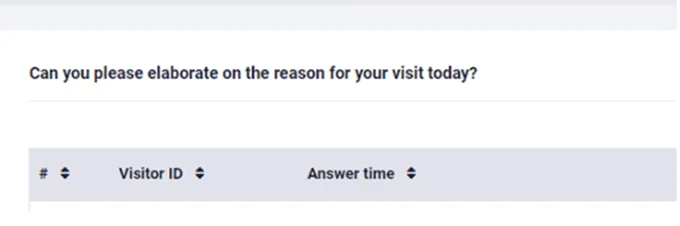
The digital marketing landscape in 2025 is defined by a significant shift in how consumer data is harvested and utilized. As third-party cookies continue to be phased out by major browsers and privacy regulations like GDPR and CCPA tighten, the reliance on zero-party data—information that customers intentionally and proactively share—has reached a critical peak. Within this ecosystem, the humble website poll has transitioned from a perceived nuisance into a high-precision instrument for Conversion Rate Optimization (CRO). When strategically deployed, these polls provide the qualitative "why" behind the quantitative "what" found in traditional analytics, offering a direct line to the consumer’s mindset during the most critical moments of the purchasing journey.
The primary challenge facing modern digital marketers is the "signal loss" caused by fragmented user behavior across multiple devices and platforms. While analytics tools can indicate that a user abandoned a shopping cart on a specific page, they cannot articulate whether the abandonment was due to a technical glitch, a sudden lack of trust, or an uncompetitive price point. Industry experts at Invesp note that polls serve as a bridge, sharpening qualitative research by collecting micro-data points from a broad audience. This methodology allows firms to validate assumptions derived from smaller usability studies or individual customer interviews, creating a statistically significant foundation for website modifications.
The Evolution of User Feedback Mechanisms
The history of website feedback has evolved from intrusive, generalized pop-ups to sophisticated, behavior-triggered interactions. In the early 2010s, "How are we doing?" was the standard query, often yielding vague and unhelpful responses. However, the current methodology emphasizes timing and relevance. Modern polling strategy is rooted in the understanding that a poll is not an isolated event but a component of a broader CRO framework. This framework includes heuristic evaluations, heatmapping, session replay analysis, and usability testing.
Before a single question is drafted, researchers must conduct extensive preliminary data analysis. For example, if session recordings reveal that users are hovering over a specific call-to-action (CTA) without clicking, the poll should not ask about general satisfaction. Instead, it should target the specific hesitation. This data-driven approach ensures that the poll acts as a mirror, reflecting the underlying truth of the user experience rather than imposing the marketer’s biases.
Strategic Alignment with the Buyer’s Journey
A fundamental error in polling is the "wide net" approach, where the same question is presented to every visitor regardless of their intent. Effective polling requires an acute understanding of the five stages of the buyer’s journey: Awareness, Interest, Desire, Action, and Post-Purchase. Each stage requires a different linguistic and psychological approach to elicit useful feedback.
- Awareness Stage: Visitors are identifying a problem. Polls here should focus on the source of the visit and the primary goal of the user.
- Interest and Consideration: Users are evaluating solutions. Feedback should focus on whether the information provided is sufficient to make a comparison.
- Desire and Decision: The user is close to a transaction. Polls must address "Fears, Uncertainties, and Doubts" (FUDs) that could prevent the final click.
- Action/Purchase: For those who complete a transaction, polls should identify the "Hooks"—the specific features or value propositions that swayed the decision.
- Post-Purchase/Loyalty: This stage focuses on satisfaction and the likelihood of referral.
To accurately place these polls, marketers utilize dashboard segmentation to report on traffic types. A visitor landing on a high-level blog post is in a vastly different headspace than one visiting a checkout page; the former should be asked about content relevance, while the latter should be queried about potential barriers to completion.
A Taxonomy of Data-Driven Poll Questions
To maximize the utility of feedback, questions must be categorized based on the specific insight required. Invesp and other leading CRO agencies categorize these into six distinct types:
1. Motivator Questions
Motivator questions aim to uncover the core reason for a visit. These are essential for identifying the "hidden value" of a brand. In one case study involving an e-commerce client, session replays showed users scrolling aimlessly without interacting with CTAs. By implementing a poll asking, "What is the primary reason for your visit today?" the company discovered that a significant portion of their audience was looking for a specific product category that was buried in the site architecture. This insight allowed for a navigation overhaul that directly increased conversion rates.
2. Barrier Questions
Barriers are the friction points that prevent conversion. Common barriers include lack of pricing transparency, concerns over shipping times, or technical bugs. If Google Analytics shows a high exit rate on a funnel page, a barrier poll can be triggered to ask, "Is there anything preventing you from completing your purchase today?" This direct feedback often reveals usability issues that are invisible to the internal team but glaringly obvious to the consumer.
3. Hook Questions
Hooks are the persuasive elements that successfully convert a visitor. These questions are typically reserved for the "Thank You" or confirmation page. Asking a new customer, "What was the one thing that almost stopped you from buying?" or "What convinced you to choose us over a competitor?" provides qualitative data that can be used to strengthen marketing copy and value propositions for future visitors.
4. Content Gap Analysis
Marketers often suffer from "expert blindness," assuming their site content is comprehensive. Content gap polls ask users if they found the information they were looking for. On category pages, questions might include, "What other information would you like to see on this page?" On product pages, a poll might ask, "Is there any detail missing about this item?" These responses frequently highlight the need for clearer specifications, better imagery, or more detailed FAQs.
5. Feedback and Service Solicitation
These polls are used to vet new features or services before a full rollout. If a company is considering discontinuing a service or changing a UI element, a poll can gauge the potential impact. For example, asking, "How would you feel if we replaced [Feature X] with [Feature Y]?" allows for a democratic approach to product development, reducing the risk of alienating the existing user base.
6. Satisfaction and Net Promoter Score (NPS)
Satisfaction polls measure the emotional resonance of the brand. By comparing the feedback of new vs. returning visitors, companies can identify whether their content meets expectations. Low satisfaction scores among returning users often signal a need for improved loyalty programs or refreshed content.
Validating Qualitative Findings Through Scale
One of the most potent uses of polling is the validation of small-scale qualitative findings. In a typical CRO project, a team might interview 10 to 15 customers. While these interviews provide deep insights, they lack the volume to represent the entire customer base. By taking a specific sentiment expressed in an interview—such as a preference for eco-friendly packaging—and turning it into a site-wide poll, marketers can determine if that sentiment is shared by 5% or 50% of their audience. This validation is crucial before committing significant resources to operational changes.
Implementation and Ethical Considerations
The efficacy of a poll is heavily dependent on its delivery. In the 2025 digital environment, "poll fatigue" is a real concern. Strategic placement involves more than just selecting a page; it involves timing the trigger. Polls can be set to appear after a specific amount of time on page, a certain scroll depth, or as an "exit-intent" pop-up.
Furthermore, the phrasing of the question must be neutral to avoid leading the witness. Open-ended questions often provide the most "shocking" and valuable responses, though they require more effort to analyze than multiple-choice options. The goal is to create a seamless experience where the user feels their opinion is valued, rather than feeling like they are being mined for data.
Conclusion: The Future of Consumer Insight
As we move further into a privacy-centric digital age, the ability to engage in a direct dialogue with the consumer is the ultimate competitive advantage. Website polls, when stripped of their intrusive origins and rebuilt on a foundation of behavioral data and psychological empathy, become a primary engine for growth. They transform the website from a static storefront into a dynamic, responsive environment that adapts to the needs of its users. By prioritizing data-driven questions over gut feelings, digital marketers can ensure that every modification to the user interface is a step toward higher conversion and deeper customer satisfaction. In the final analysis, polls do more than just collect data; they provide the human context necessary to navigate the complexities of the modern digital marketplace.








