Pevita Pearce
The landscape of digital experience analytics underwent a seismic shift in December 2023 when Contentsquare, a dominant force in the experience analytics sector, finalized its acquisition of Heap. This move, which followed Contentsquare’s 2021 acquisition of Hotjar, signaled a broader trend of consolidation within the Software-as-a-Service (SaaS) ecosystem. While Heap remains a pioneer in "autocapture" technology—the ability to record every user interaction without manual tagging—the integration into Contentsquare’s larger suite has prompted many product teams and marketers to re-evaluate their long-term reliance on the platform. As enterprise needs evolve toward more predictable pricing, deeper product-led growth tools, and integrated visual feedback, four primary competitors have emerged as the leading alternatives: Crazy Egg, Mixpanel, Pendo, and Fullstory.
The Contentsquare Acquisition and the Drive for Alternatives
The acquisition of Heap was Contentsquare’s largest to date, aimed at merging Heap’s retroactive data analysis capabilities with Contentsquare’s existing heatmapping and session replay technology. For many current Heap users, the transition has introduced a degree of roadmap uncertainty. While Contentsquare has maintained that existing plans will be honored, the long-term strategy involves folding Heap’s features into the broader Contentsquare Product Analytics suite. This transition period has historically been a time of friction for SaaS users who fear shifts in support quality, feature prioritization, or mandatory migrations to higher-priced enterprise tiers.
Beyond the acquisition, the primary driver for teams seeking alternatives is the unpredictability of Heap’s pricing model. Heap utilizes a session-based billing system, which often scales faster than the value a company derives from the tool. Industry data from early 2024 suggests that the median annual contract for Heap sits at approximately $41,000, with some enterprise deals exceeding $150,000. For startups and mid-market companies, this lack of transparency—coupled with the fact that visual tools like heatmaps and session replays are often gated behind expensive add-ons—has made more specialized or modular tools more attractive.

A Chronology of the Analytics Evolution
To understand the current market, one must look at the evolution of data collection methodologies.
- The Manual Era (Pre-2010): Tools like early Google Analytics required developers to manually tag every event they wanted to track. If a team forgot to tag a "Buy Now" button, they would have no historical data for that action.
- The Autocapture Revolution (2013-2018): Heap entered the market with the promise of "retroactive analytics." By capturing every click and form submission automatically, they allowed non-technical users to define events after the fact.
- The Data Governance Era (2019-Present): As data privacy regulations like GDPR and CCPA became strictly enforced, "capturing everything" became a liability for some. Furthermore, the sheer volume of "noise" generated by autocapture led many teams to return to deliberate, planned tracking to ensure data integrity.
This chronology explains why current alternatives are gaining ground; they either offer a cleaner version of autocapture or provide a more disciplined approach to event tracking that aligns with modern data governance standards.

Comparative Analysis of Primary Heap Alternatives
1. Crazy Egg: The Optimization Specialist
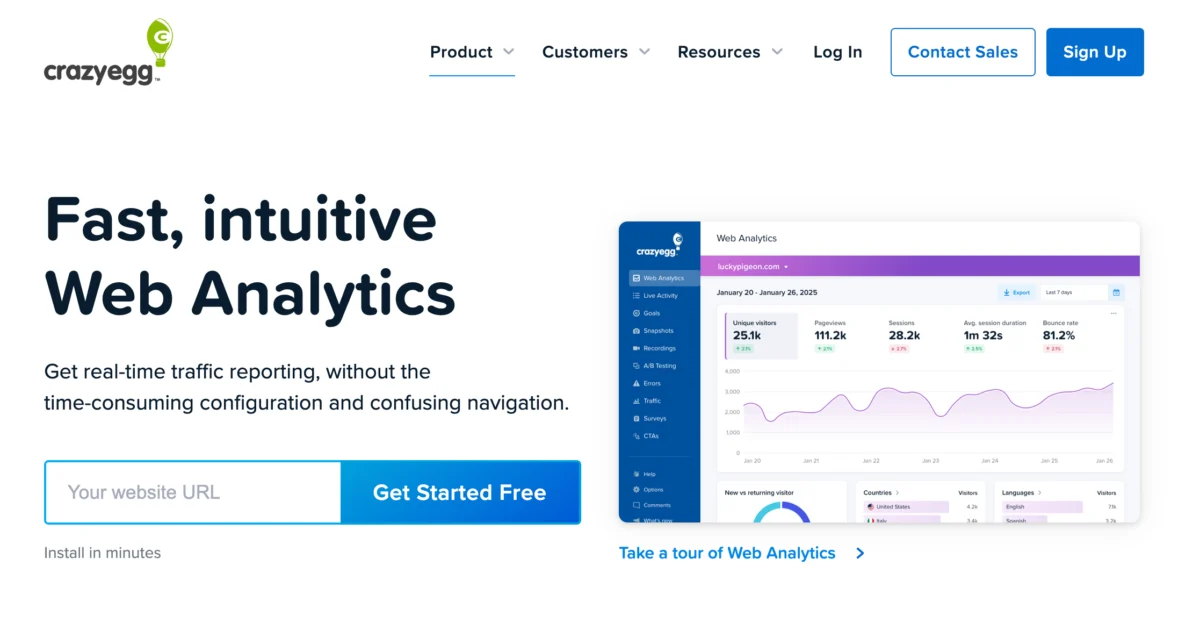
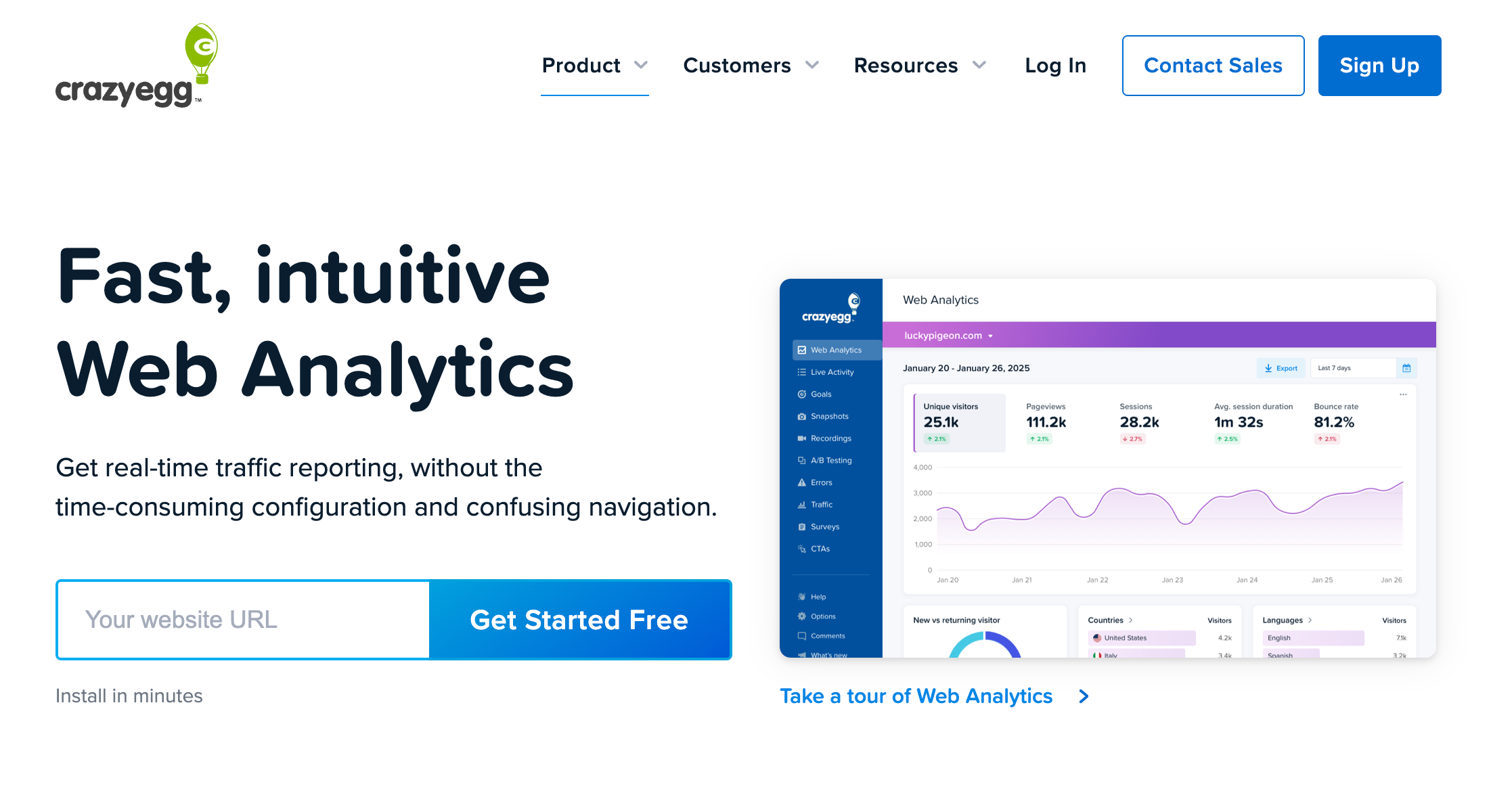
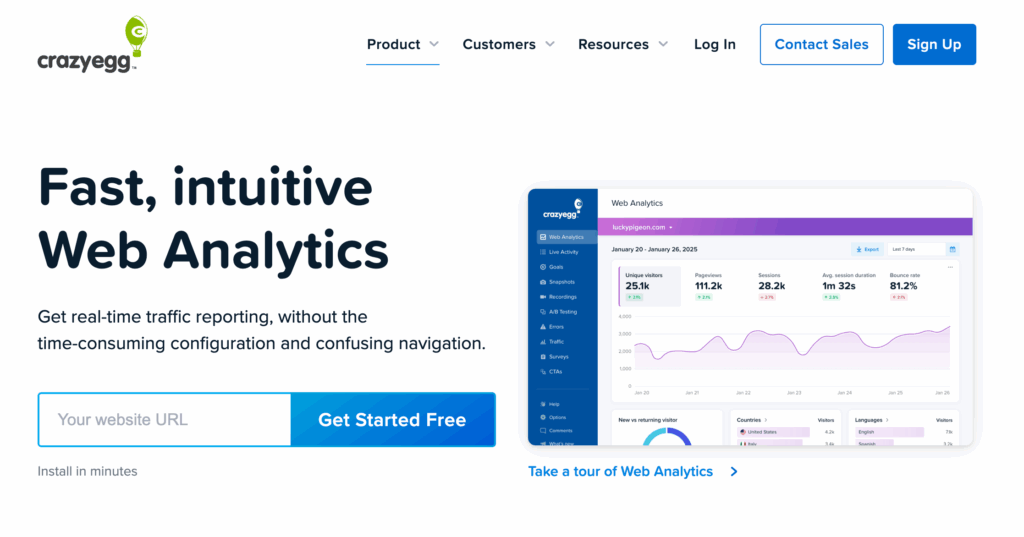
For marketing and design teams, Crazy Egg has emerged as the most cost-effective and visually intuitive alternative. Unlike Heap, which focuses on the "what" of user behavior through spreadsheets and funnels, Crazy Egg focuses on the "where" and "why."
- Core Strength: It offers five distinct types of heatmaps, including the "Confetti" report, which allows users to segment clicks by referral source or search term.
- Economic Impact: With paid plans starting at $29 per month, Crazy Egg provides a significant ROI for companies that do not require the heavy-duty data science capabilities of an enterprise platform.
- Integrated Features: A major advantage is the inclusion of built-in A/B testing and surveys. In the Heap ecosystem, a user would often need to purchase separate tools like Optimizely or Typeform to close the loop between identifying a problem and testing a solution.
2. Mixpanel: The Product Analytics Standard
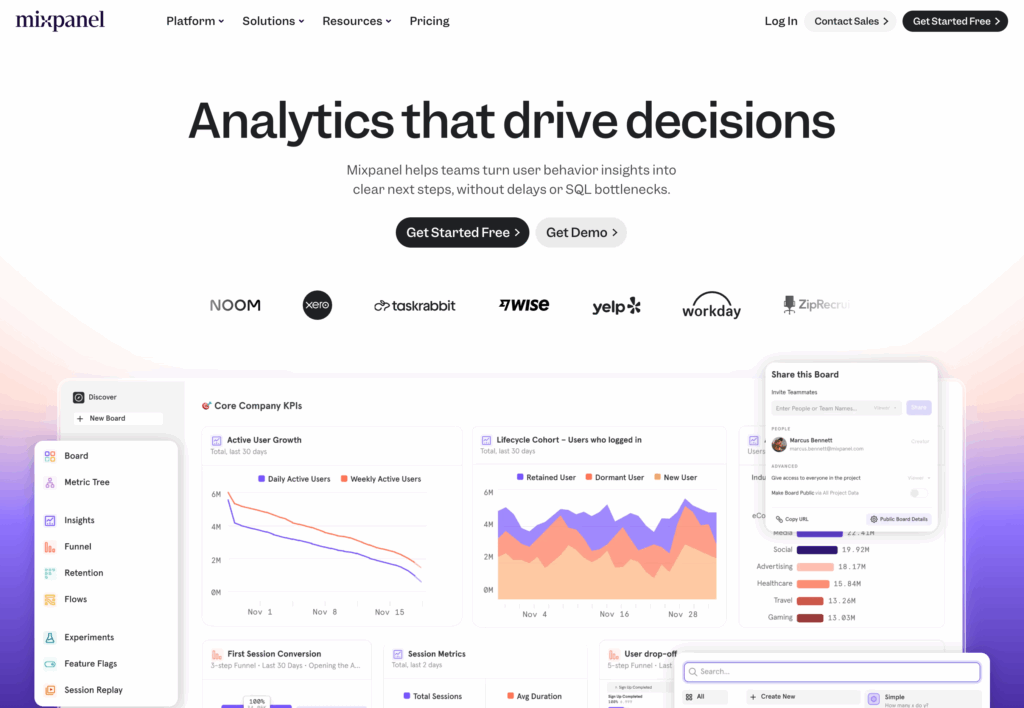
Mixpanel represents the "deliberate tracking" school of thought. It is widely considered the gold standard for product teams that need to understand user retention and long-term lifetime value (LTV).

- Data Integrity: Mixpanel avoids the "noise" of autocapture by requiring teams to define the events that matter most. This results in cleaner data and more reliable reporting for complex products.
- Accessibility: Mixpanel’s free tier is one of the most generous in the industry, allowing for up to one million events per month. This has made it the go-to choice for early-stage startups that need enterprise-grade funnels without the $41,000 price tag.
- Real-time Insights: While Heap’s retroactive analysis is powerful, Mixpanel’s real-time segmentation allows teams to react to user behavior within seconds, facilitating faster product iterations.
3. Pendo: The All-in-One Experience Platform
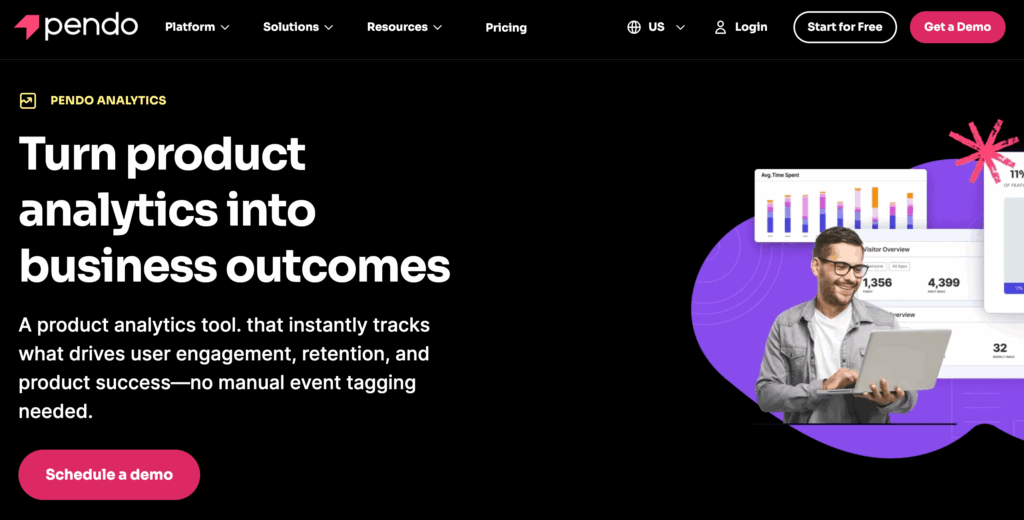
Pendo is often the preferred choice for enterprise organizations that view analytics as just one part of the user journey. It combines deep behavioral data with in-app messaging and onboarding guides.
- The "Guided" Experience: Pendo’s unique selling point is its ability to act on data. If analytics show that users are getting stuck on a specific feature, Pendo allows the team to deploy a "Tooltip" or "Walkthrough" guide directly within the app without requiring a code deploy.
- Feedback Loops: Pendo integrates user feedback and feature requests directly into the analytics dashboard, creating a holistic view of the "Product Experience" (PX).
- Market Position: While it sits at a higher price point similar to Heap, the consolidation of analytics and engagement tools often justifies the cost for large-scale SaaS companies.
4. Fullstory: The Technical Troubleshooting Leader
Fullstory specializes in "Digital Experience Intelligence" (DXI). It is best known for its high-fidelity session replays and its ability to detect "rage clicks" and "dead clicks"—indicators of user frustration.
- Frustration Detection: Fullstory’s AI-driven insights can automatically flag where users are experiencing technical errors or UI friction. This makes it an essential tool for engineering and QA teams, not just marketers.
- Privacy-First Approach: Fullstory has invested heavily in private-by-default data capture, ensuring that sensitive user information is masked at the browser level, addressing one of the primary concerns associated with the "capture everything" model.
Supporting Data and Market Sentiment
A survey of mid-market CTOs conducted in early 2024 revealed that "pricing predictability" and "ease of implementation" are now the top two factors in selecting an analytics vendor. Heap’s session-based billing often creates internal friction between marketing (which wants more traffic) and finance (which wants lower costs).
Furthermore, the technical burden of "cleaning" autocaptured data has become a significant talking point. While Heap markets the ease of its "one snippet" installation, data analysts report spending upwards of 10 hours a week labeling and organizing those auto-captured events to make them usable for executive reporting. In contrast, tools like Mixpanel require more upfront work but significantly less maintenance over time.
Broader Implications for the Analytics Industry
The shift away from Heap toward these alternatives reflects a broader maturation of the digital economy. We are moving away from an era of "data hoarding"—where companies collected every possible byte of information—toward an era of "data activation."
Modern teams no longer want to just see what happened; they want to know how to fix it (Crazy Egg), how to guide the user (Pendo), or how to ensure it never breaks again (Fullstory). The consolidation of Heap into Contentsquare may provide a powerful unified platform for those who can afford the enterprise entry fee, but for the majority of the market, the future of analytics lies in specialized, transparently priced, and actionable tools.
As artificial intelligence continues to integrate into these platforms, the "noise" of autocapture may eventually be solved by AI labeling. However, until that technology reaches total reliability, the market is voting with its budget for platforms that offer clear data structures and immediate, visual feedback on the user experience. For organizations navigating this transition, the choice between Crazy Egg, Mixpanel, Pendo, or Fullstory will ultimately depend on whether their primary goal is marketing conversion, product retention, enterprise onboarding, or technical excellence.

 Basiran
 Iffa Jayyana