Asro
The digital marketing and public relations landscape has undergone a seismic shift as social listening matures from a niche monitoring activity into a foundational pillar of enterprise consumer intelligence. At the center of this evolution is Brandwatch, a platform renowned for its deep research capabilities and massive historical archive. However, as the market for social data grows more specialized, many organizations are re-evaluating their reliance on high-cost, high-complexity tools in favor of alternatives that better align with specific team functions, such as growth marketing, influencer relations, or crisis management.
Brandwatch’s dominance in the sector is largely built upon its Consumer Intelligence product, which boasts a repository of over 1.7 trillion historical conversations dating back to 2010. With an influx of 501 million new data points daily, the platform provides a level of depth that is difficult to replicate. Despite a high user satisfaction rating of 4.4 out of 5 on review platforms like G2, the software’s acquisition by Cision for $450 million in 2021 signaled a strategic pivot toward PR and traditional communications teams. For growth-oriented teams and lean marketing departments, the complexity and non-public pricing of Brandwatch have become significant barriers to entry, sparking a search for more agile solutions.
The Strategic Drivers Behind the Search for Alternatives
The decision to migrate from a legacy platform like Brandwatch usually stems from four primary organizational pain points. First is the "depth-to-utility" ratio; many teams find themselves paying for advanced research features they rarely utilize. Second is the roadmap alignment; as a Cision-owned entity, Brandwatch’s development cycle is increasingly focused on the needs of PR giants rather than the performance-based metrics required by social commerce teams.
Thirdly, the cost of data access is a growing concern. As platforms like X (formerly Twitter) and Reddit tighten their API access and increase commercial fees, the "pass-through" costs to the end-user have escalated. Finally, there is the issue of "audience quality." In an era where bot accounts and bought followers are prevalent, raw mention counts are no longer a sufficient metric for success. Recent industry analysis of nearly 4 million Instagram profiles revealed that the median account carries approximately 7% fake followers, with one in 16 profiles showing a fake follower share exceeding 25%. This reality necessitates tools that can distinguish between high-volume noise and authentic consumer influence.
A Comparative Analysis of the Top 10 Social Listening Alternatives
The market for social listening is currently bifurcated into three categories: enterprise-grade suites, management-integrated tools, and specialized monitoring platforms.
1. Talkwalker: The Enterprise Equivalent
For organizations seeking a direct "like-for-like" replacement for Brandwatch, Talkwalker remains the primary contender. Following its acquisition by Hootsuite in April 2024, Talkwalker has integrated its Lumen technology across the Hootsuite ecosystem. Its standout feature is "LLM Insights," which monitors how AI assistants like ChatGPT and Claude describe a brand. This reflects a new frontier in reputation management: optimizing for "AI Search" rather than just traditional search engines. Talkwalker’s pricing remains custom-quoted, focusing on non-sampled data to ensure total accuracy in large-scale sentiment analysis.
2. Meltwater: The Communications Specialist
Meltwater is the preferred choice when social listening must be unified with traditional media monitoring. By housing press coverage and social mentions in a single dashboard, it serves the specific needs of corporate communications departments. However, Meltwater typically requires a 12-month minimum commitment and lacks a self-serve trial, making it a high-stakes investment for teams that haven’t fully vetted their social strategy.
3. Sprinklr: The Unified Customer Experience Suite
Sprinklr is often described as the "heavyweight" of the industry. It spans more than 30 channels, integrating marketing, customer service, and listening into one massive architecture. While powerful, it is frequently viewed as overkill for teams that only require brand monitoring. Choosing Sprinklr is less a software purchase and more a platform decision that involves multiple departments, from IT to Customer Success.
4. Sprout Social: Management and Listening Integration
Sprout Social has carved out a significant market share by prioritizing user experience. Its listening product is an add-on to its core social media management interface. This integration is vital for teams that want to move seamlessly from identifying a mention to engaging with the user. With entry-level pricing starting at $199 per seat per month, it provides a transparent, albeit premium, entry point for mid-market brands.

5. Hootsuite: The Broad-Spectrum Tool
As one of the oldest players in the space, Hootsuite provides basic listening in every paid plan. However, for historical data beyond 30 days, users must upgrade to the Enterprise tier, which utilizes the aforementioned Talkwalker technology. This makes Hootsuite a versatile choice for teams that need to scale from basic monitoring to deep trend analysis within a single ecosystem.
6. Agorapulse: The Lean Management Alternative
Agorapulse offers a competitive management suite with prices ranging from $79 to $199 per user. While it includes listening as a paid add-on, its features are generally considered secondary to its publishing and inbox management capabilities. It is best suited for agencies managing multiple client accounts where social engagement takes precedence over deep data mining.
7. Brand24: The Monitoring-First Platform
Brand24 focuses on keyword tracking and sentiment alerts. Unlike enterprise suites, it publishes a clear tiered pricing structure based on mention volume. While its $199 Individual plan is often too restrictive for active brands, its higher tiers provide robust sentiment analysis and reporting. It is particularly effective for tracking mentions across "noisy" environments like forums and blogs.
8. Mentionlytics: High-Value Analysis for Small Teams
Mentionlytics has gained traction by offering "Share of Voice" reporting—a metric that measures a brand’s share of the total category conversation—at a lower price point than enterprise competitors. With plans starting as low as $49 per month during promotional periods, it represents one of the most accessible ways for small teams to access professional-grade analytics and an 18-month data archive.
9. Awario: Boolean Search for Lean Operations
Awario is built for the "power user" who prefers building complex queries using Boolean operators (AND, OR, NOT). It skips the bells and whistles of publishing and customer service to focus entirely on data retrieval. Starting at $29 per month, it is the most cost-effective solution for solo marketers, though its storage limits (5,000 mentions per topic on the starter plan) require active management.
10. Upfluence: The Creator Partnership Pivot
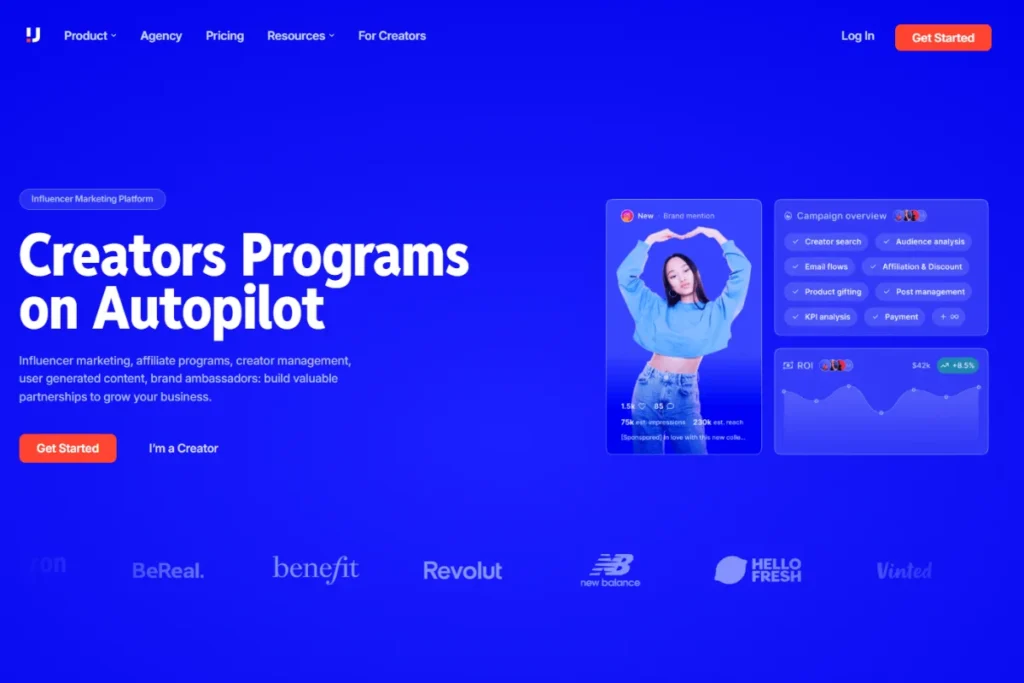
Upfluence represents a shift toward "actionable listening." Rather than just counting mentions, the platform identifies the specific creators behind those mentions and analyzes their audience authenticity. This allows brands to turn organic mentions into formal partnerships. For instance, in Q1 2026 brand reports, analysis showed that brands like L’Oréal Paris rely heavily on nano-creators for mentions, whereas brands like Shein focus on mid-tier creators. Upfluence allows teams to track the revenue generated from these specific segments, bridging the gap between PR and sales.
The Evolution of Data Accuracy and Sentiment Analysis
A critical factor in the shift away from legacy tools is the improvement in sentiment analysis. A 2025 study published in Procedia Computer Science highlighted that modern sarcasm detection in AI models has reached an accuracy range of 86% to 96%. While news headlines are easier for AI to parse, the "noise" of social media posts remains a challenge. Modern Brandwatch alternatives are increasingly using specialized NLP (Natural Language Processing) models to better understand the nuances of slang and regional dialects, providing a more accurate trend line for brand health.
Chronology of the Social Listening Market (2010–2026)
- 2010-2015: The era of "Monitoring." Tools were primarily keyword-based, used for basic PR alerts.
- 2016-2020: The rise of "Consumer Intelligence." Brandwatch and others began utilizing massive historical archives for trend forecasting.
- 2021: Consolidation. Cision acquires Brandwatch for $450M; the market begins to bifurcate between PR-heavy tools and growth-heavy tools.
- 2024: Integration. Hootsuite acquires Talkwalker, signaling a move to bring enterprise-grade listening to the social management mass market.
- 2025-2026: The AI and Creator Era. Sentiment analysis becomes highly accurate through LLMs, and social listening becomes the primary "top-of-funnel" for creator commerce and affiliate marketing.
Analysis of Implications for Decision Makers
Choosing a social listening platform in the current environment requires a strategic look at billing models. "Per-seat" pricing (used by Sprout Social and Hootsuite) favors small, high-output teams. "Volume-based" pricing (used by Brand24 and Mentionlytics) is ideal for brands with steady conversation levels but can become expensive during a crisis or a viral product launch.
Furthermore, the "Reddit factor" cannot be ignored. Following Reddit’s decision to restrict commercial data access without explicit permission, the depth of forum coverage has become a key differentiator. Buyers must demand a written source list to ensure their specific industry niches (such as r/SkincareAddiction for beauty brands) are fully covered.
In conclusion, while Brandwatch remains a formidable tool for deep historical research, the market now offers a spectrum of alternatives that are often more aligned with the fast-paced, ROI-driven needs of modern marketing teams. Whether the goal is to manage a PR crisis, monitor AI-driven brand reputation, or convert organic mentions into a high-performing creator program, the right choice depends on where an organization sits on the scale of complexity versus agility.


 Siti Muinah

 Lina Hope