Suro Senen
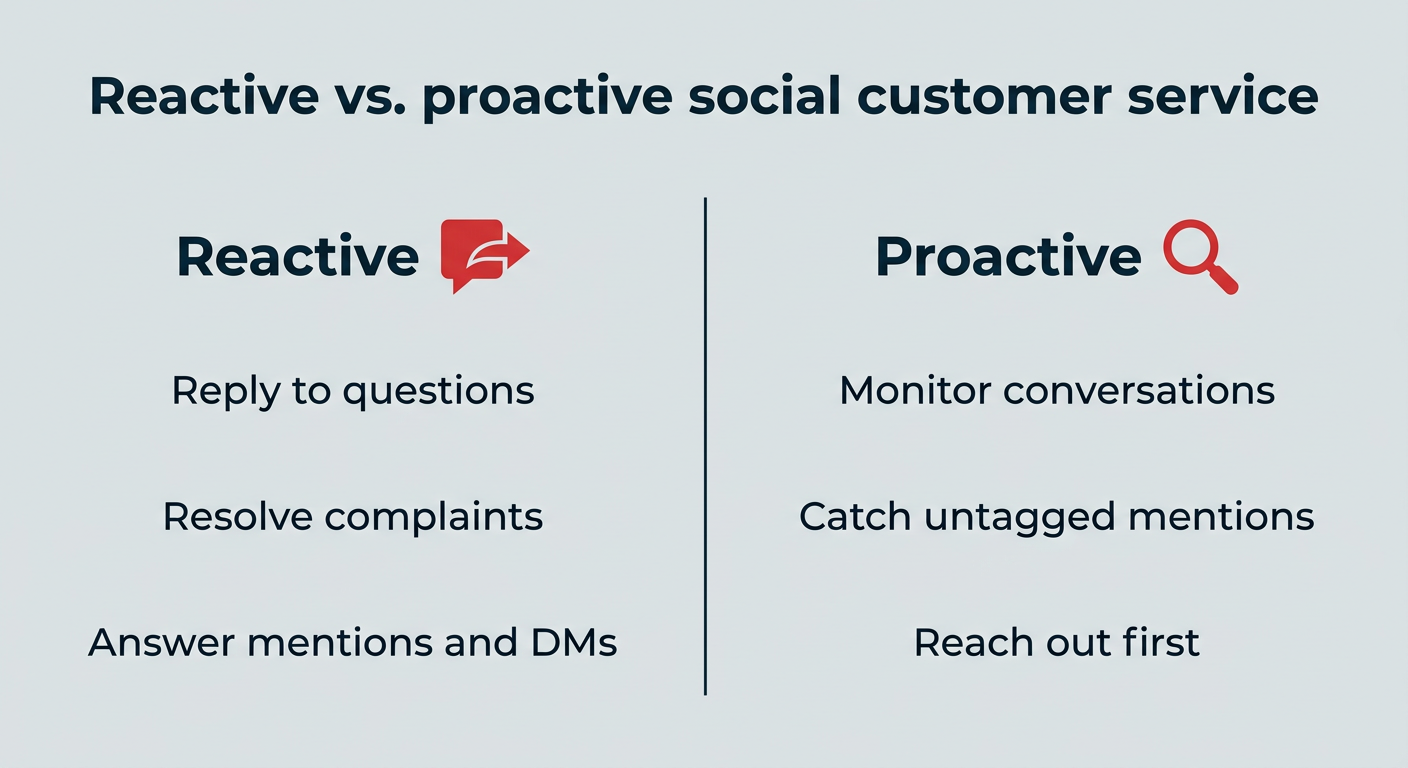
In an increasingly interconnected world, social media customer service has transitioned from a supplementary offering to a cornerstone of modern business operations, defining how brands interact with their clientele across digital touchpoints. This critical function encompasses the provision of support and service through various social networks, including prominent platforms like Facebook, Instagram, X (formerly Twitter), WhatsApp, and LinkedIn, as well as emerging channels such as TikTok and dedicated messaging applications. It involves a dual approach: reactive engagement, where businesses respond to direct inquiries, complaints, and mentions; and proactive outreach, where brands actively monitor online conversations to identify and address potential issues before they escalate. Recent data underscores this shift, with a significant majority of consumers—approximately 75.1%—expressing a preference for messaging businesses in the same informal manner they communicate with friends and family, highlighting a demand for conversational and immediate interactions.

The Evolution of Digital Customer Engagement
The landscape of customer service has undergone a profound transformation over the past two decades. Historically, customer support was predominantly channeled through traditional avenues such as telephone helplines and email. While these methods remain relevant for complex or sensitive issues, the advent and widespread adoption of social media platforms ushered in a new era of immediacy and public transparency. Initially, businesses treated social media primarily as a marketing and branding tool, with customer service interactions often being an afterthought or handled reactively by marketing teams. However, as consumers increasingly turned to social platforms to voice their experiences, both positive and negative, the strategic importance of a dedicated and efficient social customer service function became undeniable. This evolution has been further accelerated by technological advancements, particularly in artificial intelligence (AI), which now enables sophisticated chatbot interactions, automated replies, and responses informed by advanced social listening capabilities. Today, the lines between marketing and support on social media are often blurred, as public resolutions not only address individual concerns but also serve as powerful showcases of a brand’s commitment to customer care.

Why Social Media Customer Service is Non-Negotiable
The contemporary business environment demands robust social media customer care for several compelling reasons, primarily revolving around evolving customer expectations, the cultivation of trust, and direct financial benefits. Customers today anticipate swift, seamless, and often public-facing support. Businesses that effectively deliver on this expectation stand to build stronger trust, foster deeper loyalty, and significantly enhance their overall brand perception. Beyond these qualitative benefits, the strategic application of advanced technologies, such as generative AI in customer-related initiatives, has been shown to correlate with substantial revenue growth, with some companies experiencing up to 25% higher revenue within five years compared to those focusing solely on productivity gains.
Several consistent advantages emerge from prioritizing social customer service:
- Meeting Customer Expectations for Speed: The digital age has fostered an expectation of instant gratification. By leveraging social media, customer service teams can respond with unprecedented speed, often facilitated by AI chatbots that provide immediate answers to frequently asked questions. This rapid engagement is crucial for retaining customer attention and resolving issues efficiently. Projections indicate that self-service and live chat technologies are set to surpass traditional channels like phone and email as the preferred customer service modalities by 2027, underscoring the shift towards digital, real-time interactions.
- Building Trust and Enduring Relationships: Prompt and effective service is a powerful trust-builder. Monitoring brand sentiment across social channels allows businesses to gauge and track this trust over time. Exceptional service has the potential to transform even highly frustrated customers into loyal brand advocates. This trust is a compounding asset: satisfied customers are more likely to make repeat purchases and recommend the brand to their networks, solidifying the argument for integrating service quality into core revenue discussions rather than confining it to mere support metrics. Research highlights that great service directly drives repeat purchases, advocacy, and even forgiveness for occasional missteps.
- Driving Brand Awareness and Operational Efficiency: Every public interaction on social media serves a dual purpose. It resolves a specific customer issue while simultaneously demonstrating a brand’s responsiveness and care to a wider audience. This public display of commitment contributes significantly to brand awareness and reputation. In the B2B sector, social media has emerged as a leading channel for customer acquisition, often outperforming digital advertisements and email marketing. Furthermore, social customer service offers notable efficiency gains. A single agent can often manage multiple social conversations concurrently, and chatbots can effectively triage and resolve routine inquiries, reducing the workload on human agents and allowing teams to handle higher volumes without necessarily increasing headcount. Beyond direct service, engaging with comments can also boost social media engagement, which in turn can enhance organic post performance across various algorithms, notably on platforms like Instagram, where past interactions influence content visibility.
Strategic Considerations and Potential Trade-offs

While the benefits of social customer service are substantial, organizations must also acknowledge and plan for certain trade-offs. The inherent speed and public nature of social interactions mean that issues can escalate rapidly if not managed correctly. Moreover, the sheer volume of messages across multiple platforms can be challenging to manage, requiring sophisticated tools and well-defined processes. Maintaining a consistent brand voice across diverse agents and ensuring sensitive data is handled securely within public and semi-public channels also present significant operational hurdles. For most brands, however, the benefits of speed, reach, and relationship-building far outweigh these challenges, provided a robust process for volume management and governance is in place.
Selecting the Right Social Channels for Support

The effectiveness of social media customer service is intrinsically linked to selecting the appropriate platforms. This choice should be primarily dictated by where a brand’s target audience is most active and where their preferences lie. Regional variations in platform popularity are significant; for instance, Facebook and Instagram boast high adult usage rates in the U.S., while other platforms dominate elsewhere.
A strategic approach to platform prioritization involves considering:
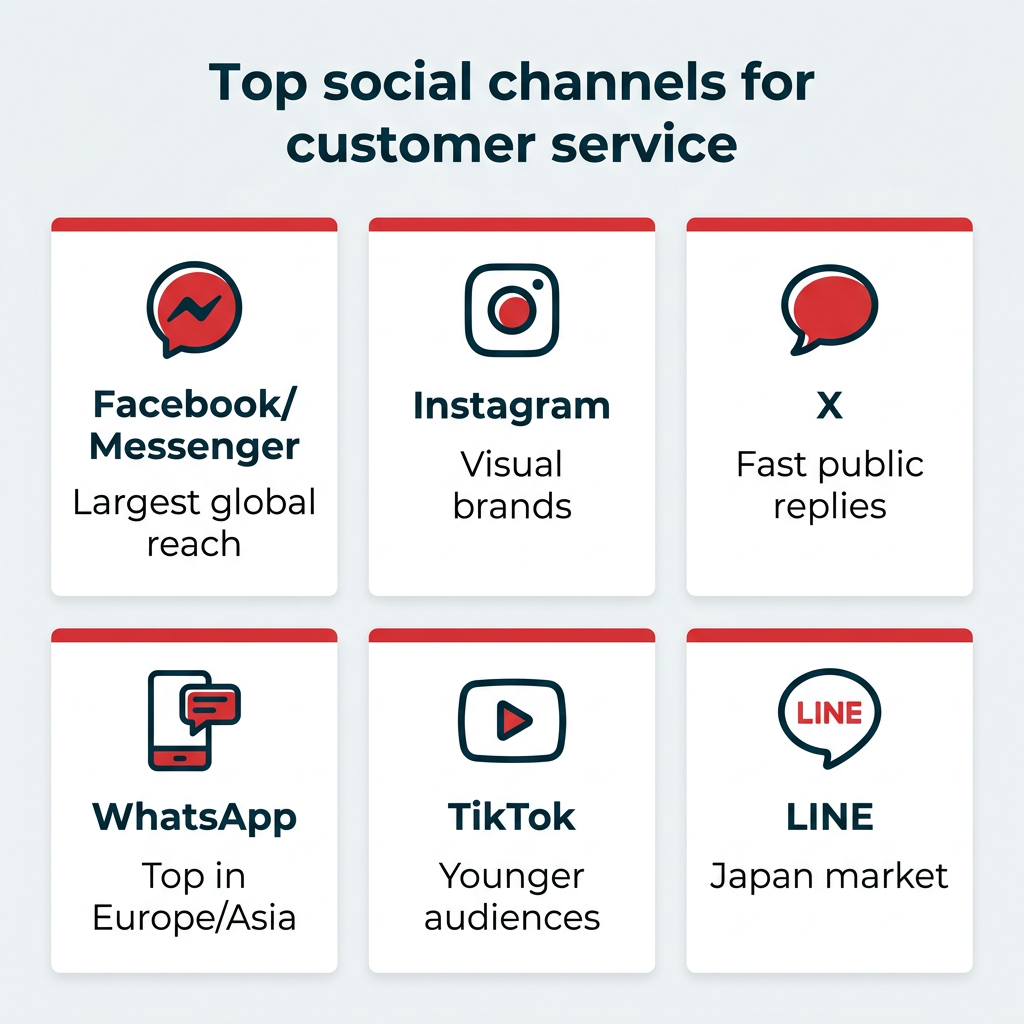
- Facebook: Remains a dominant platform globally, supporting high volumes of public comments and private messages via Messenger. It is often a primary hub for general inquiries and broad customer discussions.
- Instagram: Ideal for visually-driven brands, catering to a younger demographic. It’s effective for addressing comments on posts, managing direct messages, and resolving issues related to product visuals or lifestyle content.
- X (formerly Twitter): Known for its real-time nature, making it invaluable for urgent public complaints, service outage announcements, and rapid-fire interactions. Its public nature also makes it a powerful channel for showcasing quick resolutions.
- WhatsApp: Particularly strong in many international markets for direct, private messaging-based support, offering a more personal and immediate communication channel favored by consumers for its intimacy and convenience.
- TikTok: Increasingly relevant for brands targeting younger audiences, requiring creative and often video-based responses to comments and direct messages, often integrating entertainment with support.
- LinkedIn: Primarily a B2B platform, suitable for professional inquiries, thought leadership engagement, and support related to business services or complex solutions.
- LINE, WeChat, etc.: Important in specific regional markets (e.g., Asia) for comprehensive messaging-based support, often integrating e-commerce and various services.
Establishing Effective Ownership Models
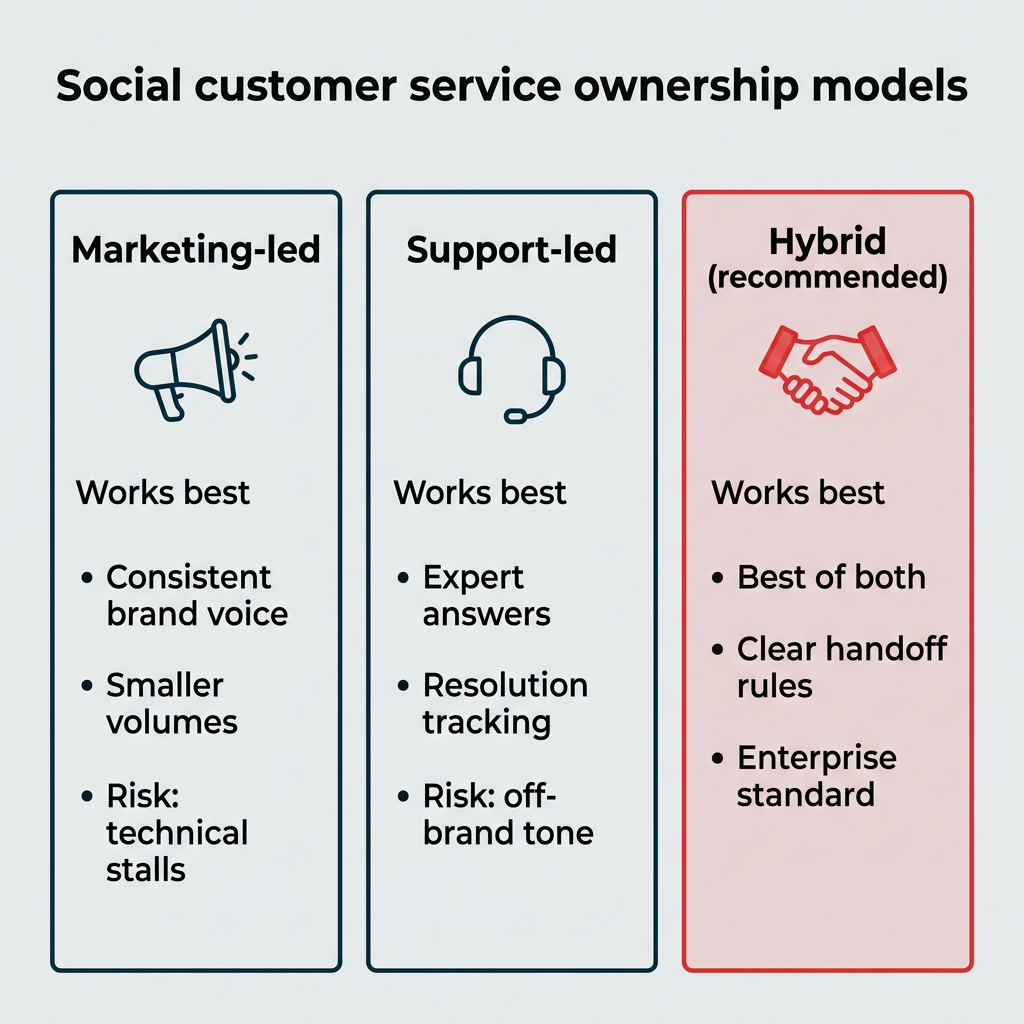
Once target channels are identified, the critical question of who manages social customer service arises. For large enterprises, a hybrid model, combining the strengths of marketing and support teams, often yields the most effective results. This approach ensures consistent brand voice while leveraging specialized expertise for issue resolution, supported by clear escalation paths to prevent any customer query from being overlooked.
Three common ownership models include:
- Marketing-Led Model: Marketing teams manage social interactions, leveraging their understanding of brand voice and public messaging. This model is ideal for general engagement, brand building, and low-complexity inquiries. However, it may lack the depth for complex technical support or direct issue resolution without strong integration with core support systems.
- Support-Led Model: Dedicated customer service teams handle social channels, bringing their expertise in problem-solving and issue tracking. This model ensures efficient resolution but might sometimes struggle with maintaining a nuanced brand voice or integrating with broader social media marketing campaigns.
- Hybrid Model: This increasingly popular approach involves a collaborative effort. Marketing teams might handle initial public engagement and general inquiries, while support teams are brought in for private, complex, or escalated issues. This requires seamless communication, shared tools, and clearly defined workflows to ensure a consistent customer experience. A unified workspace is essential for this model, allowing both teams to view conversations, apply assignment rules, and manage approvals within a single, governed workflow.
Best Practices for Exemplary Social Media Customer Service
Optimizing social customer service requires adherence to several key best practices:
- Prioritize Rapid Response Times: Customer expectations for immediate interaction are high, with many anticipating a response within the first hour. Implementing a unified inbox that consolidates comments and direct messages from all platforms into a single view can significantly accelerate response times. Advanced tools can further aid by triaging conversations, setting alerts for urgent messages, and integrating customer satisfaction (CSAT) surveys for continuous performance monitoring. AI-powered layers can assist by providing context and suggesting optimal routing for messages.
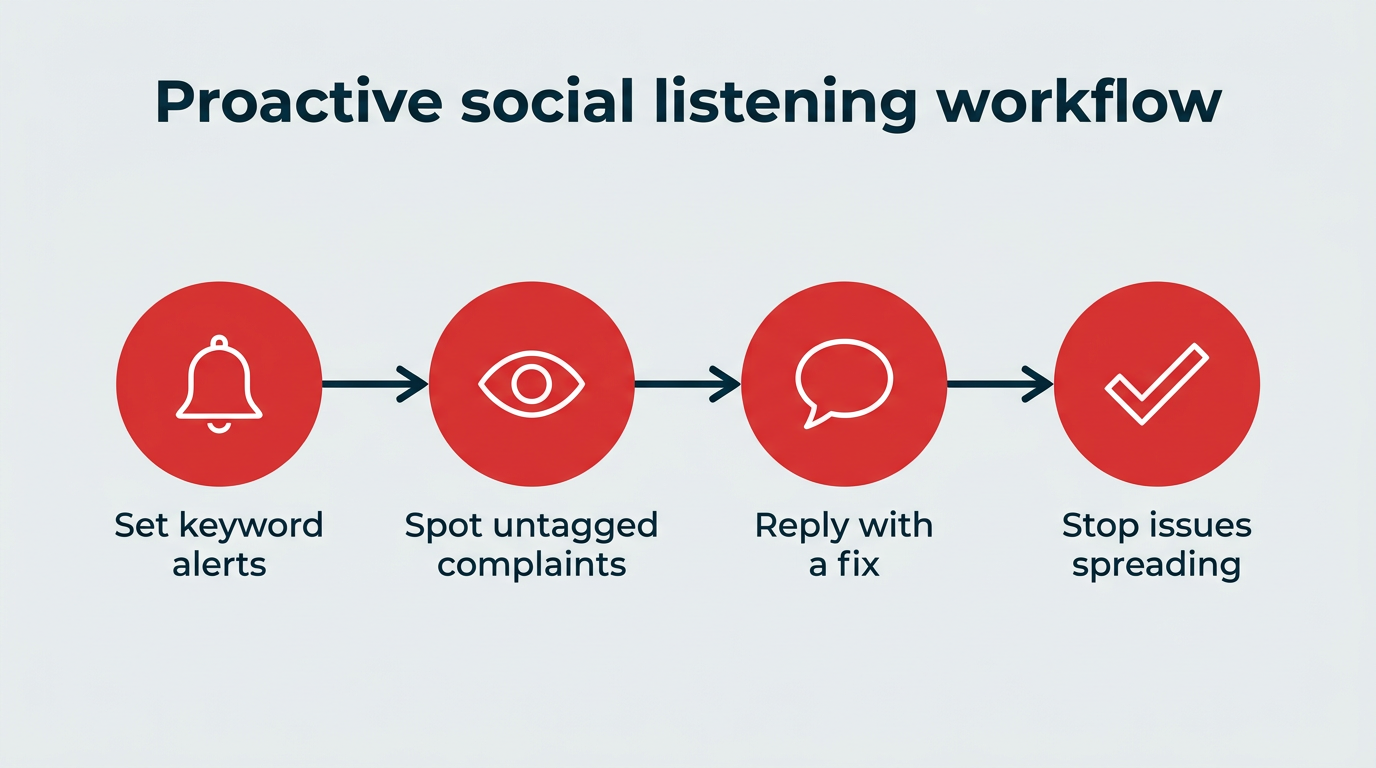
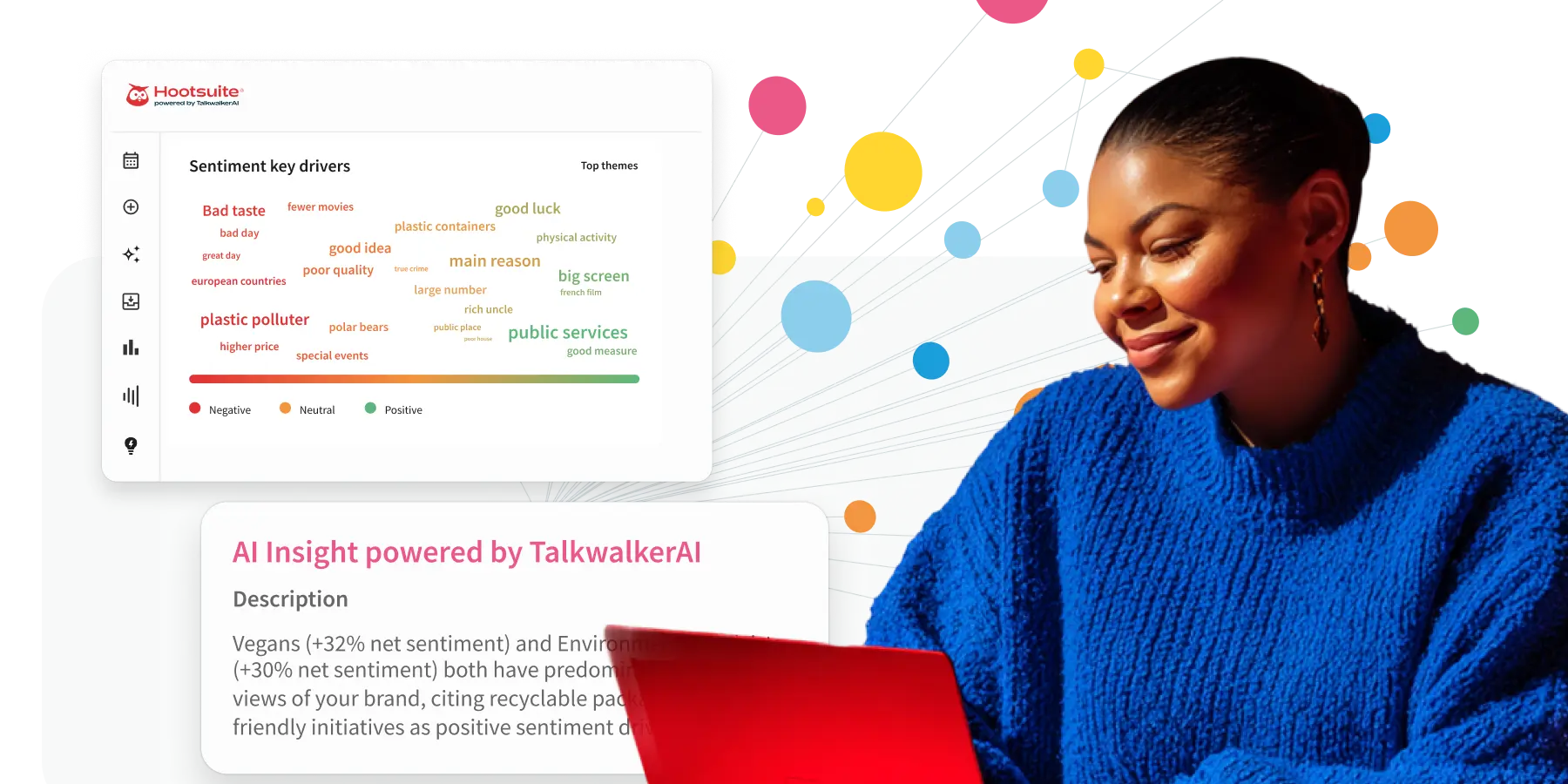
- Proactive Issue Resolution Through Social Listening: Beyond reactive responses, actively listening to online conversations is paramount. Social listening tools enable businesses to monitor brand mentions, product discussions, and relevant keywords across billions of online sources, including forums, review sites, and news articles. This proactive approach helps identify potential PR issues early, gather valuable product feedback, and, crucially, catch untagged complaints or negative sentiment before they spiral. By setting keyword alerts for common misspellings or problem phrases, brands can intervene with solutions while an issue is still contained to a single unhappy customer.
- Clearly Set Expectations and Consider Dedicated Channels: Transparency is key. If message volume warrants it, establishing dedicated social customer service accounts (e.g., "@BrandHelp" or "@AskBrand") can streamline inquiries. Regardless of dedicated channels, clearly stating response hours and capabilities (e.g., 24/7 support, multilingual options) in bios and auto-replies manages customer expectations effectively.
- Personalize Every Interaction: Generic, templated responses often alienate customers. Personalization—using the customer’s name, referencing specific details of their order or issue, and directly answering their question—demonstrates that a human has genuinely engaged with their query. While templates can provide a starting point, they should be customized to reflect individual circumstances and avoid overly formal or apologetic phrasing that can feel disingenuous. Tools that surface past conversations alongside current ones empower agents to provide context-aware, personalized support.
- Respond to All Comments and Messages: A fundamental courtesy that also yields tangible benefits. Responding to all interactions not only builds relationships but also boosts account engagement, which can positively influence content visibility within social media algorithms. It publicly signals that the brand values its customers.
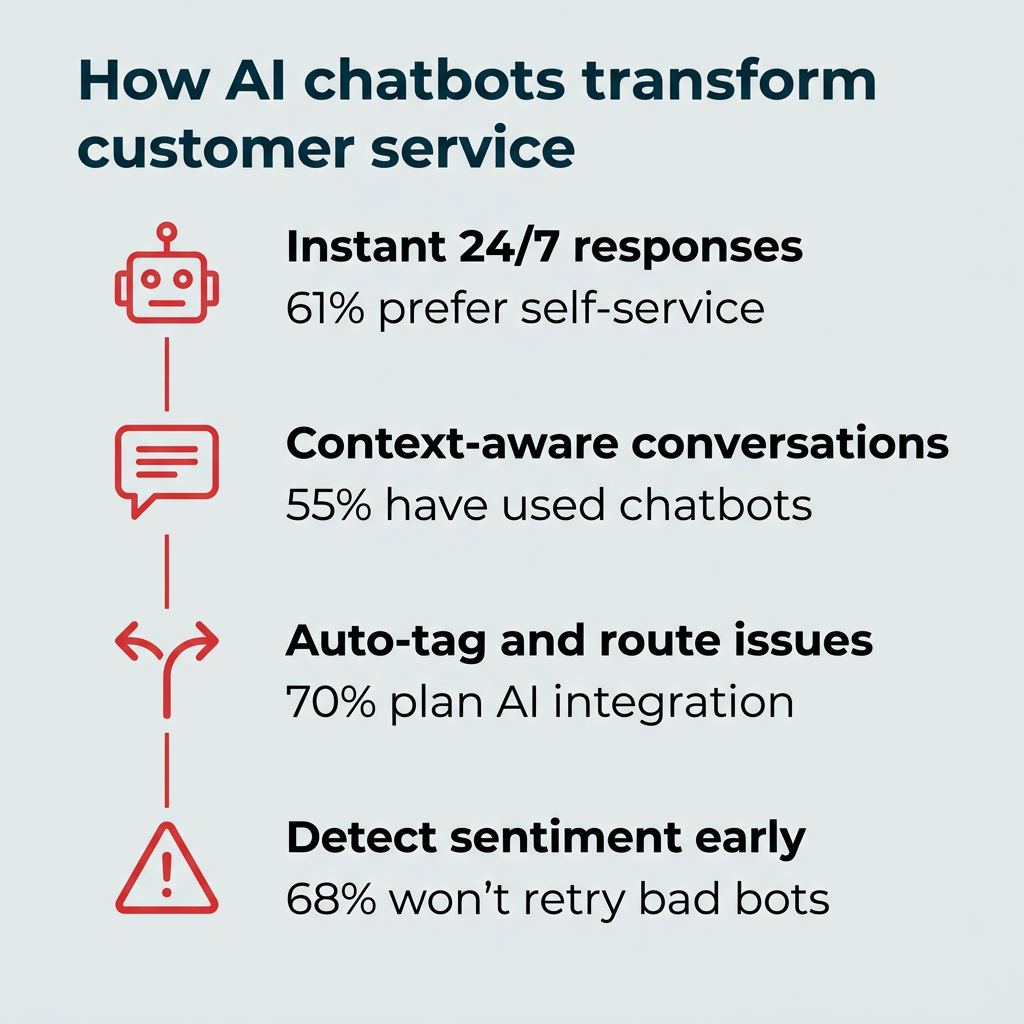
- Scale Support with AI and Chatbots: AI-powered chatbots are no longer a novelty but a necessity for scaling personalized service. A significant portion of customers (over 60%) prefer self-service for simple problems, and a majority have already used chatbots. Industry leaders anticipate substantial integration of generative AI into customer touchpoints, particularly for chat-based support. Modern chatbots are sophisticated; they understand context, retain conversation history, adapt language, and provide accurate, warm responses. Beyond chatbots, AI can auto-tag, route conversations, suggest agent replies, and detect sentiment, allowing human agents to focus on complex, nuanced issues. However, the quality of these AI interactions is critical, as negative chatbot experiences deter future use.
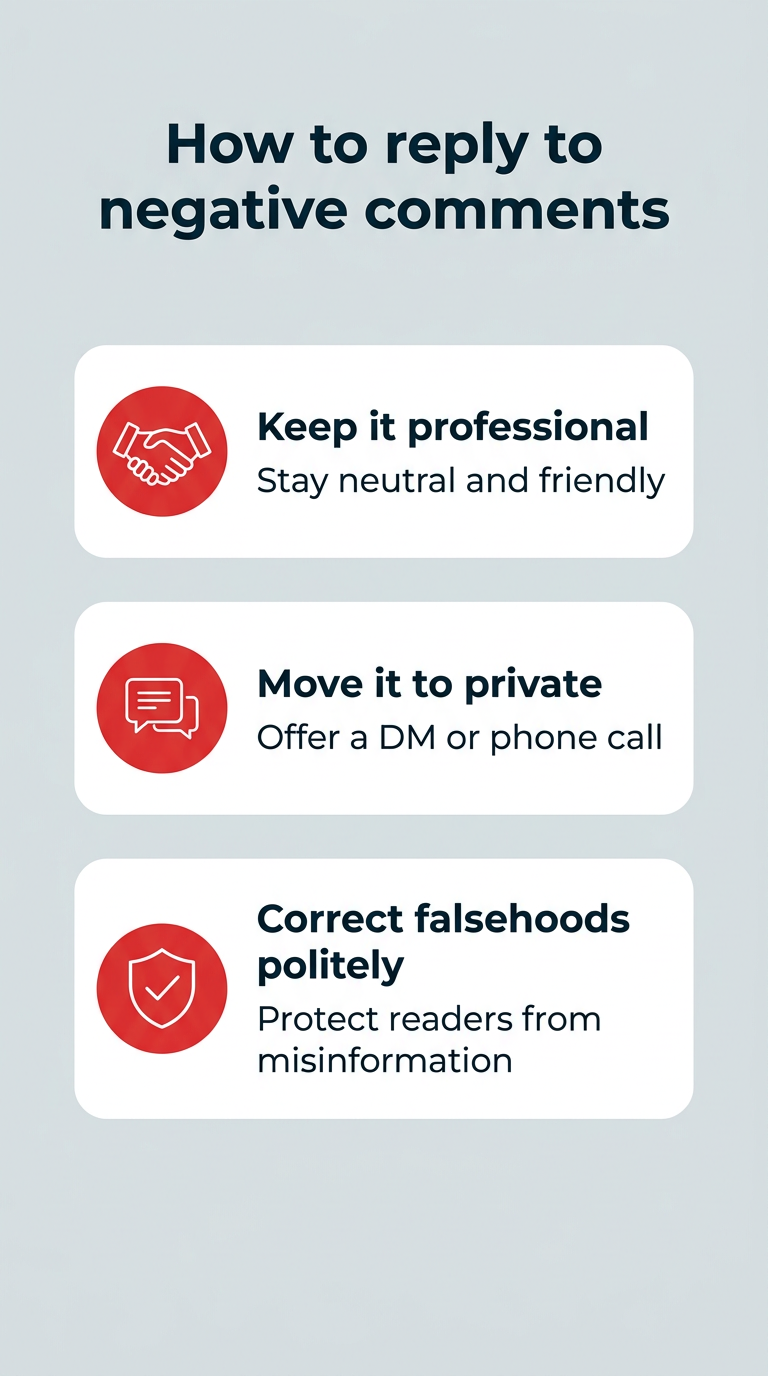
- Handle Negative Feedback with Professionalism: Negative comments, while challenging, are opportunities. Prompt, professional responses to unhappy customers can prevent issues from escalating and even turn a negative experience into a positive one. It’s crucial to differentiate between genuine feedback and malicious defamation. When responding, always thank the customer for their feedback, acknowledge their concern, apologize sincerely if appropriate, and offer to move the conversation to a private channel for resolution. If factual inaccuracies are present, correct them politely without fueling conflict. Monitoring platforms beyond owned social profiles, such as review sites, is also vital.
- Ensure Human Support Remains Accessible: While automation is crucial for efficiency, complex or sensitive situations invariably require human intervention. Businesses must ensure a clear, accessible path for customers to connect with a live agent. Some brands even offer premium support tiers, recognizing that nearly half of customers are willing to pay more for superior service. When human agents engage, authenticity is key; admitting mistakes, offering genuine apologies, and allowing agents to professionally express their personality can significantly enhance the customer experience.
Common Pitfalls to Avoid
Effective social customer service also involves understanding and avoiding common mistakes:
- Slow or Non-Existent Responses: Nothing erodes trust faster than being ignored or made to wait excessively.
- Generic, Canned Replies: These depersonalize interactions and make customers feel unheard.
- Ignoring Negative Feedback: This allows problems to fester publicly and damages brand reputation.
- Inconsistent Tone or Brand Voice: A fluctuating tone can confuse customers and weaken brand identity.
- Moving Public Issues to Private Channels Too Quickly: While sensitive details require privacy, acknowledging an issue publicly before moving to DM shows accountability.
- Over-reliance on Automation Without Human Oversight: Chatbots are powerful but need clear hand-off protocols for complex issues.
- Lack of Integration with CRM/Help Desk: This leads to fragmented customer history and repetitive questioning.
Essential Tools for Social Media Customer Service
To execute these best practices effectively, businesses require a suite of integrated tools:
- Unified Social Inbox: Consolidates all comments and direct messages from various platforms into a single interface, ensuring no interaction is missed. Key features include assignment capabilities, alerts, saved replies, approval workflows, and access to conversation history.
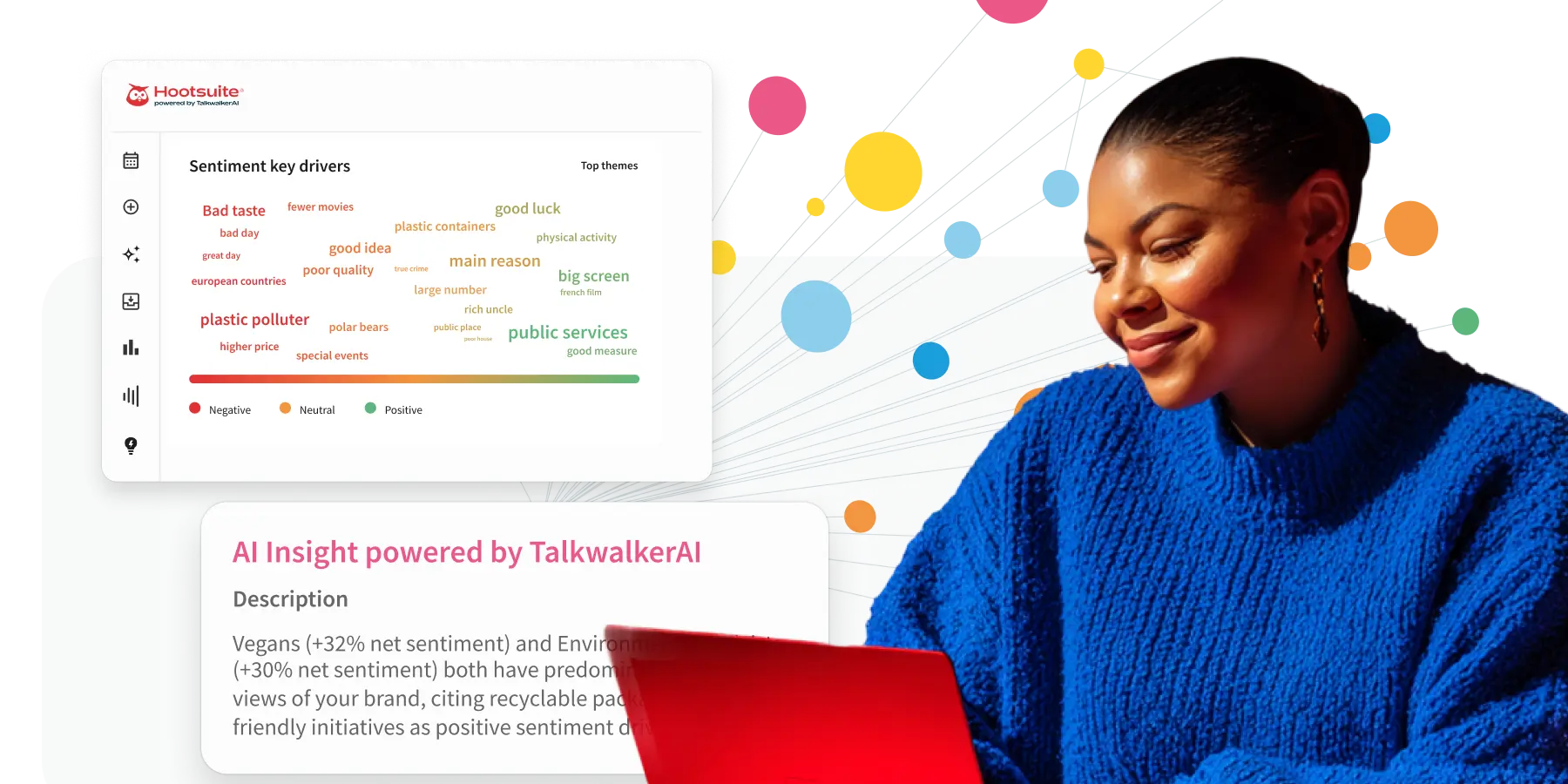
- Social Listening Platforms: Scans the broader internet for mentions of brands, products, competitors, and relevant keywords. Essential features include untagged mention detection, sentiment tracking, comprehensive review site coverage, and customizable alerts.
- AI Chatbots and Automation Solutions: Handles routine inquiries 24/7, reducing agent workload and maintaining consistent response times. Critical capabilities include context retention, seamless human hand-off, multilingual support, and intelligent auto-routing.
- Analytics and Reporting Tools: Measures key performance indicators such as response time, CSAT, and resolution rates. Look for custom report generation, scheduled delivery, integrated CSAT surveys, and team-level performance views.
- CRM and Help Desk Integration: Connects social conversations directly to existing customer records and ticketing systems. Essential for two-way data synchronization, direct ticket creation, secure authentication, and providing agents with comprehensive customer visibility. Such integrations prevent information silos and ensure a holistic view of the customer journey.
Measuring Success and Demonstrating ROI
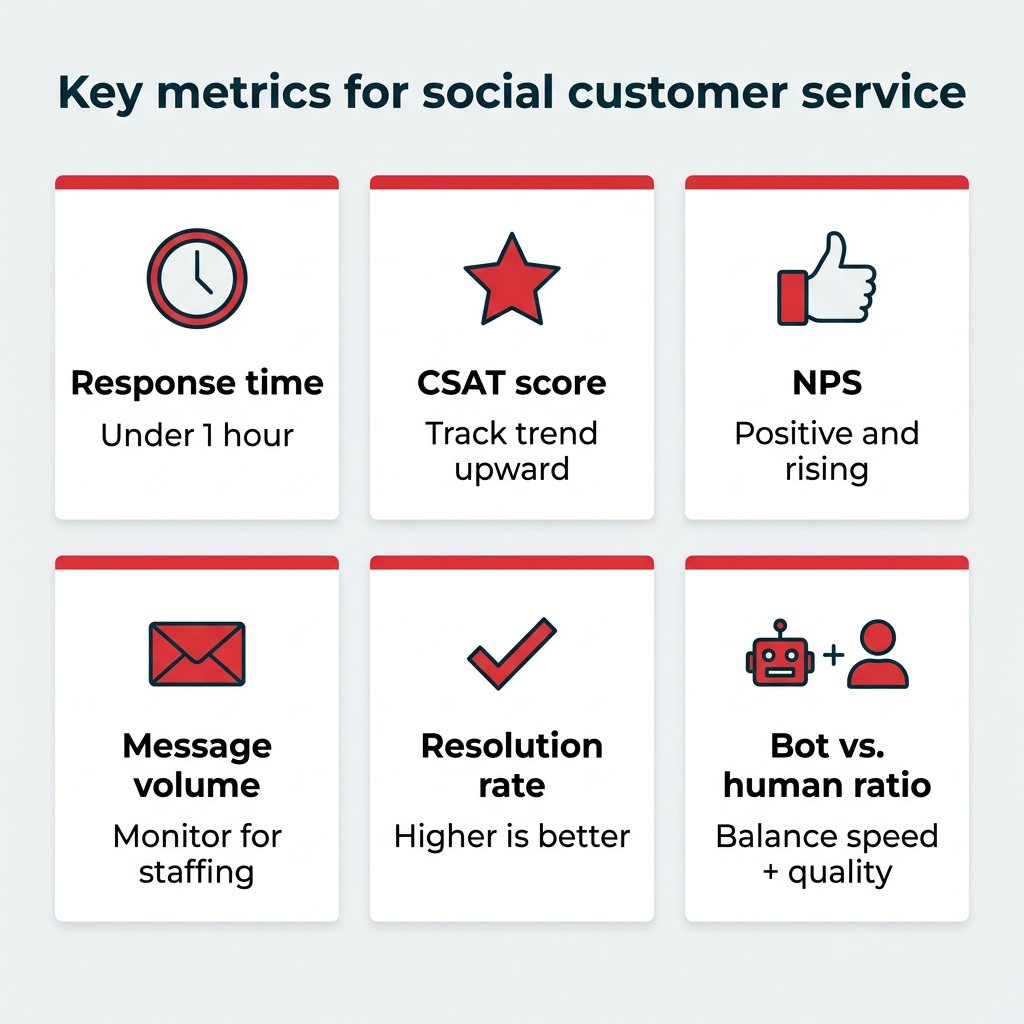
Measuring the success of social media customer service involves tracking specific metrics that reflect the speed, satisfaction, and effectiveness of support interactions. Beyond traditional marketing metrics like follower growth and engagement rates, businesses must focus on dedicated customer service KPIs:
- Average Response Time: The duration customers wait for a reply. The industry benchmark is typically within one hour, with many brands aiming for much faster.
- Customer Satisfaction Score (CSAT): Measures customer satisfaction immediately following an interaction. Tracking trends over time is crucial for continuous improvement.
- Net Promoter Score (NPS): Gauges customer loyalty and their likelihood to recommend the brand. A positive and upward-trending score indicates strong customer advocacy.
- Message Volume: The total number of inbound messages over a period, essential for staffing, resource allocation, and identifying trends.
- Resolution Rate: The percentage of issues that are successfully resolved. A high resolution rate signifies effective problem-solving.
- Automated vs. Human Responses: The ratio of interactions handled by bots versus human agents, critical for balancing efficiency with quality and personalization.
Establishing a baseline using historical data for each channel allows businesses to set realistic targets. Crucially, these metrics should be reported in conjunction with broader business outcomes, such as customer retention and repeat purchases, to demonstrate the tangible return on investment of social customer service to leadership. This strategic approach elevates customer service from a cost center to a vital revenue driver and brand asset.
Integrating social media customer service with existing CRM systems is paramount. When social conversations are siloed, agents lack crucial context, leading to repetitive questions and frustrated customers. A robust integration allows agents to view comprehensive customer history, create or update support tickets directly from social threads, and track resolution within the company’s primary reporting systems. For enterprise-level operations, secure authentication and clear audit trails are essential for governance and compliance.
In conclusion, social media customer service is no longer an optional add-on but a strategic imperative for businesses navigating the complexities of the digital economy. By embracing a proactive, personalized, and technologically augmented approach, organizations can meet evolving customer expectations, build lasting trust, enhance brand reputation, and directly contribute to revenue growth. The future of customer experience is undeniably social, demanding continuous adaptation, sophisticated tools, and an unwavering commitment to putting the customer at the heart of every digital interaction.


 Muslim

 Nana Muazin