Laily UPN

Conversion rate optimization (CRO) has transitioned from a niche marketing tactic to a fundamental pillar of digital business strategy as organizations face rising customer acquisition costs and increasingly saturated digital markets. At its core, a CRO strategy is a systematic, data-driven plan designed to increase the percentage of website visitors who take a specific, desired action—whether that is purchasing a product, signing up for a newsletter, or requesting a software demonstration. Rather than relying on anecdotal evidence or aesthetic preferences, modern CRO leverages rigorous testing, user behavior analysis, and statistical validation to transform existing web traffic into measurable revenue.
The economic imperative for CRO is rooted in the "leaky bucket" theory of digital marketing. Many enterprises invest heavily in search engine optimization (SEO) and pay-per-click (PPC) advertising to drive traffic, yet they experience high bounce rates and low engagement once users arrive. By improving the conversion rate of a landing page by even a single percentage point, a business can significantly decrease its cost per acquisition (CPA) and increase the return on investment (ROI) of its entire marketing spend.
The Evolution and Chronology of Web Optimization
The discipline of web optimization has undergone significant shifts over the last two decades. In the early 2000s, "optimization" was often synonymous with basic A/B testing of button colors or headline text. These efforts were largely disconnected from broader business goals and lacked a structured methodology.
By 2010, the rise of sophisticated analytics tools like Google Analytics and the emergence of specialized heat-mapping software began to provide marketers with deeper insights into user intent. The focus shifted from "what" users were doing to "why" they were doing it. Between 2015 and 2020, the concept of the "CRO Strategy" matured into a holistic framework that integrated psychological principles, user experience (UX) design, and rigorous data science. Today, the field is entering a new era characterized by artificial intelligence and machine learning, where personalization and predictive modeling allow for real-time optimization tailored to individual user profiles.
Establishing a Framework for Conversion Goals
A successful CRO strategy begins with the clear definition of conversion actions, categorized into macro and micro goals. This distinction is critical for understanding the full customer journey.
Macro Conversions
Macro conversions represent the primary objectives of a website. For an e-commerce platform, this is a completed transaction. For a B2B SaaS (Software as a Service) provider, it may be a trial sign-up or a booked consultation. These actions directly correlate with the organization’s bottom line.
Micro Conversions
Micro conversions are smaller, incremental steps that indicate a user is progressing through the sales funnel. Examples include downloading a white paper, viewing a pricing page, or adding an item to a cart without checking out. Tracking these actions allows marketers to identify where the "friction" occurs in the user journey. By optimizing for micro-conversions, businesses can nurture leads that are not yet ready for a macro-conversion, eventually guiding them toward the final sale.

The Role of User Research and Quantitative Analysis
Strategic optimization requires a dual approach to data: quantitative analysis to identify "where" the problem lies and qualitative research to understand "why" the problem exists.
Quantitative Data: Identifying Drop-off Points
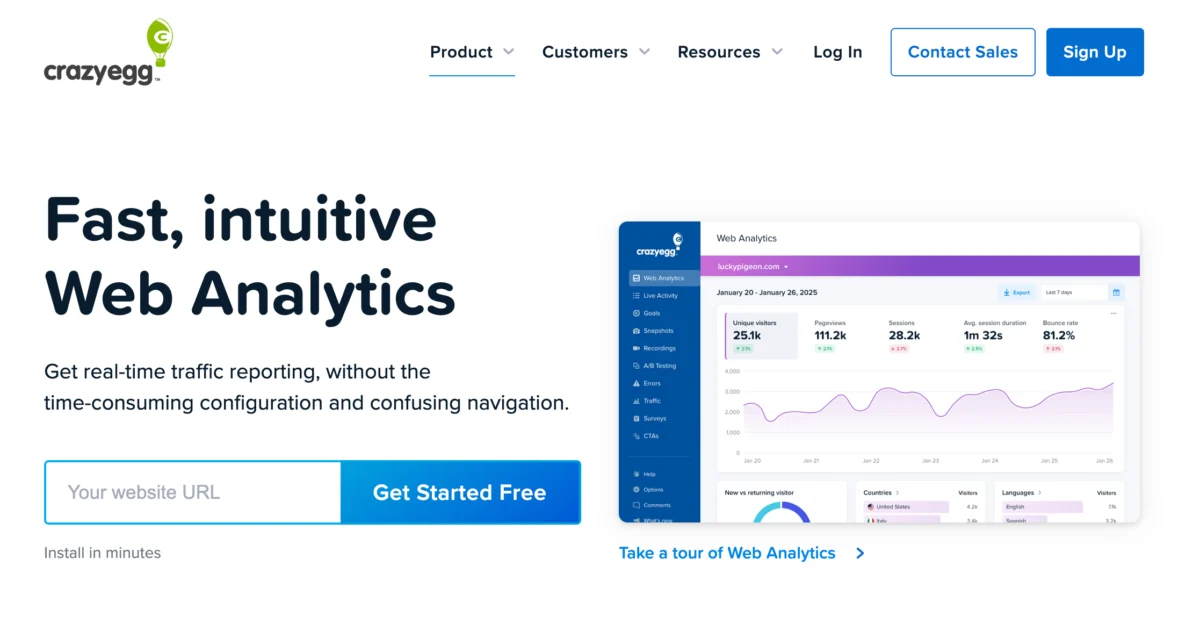
Marketers utilize analytics platforms to monitor high-traffic pages with disproportionately low conversion rates. Key metrics include the bounce rate (the percentage of visitors who leave after viewing only one page) and the exit rate (the percentage of visitors who leave from a specific page). High drop-off rates on a checkout or sign-up page often signal technical errors or significant cognitive friction.
Qualitative Data: Visualizing User Behavior
To complement numerical data, CRO specialists employ visual tools such as heatmaps and session recordings. Heatmaps illustrate where users click, move their cursors, and scroll, revealing whether important information is being ignored or if users are clicking on non-interactive elements. Session recordings provide a video-like playback of individual user journeys, allowing researchers to observe real-time struggles with navigation or form fields.
Voice of Customer (VoC)
Direct feedback through on-site surveys, exit-intent polls, and customer support transcripts provides qualitative context. This data often reveals emotional barriers—such as a lack of trust or price sensitivity—that numbers alone cannot capture.
Prioritizing High-Impact Pages and the ICE Framework
A common pitfall in CRO is attempting to optimize every page simultaneously. Strategic prioritization focuses resources on pages where improvements will yield the highest return.
- Checkout and Pricing Pages: These are high-intent areas. Small reductions in friction here—such as removing unnecessary form fields or adding trust signals like security badges—can lead to immediate revenue gains.
- Product and Core Service Pages: These pages must bridge the gap between user problems and the company’s solutions. Effective optimization here focuses on clarity of value proposition and social proof (testimonials and case studies).
- High-Traffic Blog Content: While informational, these pages often fail to convert visitors into leads. Strategies such as "content upgrades" (offering a relevant PDF in exchange for an email) can capitalize on this existing traffic.
To determine which tests to run first, many organizations use the ICE framework:
- Impact: How much will this change improve the conversion rate?
- Confidence: How sure are we that this change will work based on data?
- Ease: How difficult or expensive is it to implement this change?
The Rigor of A/B Testing and Statistical Significance
The core of any CRO strategy is the A/B test (or split test), where two versions of a page are shown to different segments of visitors to see which performs better. However, the validity of these tests depends on statistical significance.
Statistical significance is a mathematical way of ensuring that the results of a test are not due to random chance. Most industry experts recommend a confidence level of at least 95%. Stopping a test too early—before reaching a sufficient sample size—can lead to "false positives," where a change is implemented based on misleading data. For websites with lower traffic, experts suggest focusing on "big swings"—radical changes to layout or messaging—rather than minor tweaks, to reach significance faster.

Supporting Data and Industry Benchmarks
While "good" conversion rates vary by industry, data from Unbounce and other market analysts provide a baseline for performance. The universal average conversion rate across all industries is approximately 6.6%. However, sector-specific data reveals a more nuanced picture:
- E-commerce: Typically sees conversion rates between 2% and 3%.
- SaaS/B2B: Often ranges from 3% to 5% for lead generation.
- Finance and Professional Services: Can see rates as high as 10% for specialized landing pages.
Analysis shows that the top 25% of websites convert at 11% or higher, while the top 10% achieve rates exceeding 20%. This gap between average and high performers underscores the competitive advantage gained through a dedicated CRO strategy.
Professional Perspectives and Organizational Impact
Marketing leaders and agency executives increasingly view CRO as a hedge against economic volatility. "When ad platforms become more expensive, the only way to maintain margins is to make the website more efficient," notes one digital strategist. "CRO is essentially a multiplier for every other marketing channel."
Furthermore, CRO fosters a "culture of experimentation" within organizations. By moving away from a top-down decision-making model where the "Highest Paid Person’s Opinion" (HiPPO) dictates design, companies become more agile and responsive to actual customer needs. This shift often leads to improved brand perception, as users appreciate the more intuitive, frictionless experiences that result from continuous optimization.
Broader Implications and Future Outlook
The long-term impact of a CRO strategy extends beyond immediate sales. By systematically identifying and removing barriers to conversion, businesses gain a deeper understanding of their target audience’s psychology and preferences. This intelligence informs product development, customer service, and even offline marketing efforts.
As we look toward the future, the integration of AI-driven optimization tools is expected to democratize CRO, allowing smaller businesses to run sophisticated tests that were previously reserved for enterprise-level companies. However, the fundamental principles remain the same: optimization is not a one-time project but a continuous cycle of learning and improvement. In an era where digital attention is the most valuable commodity, the ability to effectively convert that attention into action is the ultimate differentiator for any business.

 Pevita Pearce
 Nana