 Sagoh
The landscape of artificial intelligence has undergone a fundamental shift as the industry moves away from a total reliance on proprietary, cloud-based models toward a decentralized approach defined by local execution. While the raw computational power of massive proprietary models remains significant, the year 2026 has seen a surge in the adoption of locally hosted Large Language Models (LLMs) driven by the need for configurability, data privacy, and reduced latency. This transition has been facilitated by advancements in consumer-grade hardware—specifically the integration of high-bandwidth Neural Processing Units (NPUs) in standard laptops—and the refinement of deployment tools like Ollama and LM Studio. For developers and enterprises alike, the ability to run capable models entirely on-device represents a milestone in digital sovereignty and operational efficiency.
The emergence of these models is not merely a technical curiosity but a response to the growing demand for "Edge AI," where data remains within the user’s perimeter. As we evaluate the current ecosystem, five specific models have emerged as the primary choices for local implementation, each serving distinct roles ranging from general-purpose assistants to specialized coding engines and multimodal processors.
The Evolution of Local AI: A Three-Year Chronology
To understand the current state of local LLMs in 2026, it is necessary to examine the trajectory of the open-weights movement over the preceding three years.
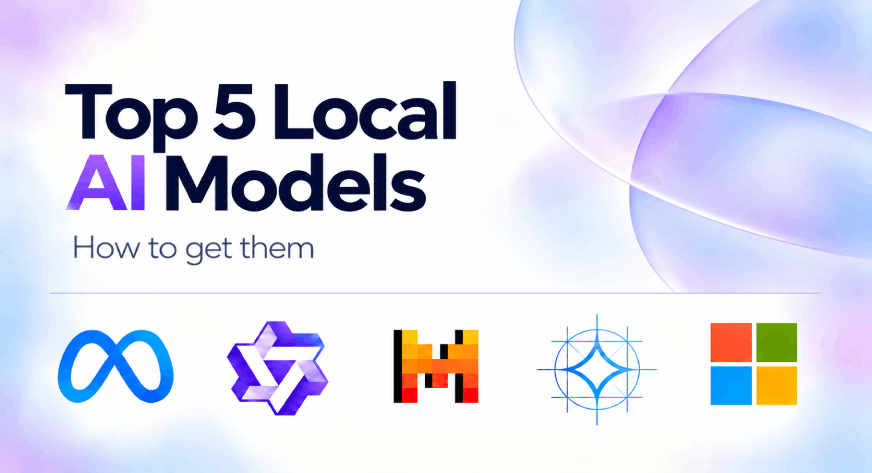
In early 2023, the release of Meta’s initial Llama weights sparked a revolution in the developer community, demonstrating that models with relatively small parameter counts could achieve impressive results when properly fine-tuned. By 2024, the "Small Language Model" (SLM) movement gained momentum as companies like Microsoft and Mistral AI proved that high-quality training data was more important than sheer parameter scale.
The year 2025 marked the "Multimodal Breakthrough," where open-weights models began to move beyond text, incorporating native vision and audio processing capabilities. This led to the current environment in 2026, where local models are no longer considered "downgraded" versions of cloud APIs, but rather specialized tools that offer superior performance in specific, privacy-sensitive contexts.
1. Llama 3.1 8B Instruct: The Industry Standard for General Purpose Utility
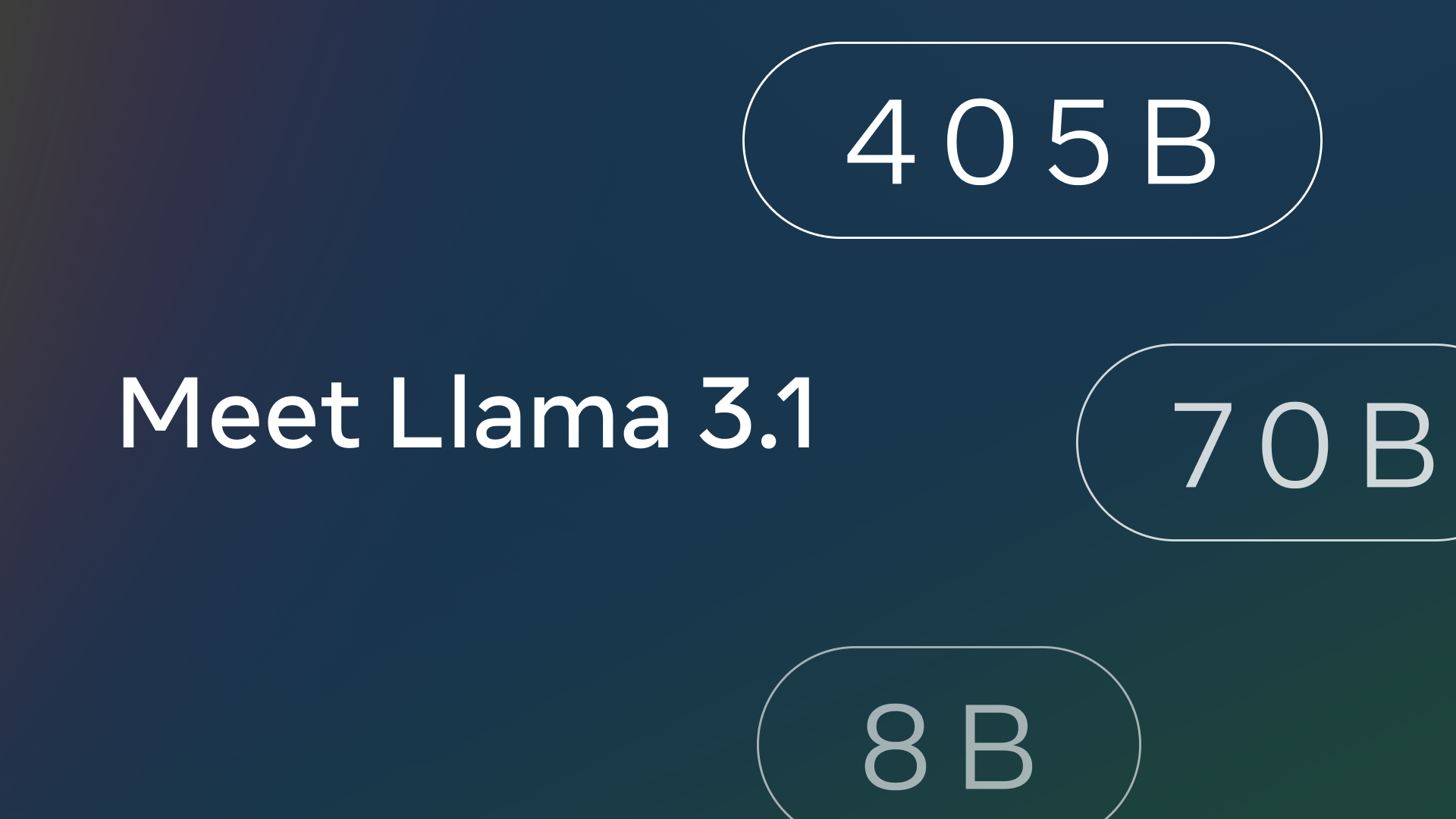
Meta’s Llama 3.1 8B Instruct continues to serve as the foundational baseline for the local AI ecosystem in 2026. Despite being part of an established family, its 8-billion parameter architecture remains the "sweet spot" for most consumer hardware, balancing speed with sophisticated reasoning.
The primary appeal of the Llama 3.1 8B model lies in its massive ecosystem. It is the most widely supported model for adapters, Low-Rank Adaptations (LoRAs), and custom fine-tunes. Organizations frequently use this model for internal summarization, classification, and general-purpose chat assistants. Its 128k context window—a significant upgrade from earlier iterations—allows users to process long documents and extensive codebases without the "memory loss" issues that plagued earlier local models.
From a licensing perspective, the Llama Community License has become a standard for "open-ish" AI, allowing for broad use while maintaining certain protections for the parent company. For developers, starting with Llama 3.1 is often a matter of pragmatism; if a tool or framework supports local AI, it almost certainly supports Llama first.
2. Qwen2.5 7B: Excellence in Multilingualism and Specialized Coding
Developed by Alibaba Cloud, the Qwen2.5 7B series has established itself as the premier choice for tasks requiring multilingual fluency and technical precision. In 2026, the Qwen family is often cited as the strongest competitor to Western-developed models, particularly in the realms of mathematics and programming.
The Qwen2.5 7B comes in two primary flavors: the Instruct model and the Coder model. The Coder variant has become a staple for software engineers who require a local pair-programmer that does not transmit sensitive proprietary code to a third-party server. Benchmarks in 2026 indicate that the Qwen2.5-Coder-7B-Instruct performs at levels comparable to much larger proprietary models in Python, Java, and C++ generation.
Furthermore, Qwen’s training on a diverse, global dataset makes it exceptionally proficient in translating and extracting data from multilingual documents. While Llama remains the general-purpose leader in the West, Qwen is frequently the preferred choice for global enterprises operating across multiple linguistic regions.
3. Mistral 7B Instruct v0.3: The Efficiency Leader for Documentation
Mistral AI, the French powerhouse, has maintained its reputation for "efficiency-first" architecture. The Mistral 7B Instruct v0.3 remains a highly relevant model in 2026 due to its lean resource requirements and its Apache 2.0 license, which offers the highest degree of freedom for commercial customization.
Mistral 7B is particularly effective for "everyday writing" tasks—turning rough bullet points into polished documentation, drafting README files, and generating commit messages. Its instruction-following capabilities are noted for being concise and less prone to the "verbosity" that often affects other models.
A key feature of the v0.3 release is its native support for function calling. This allows the model to interact with external tools and APIs, making it an ideal engine for local agents that need to perform actions like checking a local calendar, querying a database, or managing file systems. For developers building lightweight, autonomous applications, Mistral 7B remains the most reliable "workhorse" model.
4. Gemma 4 E2B / E4B: Google’s Multimodal Edge Solution
Google’s entry into the 2026 local AI market is defined by the Gemma 4 series. Unlike its predecessors, Gemma 4 was built from the ground up to be natively multimodal. The E2B (approximately 5.1B parameters) and E4B (8B parameters) variants are designed to run on smaller devices while processing text, images, and audio simultaneously.
The "E" in the naming convention refers to the effective parameter count, reflecting Google’s use of sophisticated distillation techniques from their larger Gemini models. These models are the preferred choice for "on-device assistants" that need to "see" and "hear." Typical use cases in 2026 include:
- Visual Document Q&A: Asking questions about a PDF or a photograph of a physical document.
- On-Device Transcription: Converting audio to text with high accuracy without cloud latency.
- Image Understanding: Generating alt-text or descriptions for visual assets in a local creative workflow.
Google’s focus with Gemma has been on "Responsible AI," incorporating robust safety filters directly into the weights, which makes it a popular choice for educational and corporate environments where content moderation is a priority.
5. Phi-4-mini: High-Reasoning in a Compact Footprint
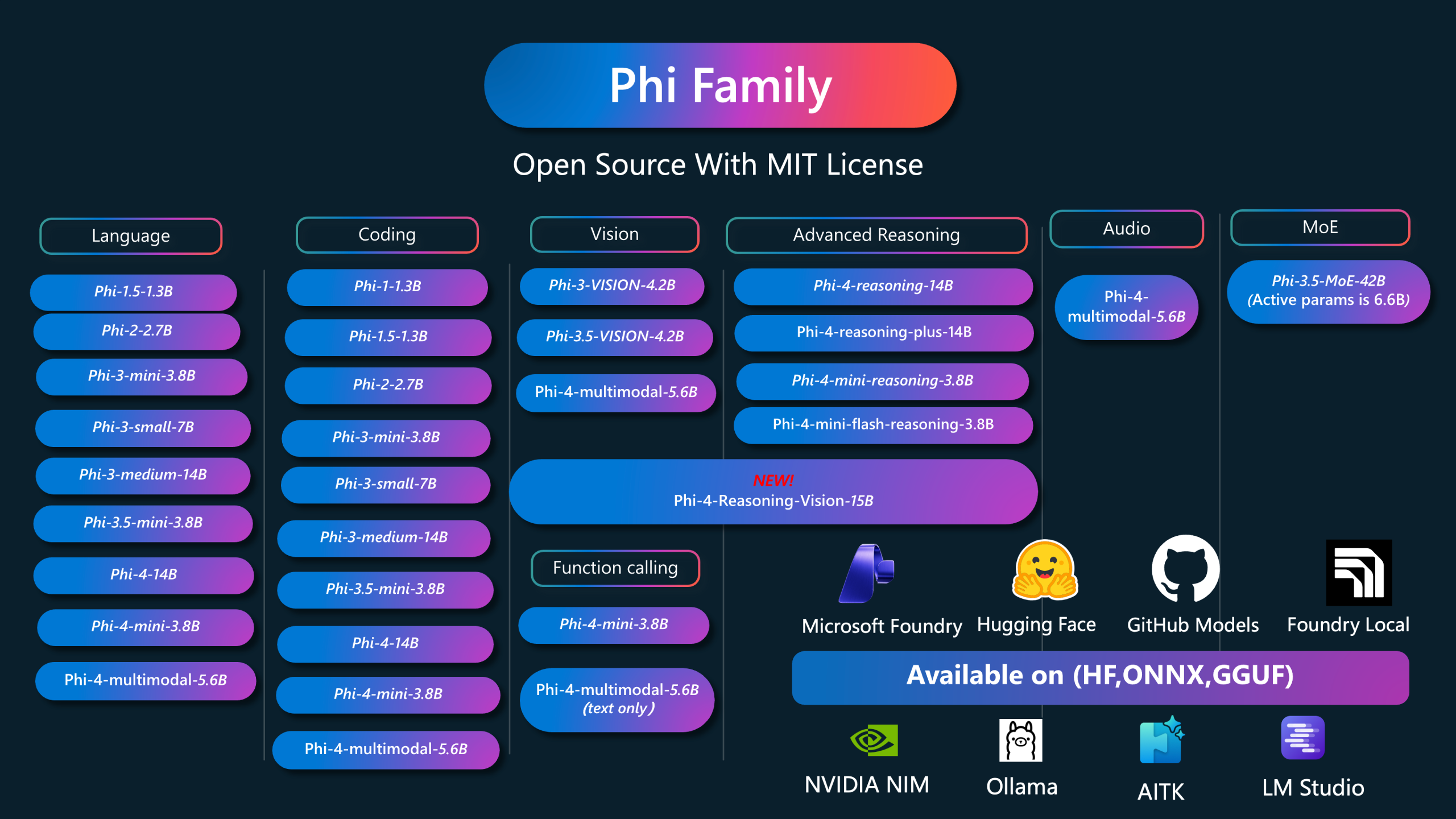
Microsoft’s Phi-4-mini represents the pinnacle of "Small Language Model" engineering in 2026. With only 3.8 billion parameters, it is designed for environments where memory is severely constrained or where near-instantaneous latency is required.
Despite its small size, Phi-4-mini punches well above its weight class in logic, math, and reasoning. This is largely attributed to Microsoft’s strategy of training on "textbook-quality" synthetic data rather than the "noisy" data often found on the open web. In 2026, Phi-4-mini is frequently used as a "router" or a "classifier" in complex AI pipelines—analyzing an incoming prompt and deciding which larger model should handle it, or performing final logic checks on outputs from other models.

Its compact nature allows it to run comfortably on mobile devices and older hardware, making it the most accessible model for users who do not possess high-end GPUs.
Implementation and Hardware Requirements
The adoption of these models has been simplified by the "Ollama effect." Ollama, a tool that wraps complex model configurations into simple command-line or API-driven interactions, has become the de facto standard for local AI deployment. A single command, such as ollama run qwen2.5-coder:7b, is now all that is required to initialize a high-performance environment.
However, hardware remains a critical factor. In 2026, the standard requirements for a fluid local AI experience have crystallized:
- Memory (RAM/VRAM): A minimum of 16GB of unified memory (common in Apple Silicon) or 8GB of dedicated VRAM (in NVIDIA RTX series) is required to run 7B-8B models with 4-bit quantization.
- Quantization: Most local users employ 4-bit or 8-bit quantized versions of these models, which reduce memory footprints by 50-70% with negligible loss in accuracy.
- NPU Integration: The 2026 generation of processors from Intel, AMD, and Apple features dedicated AI silicon that offloads these tasks from the CPU and GPU, significantly reducing power consumption.
Impact and Implications: The Sovereignty of Data
The move toward these five models signifies a broader shift in the digital economy. Industry analysts suggest that by the end of 2026, over 40% of enterprise AI interactions will occur locally or at the edge.
The implications for privacy are profound. When a model runs locally, the "Data Leakage" risk—where sensitive corporate strategy or personal health information is used to train future iterations of a public model—is effectively eliminated. This has led to a "privacy-first" mandate in sectors such as healthcare, legal services, and defense.
Furthermore, the cost implications are undeniable. While proprietary APIs charge per token, a locally hosted model has a fixed cost (the hardware) and a marginal cost (electricity). For high-volume tasks like data extraction or repetitive drafting, local models provide a return on investment within months.
Conclusion
As we progress through 2026, the distinction between "local" and "cloud" AI continues to blur. However, for those who prioritize control, privacy, and speed, the selection of Llama 3.1, Qwen2.5, Mistral 7B, Gemma 4, and Phi-4-mini represents the current state of the art in accessible intelligence. These models prove that power no longer requires a massive data center; sometimes, the most effective AI is the one that never leaves your desk.

 Dwi Wanna

 Jia Lissa