Raul Delapena Setiawan
The digital marketing ecosystem is grappling with a significant and sudden shift in email deliverability, as Gmail, long considered the bastion of inbox placement, has experienced a dramatic plummet in its average inbox placement rates (IPRs). This unprecedented decline, identified in recent industry benchmarks, poses a critical challenge for email senders and marketing leaders, particularly as the high-stakes Black Friday and holiday shopping season approaches. The implications extend far beyond mere statistics, potentially costing businesses millions in lost revenue and forcing a fundamental reevaluation of email marketing strategies.
The Unprecedented Decline: Data from Validity Reveals a Stark Reality
For years, Gmail consistently led the pack among mailbox providers (MBPs) with superior inbox placement, providing a reliable channel for businesses to connect with their audiences. However, this long-standing stability has been shattered in 2026. According to Validity’s latest deliverability benchmark report, which previously highlighted Gmail’s stellar performance in 2025 with an 89.8 percent inbox IPR (comfortably ahead of Yahoo at 87.3 percent and Microsoft at 77.4 percent), the landscape has dramatically altered.
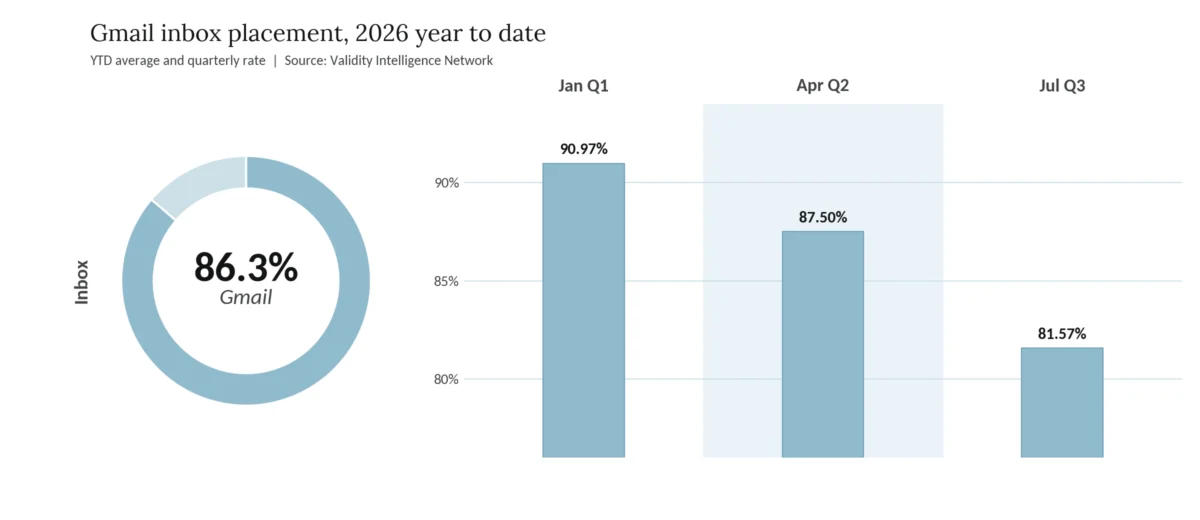
The initial quarter of 2026 saw Gmail maintaining its robust performance, averaging an impressive 90.97 percent IPR. Yet, this peak was short-lived. By the third quarter of 2026, Gmail’s IPR had plummeted to a concerning 81.57 percent, marking a substantial 9.4 percent reduction within a mere six months. This rapid decline is particularly alarming given Gmail’s dominant market share and its foundational role in countless email marketing programs.
Digging deeper into the metrics reveals the underlying drivers of this downturn. The report indicates a sharp increase in Gmail spam placement rates, which have risen by three quarters over 2026, climbing from 5.4 percent to 9.5 percent. Concurrently, "missing rates"—emails that are either blocked or rejected outright by Gmail’s servers—have also surged by 2.5 percentage points, escalating from 3.6 percent to 8.9 percent. These two factors combined paint a clear picture: a growing proportion of legitimate emails are either being rerouted to spam folders or failing to reach their intended recipients altogether.
The situation is even more dire for Business-to-Business (B2B) senders utilizing Google Workspace. Average IPRs for Google Workspace accounts have experienced an even steeper descent, dropping precipitously from 88.9 percent to 74.3 percent. This represents a staggering 14.6 percent delta, and critically, this figure does not even account for the additional filtering layers imposed by corporate spam filters such as Proofpoint, which can further reduce deliverability in enterprise environments. The cumulative effect means a significant portion of B2B communications are simply not reaching their target professional inboxes, hindering sales, customer service, and internal communications.
Why Gmail Matters: A Market Dominance Perspective
To fully appreciate the gravity of this situation, it’s essential to understand Gmail’s unparalleled influence in the email landscape. Globally, Gmail commands an inbox market share of 40.4 percent, solidifying its position as the world’s largest mailbox provider. In the United States, its dominance is even more pronounced, capturing an astounding 53.9 percent of the market. This means that for a vast majority of email senders, Gmail accounts for at least half, if not more, of their entire email recipient base.
Historically, Gmail has been revered for its sophisticated yet generally forgiving spam filtering algorithms. While rigorous in protecting users from malicious content, it typically allowed well-intentioned senders with good practices to achieve high inbox rates. This reliability fostered a sense of security among marketers, who often built their strategies around the assumption of strong Gmail deliverability. The current shift, therefore, represents a fundamental challenge to these long-held assumptions and established operational norms.
The timing of this decline couldn’t be worse. The holiday shopping season, initiated by Black Friday, is the most critical period for many retailers and e-commerce businesses. Email marketing plays an indispensable role during this time, driving promotions, sales, and customer engagement. A significant reduction in Gmail deliverability during this peak season directly translates to reduced visibility, diminished sales, and substantial revenue losses.
Unpacking the "Perfect Storm": Potential Factors Behind the Shift
While Validity’s report points to a "perfect storm of factors" driving this change, it’s crucial to explore the plausible technical and behavioral elements contributing to this unprecedented decline. Industry analysts suggest several key areas that Google may be tightening its grip on:
-
Advanced AI and Machine Learning in Spam Detection: Google has consistently invested heavily in artificial intelligence and machine learning. It’s highly probable that their spam detection algorithms have become significantly more sophisticated, capable of identifying subtle patterns of unsolicited or low-engagement content that previously slipped through. These new models might be more aggressive in classifying bulk sends, even from legitimate marketers, if they exhibit characteristics associated with spam.
-
Increased Emphasis on Sender Reputation Metrics: While always important, Gmail appears to be placing an even greater weight on sender reputation. This isn’t just about avoiding spam complaints; it encompasses a broader range of signals including consistent sender authentication (DMARC, SPF, DKIM), IP address reputation, domain reputation, and crucially, recipient engagement. Low open rates, high delete-without-opening rates, and frequent marking as spam or unsubscribes from a particular sender can severely damage reputation, leading to lower inbox placement.
-
Stricter Enforcement of Authentication Standards: Email authentication protocols like DMARC, SPF (Sender Policy Framework), and DKIM (DomainKeys Identified Mail) are designed to verify the sender’s identity and prevent spoofing. Google has been a proponent of these standards for years. It’s possible that enforcement has become more stringent, with emails failing these checks more likely to be sent to spam or rejected outright. Many senders, particularly smaller ones, may not have fully optimized or consistently maintained these protocols.
-
User Engagement as a Primary Signal: Gmail’s algorithms are notoriously user-centric. If a significant portion of recipients are not opening, clicking, or otherwise interacting positively with emails from a particular sender, but are instead deleting them, moving them to trash, or marking them as spam, this negative engagement heavily influences deliverability. Google likely prioritizes delivering content that users genuinely want to see. A general decline in email engagement across the board could therefore be contributing to the issue.
-
Data Privacy and Regulatory Landscape: While not directly cited, the increasing global focus on data privacy (e.g., GDPR, CCPA) and unsolicited communications might indirectly influence MBP behavior. Google, as a major player, might be proactively adjusting its filters to align with or even exceed evolving user expectations for privacy and control over their inboxes.

-
Volume and Frequency Management: The sheer volume of emails sent globally continues to rise. Google may be adjusting its filtering thresholds to manage the deluge, making it harder for high-volume, low-engagement senders to reach the inbox. This aligns with the "quality over quantity" mantra now being echoed across the industry.
Chronology of a Crisis: Q1 to Q3 2026
The timeline of Gmail’s deliverability decline underscores its rapid and unexpected nature:
- 2025 Benchmark: Gmail concluded 2025 with an industry-leading average IPR of 89.8 percent, as reported by Validity, cementing its status as the most reliable MBP.
- Q1 2026: The year began on a strong note, with Gmail’s IPRs averaging 90.97 percent, indicating continued robust performance and perhaps even a slight improvement over the previous year-end. Marketers largely continued with their established strategies, confident in Gmail’s reach.
- Q2 2026 (Inferred): While not explicitly detailed in the provided data, the dramatic drop from Q1 to Q3 suggests a significant decline would have begun or accelerated during the second quarter. This period would likely have seen the initial signs of trouble, perhaps in the form of subtle dips in engagement metrics or anecdotal reports from senders.
- Q3 2026: The third quarter witnessed the full impact of the shift, with Gmail’s IPR plummeting to 81.57 percent. This represents a stark 9.4 percent reduction from Q1, translating into millions of emails diverted from the primary inbox. Concurrently, spam placement rates surged to 9.5 percent, and missing rates climbed to 8.9 percent, confirming a systemic change in how Gmail processes incoming mail.
This compressed timeline suggests that Google implemented significant changes to its filtering mechanisms over a relatively short period, catching many marketers off guard and necessitating immediate strategic adjustments.
The Financial Fallout for Marketers
The financial implications of this deliverability crisis are substantial and immediate. Given Gmail’s dominant market share, particularly in the US, a 10 percent drop in deliverability translates directly into a 10 percent reduction in the potential reach and effectiveness of email campaigns for half of most senders’ email programs.
Consider the commonly cited average revenue per message, which stands at approximately 11 cents. For every million Gmail messages a marketer sends during the crucial Black Friday period, this 9.4 percent reduction in IPR means that roughly 94,000 fewer emails are reaching the primary inbox. At 11 cents per message, this equates to a direct revenue loss of approximately $10,340 for every million messages sent to Gmail addresses.
For large-scale retailers sending tens or hundreds of millions of emails during the holiday season, these figures quickly escalate into millions of dollars in lost revenue. This is not merely a theoretical exercise; it represents a tangible hit to bottom lines, impacting sales targets, marketing ROI, and overall business profitability. Moreover, the hidden costs include wasted resources on campaign creation, reduced brand visibility, and the potential for frustrated customers who miss out on important offers.
Strategic Imperatives for Email Marketers
In light of this evolving landscape, email marketers must urgently adapt their strategies to navigate Gmail’s new reality. The era of "spray and pray" or simply focusing on volume is unequivocally over.
- Prioritize Measurement and Monitoring: The adage "measurement drives management" has never been more pertinent. Marketers must invest in robust deliverability monitoring tools that provide real-time insights into sender reputation, inbox placement rates across various MBPs (especially Gmail), spam trap hits, and bounce rates. Understanding these metrics is the first step toward identifying issues and implementing corrective actions.
- Obsessive Focus on Sender Reputation: Maintaining an impeccable sender reputation is paramount. This involves:
- List Hygiene: Regularly cleaning email lists to remove inactive, unengaged, or invalid addresses. Sending to unengaged subscribers signals low value to MBPs.
- Consistent Authentication: Ensuring DMARC, SPF, and DKIM records are correctly configured, published, and monitored for compliance. Any authentication failures can severely impact deliverability.
- Monitoring Feedback Loops: Actively responding to spam complaints and unsubscribe requests, and ensuring prompt removal of those users from future sends.
- Elevate Engagement: Gmail’s algorithms are increasingly favoring emails that users actively engage with. Marketers must:
- Segment and Personalize: Send highly targeted and relevant content to specific audience segments rather than generic blasts. Personalization drives engagement.
- Optimize Content and Subject Lines: Craft compelling subject lines that encourage opens and content that provides genuine value, fostering clicks and positive interactions.
- Implement Re-engagement Campaigns: Identify inactive subscribers and attempt to re-engage them with special offers or content. If unsuccessful, remove them from the active sending list.
- Compliance with MBP Bulk Sender Requirements: Stay abreast of and strictly adhere to all bulk sender guidelines published by Gmail (and other major MBPs). These guidelines often include technical requirements, content best practices, and sender reputation advice.
Leadership’s Mandate: Adapting to the New Reality
For marketing leadership, the implications are even broader, requiring a strategic pivot and potentially a reallocation of resources. The immediate takeaway is clear: "less is more," and "quality trumps quantity."
- Rethink Volume and Frequency: Instead of pushing email teams to increase sending frequency and volume, leadership should encourage a strategy of smaller, more highly targeted sends. The goal should be to reach a smaller, highly engaged cohort that is more likely to convert, rather than aiming for zero visibility to a larger, less interested audience.
- Invest in Deliverability Infrastructure and Expertise: Email deliverability is no longer a peripheral concern; it’s a core business function. Marketing leaders must support investment requests for advanced deliverability tools, sender reputation management platforms, and potentially hiring or training dedicated deliverability specialists. This investment ensures that emails, a critical revenue driver, actually reach their intended destination.
- Integrate AI-Driven Strategies: The rise of AI in spam filtering suggests that marketers need to use AI themselves to optimize campaigns. This could involve AI-powered content optimization, predictive analytics for engagement, and intelligent segmentation to ensure relevance.
- Cross-Channel Strategy Review: While email remains powerful, its diminishing reach at Gmail necessitates a review of the broader cross-channel marketing strategy. Are other channels (social media, SMS, push notifications, paid ads) effectively compensating for potential email deliverability gaps?
Broader Industry Implications and Future Outlook
Gmail’s significant shift is not an isolated event; it represents a powerful signal for the entire email marketing industry. Other MBPs often follow Google’s lead, and it’s plausible that we will see similar tightening of filtering policies across Yahoo, Microsoft, and others in the near future. This collective movement towards stricter deliverability standards underscores an industry-wide trend: a relentless pursuit of a cleaner, more valuable inbox experience for users.
This new era demands a more sophisticated and ethical approach to email marketing. Marketers must move beyond simply acquiring email addresses and focus on building genuine relationships with their subscribers. Permission-based marketing, transparent data practices, and a consistent commitment to providing value will be the cornerstones of successful email programs moving forward.
The long-term future of email marketing remains robust, but its execution must evolve. It will require greater diligence, more advanced technological tools, and a deeper understanding of recipient behavior and MBP algorithms. The current crisis at Gmail is not an end to email marketing, but rather a powerful catalyst for its necessary transformation into a more refined, engagement-driven, and ultimately more effective channel.
In conclusion, the dramatic decline in Gmail’s inbox placement rates is a critical development that demands immediate attention and strategic adaptation from all stakeholders in the digital marketing landscape. With the crucial holiday shopping season upon us, the imperative to prioritize quality, engagement, and rigorous deliverability practices has never been more urgent. Businesses that quickly embrace this new reality and adjust their strategies accordingly will be best positioned to mitigate losses and thrive in the evolving email ecosystem.

 Sagoh