Pevita Pearce
The digital analytics landscape underwent a significant transformation following the December 2023 acquisition of Heap by Contentsquare, a move that consolidated one of the industry’s most prominent product analytics platforms into a broader digital experience suite. This strategic merger, which followed Contentsquare’s 2021 acquisition of Hotjar, has prompted many product managers, marketers, and data analysts to re-evaluate their tech stacks. While Heap’s pioneering "autocapture" technology remains a benchmark for retroactive data analysis, shifting market priorities—specifically toward pricing transparency, integrated A/B testing, and reduced data noise—have driven a surge in interest for specialized alternatives. The current market offers four primary contenders that cater to distinct organizational needs: Crazy Egg for visual optimization, Mixpanel for deep product insights, Pendo for in-app guidance, and Fullstory for high-fidelity session intelligence.
The Strategic Shift: Why Organizations Are Moving Beyond Heap
The transition away from Heap is rarely a reflection of a failure in its core technology but rather a response to evolving operational requirements and market consolidation. When Contentsquare acquired Heap, it signaled a shift from pure-play product analytics toward a unified "Experience Intelligence" model. For many teams, this roadmap uncertainty creates friction, especially for those who require dedicated tools for feature flagging or rapid experimentation rather than broad-spectrum journey mapping.
One of the most significant pain points cited by departing customers is the lack of pricing predictability. Heap’s billing model is predicated on session volume, which can lead to "success tax" scenarios where increased traffic results in exponential cost increases without a corresponding increase in analytical value. According to market data from February 2026 provided by SaaS procurement platform Vendr, the median Heap contract has reached approximately $41,000 annually, with enterprise-level deals often exceeding $150,000. Furthermore, the restriction of essential features like heatmaps and session replays to premium, paid add-on tiers has made the platform less accessible to mid-market teams.
Technically, the "autocapture" feature—once Heap’s greatest selling point—has become a double-edged sword for mature data organizations. While it records every interaction automatically, it often generates significant "data noise." Teams frequently find themselves spending more time cleaning, labeling, and managing thousands of irrelevant events than actually performing analysis. This has led to a resurgence in "planned tracking" models, where tools like Mixpanel and Amplitude prioritize intentional data collection over the "capture everything" approach.
A Chronology of Consolidation in the Analytics Sector
To understand the current state of the market, one must look at the timeline of industry consolidation that has narrowed the field of independent analytics providers:

- September 2021: Contentsquare acquires Hotjar, signaling an aggressive move into the mid-market experience analytics space.
- December 2023: Contentsquare completes its acquisition of Heap, its largest to date, aiming to combine Heap’s product analytics with Contentsquare’s visual journey analysis.
- 2024-2025: Competitors like Mixpanel and Crazy Egg aggressively expand their feature sets to include surveys, A/B testing, and AI-driven summaries to capture displaced Heap users.
- February 2026: Market reports indicate a stabilizing trend where organizations are choosing "best-of-breed" tools over "all-in-one" suites to maintain agility and cost control.
1. Crazy Egg: The Visual and Optimization Powerhouse for Marketers
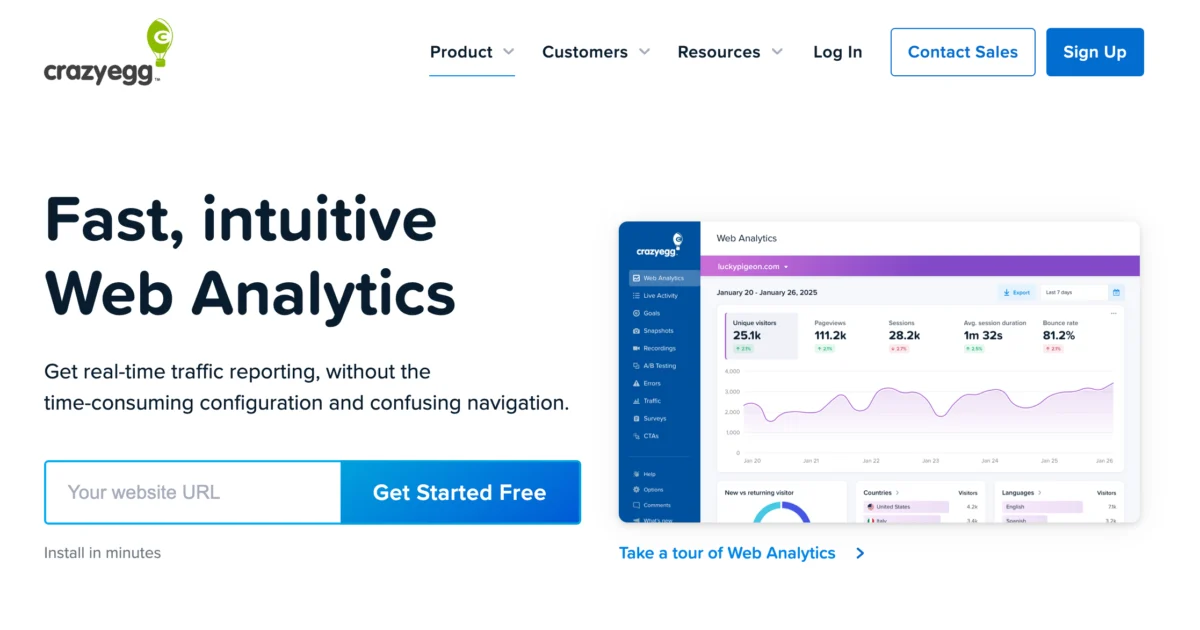
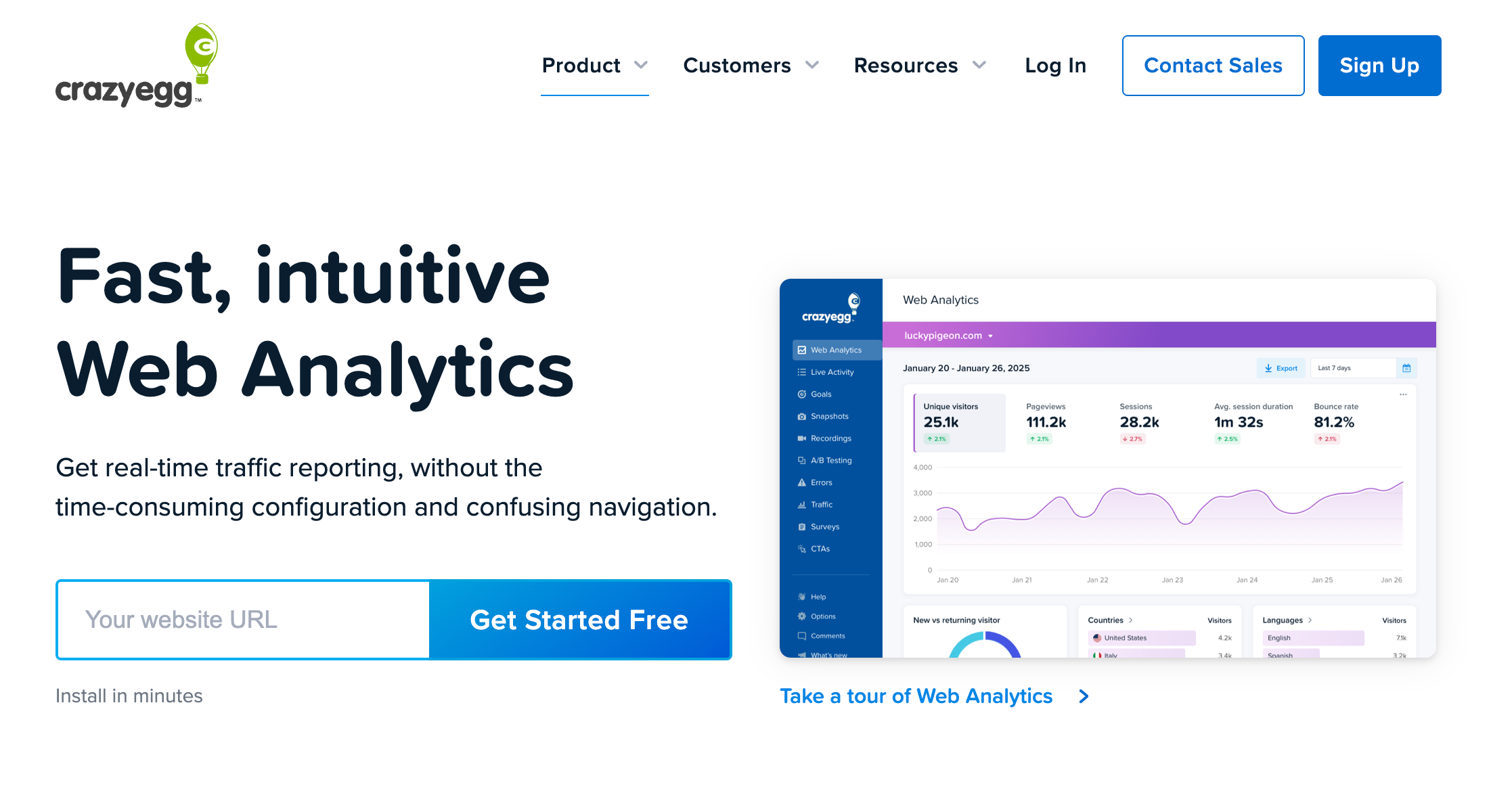
Crazy Egg has emerged as the premier choice for marketing and design teams who prioritize visual evidence of user behavior over complex data science workflows. Unlike Heap, which can be intimidating for non-technical users, Crazy Egg focuses on "Snapshot" reporting that provides immediate, actionable insights into how users interact with specific page elements.
Key Advantages and Strategic Fit:
Crazy Egg’s value proposition lies in its multi-map approach. It offers five distinct heatmap types, including the "Confetti Map," which allows users to segment clicks by referral source, search term, or browser type. This level of granularity is particularly useful for conversion rate optimization (CRO) specialists. Furthermore, Crazy Egg integrates A/B testing and user surveys directly into its base platform—features that are either missing or require third-party integrations in Heap.
Financial Implications:
For organizations focused on the bottom line, Crazy Egg offers a stark contrast to Heap’s enterprise pricing. With paid plans starting as low as $29 per month, it provides a low-barrier entry point for startups and mid-sized agencies while still offering the scalability required by larger firms. Its inclusion of free analytics and surveys adds a layer of qualitative data that helps explain the "why" behind the "what."

2. Mixpanel: The Gold Standard for Event-Based Product Analytics
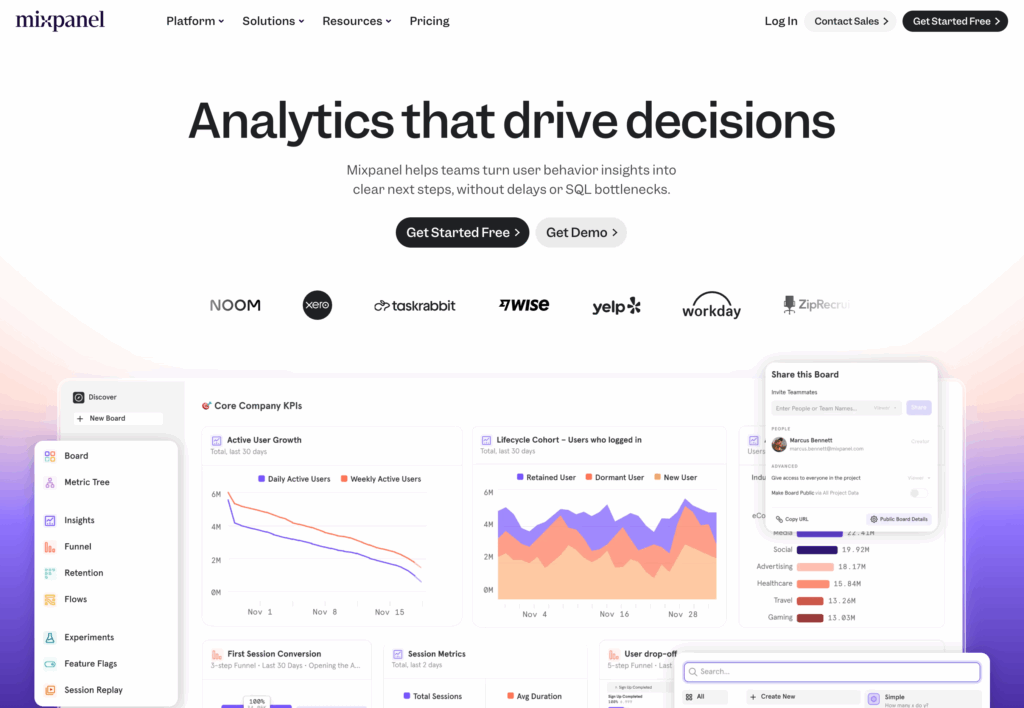
For product teams that have outgrown the "noise" of autocapture and require surgical precision in their data, Mixpanel stands as the leading alternative. Mixpanel pioneered the event-based tracking model, which focuses on user actions rather than page views or sessions.
Analytical Depth:
Mixpanel excels in cohort analysis and retention modeling. It allows product managers to track how specific features impact long-term user behavior. Unlike Heap, Mixpanel’s reporting is built for real-time speed, enabling teams to see the impact of a new feature release within seconds. Its "Signal" and "Predict" features use machine learning to identify which behaviors are most likely to lead to conversion or churn, providing a forward-looking perspective that retroactive tools often lack.
Accessibility and Scale:
Mixpanel’s pricing model is widely considered more favorable for growing apps, offering a free tier that supports up to 1 million events per month. This allows early-stage companies to build a sophisticated data culture without initial capital expenditure. For established enterprises, Mixpanel’s move toward "warehouse-native" analytics allows them to run reports directly against their own data lakes (like Snowflake or BigQuery), ensuring data sovereignty and security.

3. Pendo: Integrating Analytics with Digital Adoption
Pendo represents a different category of tool—the Product Experience Platform (PXP). While Heap focuses on observing behavior, Pendo focuses on influencing it. This makes it the preferred choice for enterprise SaaS companies and internal IT teams managing employee software adoption.
The Hybrid Advantage:
Pendo combines robust product analytics with in-app guidance tools. If the data shows that users are getting stuck at a specific step in a workflow, Pendo allows the team to immediately deploy a "guide" or "tooltip" to help the user finish the task. This closed-loop system between insight and action is a significant differentiator.
Enterprise Focus:
Pendo’s suite includes specialized modules for feedback collection and roadmap planning, creating a centralized "source of truth" for product strategy. While its pricing is firmly in the enterprise bracket (often requiring a custom quote), the value derived from increased user retention and reduced support tickets often justifies the investment for high-contract-value B2B platforms.
4. Fullstory: Unrivaled Fidelity in Session Intelligence
When the primary goal is to understand the nuances of the user experience—specifically where technical errors or UI friction occur—Fullstory is the industry leader. It provides what is often described as "high-definition" session replay.
Frustration Detection:
Fullstory’s proprietary "Frustration Signals," such as "Rage Clicks," "Dead Clicks," and "Thrashed Curses," allow teams to automatically identify moments where users are struggling. While Heap has added session replay capabilities, Fullstory’s search and indexing engine is more advanced, allowing users to search for sessions based on complex CSS selectors or specific API errors.
Cross-Functional Utility:
Fullstory bridges the gap between product, engineering, and customer support. When a bug is reported, support teams can watch the exact session where it occurred and share the link with developers, who can then inspect the browser console logs and network requests directly within the Fullstory interface. This significantly reduces the "Mean Time to Resolution" (MTTR) for technical issues.
Comparative Analysis: Identifying the Optimal Fit
The choice between these four alternatives depends largely on the primary objective of the organization:
- For Marketing and CRO: Crazy Egg is the logical choice due to its visual maps, built-in A/B testing, and affordability.
- For Product Growth and Data Science: Mixpanel offers the most robust framework for tracking user journeys and predicting future behavior.
- For Onboarding and Enterprise SaaS: Pendo’s combination of analytics and in-app messaging provides a comprehensive solution for user success.
- For UX Research and Technical Debugging: Fullstory provides the highest level of detail for diagnosing friction and errors.
Broader Industry Implications and Future Outlook
The migration away from all-in-one legacy tools toward specialized, integrated stacks reflects a maturing digital economy. Organizations are increasingly wary of "vendor lock-in" and are prioritizing tools that offer open APIs and seamless data portability. The acquisition of Heap by Contentsquare is likely just one of several consolidations we will see as the market shifts toward "Experience Intelligence."
However, for the end-user, this competition is a net positive. It has forced providers to innovate rapidly, leading to the integration of generative AI for data summarization, more transparent pricing models, and a greater emphasis on privacy-first tracking. As privacy regulations like GDPR and CCPA continue to evolve, the ability of these tools to provide deep insights while maintaining strict data anonymity will become the next major battleground in the analytics sector. Teams that choose their Heap alternative today are not just buying a tool; they are choosing a partner for their long-term data strategy in an increasingly complex digital world.


 Asro

 Asep Darmawan