Nila Kartika Wati
Crazy Egg, a pioneer in the field of web analytics and user behavior mapping, has officially unveiled an expanded suite of design customization features for its Popup Surveys and Call-to-Action (CTA) tools. This update, led by the company’s growth marketing division, aims to provide digital marketers, UX designers, and e-commerce managers with the granular control necessary to align on-site engagement tools with sophisticated brand identities. By introducing advanced settings for colors, typography, and structural styling, the platform seeks to bridge the gap between third-party marketing overlays and native website aesthetics, while simultaneously addressing the growing industry demand for digital accessibility.
The announcement comes at a time when user experience (UX) is increasingly dictated by the seamlessness of third-party integrations. For years, digital marketers have relied on popups and banners to capture "zero-party data"—information intentionally shared by the consumer—yet these tools have often been criticized for appearing intrusive or disconnected from the primary site design. The new Crazy Egg update addresses these friction points by allowing for a "no-code" design environment where every visual element of a survey or CTA can be modified to match the host site’s CSS (Cascading Style Sheets) parameters.
Detailed Breakdown of Design Enhancements
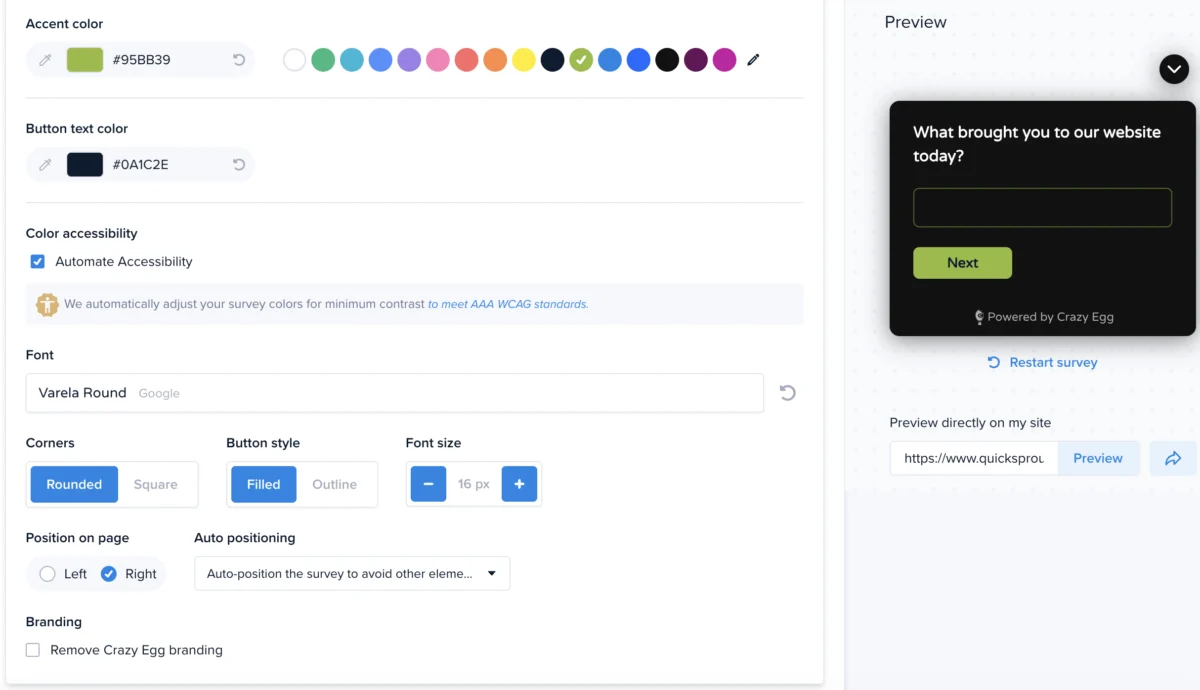
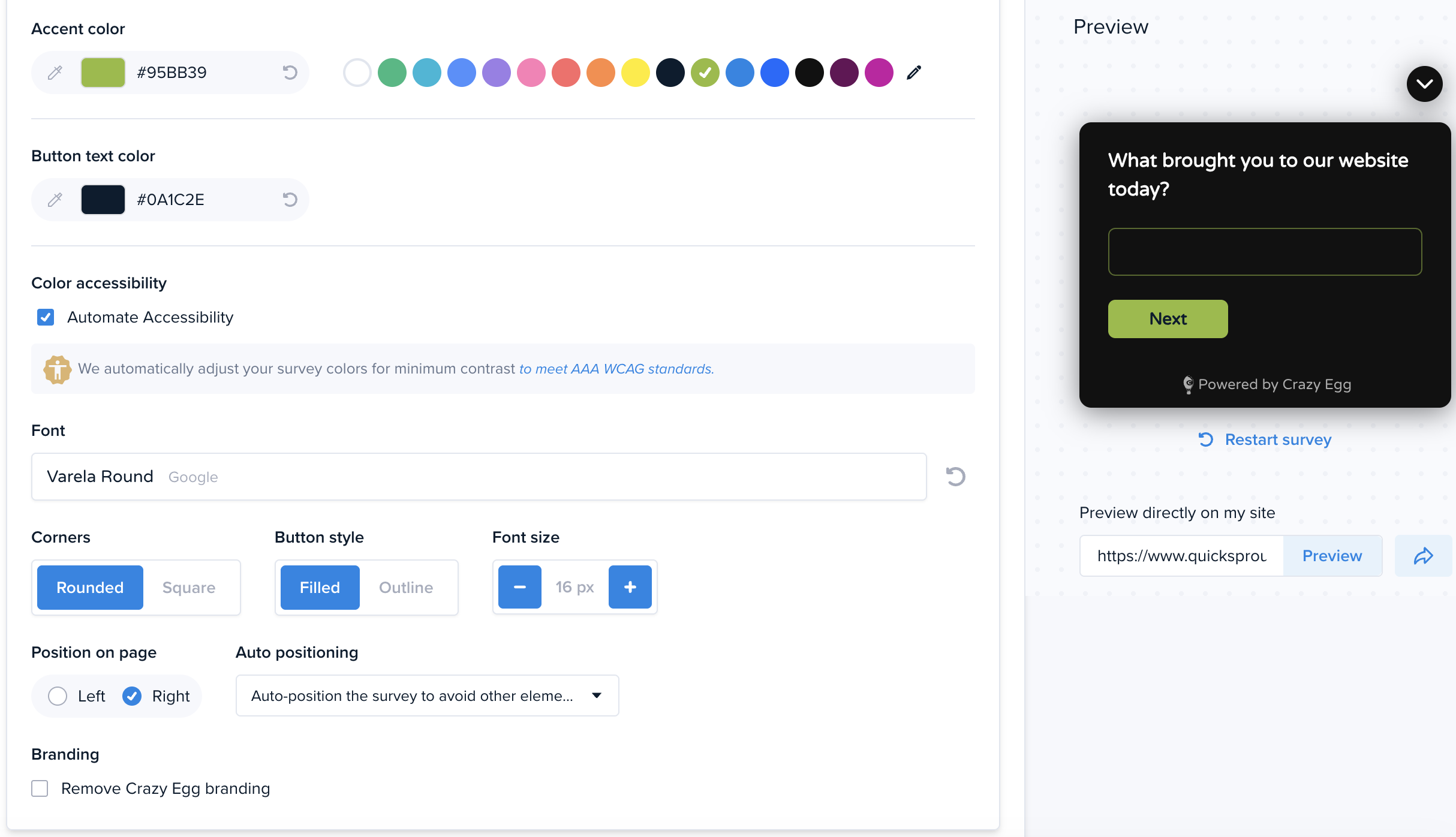
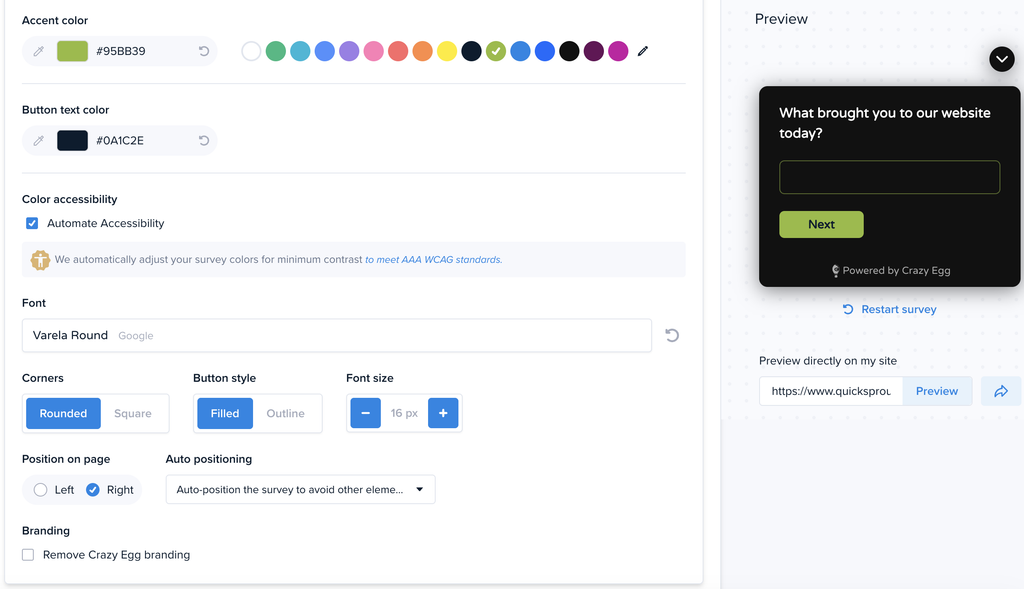
The core of the update resides within a revamped "Design" tab located inside the Survey and CTA editor. This interface provides a real-time preview environment where changes are reflected instantly, allowing for rapid prototyping and iteration.
Color Palettes and Brand Alignment
Marketers can now move beyond basic presets to implement specific hex codes and RGB values for every component of the overlay. This includes the background container, the overlay backdrop (which dims the rest of the page), text elements, and the buttons themselves. By matching the exact color palette of a brand, companies can reduce "banner blindness" and increase the perceived trustworthiness of the survey. Industry data suggests that brand consistency across all touchpoints can increase revenue by up to 23%, as users are more likely to engage with content that feels like a secure, integrated part of their browsing experience.
Typography and Readability
The update introduces expanded font selections, enabling users to choose typefaces that mirror their site’s primary headers and body text. Typography plays a psychological role in conversion; for instance, serif fonts are often associated with authority and tradition, while sans-serif fonts evoke a modern, clean feeling. By providing the ability to adjust font weights, sizes, and line heights, Crazy Egg ensures that surveys remain legible across various screen resolutions, from desktop monitors to mobile devices.
Structural Styling and Borders
Beyond color and text, the update offers control over the physical "shape" of the engagement tools. Users can adjust border radii to create sharp, professional corners or soft, rounded "pill" shapes. Additionally, shadow effects can be toggled to provide a sense of depth, helping the popup stand out against complex backgrounds without being visually jarring. These stylistic choices allow the tools to adapt to the prevailing design trends of 2024 and beyond, such as "Glassmorphism" or "Neumorphism."
The Critical Shift Toward Digital Accessibility
Perhaps the most significant aspect of this update is the focus on accessibility. As global regulations such as the Americans with Disabilities Act (ADA) and the European Accessibility Act (EAA) become more stringent, digital platforms are under pressure to ensure that all users, regardless of visual or cognitive impairments, can interact with web content.
Crazy Egg’s new design suite includes features specifically aimed at meeting Web Content Accessibility Guidelines (WCAG). This includes:
- Contrast Ratios: The color selection tool assists users in maintaining a high enough contrast ratio between text and backgrounds, ensuring that users with low vision can read the prompts.
- Keyboard Navigation: The backend of the surveys and CTAs has been optimized for "tabbing," allowing users who cannot use a mouse to navigate through form fields and buttons using a keyboard.
- Screen Reader Compatibility: The update ensures that the HTML structure of the popups is recognizable by assistive technologies, providing the necessary ARIA (Accessible Rich Internet Applications) labels to describe the content to visually impaired users.
By prioritizing these elements, Crazy Egg is positioning its tools not just as marketing assets, but as compliant components of a modern, inclusive web infrastructure.
Historical Context and Product Evolution
To understand the importance of this update, one must look at the evolution of Crazy Egg. Founded in 2005 by Hiten Shah and Neil Patel, the company revolutionized the industry by introducing heatmaps—visual representations of where users click, scroll, and linger. Over the last two decades, the platform has evolved from a niche diagnostic tool into a comprehensive optimization suite.
In the early 2010s, the primary challenge for webmasters was simply knowing what was happening on their pages. Today, the challenge has shifted to "interaction management." It is no longer enough to know where a user is looking; marketers must be able to interact with that user at the "moment of truth" without causing a bounce.

The introduction of surveys and CTAs several years ago was Crazy Egg’s first step into active engagement. However, early iterations of these tools were often rigid in their design. This 2026 update represents a maturation of the product line, acknowledging that in a competitive digital economy, "good enough" design is a liability.
Market Analysis and Implications for CRO
The field of Conversion Rate Optimization (CRO) is currently undergoing a shift toward personalization. According to recent market reports, the global CRO software market is expected to grow at a CAGR of over 10% through 2030. This growth is driven by the rising cost of customer acquisition (CAC). As it becomes more expensive to drive traffic to a website via paid search and social media, the value of converting the existing traffic increases exponentially.
Stephen Ngo, Director of Growth Marketing at Crazy Egg, notes that surveys and CTAs are essential for capturing user attention quickly. By overlaying forms and buttons on top of existing pages, businesses can guide the user journey more effectively. The ability to customize these overlays means that the "nudge" feels more like a helpful suggestion and less like a disruptive advertisement.
From a data perspective, highly customized surveys tend to yield higher response rates. When a survey looks like a native part of a premium service, users are more inclined to provide honest feedback. This, in turn, provides the business with better data to inform their product roadmap or marketing strategy.
Implementation and User Workflow
For existing Crazy Egg users, the transition to the new design suite is designed to be seamless. The workflow follows a logical progression:
- Selection: The user chooses a goal (e.g., "Collect Email Addresses" or "Gather Product Feedback").
- Content: The user inputs the questions or the CTA copy.
- Design: The user enters the new customization menu to refine the visuals, using the live preview to check for brand alignment and mobile responsiveness.
- Targeting: The user sets the logic for when the popup should appear (e.g., after 30 seconds, upon 50% scroll, or during exit intent).
This streamlined process allows a marketing team to deploy a fully branded, accessible survey in a matter of minutes, a task that previously might have required a front-end developer to write custom CSS overrides.
Future Outlook and Industry Reactions
The industry reaction to Crazy Egg’s update has been largely positive, with early testers noting that the added flexibility reduces the need for expensive third-party "overlay" software. By consolidating heatmaps, A/B testing, and now highly customizable engagement tools into a single platform, Crazy Egg is strengthening its "all-in-one" value proposition.
Looking forward, the implication for the broader SaaS (Software as a Service) landscape is clear: the era of "one-size-fits-all" widgets is over. Users expect tools that are as beautiful as they are functional. As AI begins to play a larger role in web design, it is expected that future updates may include "Auto-Style" features, where the tool automatically detects a site’s CSS and suggests a matching design for the popup.
For now, the focus remains on empowering the human designer. By providing a robust set of tools for colors, fonts, and styles, Crazy Egg ensures that the bridge between a brand and its audience remains both aesthetically pleasing and accessible to all. This update is not merely a cosmetic change; it is a strategic move to ensure that customer engagement remains effective in an increasingly design-conscious and regulated digital world.

 Evan Lee Salim

 Ammar Sabilarrohman