Ali Ikhwan
The digital experience monitoring market has undergone a significant transformation over the last decade, transitioning from basic hit-counters to sophisticated behavioral analysis suites. While Microsoft Clarity has emerged as a dominant force due to its "forever free" pricing model and integration with the Microsoft ecosystem, a growing number of enterprises and mid-market firms are seeking alternatives that bridge the gap between simple session recording and comprehensive conversion rate optimization. The demand for these tools is driven by a global digital experience analytics market that is projected to grow at a compound annual growth rate of over 15% through 2030, as businesses prioritize user retention and frictionless conversion paths in an increasingly competitive e-commerce landscape.
The Strategic Shift in Behavioral Analytics
Microsoft Clarity, launched in 2020, disrupted the industry by offering heatmaps and session recordings without traffic caps. However, industry analysts note that the "free" nature of the tool comes with inherent trade-offs, particularly regarding data retention, privacy, and the lack of integrated experimentation tools. For many organizations, the decision to migrate away from Clarity is not a critique of its core functionality, which remains robust for a no-cost solution, but rather a strategic move toward "all-in-one" optimization platforms.

The current landscape of behavioral analytics is divided into three primary tiers: free entry-level tools, mid-market optimization suites, and enterprise-grade digital experience intelligence (DXI) platforms. Each tier serves different organizational needs, ranging from simple bug identification to complex multi-variate testing and regulatory compliance auditing.
Critical Limitations Driving the Search for Alternatives
To understand the necessity of alternatives, one must examine the specific functional gaps present in Microsoft’s offering. These limitations often become "deal-breakers" as a company’s digital maturity increases.
Data Retention and Historical Analysis
The most significant hurdle for long-term strategic planning is Clarity’s 30-day retention policy for session recordings. While the platform retains a 1% sample for up to 13 months, this is often insufficient for seasonal businesses or those with long sales cycles. For instance, an e-commerce retailer looking to compare Black Friday user behavior year-over-year would find their data largely purged unless individual sessions were manually saved. Premium alternatives typically offer customizable retention periods, allowing for deep longitudinal studies of user behavior.
The Absence of Native Experimentation
Conversion Rate Optimization (CRO) is a two-step process: identifying a friction point and testing a solution. Microsoft Clarity excels at the former but lacks the latter. Without native A/B testing or split-testing capabilities, teams must integrate and pay for secondary tools like Optimizely or VWO. This "tool sprawl" can lead to data silos and increased latency on the front end of the website.
Privacy and Regulatory Constraints
Microsoft Clarity’s terms of service explicitly prohibit its use on sites containing sensitive financial, healthcare, or government information. Furthermore, because Microsoft may use collected data to improve its own advertising products and user profiles, many legal departments in highly regulated sectors—such as banking and insurance—find the platform’s data-sharing model incompatible with their internal compliance standards or GDPR/CCPA interpretations.
Top-Tier Alternatives: A Detailed Analysis
As organizations outgrow free tools, several key players have emerged to fill the specific voids left by Microsoft Clarity.

1. Crazy Egg: The Integrated Optimization Suite
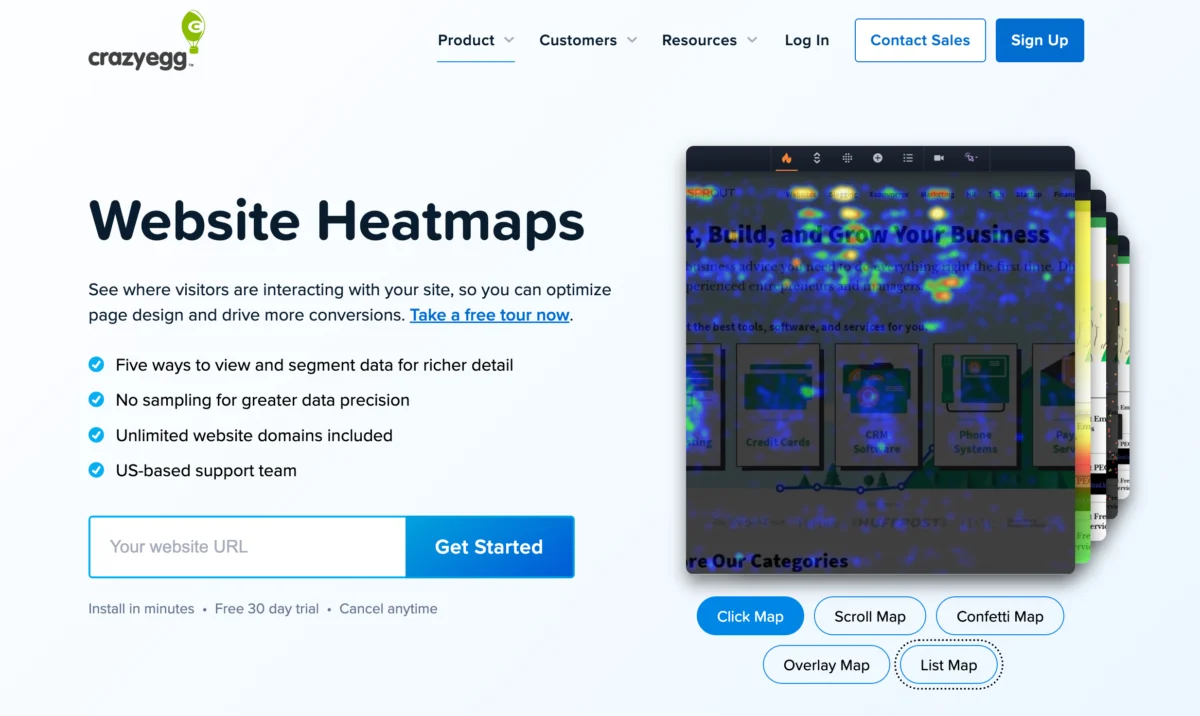
Founded by marketing veterans Hiten Shah and Neil Patel, Crazy Egg was one of the first platforms to popularize heatmapping technology. Unlike Clarity, Crazy Egg functions as a complete feedback loop. It combines heatmaps and recordings with native A/B testing and on-site surveys.
- Strategic Advantage: By housing the "Why" (surveys), the "What" (recordings), and the "Fix" (A/B testing) in a single dashboard, it reduces the time-to-insight.
- Key Feature: The "Confetti" heatmap allows users to segment clicks by referral source, device, or search term, providing a level of granular marketing attribution that basic heatmaps cannot match.
2. Mouseflow: Advanced Friction Triaging
For technical teams and UX designers, Mouseflow offers a more analytical approach to user frustration. Its proprietary "Friction Score" automatically identifies sessions where users experience rage clicks, mouse errors, or "dead clicks."
- Strategic Advantage: While Clarity provides "Rage Click" filters, Mouseflow’s friction scoring is more holistic, factoring in multiple indicators of user struggle to prioritize which sessions a developer should watch first.
- Key Feature: Form Analytics. Mouseflow tracks how users interact with every field in a checkout or lead-gen form, identifying exactly where users drop off—a feature entirely absent from Microsoft Clarity.
3. Glassbox: The Enterprise Standard for Compliance
Glassbox is designed for large-scale enterprises, particularly those in the fintech and healthcare sectors. It offers "tagless" data capture, meaning it records every interaction without requiring developers to manually tag specific events.

- Strategic Advantage: Glassbox provides high-level security and privacy controls, including the ability to host data on-premise or in private clouds. This makes it a viable option for industries where Microsoft Clarity’s data-sharing policies are a liability.
- Key Feature: Struggle Scoring and Error Analysis. Glassbox integrates deeply with server-side logs to show the technical error code (e.g., a 404 or 500 error) alongside the visual session recording of the user experiencing it.
4. Fullstory: Digital Experience Intelligence (DXI)
Fullstory represents the "high-end" of the market, focusing on "Autocapture" technology. It is designed for product-led growth teams that need to understand the entire customer journey across web and native mobile applications.
- Strategic Advantage: Fullstory’s search capabilities are peerless. A user can search for "everyone who put a blue shirt in the cart but didn’t buy it and also experienced a slow page load," and the system will instantly pull those specific sessions.
- Key Feature: Retrospective Data. Because it captures everything, you can create a new "event" today and see how users interacted with that element six months ago, provided the data was within your retention window.
Industry Response and Market Trends
The reaction from the digital marketing and web development community suggests a move toward "privacy-first" and "data-sovereignty" models. Open-source alternatives like PostHog have gained significant traction among SaaS companies. PostHog allows teams to self-host their analytics, ensuring that sensitive user data never leaves their own servers. This is a direct response to the growing global scrutiny of "Big Tech" data harvesting practices.
Furthermore, the integration of Artificial Intelligence is becoming the new baseline. While Microsoft Clarity uses AI to summarize sessions, premium competitors are deploying predictive AI to forecast conversion drops before they happen. Market analysts suggest that by 2026, the value of a behavioral tool will not be in the recordings themselves, but in the AI’s ability to tell a human exactly which three changes to the website will result in the highest revenue lift.

Comparison of Technical Capabilities and Retention
| Feature | Microsoft Clarity | Crazy Egg | Mouseflow | Glassbox |
|---|---|---|---|---|
| Pricing | Free | $29 – $599/mo | $25 – $319/mo | Enterprise |
| Data Retention | 30 Days | 3 – 24 Months | 1 – 12 Months | Custom/Unlimited |
| A/B Testing | No | Yes (Native) | No | No |
| Surveys | No | Yes | Yes | No |
| Form Analytics | No | No | Yes | Yes |
| Compliance | Standard | High | High | Enterprise-Grade |
| Mobile App Support | Limited | No | No | Yes (Native) |
Broader Impact and Implications for Businesses
The choice of a behavioral analytics tool has far-reaching implications for a company’s bottom line. For small businesses and personal blogs, Microsoft Clarity remains an unparalleled resource that democratizes access to high-level UX data. However, for growth-stage companies, the "cost of free" often manifests as missed opportunities.
The inability to run native tests or retain data for year-over-year comparisons can lead to stagnant conversion rates. Furthermore, as global privacy regulations like the EU’s AI Act and evolving GDPR standards take hold, the transparency of data usage will become a competitive advantage. Companies that can prove to their customers that their behavioral data is not being used to train third-party advertising algorithms may find higher levels of brand trust and user opt-in rates.
In conclusion, while Microsoft Clarity is a powerful entry point into the world of behavioral analytics, it is increasingly viewed as a "stepping stone" rather than a final destination. The rise of alternatives like Crazy Egg, Mouseflow, and Glassbox reflects a maturing digital economy where data depth, native experimentation, and strict privacy compliance are valued more than a zero-dollar price tag. Organizations must evaluate their specific needs—whether they require the simple "What" of user behavior or the more complex "Why" and "How to fix it"—when selecting the platform that will guide their digital strategy into the future.

 Neng Nana
 Nana Muazin