Asep Darmawan
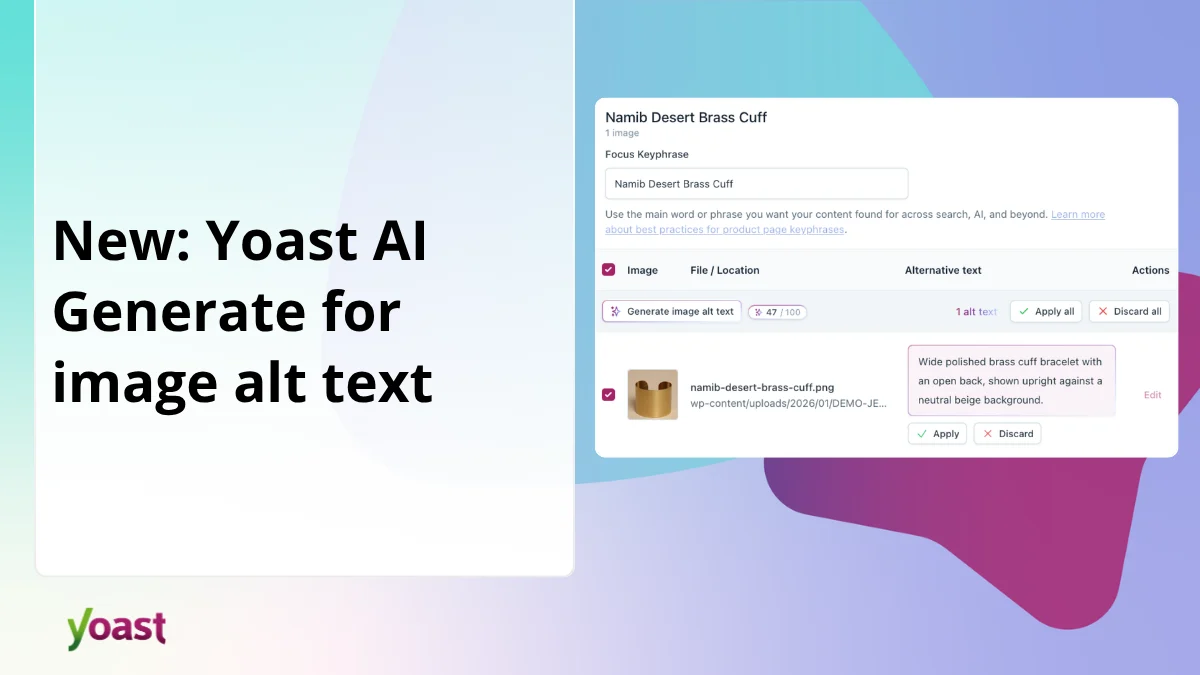
Utrecht, Netherlands – Yoast, a leading name in search engine optimization (SEO) software for WordPress, has unveiled a groundbreaking artificial intelligence (AI) powered feature designed to automatically generate image alt text. This innovative tool, dubbed "Yoast AI Generate for image alt text," is a key component of the newly released Yoast WooCommerce SEO 17.0, which launched today alongside Yoast SEO and Yoast SEO Premium 28.8. The integration of AI into alt text generation promises to revolutionize how e-commerce businesses manage their product images, significantly enhancing both search engine visibility and digital accessibility.
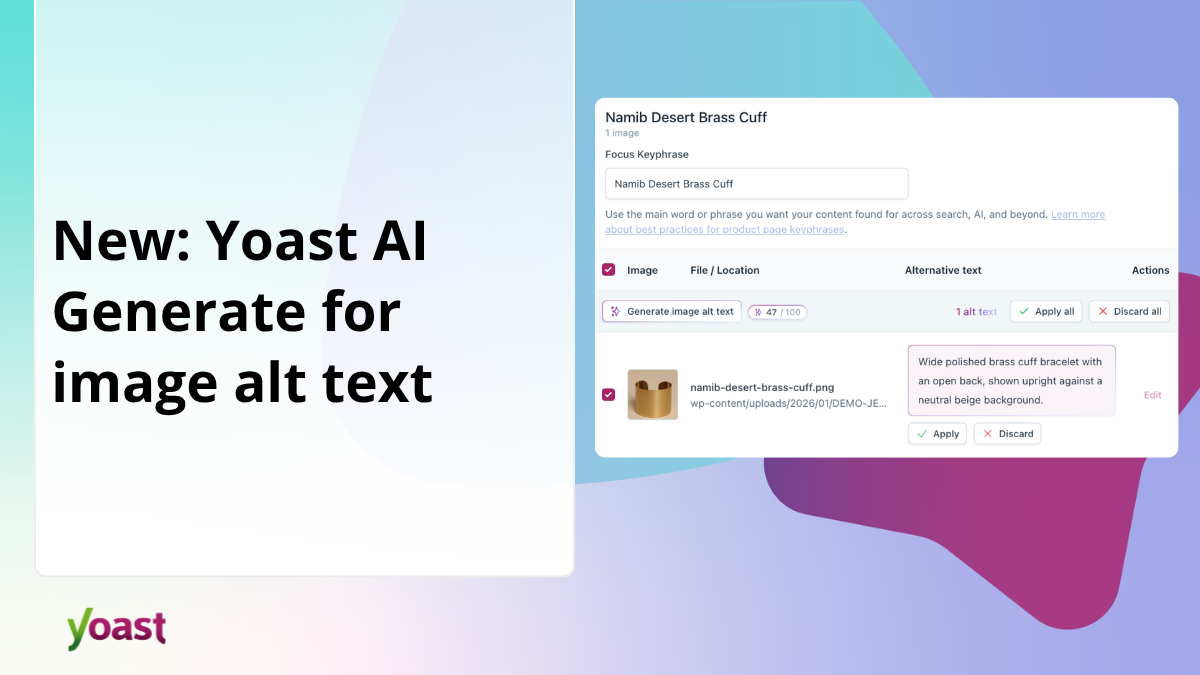
The new functionality directly addresses a pervasive challenge for online stores: the sheer volume of product images often lacking descriptive alternative text. Previously, Yoast SEO products could identify missing alt text, prompting users to manually input descriptions. Now, with the AI-driven solution, e-commerce managers can generate relevant, context-aware alt text directly from their product data and the image itself. Users can then review and apply these suggestions, streamlining a tedious and time-consuming process. For stores with hundreds or even thousands of images missing alt text, this feature offers an unprecedented opportunity to clear backlogs efficiently, without the necessity of writing each description manually.
Understanding the Innovation: Yoast AI Generate for Image Alt Text
At its core, the Yoast AI image alt text builder leverages advanced algorithms to craft each suggestion. It intelligently synthesizes information from multiple sources: the product’s existing data (such as title, description, and attributes), the designated focus keyphrase for the product page, and a sophisticated analysis of the image content itself. This multi-modal approach ensures that the generated alt text is not only descriptive but also highly relevant to the product’s context and optimized for search intent. For example, instead of a generic "shoe," the AI might suggest "men’s brown leather lace-up boots, side view," providing a much richer and more useful description.
This technological advancement represents a critical step in automating content optimization, moving beyond simple keyword suggestions to dynamic content generation. The AI’s ability to interpret visual data and combine it with textual product information creates a powerful synergy, offering a level of detail and accuracy that would be difficult and slow to achieve through manual input alone. The user retains ultimate control, with the option to review, modify, or dismiss any AI-generated suggestion, ensuring brand consistency and accuracy.
The Critical Role of Alt Text: A Dual Imperative for Modern Web
The significance of alt text extends across two primary domains: digital accessibility and search engine optimization. Both aspects have seen their importance amplify considerably in recent years, making Yoast’s new feature particularly timely.
From an accessibility standpoint, alt text serves as a vital bridge for individuals who are blind or have low vision. Screen readers rely on alt text to describe images, translating visual content into an audible format. Without proper alt text, images become invisible barriers, rendering websites unusable for a significant portion of the online population. This is especially critical for e-commerce, where product images are central to the shopping experience. A shopper using a screen reader cannot visually inspect a product; their only description comes from the alt text. If this text is missing or uninformative, they are effectively excluded from making an informed purchase.
Beyond individual users, regulatory landscapes are increasingly emphasizing digital accessibility. Laws such as the Americans with Disabilities Act (ADA) in the United States, the European Union Accessibility Act, and the UK Equality Act mandate that digital content be accessible to all. Non-compliance can lead to legal challenges, hefty fines, and significant reputational damage. For businesses selling to customers in the EU or UK, or targeting a global audience, robust accessibility practices, starting with comprehensive alt text, are no longer optional but a legal and ethical imperative. Studies have shown that a significant percentage of websites still fall short of basic accessibility standards, with image alt text being one of the most common oversights.
Concurrently, alt text plays an increasingly prominent role in SEO. Search engines, including Google, rely on alt text to understand the content and context of images. As image search and AI-driven discovery mechanisms continue to grow in sophistication and usage, descriptive alt text acts as one of the clearest signals webmasters control. High-quality alt text helps images rank higher in image search results, driving organic traffic to product pages. Furthermore, in an era where AI models are increasingly interpreting web content for answers and recommendations, well-described images contribute to a more comprehensive understanding of a page’s content, potentially boosting overall search rankings and visibility in emerging AI-powered search experiences. Data indicates that optimizing images, including proper alt text, can significantly improve page loading times and user engagement, further indirectly benefiting SEO.
Addressing a Common E-commerce Challenge: The Alt Text Backlog
The challenge of ensuring every product image has high-quality alt text is monumental for most e-commerce businesses. A typical online store can feature hundreds, thousands, or even tens of thousands of products, each with multiple images. Manually writing unique, descriptive, and SEO-friendly alt text for every single image is an incredibly labor-intensive task, often neglected due to time and resource constraints. This neglect leads to large backlogs of unoptimized images, creating both accessibility gaps and missed SEO opportunities.
The traditional workflow for alt text generation involved a content manager or SEO specialist meticulously examining each image, formulating a description, and then inputting it into the content management system. This process is not only slow but also prone to inconsistencies in quality and style. Yoast’s AI solution directly tackles this bottleneck, transforming a manual, costly process into an automated, scalable one. By reducing the human effort required, businesses can now realistically aim for 100% alt text coverage across their entire product catalog, unlocking significant benefits previously out of reach for many.
A Chronology of Yoast’s Commitment to Image Optimization
Yoast’s journey toward this AI innovation has been iterative, building on its long-standing commitment to comprehensive SEO. For years, Yoast SEO products have offered users valuable insights into their website’s optimization status, including flagging product images that were missing alt text. This diagnostic capability was a crucial first step, empowering users to identify areas for improvement. However, the subsequent remedial action remained a manual burden.
The introduction of Yoast WooCommerce SEO 17.0, Yoast SEO 28.8, and Yoast SEO Premium 28.8 marks a pivotal moment. These releases not only maintain the existing diagnostic capabilities but also introduce the crucial "fix" mechanism through AI. This evolution from identification to automated solution underscores Yoast’s strategy of continually enhancing its tools to meet the evolving demands of the digital landscape. The timing aligns with broader industry trends, including the increasing sophistication of AI in content generation and the heightened global focus on digital accessibility. This release can be seen as a culmination of Yoast’s efforts to provide a holistic SEO solution that addresses both technical and content-related optimization challenges.
Mechanism and Implementation: How Yoast’s AI Delivers
Users of Yoast WooCommerce SEO will find the AI image alt text feature integrated into two key areas, catering to different scales of optimization needs. For individual product pages, the AI suggestion appears within the product editor interface, allowing for immediate optimization as new products are added or existing ones are updated. This provides a focused approach for ensuring each new item meets optimization standards from the outset.
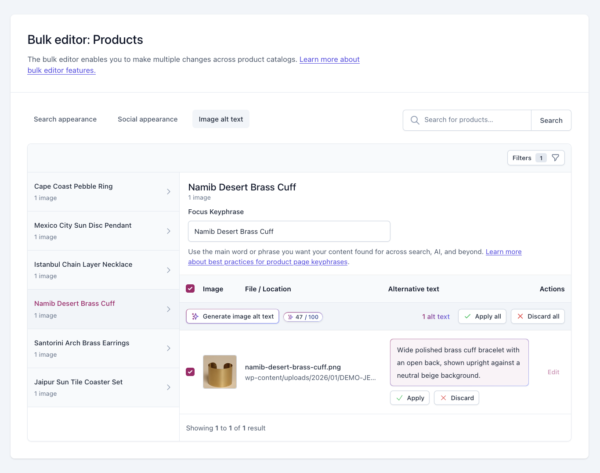
For larger-scale remediation, the feature is accessible through the bulk editor. This is where the true power of automation shines, enabling users to process hundreds or thousands of images simultaneously. The workflow is designed for efficiency: the AI generates suggestions, and users can quickly review, apply, or dismiss them in batches. This capability is particularly beneficial for established e-commerce sites with extensive product catalogs that have accumulated a significant number of images without alt text over time.
To utilize this advanced feature, users require an active subscription to Yoast WooCommerce SEO. Additionally, it is included within the Yoast SEO AI+ bundle, which provides access to a suite of AI-powered optimization tools. While the AI features support all languages, Yoast notes that performance may vary for less widely used languages, reflecting the current limitations and ongoing development in large language models. This flexibility, however, ensures that a broad international user base can benefit from the automation.
Economic and Strategic Implications for E-commerce Businesses
The economic implications of Yoast’s new AI alt text generator are substantial. For many e-commerce businesses, the cost of manually optimizing alt text for a large product catalog could be prohibitive, requiring dedicated staff hours or outsourcing to content agencies. By including this feature in Yoast WooCommerce SEO at no additional cost (beyond the existing subscription), Yoast effectively provides a massive operational efficiency gain. There is no separate add-on to buy, and existing plan prices remain unchanged, making it an immediate value-add for subscribers.
This reduction in operational expenses frees up valuable resources that businesses can reallocate to other critical areas, such as marketing, product development, or customer service. For small to medium-sized enterprises (SMEs), this levels the playing field, allowing them to compete more effectively with larger corporations that might have more extensive resources for SEO and accessibility compliance. For larger enterprises, it offers a powerful tool to clear legacy backlogs and maintain consistent optimization standards across vast inventories, improving overall site health and performance at scale.
Strategically, this feature allows businesses to significantly enhance their digital footprint. Improved alt text directly translates to better image search rankings, which can be a significant source of traffic, especially for visually driven products. Furthermore, by improving accessibility, businesses expand their potential customer base and mitigate legal risks, reinforcing their brand’s commitment to inclusivity. The "Sparks counter" feature, common to all Yoast AI functionalities, allows users to monitor their AI usage, providing transparency and control over resource consumption.
Statements and Industry Reactions (Inferred)
While official statements from Yoast executives are typically focused on product benefits, one could infer the strategic thinking behind such a release. A hypothetical statement from a Yoast Product Manager, Beth Parker, might emphasize: "Our mission at Yoast has always been to make SEO accessible to everyone. With Yoast AI Generate for image alt text, we’re taking a monumental step in that direction for e-commerce. We’re not just identifying problems; we’re providing an intelligent, scalable solution that saves businesses time and ensures their products are visible and accessible to every potential customer, regardless of their abilities."
From the perspective of an e-commerce store owner, the reaction would likely be overwhelmingly positive. "Managing thousands of product images was a constant headache, and keeping up with alt text felt like an impossible task," remarks Sarah Chen, owner of ‘Artisan Finds,’ an online craft store. "This new Yoast AI feature is a game-changer. I can now ensure all my products are optimized for search and accessible, without hiring extra staff. It’s a huge relief and a significant boost to our online presence."
Accessibility advocates would also likely welcome the development as a positive step forward. Dr. Alex Sharma, a digital accessibility consultant, might state: "Tools like Yoast’s AI alt text generator are crucial for pushing the boundaries of digital inclusivity. By embedding accessibility directly into the SEO workflow and automating a historically manual process, it helps to ensure that more websites are built with accessibility in mind from the ground up, benefiting millions of users with disabilities worldwide."
The Broader Landscape: AI, SEO, and Digital Accessibility
The introduction of Yoast’s AI alt text generator is part of a broader industry trend towards integrating artificial intelligence into SEO and content management systems. AI is rapidly transforming how websites are built, optimized, and consumed. From AI-powered content creation tools to predictive analytics for keyword research, the landscape of digital marketing is undergoing a profound shift. Yoast’s move places it at the forefront of this evolution, demonstrating how AI can be leveraged to solve real-world problems for its user base.
This development also underscores the increasing convergence of SEO and digital accessibility. Historically, these two disciplines were often treated as separate entities. However, as search engines increasingly prioritize user experience and as regulatory pressures for accessibility mount, the lines are blurring. What is good for accessibility (e.g., clear alt text) is often also good for SEO, and vice versa. Yoast’s integrated approach reflects this synergy, offering a unified solution that addresses both imperatives.
The implications for the future of web development and content management are significant. As AI capabilities continue to advance, we can expect more sophisticated automation in areas like content generation, meta description writing, and even predictive SEO analysis. Yoast’s latest feature sets a new benchmark for what users can expect from their SEO tools, pushing competitors to innovate and ultimately benefiting the entire digital ecosystem by making the web a more optimized and accessible place.
Yoast’s Ecosystem: Availability and Requirements
It is important for users to understand the specific requirements for accessing this new AI functionality. While Yoast SEO and Yoast SEO Premium 28.8 were released concurrently, the AI image alt text generator is exclusively available to users of Yoast WooCommerce SEO or the Yoast SEO AI+ bundle. This distinction is crucial for WooCommerce store owners currently running on Yoast SEO or Yoast SEO Premium. While they can already identify missing alt text using the Bulk Editor, they will need to upgrade to Yoast WooCommerce SEO to unlock the AI-powered fix. This strategic bundling highlights the specialized nature of the feature, targeting the unique needs of e-commerce platforms.
Notably, the AI image alt text feature is not available in Yoast SEO for Shopify, indicating a platform-specific rollout strategy. This may be due to the differing architectural and integration challenges presented by Shopify’s closed ecosystem compared to the open-source nature of WordPress and WooCommerce.
Beyond Alt Text: Other Enhancements in Yoast SEO 28.8
While the AI alt text generator is the headline feature, Yoast SEO 28.8 also brings other valuable improvements to its core SEO and Premium offerings. These updates contribute to the overall refinement and robustness of the Yoast suite, ensuring continuous enhancement of its capabilities across the board. While the specific details of these additional updates were not extensively elaborated in the original announcement, they typically include performance improvements, bug fixes, and minor feature enhancements that contribute to a more stable and efficient user experience.
Conclusion: Paving the Way for a More Accessible and Optimized Web
The release of Yoast AI Generate for image alt text in Yoast WooCommerce SEO 17.0 represents a pivotal moment in the evolution of SEO and digital accessibility tools. By automating a historically manual and often neglected task, Yoast has empowered e-commerce businesses to not only enhance their search engine visibility but also to significantly improve the inclusivity of their online stores. This innovation underscores the growing synergy between AI, SEO, and accessibility, pointing towards a future where intelligent automation plays an ever-increasing role in creating a more optimized, efficient, and universally accessible web experience for all. As digital regulations tighten and user expectations for seamless online interactions rise, tools like this will become indispensable for businesses aiming to thrive in the competitive online landscape.

 Dwi Wanna

 Iffa Jayyana