Suro Senen
Digital marketing strategies are undergoing a fundamental shift as organizations move away from traditional, "one-and-done" A/B testing models toward a more resilient framework known as iterative testing. While conventional testing often concludes with a single winner or loser, iterative testing establishes a continuous cycle of experimentation where each result serves as the foundation for the next hypothesis. This methodological evolution, rooted in agile product development, allows marketing teams to adapt to volatile consumer behaviors and maximize return on investment (ROI) through incremental, evidence-based refinements rather than high-risk, large-scale overhauls.
The Strategic Shift Toward Incrementalism
In the current economic climate, marketing budgets are under increased scrutiny, necessitating a move toward more predictable growth models. Industry experts note that the primary cause of marketing failure is rarely a catastrophic launch, but rather "slow leaks"—minor inefficiencies in messaging, user experience, and conversion paths that cumulatively drain resources over time. Iterative testing addresses these leaks by prioritizing consistent, data-backed improvements.
Unlike traditional A/B testing, which often focuses on isolated variables in a vacuum, the iterative approach views marketing assets as living documents. This shift is characterized by three core advantages: accelerated growth through faster feedback loops, the reduction of wasted spend via evidence-based changes, and a heightened ability to adapt to evolving user needs. By compressing the testing cycle, organizations can identify high-performing elements within days rather than months, ensuring that campaigns remain relevant in a fast-paced digital environment.
The Evolution of Testing: From Product Development to Marketing
The principles of iterative testing are not entirely new; they have been the cornerstone of software engineering and product development for decades. The "Lean Startup" methodology and Agile frameworks both emphasize the importance of the Build-Measure-Learn loop. Marketers are now adopting these same principles to refine campaign messaging, landing page layouts, and user journeys.
Historically, marketing was a discipline of intuition and large-scale creative bets. However, the rise of sophisticated analytics and machine learning tools has transformed it into an empirical science. According to the 2024 Conversion Benchmark Report, data-driven insights are revealing surprising trends that challenge conventional wisdom. For instance, the report found that landing pages written at a 5th-to-7th-grade reading level convert at a rate of 11.1%, which is more than double the conversion rate of pages utilizing professional or academic-level language. This specific insight provides a clear example of the type of hypothesis an iterative tester might use to refine a campaign.

A Systematic Framework for Iterative Success
To implement a successful iterative testing program, marketing teams must follow a disciplined, six-step process designed to minimize bias and maximize learning.
1. Defining a Focused Hypothesis
The foundation of any successful experiment is a laser-focused hypothesis. Broad objectives, such as "improving the website," are replaced with specific, measurable predictions. A high-quality hypothesis typically follows a structured format: "By changing [Variable X] to [Variable Y], we expect to see [Result Z] because of [Insight A]." By isolating a single element—such as a headline, a call-to-action (CTA) button, or a form field—marketers can ensure that the results are attributable to a specific change.
2. Prioritization Based on Impact and Effort
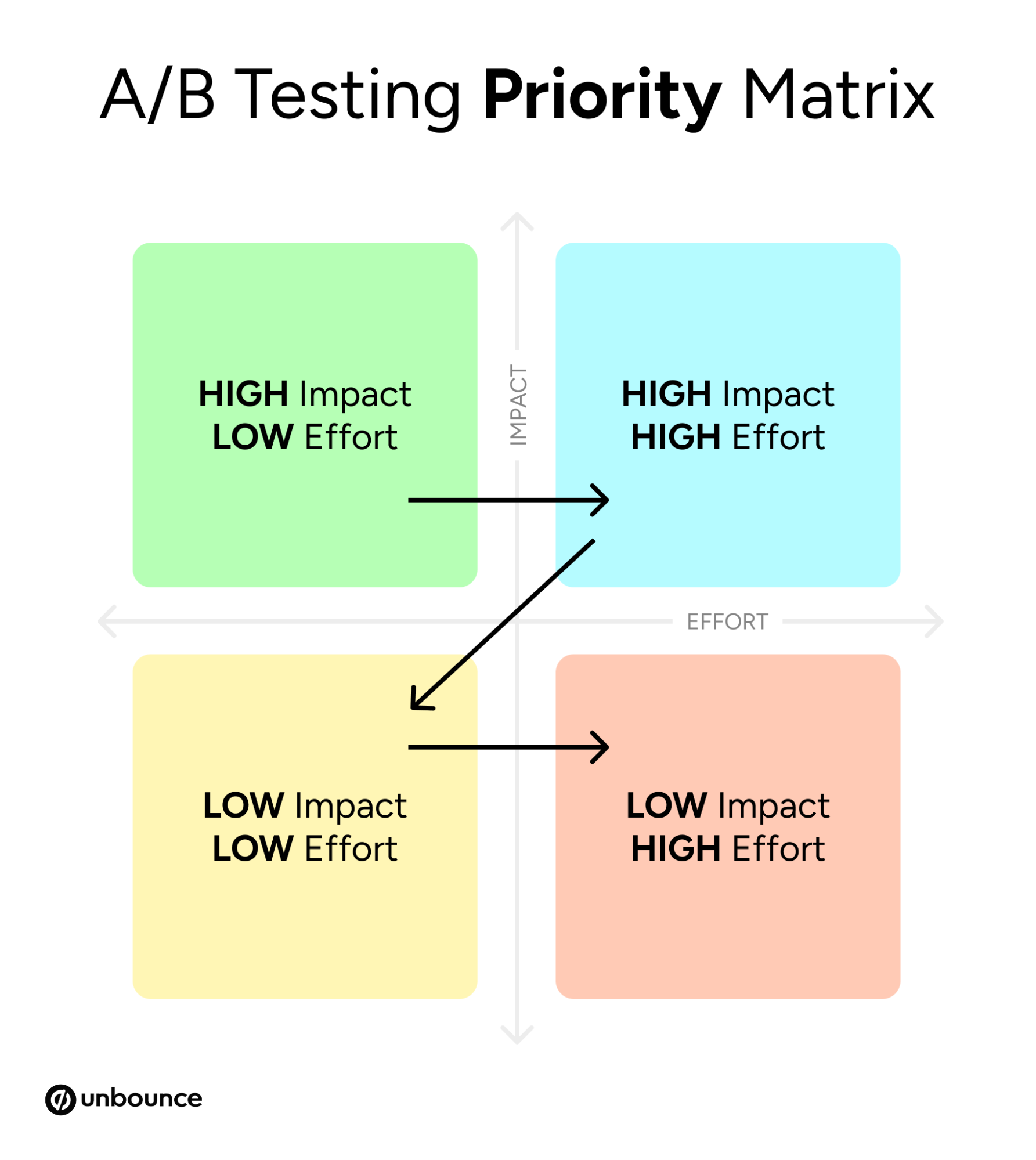
Not all tests are worth running simultaneously. Strategic marketers utilize a prioritization matrix to evaluate potential experiments based on two axes: potential impact and implementation effort. High-impact, low-effort changes (often called "quick wins") are prioritized to build momentum. This approach ensures that resources are allocated to the experiments most likely to move the needle on key performance indicators (KPIs).
3. Development of Minimal Testable Variations
Iterative testing discourages over-complicating test variants. Instead of redesigning an entire page, the focus is on creating a "minimal testable variation." This involves making clean, isolated changes that allow the team to understand exactly what influenced the user’s behavior. Modern A/B testing platforms have facilitated this by allowing marketers to duplicate control pages and make targeted adjustments without extensive developer involvement.
4. Data Collection and Statistical Validation
One of the most critical aspects of the process is ensuring statistical significance. Without a sufficient sample size, test results may be the product of random chance rather than a genuine shift in user preference. While the required data volume varies depending on the desired confidence level, industry standards suggest that a test should generally run for at least one to two full business cycles (typically two weeks) to account for daily and weekly fluctuations in traffic quality.
5. Deep Analysis and Insight Extraction
Analysis must go beyond identifying the "winning" variant. Marketers must ask why a specific change resonated with the audience. If a simplified headline outperformed a more creative one, the broader insight might be that the target demographic values clarity and speed over brand personality. These qualitative insights are often more valuable than the quantitative data alone, as they can be applied to other marketing channels, including email and social media.

6. Scaling and Further Iteration
Once a winning variant is identified, the cycle begins anew. The successful element is integrated into the "control" version of the asset, and a new hypothesis is developed to further optimize performance. This creates a compounding effect where small, 5% or 10% improvements eventually lead to massive gains in conversion efficiency over time.
Supporting Data: The Impact of Mobile and Complexity
The importance of an iterative approach is underscored by current industry benchmarks regarding device usage and content complexity. Data indicates that 83% of landing page visits now occur on mobile devices. However, desktop visits still convert at an 8% higher rate on average. This discrepancy presents a significant opportunity for iterative testing. Marketers can experiment with mobile-specific CTAs, simplified navigation, or faster-loading media to bridge the conversion gap between devices.
Furthermore, analysis of word complexity reveals a -24.3% negative correlation with conversion rates. This suggests that as the technical difficulty of the copy increases, the likelihood of a conversion decreases. For a marketing team, this data provides a clear roadmap for the first several rounds of iterative testing: simplify language, reduce jargon, and measure the impact on user engagement.
Official Perspectives and Organizational Impact
Marketing leaders, such as Josh Gallant, founder of Backstage SEO, emphasize that building a culture of experimentation is as much about people as it is about tools. Effective iterative testing requires cross-departmental collaboration. For example, customer support teams can provide insights into common user frustrations, which can then be turned into testing hypotheses for the marketing team. Similarly, sales teams can identify which messaging points resonate most during live demos, providing a baseline for landing page copy.
When multiple departments contribute to the testing backlog, the organization develops a more holistic understanding of the customer journey. This collaborative environment also helps secure executive buy-in, as the testing program becomes a source of shared intelligence rather than a siloed marketing activity.
The Role of Technology and Automation
The future of iterative testing is increasingly tied to artificial intelligence and machine learning. Tools like "Smart Traffic" are now capable of optimizing campaigns after as few as 50 visits. These technologies work by automatically routing visitors to the variant most likely to convert based on their specific attributes (such as location, device, or time of day).
While automation does not replace the need for human-led hypothesis generation, it significantly accelerates the testing cycle. It allows teams to run multiple variants simultaneously without the traditional "winner-take-all" constraints of standard A/B testing. This multi-armed bandit approach ensures that even during the testing phase, the campaign is actively working to maximize conversions.
Conclusion: The Compounding Power of Progress
Iterative testing represents a departure from the pursuit of perfection in favor of the pursuit of progress. By embracing a cycle of continuous improvement, marketing teams can build more resilient campaigns that are grounded in empirical evidence rather than subjective opinion.
The broader implications of this shift are significant. In an era where consumer preferences change rapidly and competition is fierce, the ability to learn and adapt faster than the competition is a primary competitive advantage. Organizations that implement a disciplined iterative testing framework are better positioned to reduce wasted spend, increase user satisfaction, and achieve sustainable, long-term growth. As the digital landscape continues to evolve, the most successful marketers will be those who view every campaign not as a final product, but as a starting point for the next great insight.


 Pevita Pearce
 Ali Ikhwan